Send the form and the search for an installer is over.
Winter in Iowa, your furnace runs for months at a stretch, and that dry heat pulls the moisture right out of the air in your house. You feel it in your skin, in the static off the carpet, in wood floors and trim that shrink and creak. Furnace humidifiers exist for exactly this reason, and whether you need one depends on how your house feels once the furnace has been running steady, not on anything about where in Iowa you live.
Come summer the question flips. Summers here get sticky, and a furnace humidifier has nothing to do with that. That's a job for your air conditioner and the humidity it pulls out as it cools. So the real question is narrower than it sounds: do you need help adding moisture back during the months you're heating.
Most homes in Iowa heat with gas, and a furnace humidifier mounts right to that same ductwork, using the system that's already moving air through your house. It doesn't run on its own. It's tied to your furnace, so it only adds moisture when the furnace is calling for heat. Power here is cheap, and running one costs little next to what the furnace itself is already using.
Deciding whether to install one usually means getting a straight answer about your specific furnace, your ductwork, and how dry your house actually gets. That's a call to a contractor, then another, then explaining your setup twice, then waiting on quotes to compare. Send the form on this page instead, and that work is off your plate. Someone licensed to look at your furnace and tell you what's right for your house takes it from there. You stop chasing it down and start getting an answer.
Yes, most homes in Iowa benefit from one. Once your furnace starts running regularly through the winter, the air inside your house dries out fast, often well below the humidity level a house needs to feel comfortable. That's not a flaw in your furnace. It's what happens when cold outside air, which holds very little moisture, gets pulled in, heated, and circulated through your rooms for months. A humidifier adds moisture back at the furnace, before the air reaches your vents, so the whole house gets it evenly instead of running a portable unit room by room. Without it, you're left with dry skin, static shocks, and wood floors or trim that shrink and crack over the winter. Whether you need one installed, and what size your furnace calls for, depends on your house and your ductwork. That's a question worth getting answered before the cold sets in.
A furnace with a humidifier installed keeps the air in your house at a steady moisture level all winter, so your skin, floors, and furniture stop paying the price.
A furnace running without one dries the house out through the same vents and ducts, which is why the static and the cracked trim keep coming back every year.
The unit itself sits on the ductwork near your furnace, not in a room where you'd notice it. A small line runs from a nearby water pipe to feed it, so there's no tank to check or fill. A humidistat, set on the wall or the return duct, is what actually decides when moisture gets added. It reads the air and signals the humidifier on and off through the winter without anyone touching a dial.
Most installations are bypass units. Warm air from the supply duct is routed through a wet pad, where it picks up moisture before it rejoins the return and continues through your system. A fan-powered unit works the same way but uses its own fan to push air through that pad, rather than depending on the furnace blower to do it. Either way, nothing happens unless the blower is moving air. The humidifier doesn't generate heat or run on its own. It adds moisture to air that's already circulating, which is why it's tied into the ductwork instead of sitting somewhere in the house.
How a furnace humidifier works
A furnace humidifier mounts directly to the supply or return duct near the furnace, not inside the living space.
A saddle valve taps into a nearby water line to feed the unit, so no one refills a tray or tank by hand.
A humidistat, usually mounted on a wall or the return duct, reads the air and tells the unit when to add moisture.
On a bypass humidifier, warm air from the supply duct passes through a wet pad and carries moisture back into the return.
A fan-powered unit uses its own small fan to push air through the pad instead of relying on the furnace's blower pressure.
The furnace blower has to be running for either type to put any moisture into the air moving through the ducts.
Skip the round of in-home estimates for a new furnace.
You only hire the pro if you want to.
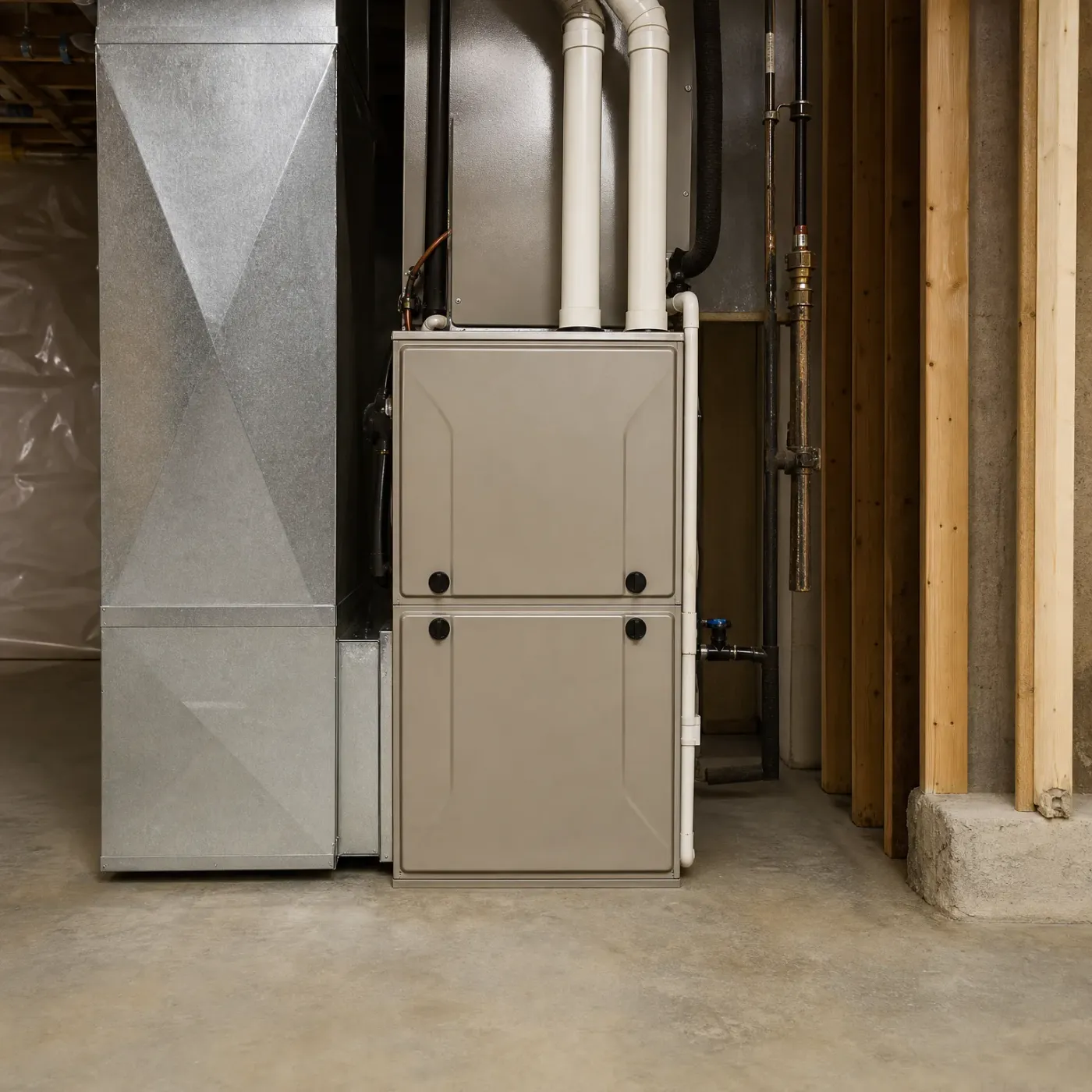
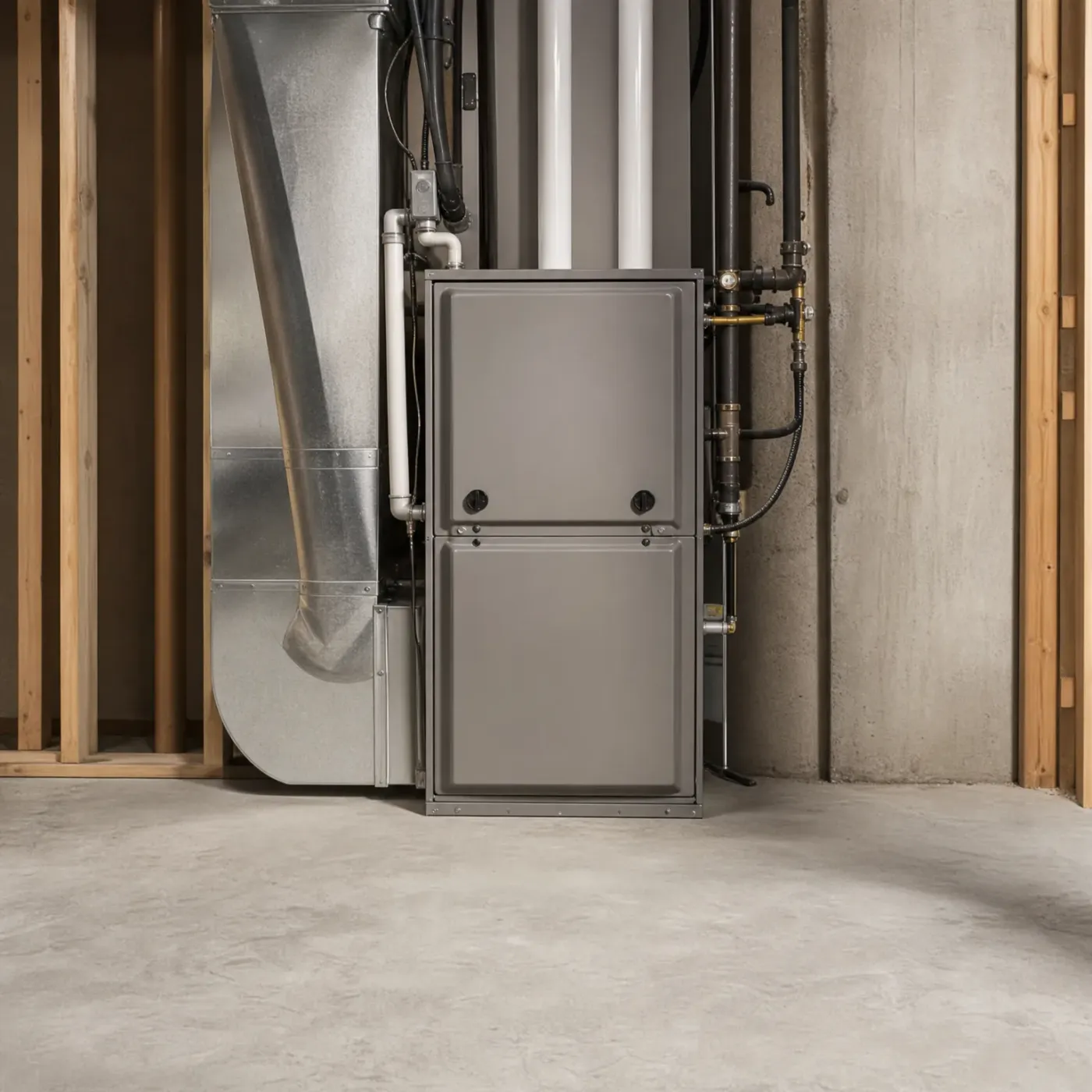
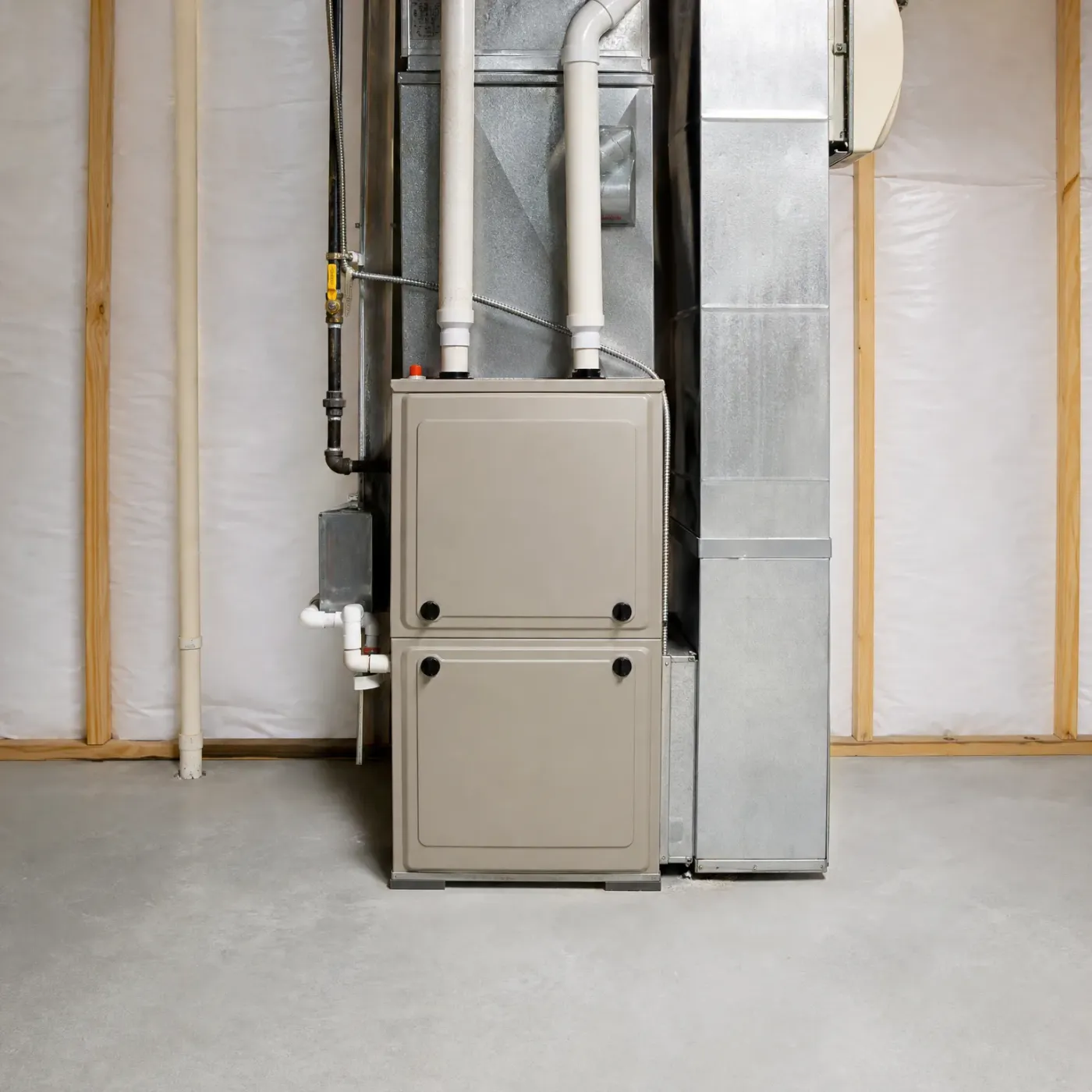
Furnace with a humidifier
This furnace feeds a humidifier mounted right on the ductwork, so the air moving through those supply lines carries moisture with it. The wood framing and floor joists nearby stay in a house that isn't fighting dry air all winter. The PVC and gas lines just do their normal job.
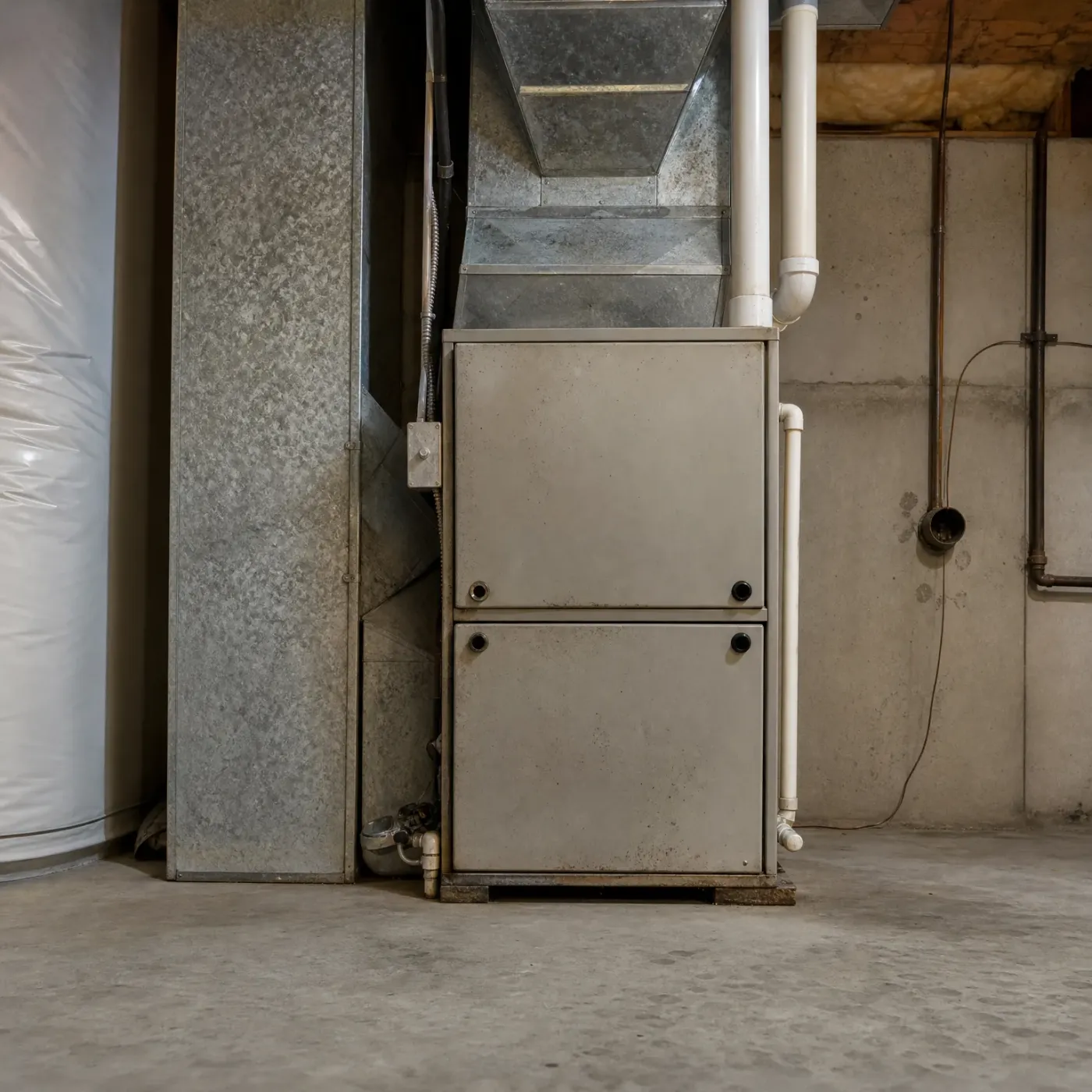
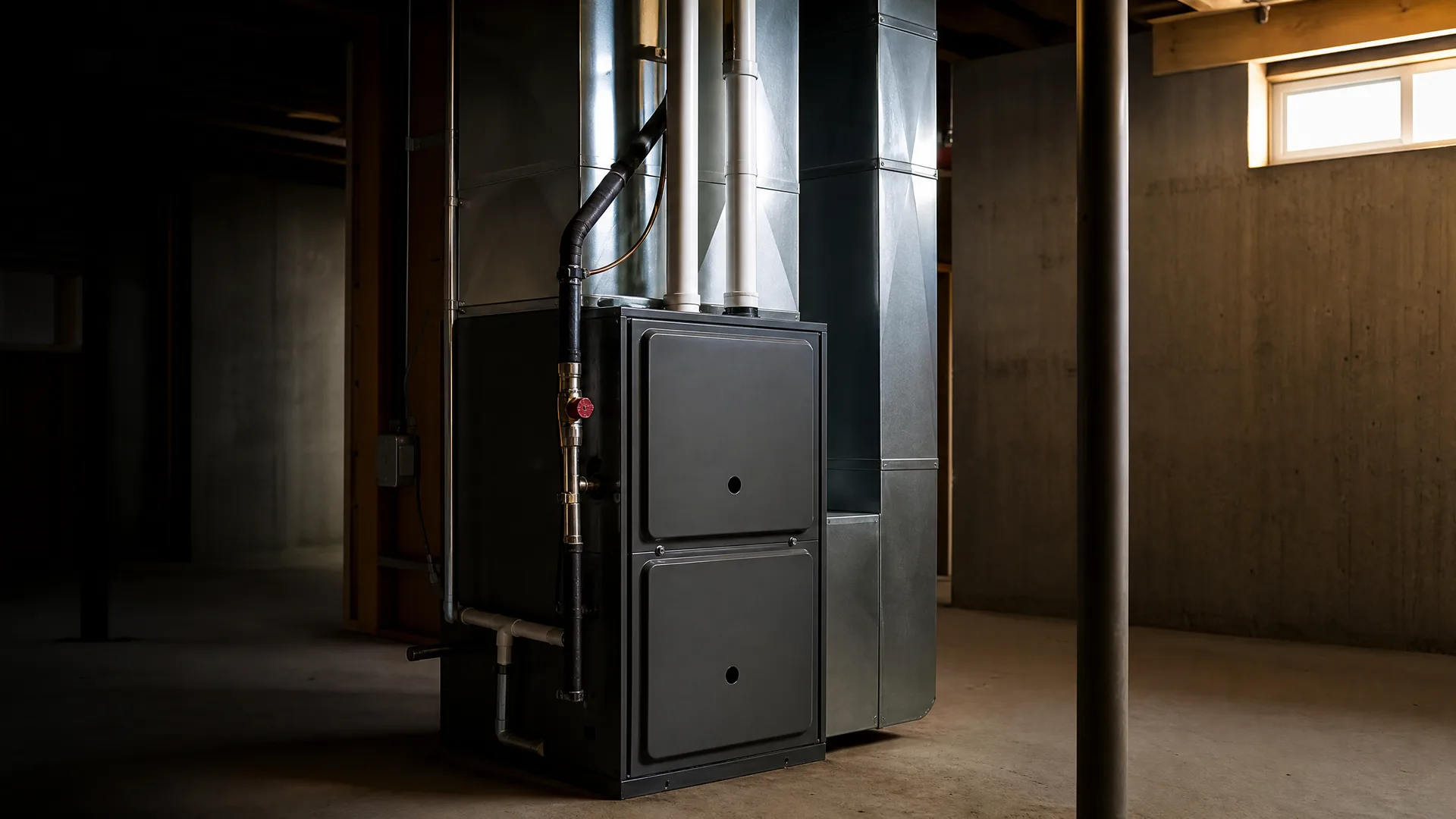
Furnace without one
This furnace pushes heat through the same ductwork without anything added to it, so the house dries out as it runs. Sitting on that pallet, it's doing its job fine, but nothing between it and the vents is putting moisture back into the air it's heating.
How does a furnace humidifier know how much moisture to add?
You've seen the humidistat mentioned, but it's natural to wonder what's actually controlling it. You don't want a system that either leaves the air too dry or fogs up your windows with too much moisture. Since the unit isn't something you'll check daily, you want to know it's making the right call on its own, based on something more than a guess.
A humidistat reads the air and tells the humidifier when to run
The humidistat works like a thermostat, but for moisture instead of temperature. You set a target humidity level, and it reads the air inside your ductwork or living space and compares it to that setting. When the air falls below the number you set, it signals the humidifier to open its water valve and start adding moisture. Once the air reaches that level, it shuts the valve off. Some humidistats also factor in the outdoor temperature, since colder air outside means your house can hold less moisture before windows start fogging up. That's why the setting that feels right in November might need to come down some by January.
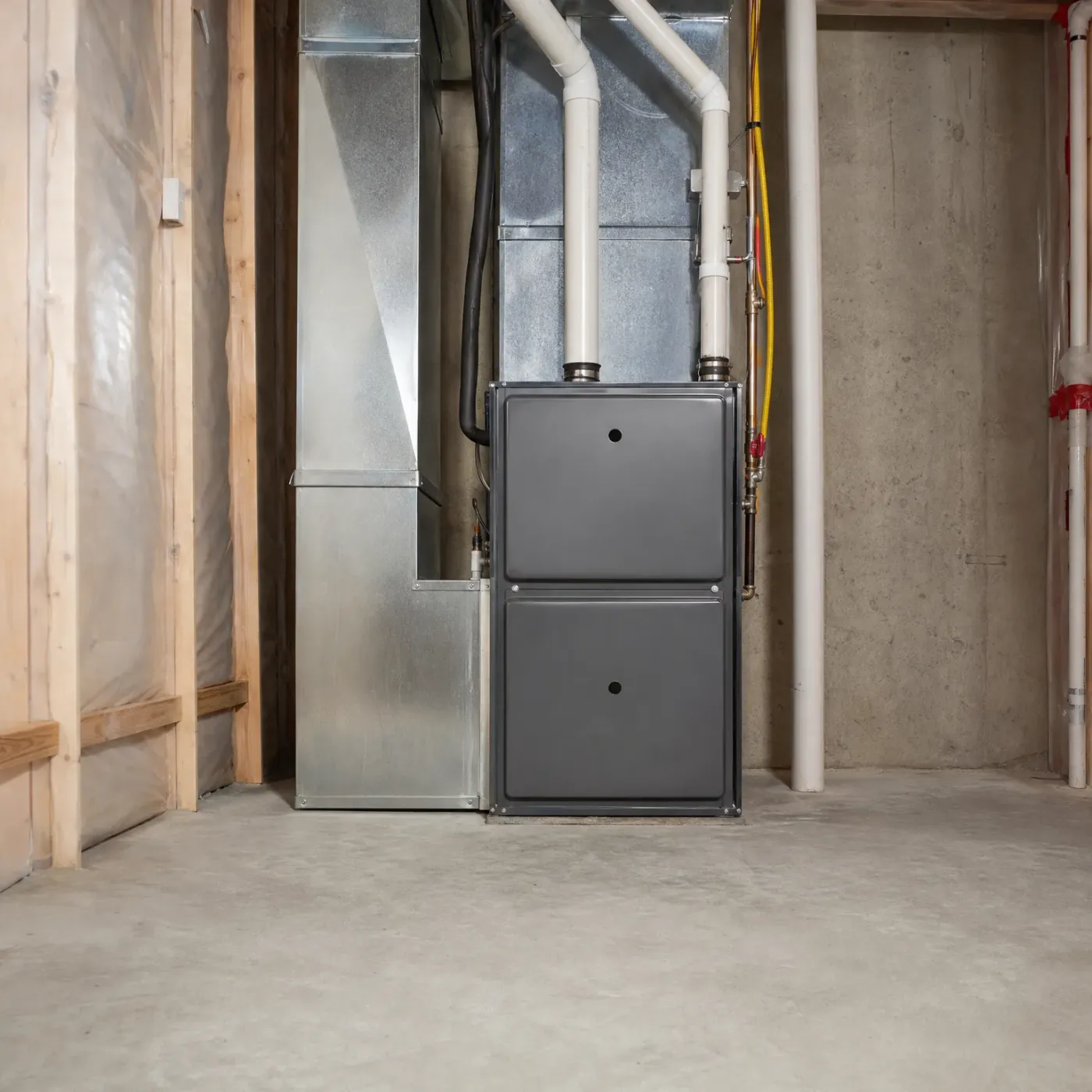
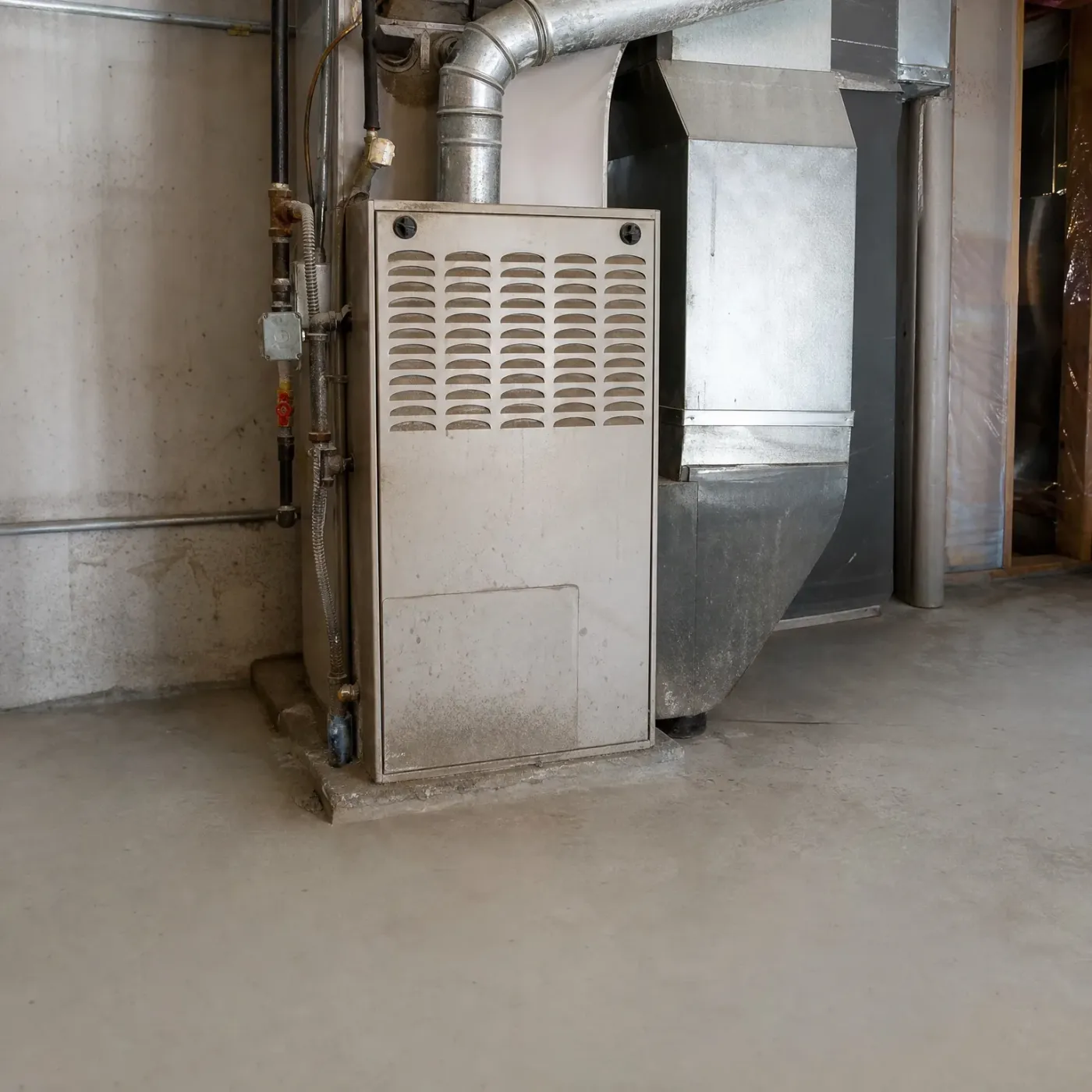
Furnace running as built
This furnace is doing exactly what it was installed to do, moving air through the plenum and out to the ducts. No rust, no strain on the cabinet. Add a humidifier here and the duct already has room for the saddle valve and the mounting.
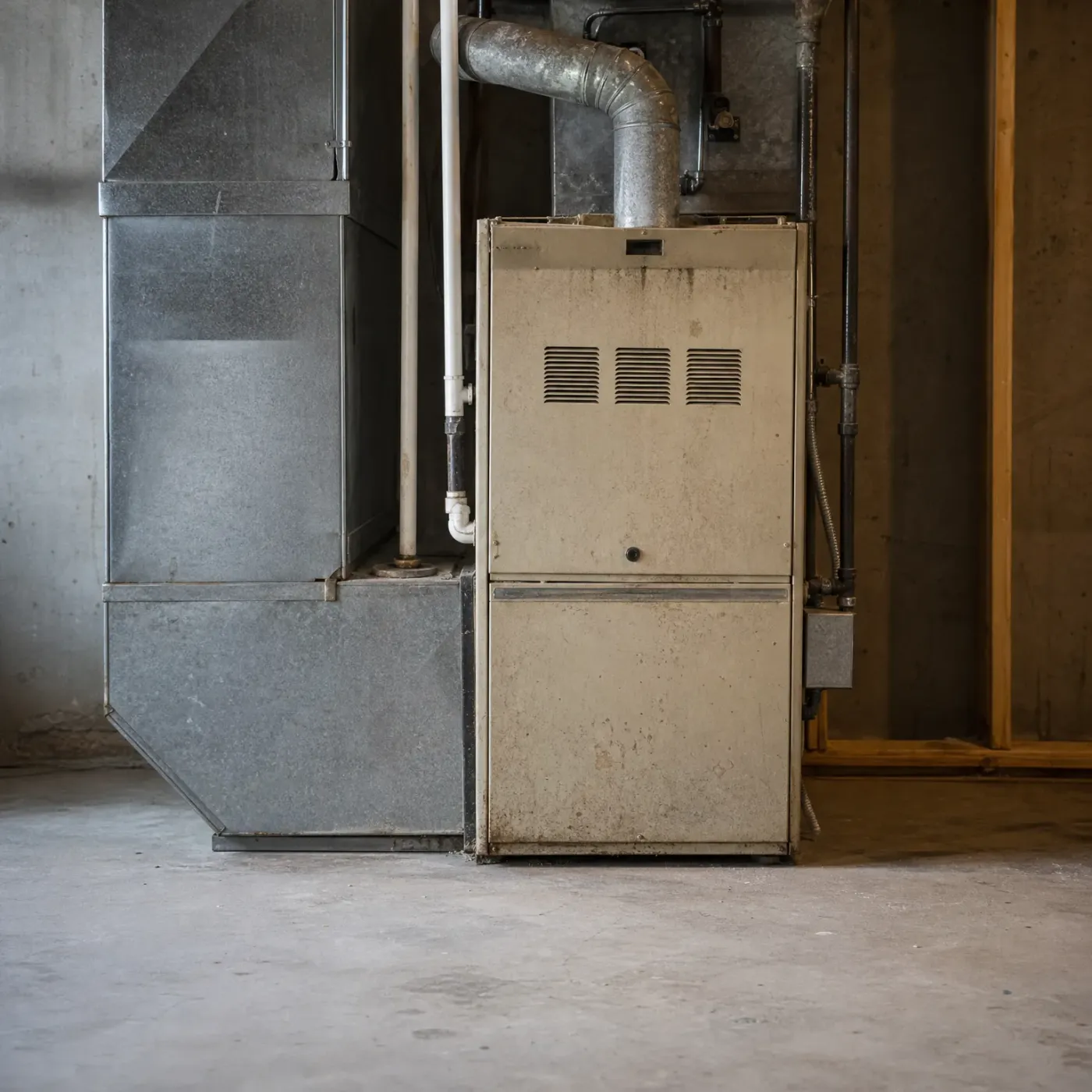
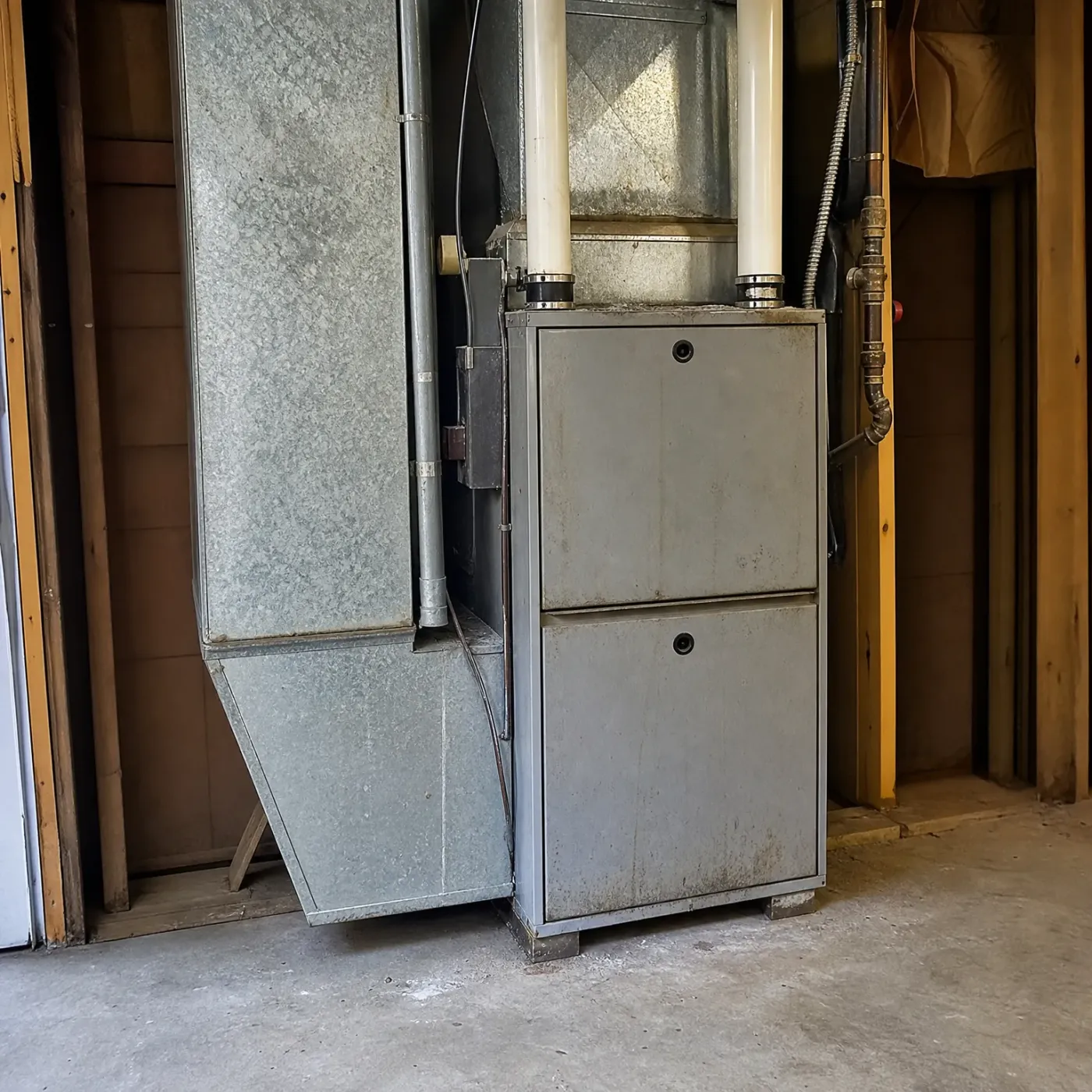
Furnace left to dry the house out alone
The PVC pipes and surface rust here point to a furnace that has been working through dry winters without help. Pulling all the moisture out through the ducts year after year is wear a humidifier would have shared.
Before you get your furnace installationAfter you get your furnace installation
30 to 50 percent
That's the indoor humidity range most homes aim for through the winter. Dry furnace air without a humidifier often falls well under that, no matter how warm the house feels.
A 15°F night means your furnace is pushing hard and pushing long to keep up, and that's the air moving through your ducts hour after hour. The colder it gets outside, the drier that air gets inside, no matter how high you set the thermostat.
NOAA nClimDiv 1991-2020 county normals weighted by homes
1
A contractor taps a saddle valve into the nearest water line.
2
The humidifier body mounts to the supply or return duct.
3
A water line runs from the valve into the unit.
4
A humidistat near the furnace gets wired to control it.
Is the dry air in your house actually a problem
You've probably noticed it already. A shock every time you touch a doorknob or your dog. Lips that chap no matter how much balm you use. Gaps opening up between the boards of your hardwood floor, or a door that used to shut fine and now sticks in its frame. Houseplants that need watering more than they used to, even though it's cold out. None of that is random. It's your furnace pulling moisture out of the air faster than anything in the house is putting it back. Left alone all winter, that same dry air keeps working on the wood floors, trim, and furniture joints long after the itchy skin stops bothering you.
Statewide, winter nights average 15°F, according to NOAA climate data. At that temperature your furnace isn't cycling on and off, it's running long stretches just to hold the thermostat setting. Every one of those hours, it's pulling in cold outdoor air and heating it, and heated air holds less moisture than it did outside. That's the air coming out of your vents. A humidifier mounted on the furnace adds moisture back into that same airstream before it reaches your rooms, so a 15°F night doesn't mean a house that feels like a desert by morning.
NOAA nClimDiv 1991-2020 county normals weighted by homes
So, do you need one
Most houses in Iowa do better with one. Your furnace runs for months at a stretch once the cold sets in, and that alone is reason enough to add moisture back into the air it moves through your ducts. A humidistat near the furnace keeps that level steady without you thinking about it again.
If you're at the point of wanting one installed, the part that usually eats your time is finding someone who installs them, checking licenses, calling two or three contractors, explaining the same thing to each one, then sitting with quotes trying to compare them fairly. Send the form on this page and that part is off your plate. Someone qualified gets in touch, and from there it's a conversation about your furnace and your house, not a search.