
Furnace carbon monoxide signs in Iowa

Send the request today and stop worrying about who to call.

Let a pro reach out

A furnace leaking carbon monoxide usually shows itself in ways you can catch before anyone gets sick. Look for soot stains around the furnace cabinet, a yellow or flickering burner flame instead of a steady blue one, extra moisture on windows near the furnace room, or a smell like something faintly burning or sour when the system kicks on. Headaches or nausea that show up when the furnace runs and ease off when you leave the house are a signal too. This happens when the heat exchanger cracks or the vent pipe gets blocked, so exhaust that should leave the house gets pulled back into the air you breathe. With gas heat running in most Iowa homes through the winter, a furnace that's circulating carbon monoxide can affect everyone inside within hours. A working carbon monoxide detector near the furnace and bedrooms catches what you can't see or smell, but any of these signs on their own is reason enough to shut the furnace off and have it checked.

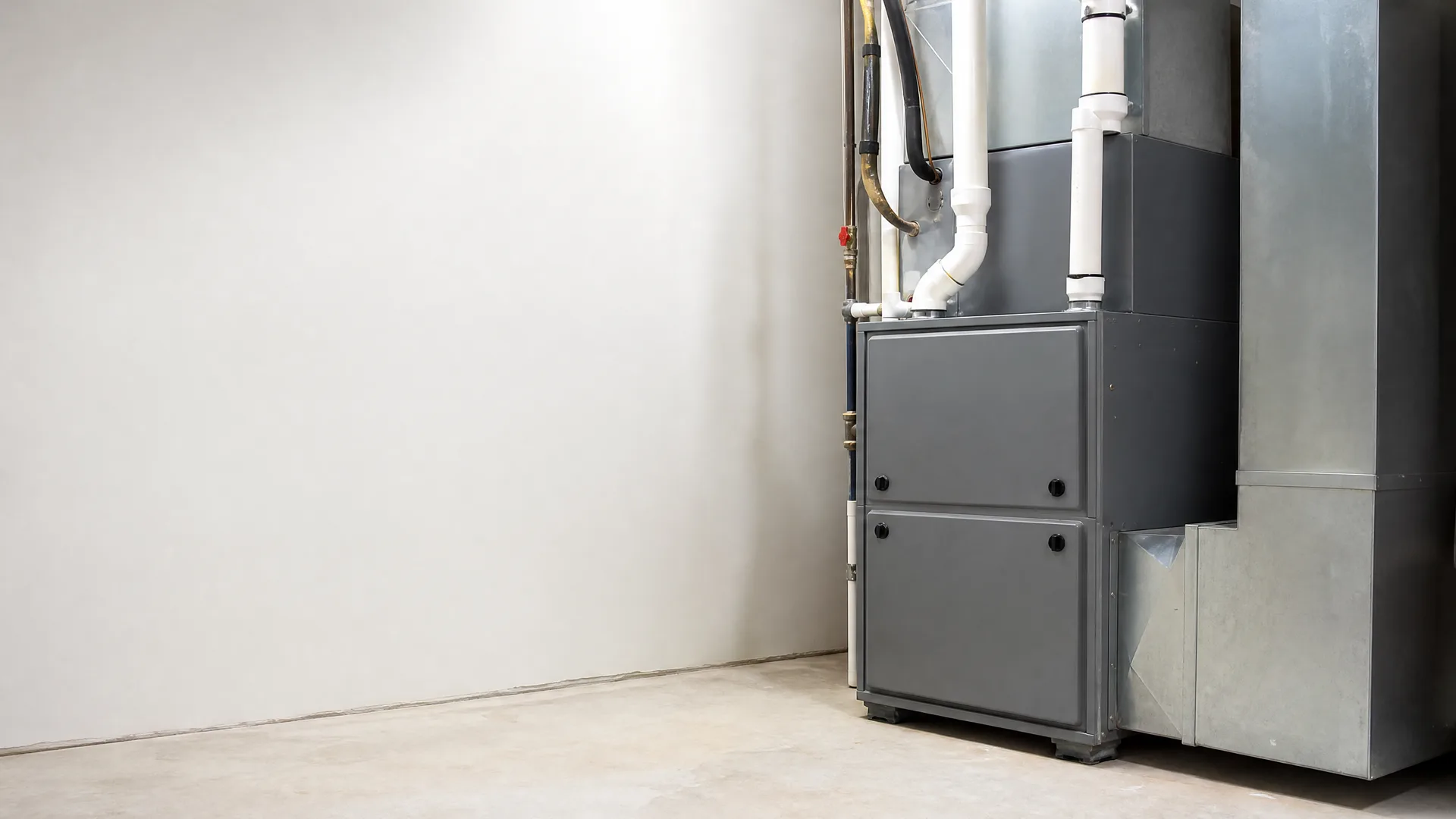
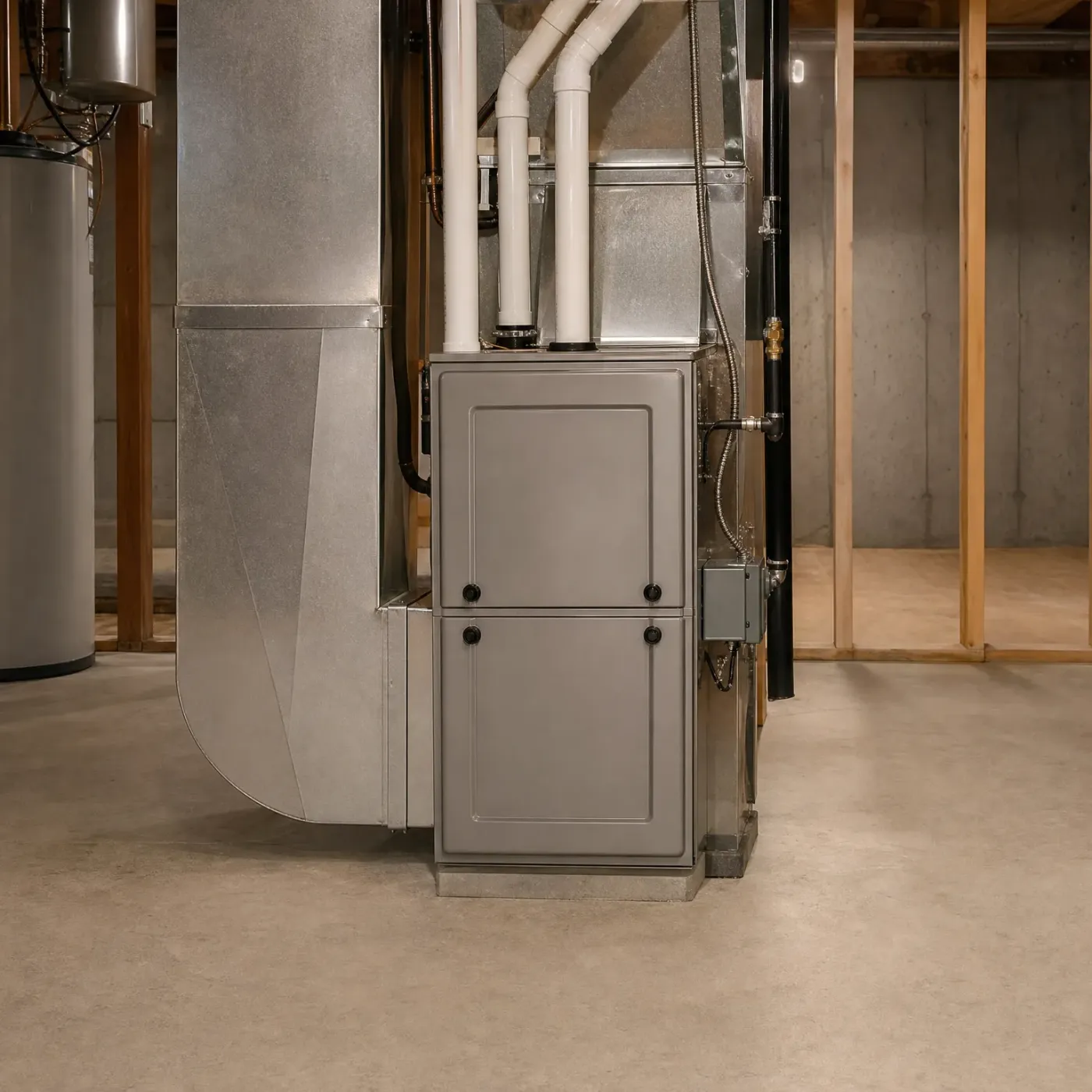
A gray high-efficiency furnace with white PVC vent pipes stands beside sheet-metal ductwork and a water heater in an unfinished basement with concrete walls and wood framing.

Normal operation

A healthy furnace burns with a steady blue flame and vents through the PVC pipe without spilling exhaust into the basement. No soot around the cabinet, no odd smell, no rust on the flue connections. The pilot or igniter lights cleanly each cycle and the burner sound stays even, not a rumble or a bang.
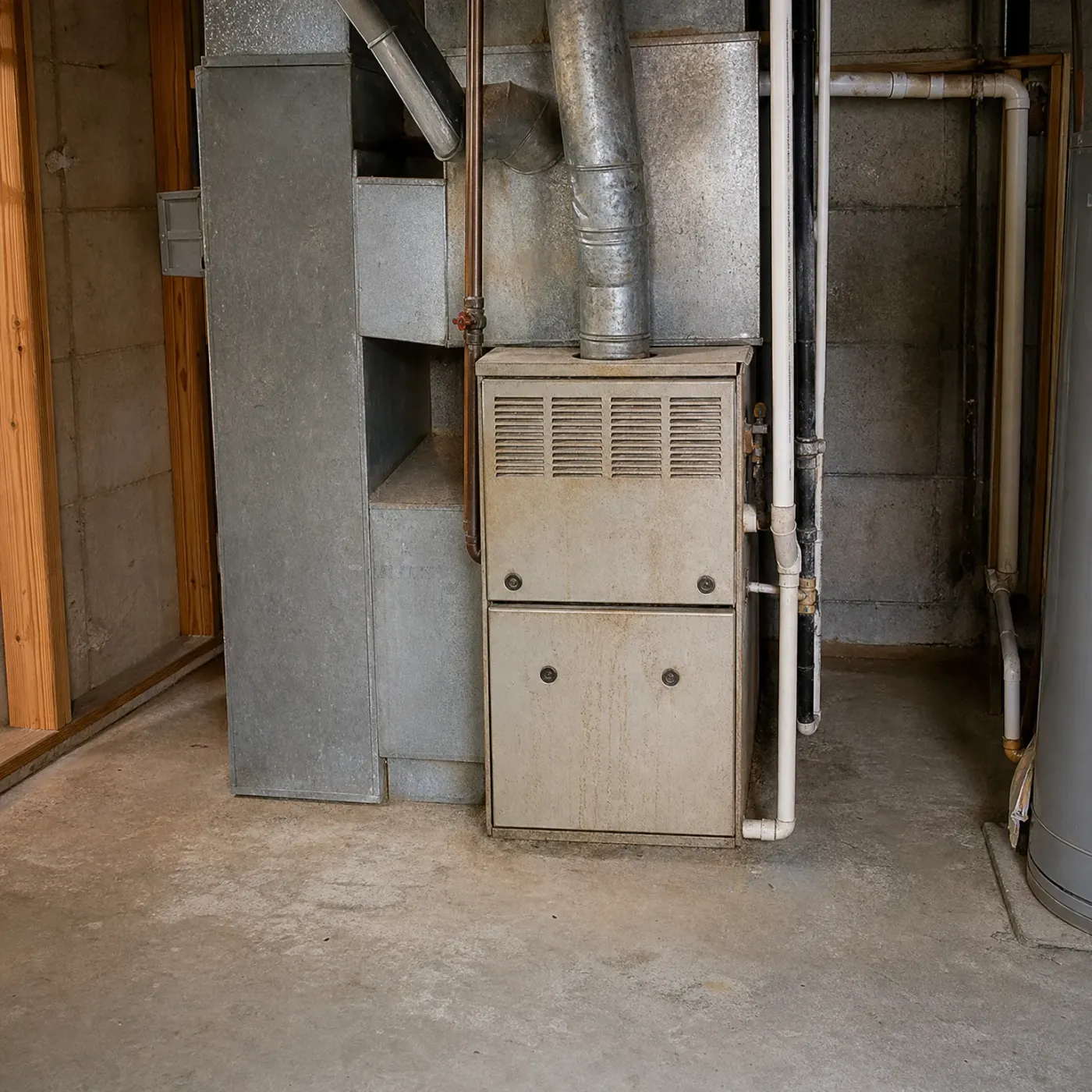
A beige gas furnace with a metal flue pipe stands in a basement against concrete block walls, beside sheet-metal ductwork, copper and white plastic pipes, and a water heater at right.

Warning signs

An older furnace with galvanized ductwork can develop a cracked heat exchanger or a blocked flue without any obvious change in heat output. Watch for a yellow flame tip, soot near the burner compartment, or rust streaks on the vent pipe. A carbon monoxide detector near the furnace catches what you can't see or smell.

What would you actually notice in your own house

Headaches that show up when the furnace has been running and ease off when you leave the house. A stale, warm smell near the vents that wasn't there before. Streaks of soot on the wall behind the furnace or around the cabinet doors. Condensation building up on basement windows even when nobody's been showering nearby. Pilot or burner flame that looks orange or yellow instead of blue. If anyone in the house has been more tired than usual, or pets seem sluggish during the day when the furnace cycles most, that's worth paying attention to. A furnace that's been spilling exhaust instead of venting it outside puts everyone sleeping upstairs at risk, especially overnight when the furnace runs longest and everyone's home.

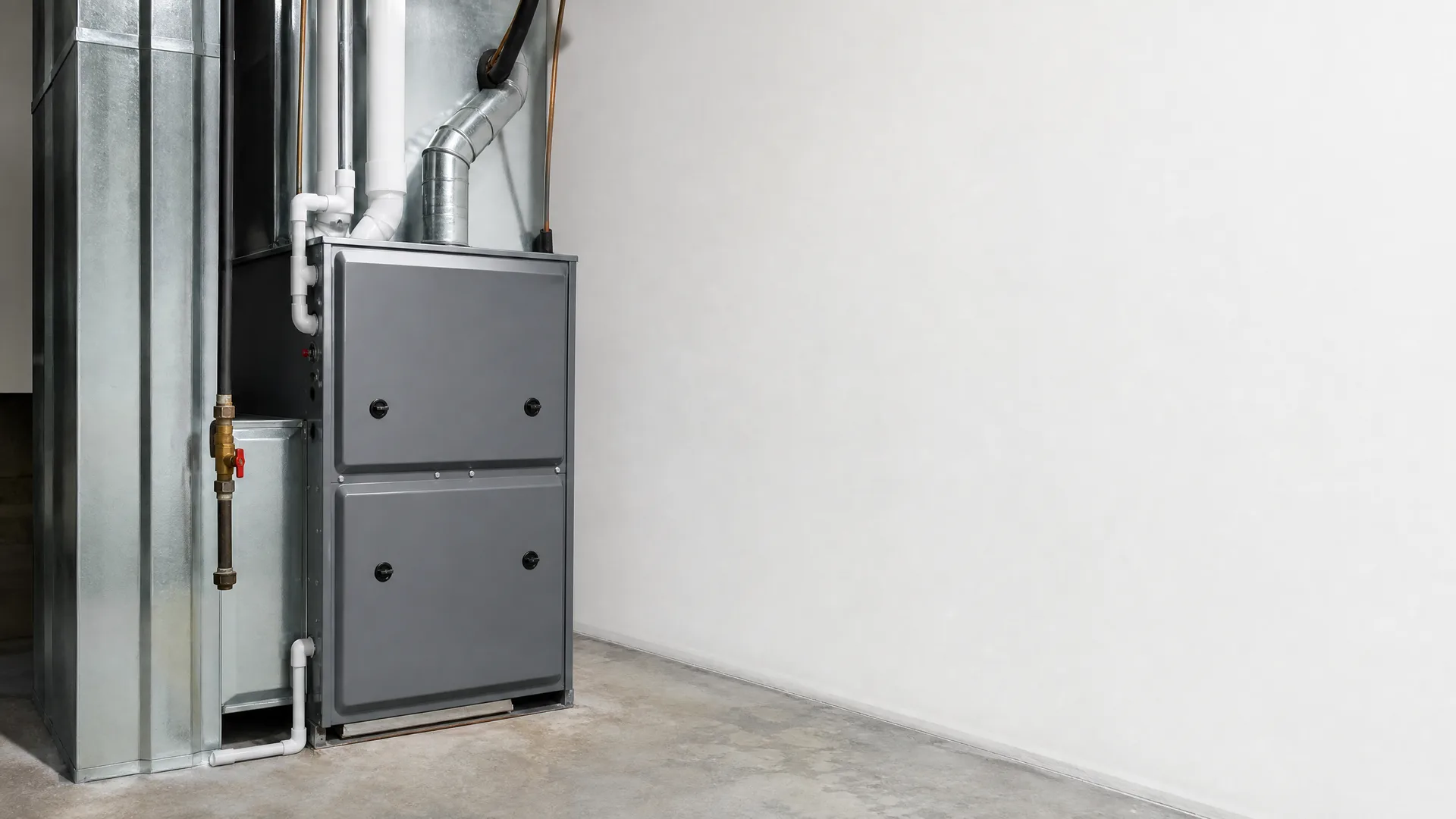
A gray residential furnace with two panel doors stands against a plain light wall in a concrete-floored room, connected to metal ductwork and white and copper pipes.

Why the flame color matters

A gas burner needs the right mix of gas and air to burn clean. Enough air and the flame burns blue and steady, and the combustion is complete. Starve it of air, or let the burner get dirty or out of adjustment, and the flame turns yellow and starts throwing off carbon monoxide along with soot. That soot is the clue you can see without any equipment. A burner that was blue last winter and is yellow now has changed for a reason.

A gray high-efficiency furnace with white PVC venting pipes stands against a plain wall in a basement, connected to sheet-metal ductwork on a concrete floor.

Why the vent pipe matters

Your furnace sends exhaust out through a flue or PVC vent pipe built to carry it out of the house completely. If that pipe is cracked, disconnected, or blocked by a bird nest or ice at the outside end, exhaust has nowhere to go but back into the basement. Rust or dark staining at the pipe joints is a sign it's leaking somewhere along the way. A furnace that depends on a tight, clear vent is only as safe as that pipe stays intact.

Call It In, or Keep Watching It

Call it in

  • A carbon monoxide alarm that keeps tripping even after you reset it means gas is getting into the house, not a dead battery.
  • Soot around the cabinet or a burner flame that's gone yellow points to incomplete combustion, and that's when CO production climbs.
  • Rusted or disconnected flue pipe lets exhaust spill into the basement instead of leaving through the vent outside.
  • Headaches or nausea that start after the furnace has been running a while and ease once you're outside are worth acting on right away.
  • A cracked heat exchanger can leak CO straight into the air moving through your ducts, and you can't see the crack yourself.
  • Iowa winters mean the furnace runs for months straight, so a problem that starts small keeps burning the same way every day it's not looked at.

Keep watching it

  • A steady blue flame with no soot and no odd smell is what a furnace burning clean looks like, season after season.
  • If the CO alarm hasn't sounded and there's no rust or staining near the flue connections, there's nothing pointing to a leak yet.
  • Moisture on windows near the furnace room can come from normal humidity, not necessarily from combustion gas, so it's worth checking other signs first.
  • A furnace that lights cleanly and runs quiet, without short cycling or a smell when it kicks on, is doing what it's supposed to.
  • Keeping an eye on the flame color and the alarm each time you're down there costs nothing and catches a change early.
  • Since gas heat is the norm here, most furnaces in Iowa run clean for years when nothing's pointed to trouble.
A smiling man in a gray long-sleeved shirt stands in a kitchen looking to the side, with open shelves of dishes, a white mug on the counter, a potted plant, and a view through a doorway into a living room.
A smiling bearded man in a green sweater sits at a white marble kitchen island with a mug, potted plant and bowl of fruit, in a bright white interior with open shelving and an arched doorway.
A smiling man with dark curly hair and a beard, wearing a dark green knit sweater, stands at a white marble kitchen counter with a dark blue mug, with open shelving, pendant lights and a houseplant behind him.
A smiling man in a green ribbed sweater stands behind a wooden table holding a ceramic mug of coffee in a kitchen with white subway tile, shelves of potted plants, and a bowl of fruit.

Hand off the furnace problem

A furnace that's spilling carbon monoxide isn't something to sit on until the next heating bill comes due. If you've seen soot on the cabinet, a yellow flame, or your CO alarm keeps tripping, that's a combustion problem inside the furnace, and it needs a look from someone who works on gas furnaces all winter long in Iowa and knows what causes it. A cracked heat exchanger, a blocked flue, a burner out of adjustment, these aren't things to guess at from a search result. Your request goes to one licensed contractor local to you, not a handful of companies competing for the job, so you're not fielding five calls while you're trying to figure out if it's safe to keep the furnace running. Send it and that part stops being yours to carry.

  1. Burner mixes gas and air, lighting a steady flame

  2. Flame heats a metal heat exchanger inside the furnace

  3. Exhaust gas flows into the heat exchanger's sealed chambers

  4. Draft inducer pulls exhaust through the flue to outside

Winter nights average 15°F statewide

At 15°F, a furnace in your house is firing often and running long to keep up. That's more hours a night for exhaust to slip past a cracked heat exchanger or a flame struggling for air. Cold nights are when a combustion problem turns into a CO problem.

NOAA nClimDiv 1991-2020 county normals weighted by homes

A smiling man with dark curly hair in a navy t-shirt sits on a gray couch indoors, with a large-leafed plant and a window in the background.
A bearded man in a plaid flannel shirt stands in a kitchen looking out a window toward snow-covered shrubs, with a steaming mug on the windowsill and potted plants on a shelf behind him.

What to do with what you've seen

  • Soot on the cabinet, a yellow flame, or a CO alarm that keeps tripping means the furnace needs a combustion check, not a wait and see.
  • A furnace running long on a cold Iowa night is the same furnace working through whatever combustion problem it already has.
  • A local contractor who services furnaces all winter has seen what usually cracks a heat exchanger or starves a burner of air.
  • Sending one request means one licensed contractor looking at your furnace, not a string of callbacks to sort through.
  • The signs above are things you can check tonight, before the next cold snap puts the furnace to work again.

If you've found soot on the cabinet, a flame that's gone yellow, or an alarm that won't stay quiet, you already have your answer. That's a combustion problem, and it doesn't get better because the weather's mild for a few days. It gets worse the next time the furnace has to run long and hard, which in Iowa means the next cold snap, not next month.

A furnace in this state needs someone who knows what a cracked heat exchanger looks like before it fails completely, and what a burner starved for air sounds like before the flame tells on itself. That's the kind of thing a contractor who works on furnaces all winter in your area has seen before, more than once, in houses not unlike yours. They know what usually goes wrong first and what to check to rule the rest out.

Send the request and one licensed contractor gets it, local to you, not a handful of companies competing for the callback. You check the signs once, send the request once, and the search for someone to look at it stops being something you have to manage. From there it's a matter of someone qualified getting eyes on the furnace before the next hard freeze asks more of it than it can safely give.

At dusk, a dark board-and-batten house with a standing-seam metal roof and lit entry walkway of stone pavers, with two large outdoor heat pump units on a stone-walled pad at right and trees and hills in the background.

Furnace Repair

One request and it's handed off

Step 1 of 3: Equipment
  • A ceramic vase holding leafy green branches and a shallow wooden bowl sit on a wooden window ledge beside a sunlit window, with a cream upholstered chair and knit throw in the foreground.
    • Describe your furnace job, and a local pro who handles it gets in touch.
    • Say what's going on with your furnace, and a pro who works on them reaches out.
  • Sunlit living room corner with a beige upholstered sofa, a round wooden side table holding a ceramic vase of olive branches, linen curtains at a window, a floor vent in the baseboard, and a woven jute rug on hardwood flooring.
    • One request and the search for a pro is handled.
    • Send it once and finding someone is no longer on you.
  • A wooden side table with a single drawer holds a shallow carved wood bowl and a white ceramic vase of green eucalyptus stems, beside a window and an upholstered chair draped with a cream knit throw.
    • Skip searching for a furnace pro and answer a few questions instead.
    • One form replaces the calls you'd make to find a furnace pro.
  • Corner of a house with horizontal siding, a white-framed window and stone veneer base, beside a covered entry with wooden steps, a potted plant, mulched beds of green shrubs and a flagstone path.
    • Your request goes to one pro, not a list of companies.
    • The pro who reaches out is licensed in Iowa.