
Furnace leaking water in Dubuque, IA

A Dubuque County pro who repairs furnaces gets your request.

Request a pro

Water pooling near your furnace almost always means the condensate line is clogged or the drain trap is blocked, backing up water that should be draining away. If your furnace is a high-efficiency model, it produces condensation as part of normal operation, and that water has to drain somewhere through a plastic line into a floor drain or pump. When that line gets blocked with sludge or algae, the water backs up and drips from the unit. It can also mean a crack in the condensate pan or heat exchanger, or ice on a furnace flue outside during a cold Dubuque winter melting back into the system. Left alone, the water can trigger a safety switch that shuts the furnace down, or damage the cabinet and nearby flooring. Either way, with winters here running hard on the furnace, this is worth sorting out before the next cold stretch rather than waiting on it.

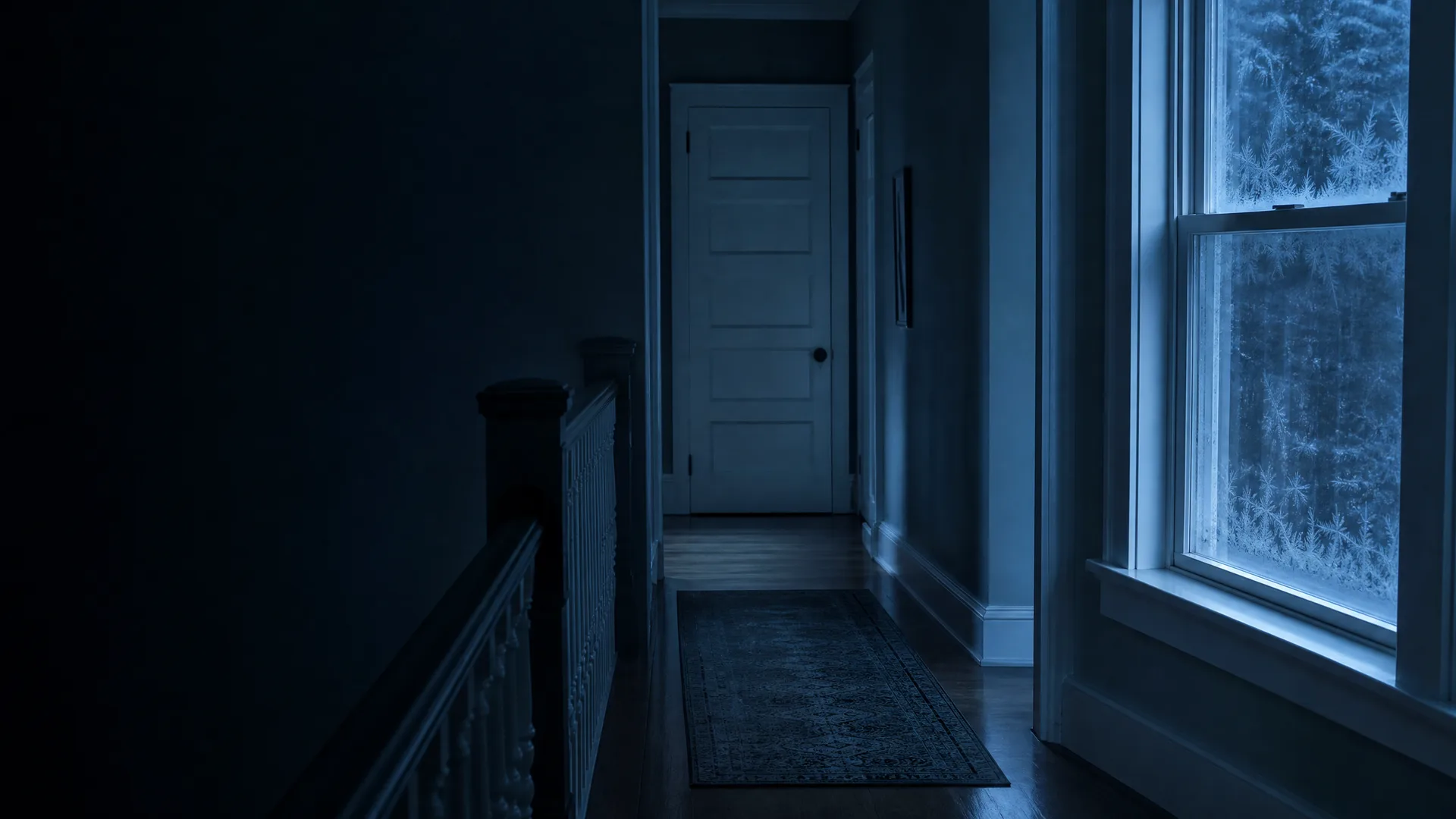
Dimly lit interior hallway at night with a closed white paneled door at the end, a long runner rug on a wood floor, a stair railing at left, and a frost-covered window admitting blue light at right.

You wake up because the house feels wrong. It is past two and the upstairs hallway is cold enough that you can see your breath near the window, where frost has crept up the glass. You put your hand over the vent in the floor and feel nothing, no air, no sound of the blower. Downstairs the furnace sits quiet, and when you get close you see the water already spread across the concrete, dark and wide, soaking into a box of winter boots left too close. Outside, a Dubuque County night in January isn't going to warm up by morning.

Clogged Line or Failed Part

Clogged Line

  • The condensate line or drain trap is blocked, and water backs up and spills near the furnace cabinet instead of draining outside.
  • A contractor can often clear the line the same visit, running a wet vacuum or a stiff brush through it to break up the clog.
  • If the float switch tripped and shut the furnace down, clearing the line and resetting the switch can get heat running again that day.
  • This is the more common cause when the furnace is newer or was running fine until recently.
  • Cost runs lower than a part replacement, since the line itself is just plastic tubing.

Failed Part

  • A cracked heat exchanger, a rusted-through drain pan, or a bad condensate pump can all leak water even with a clear line.
  • These problems tend to show up as water returns after a line is cleared, or as water pooling even when the furnace has sat idle.
  • A heat exchanger crack is a safety issue, since it can let flue gas into the air your furnace moves through the house.
  • Parts like a condensate pump or drain pan need replacing outright, since there is nothing to clean or clear.
  • This is more likely in a furnace that has been running for many winters, if yours came with the house check its age against the panel inside the cabinet door.
  • Repairs here cost more and may take a follow-up visit if a part has to be ordered.
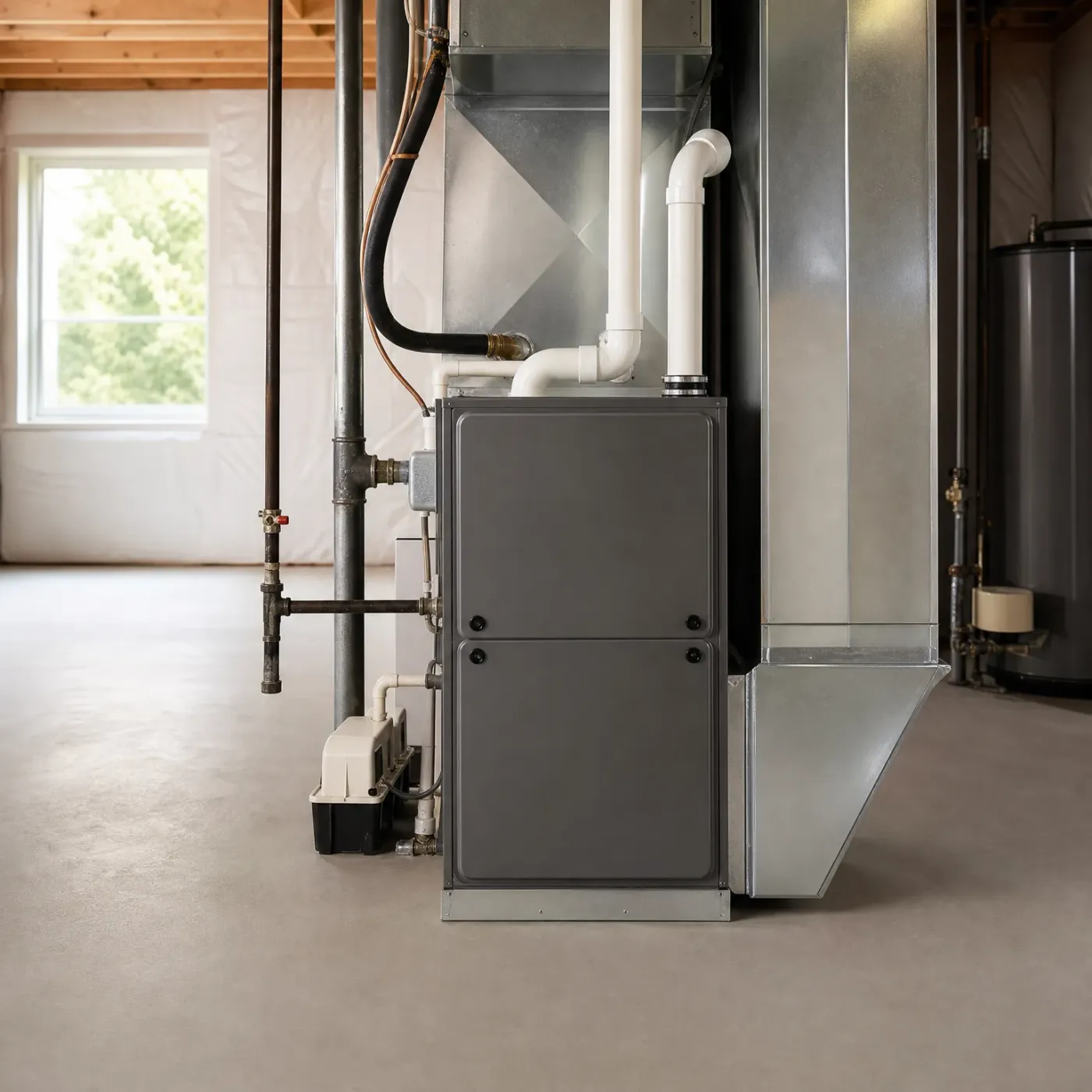
A gray high-efficiency furnace in a basement with sheet-metal ductwork, white PVC vent pipes, metal plumbing lines, a condensate pump on the floor, and a window showing green trees outside.

Draining the way it should

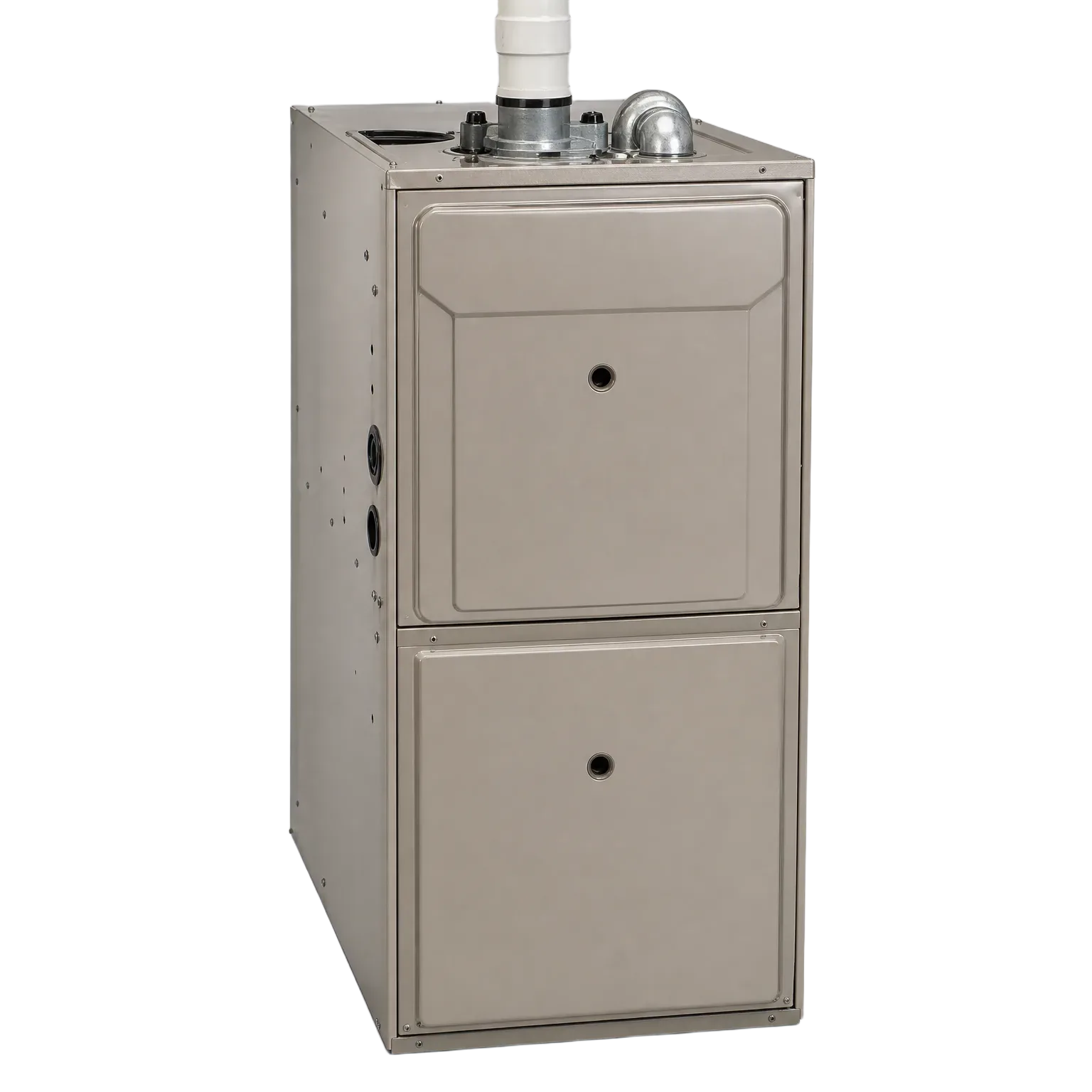
This is a high-efficiency furnace, and the white PVC pipe is the condensate line carrying water out to a drain or pump. The connections are tight and the pump beside the unit kicks on to move water out on its own. No puddle on the floor, no drip off the cabinet.
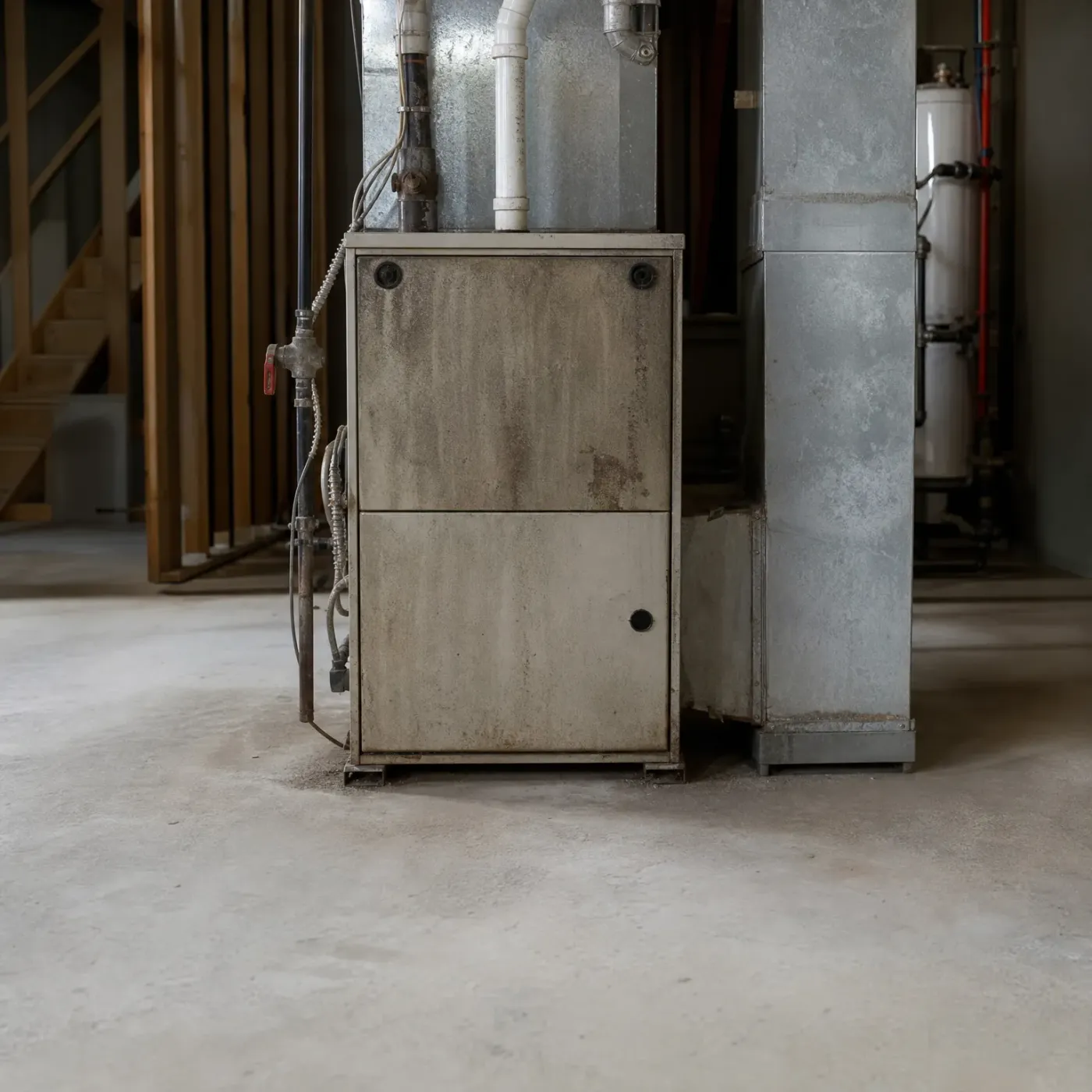

An older metal furnace with PVC and metal pipes stands on a concrete basement floor beside galvanized ductwork, with wooden stairs and a water tank in the background.

Water backing up

Here the condensate line or drain trap has clogged, and water is finding its way out around the cabinet instead of down the pipe. You might see it pooling on the concrete near the base, or staining the floor below the unit. Left alone it can trip the furnace's safety switch and shut the system down.

A woman in a cream sweater with her hair in a bun laughs while seated at a stone counter holding a glass of red wine, in a dimly lit interior with a sofa, houseplants and a large window at night.
A woman with long dark hair in a cream knit sweater laughs while looking off to the side, seated in front of a dimly lit kitchen with an island, stools, open shelving and a potted plant, with a glass of red wine in the foreground.
A smiling woman with long dark wavy hair in a light knit sweater sits at a marble counter with a glass of red wine, with a dimly lit living room and kitchen in the background.
A smiling woman with long wavy brown hair in a beige sweater sits at a white marble counter with a glass of red wine, with a living room, dining table and kitchen cabinets behind her.

A local pro for your furnace repair

Describe your furnace job once, to one pro.

No fee to send it, and nothing to sign.

How the water actually gets there

  • A high-efficiency furnace pulls so much heat from the exhaust that water vapor in it condenses into liquid, and that water has to go somewhere.
  • That water drains through a PVC line, usually with a trap built in, down to a floor drain or into a small condensate pump nearby.
  • The trap holds a bit of standing water on purpose, the same way a sink trap does, to keep exhaust gas from coming back up the line.
  • Algae and sediment build up inside that line over months and narrow it until water backs up faster than it can drain.
  • If the furnace sits below the drain, a condensate pump lifts the water up and out, and a stuck float switch in that pump will shut the furnace down or let water overflow the pan.
  • Older furnaces without that drain line make heat a different way and should not be producing this kind of water at all, so a puddle there points somewhere else, like a cracked heat exchanger or a flue problem.

A high-efficiency furnace burns gas, but it also squeezes extra heat out of the exhaust before letting it leave the house, and that process turns part of the exhaust into water. That water needs somewhere to go, so the furnace sends it down a PVC line to a floor drain or a small pump sitting nearby. Built into that line is a trap, a low spot that holds a little standing water on purpose, the same job a trap under your kitchen sink does, keeping gas from the burner out of the line instead of venting through it. Over months, algae and sediment collect inside that line and slowly choke it down until the water coming off the furnace can't get through fast enough and starts backing up into the cabinet. If your furnace sits in a basement below the level of the drain, it relies on a condensate pump to lift the water up and push it out, and that pump has a float switch inside it that either shuts the furnace down or lets the pan overflow when it sticks. None of this applies to an older, standard-efficiency furnace. Those vent hot exhaust straight out through a metal flue, without that condensation step, so they shouldn't be making this kind of water at all. If yours is one of those and you're seeing a puddle, the cause is somewhere else, and it is worth having a contractor look at the heat exchanger and the flue rather than assuming it is condensate.

Why does a leaking furnace matter so much in a Dubuque winter?

  • Winter nights average 15°F

    Winter nights here average 15°F, so a furnace that quits while it drains onto the floor leaves you without heat when you need it most.

  • Heat runs October through May

    Heat runs here from October through May, eight months a year, which is a long stretch for a clogged line or cracked trap to go unnoticed.

  • 71.2% of homes heat with gas

    Gas heats 71.2% of homes in Dubuque County, and most newer gas furnaces are high-efficiency models that produce condensate as part of running at all.

NOAA nClimDiv 1991-2020 · ACS 2020-2024

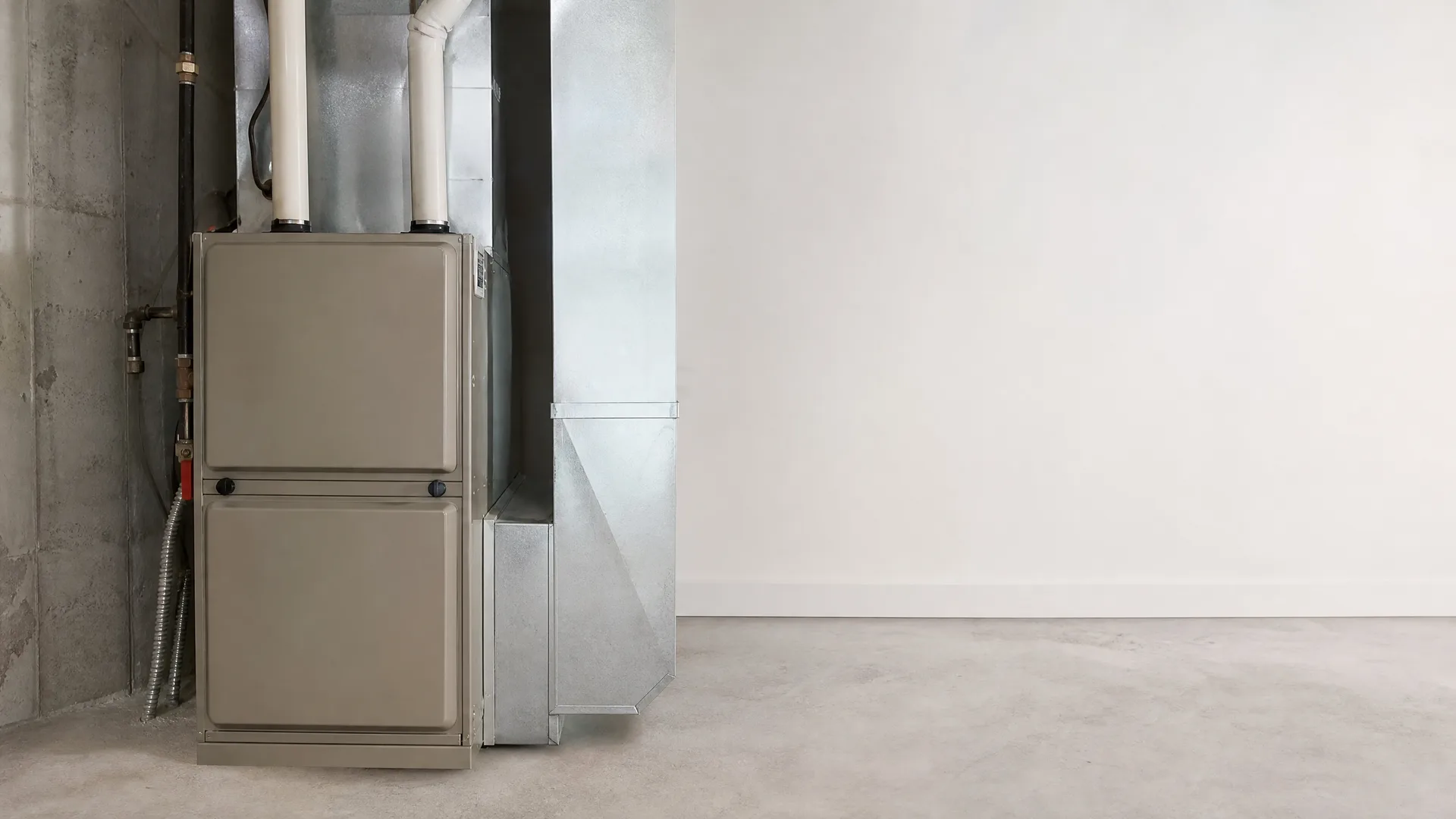
A beige high-efficiency furnace with two white PVC pipes stands beside sheet-metal ductwork and a concrete wall in an empty basement with a bare light-colored wall and concrete floor.

What a clogged line does to the furnace

Most high-efficiency furnaces have a pressure switch that checks for a clear condensate line before the burners fire. When the trap backs up, that switch reads it as a blockage and won't let the furnace start at all. So the leak you see on the floor is often paired with no heat, not just a mess to clean up. The furnace is protecting itself from flooding its own cabinet.

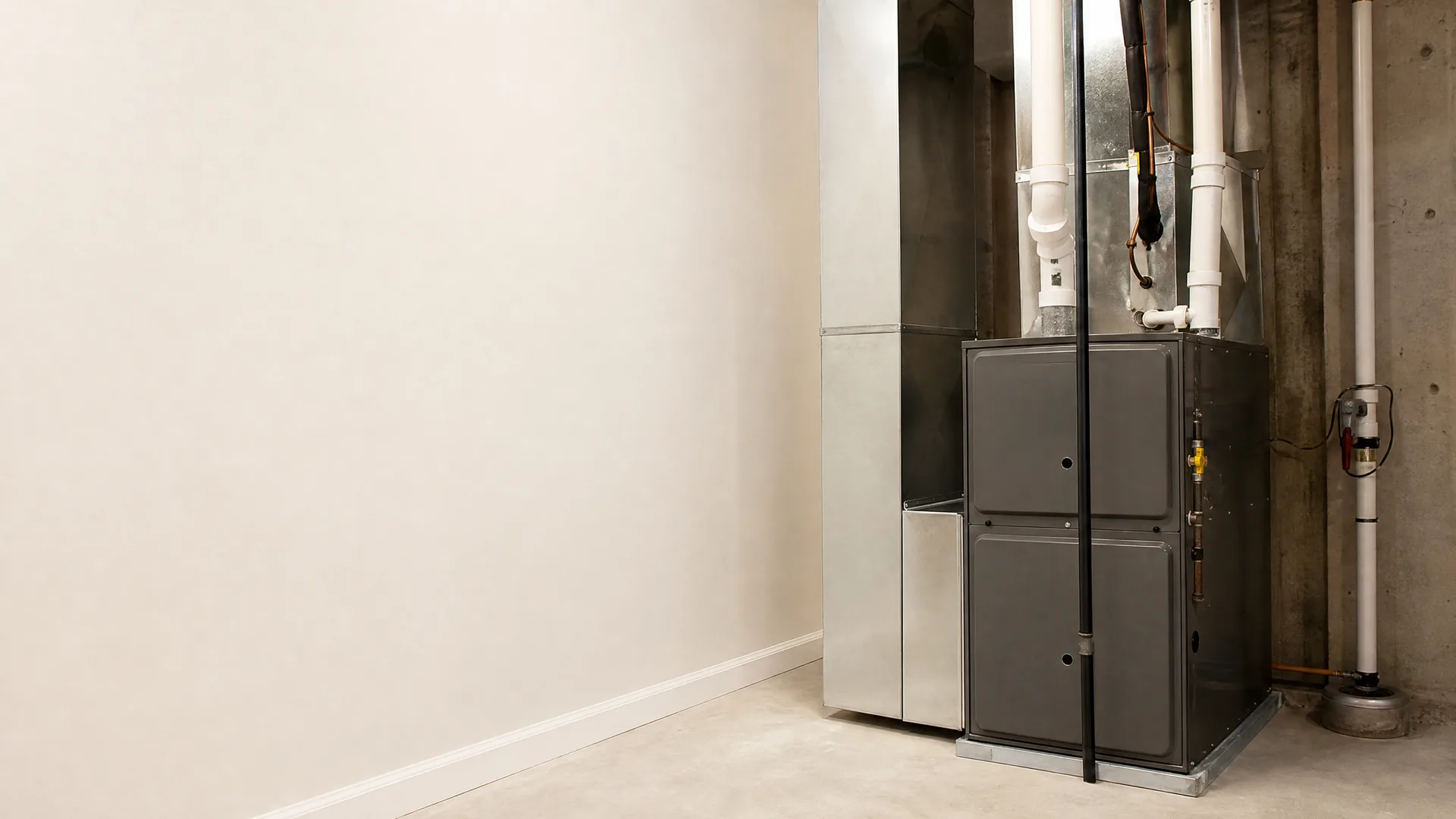
A gray furnace with sheet-metal ductwork and white PVC vent pipes stands in the corner of a finished basement room with a blank beige wall and concrete floor.

Why the trap holds water on purpose

The condensate trap is built to hold a small amount of water at all times, the same way a sink trap does. That water blocks exhaust gas from pushing back up through the drain line. If the trap cracks or sits at the wrong angle, that standing water finds its way out onto the floor instead of staying put. A trap that looks dry or sits crooked is worth pointing out when a contractor looks at the unit.

A woman stands in the open black front door of a white-sided house with a dark shingled roof while a man in a navy jacket approaches along the walkway, with lantern wall lights, a potted shrub, and flowering garden beds nearby.

Water by the furnace means one thing

A puddle near the furnace means the condensate line or trap is blocked somewhere between the unit and the drain. That is true whether it showed up as a few drops or a spreading patch on the floor. The furnace itself is usually fine. The water just has nowhere to go until that line is clear again.

A contractor who works on furnaces in Dubuque County sees this every winter, and knows where these lines tend to clog and how the trap is supposed to sit. Instead of searching around, calling a few places, and explaining the same leak over and over, you get matched with someone who already knows what questions to ask and reaches out to you directly. You're not left to sort through quotes or figure out who's worth calling back.

A dark ceramic mug on a round wooden table beside a light grey sofa with a woven cushion and knit throw, with a window, potted plant, floor lamp and wooden cabinet blurred in the background.
A smiling middle-aged man in a dark green sweater sits at a candlelit table with wine glasses and a plate of greens in a dimly lit interior.
A woman in a dark knit turtleneck sweater reclines on a couch under a cream knit blanket, looking down at an open book, with a lit table lamp and framed pictures behind her.

Furnace Repair

Get the right pro for your furnace

Explain the furnace problem once instead of to every shop in Dubuque County.

A black smartphone standing upright against a plain light gray background, its screen filled with solid green.
Step 1 of 3: Equipment