Furnace pilot light won't stay lit in Ames, IA

Find a furnace pro

A pilot that won't stay lit means a furnace that won't heat, and in Story County that's not something to sit on. Winters here are hard, and most homes run on gas, so a dead pilot light turns into a cold house fast. Maybe you've already tried relighting it a few times and it keeps going out. That usually points to something specific, a thermocouple, a dirty orifice, a draft problem, and figuring out which one it is takes someone who can look at your actual furnace, not guess over the phone. Finding that person is the part that eats your evening: searching, calling a few numbers, explaining the same problem three times, waiting on quotes that never seem to compare cleanly. This page skips that part. Tell it what's going on and you get matched with a contractor who works on furnaces like yours around Ames, and they'll reach out to you directly. No more calling around in the cold to find someone who can actually take the job.

Why does my furnace pilot light keep going out?

You've relit the pilot once, maybe twice, and it keeps dying on you, sometimes in an hour, sometimes overnight. With Story County winters as hard as they are, a furnace that can't hold a pilot light is one you can't count on, and you want to know whether this is something simple or a sign the furnace needs a real look.

A weak thermocouple is the most common cause

The thermocouple is a small sensor that sits in the pilot flame and tells the gas valve the flame is lit. Once it wears out or sits out of position, it reads the flame as out even when it's burning, and the valve shuts the gas off. That's the most common reason a pilot won't stay lit, though a draft reaching the pilot or a dirty pilot orifice can cause the same thing. None of these are something to keep relighting around. A furnace that keeps shutting its pilot off is protecting you from a gas valve that isn't getting a reliable signal, and with gas heat common across Story County homes, that's a furnace a technician should look at before the next cold stretch.

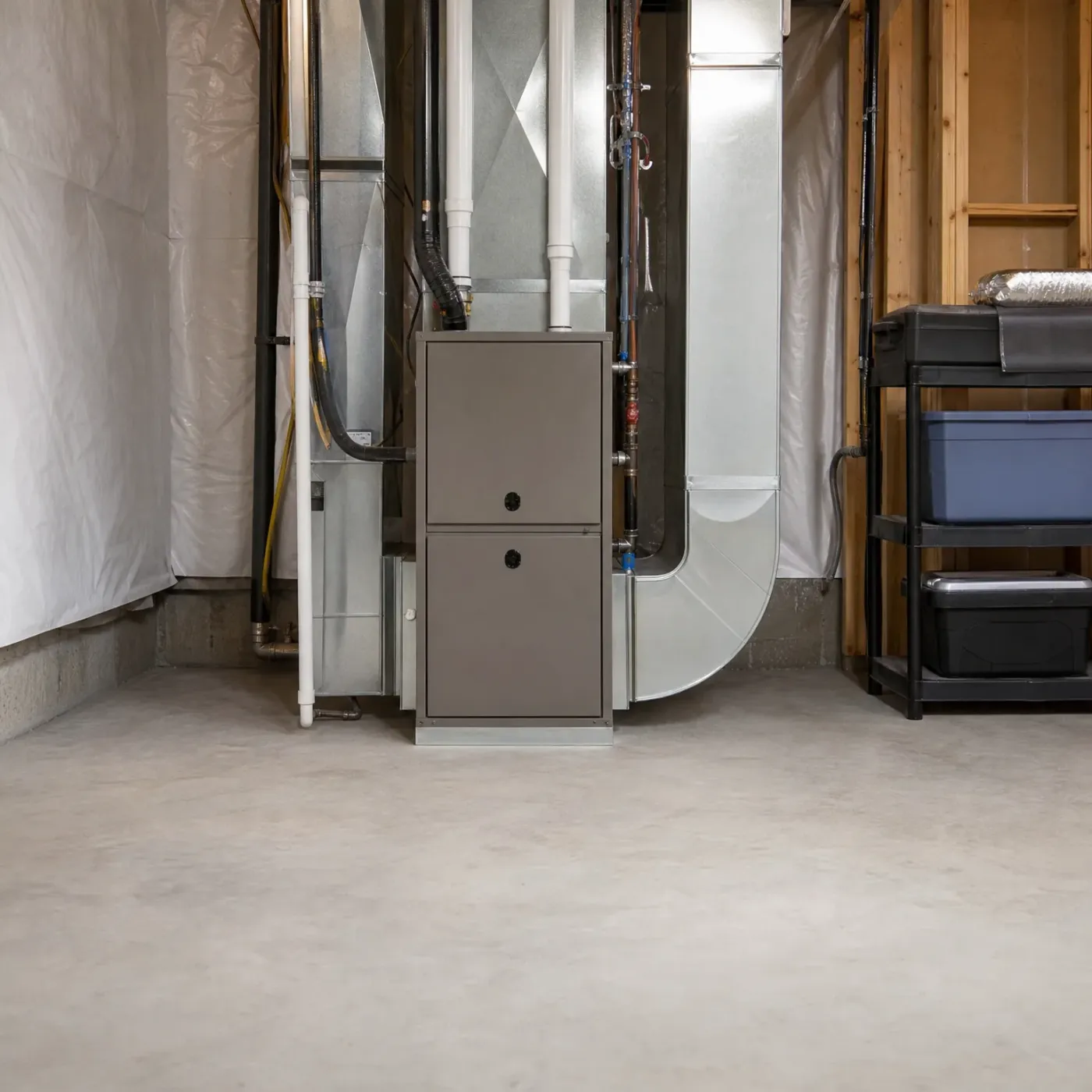
A basement utility area with a gray furnace, sheet-metal ductwork, pipes, plastic-covered walls, a concrete floor, and a black shelving unit holding storage bins.

The pilot holds and the furnace runs

A gas furnace that's working right burns clean and steady. The flame stays put behind the burner, the ductwork carries warm air through the house, and the condensate line drains off what the furnace doesn't need. Nothing here calls attention to itself, which is the point.
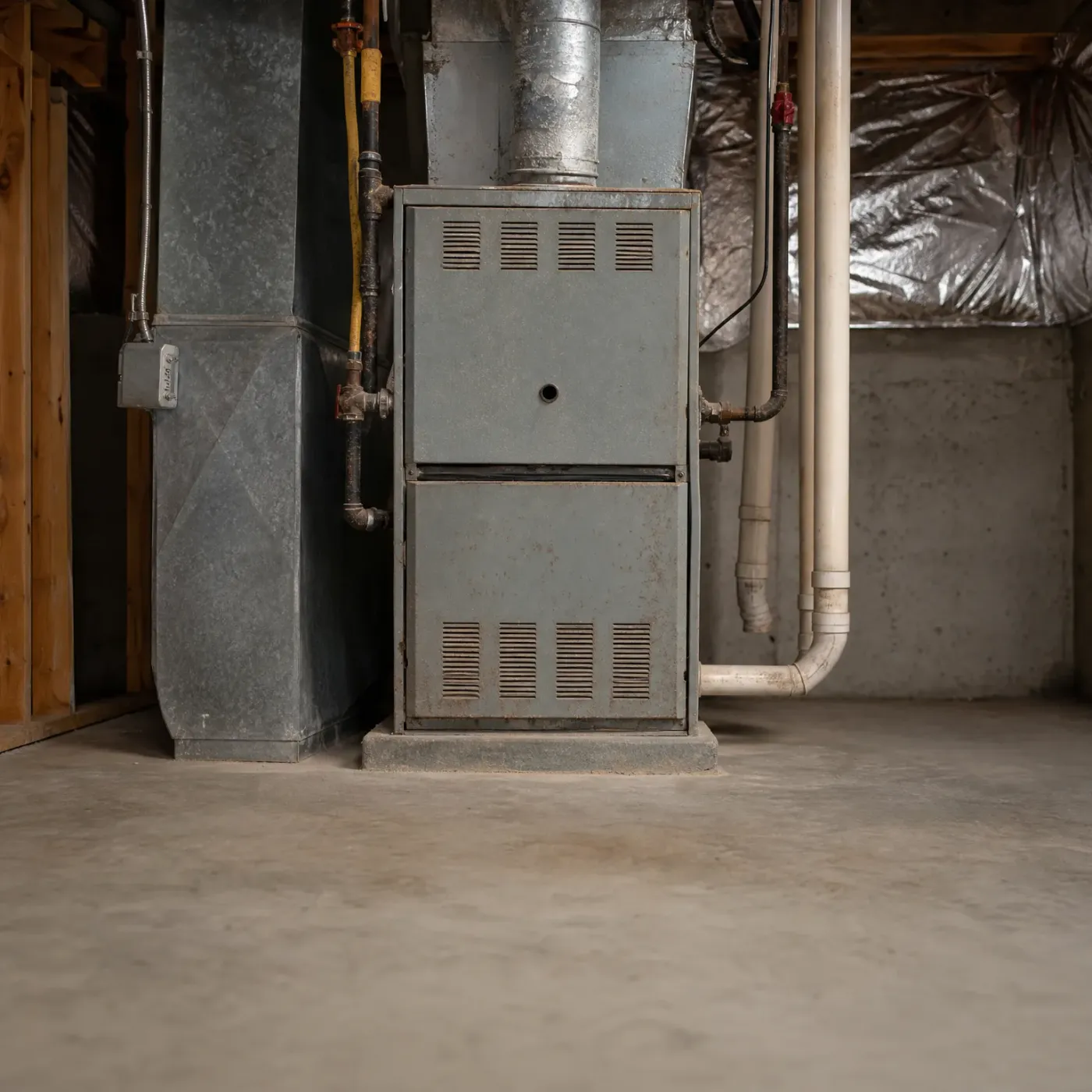
A gray metal furnace with louvered vent panels stands on a concrete basement floor beside galvanized ductwork, gas and plastic pipes, and foil-faced insulation along the ceiling and wall.

The pilot won't stay lit

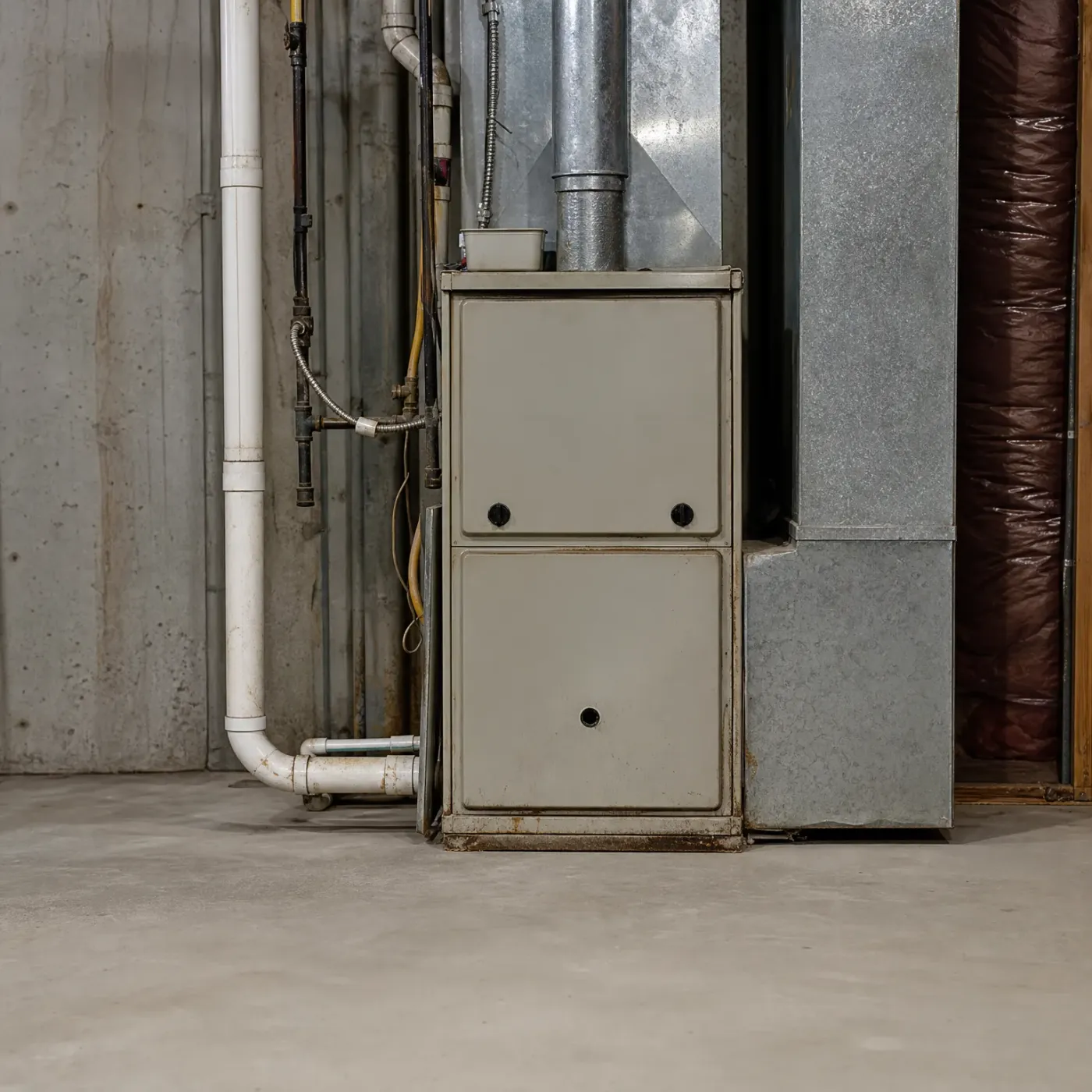
Rust on the cabinet like this often means years of small problems adding up. A furnace this old may have a thermocouple that's worn out, a draft pulling the flame sideways, or a pilot assembly that's just done. A furnace that can't hold a pilot light isn't one to keep relighting through a cold snap.

What's Blowing Out Your Pilot Light

Thermocouple problem

  • A worn thermocouple drifts out of position or wears down and stops sensing the pilot flame, so the gas valve shuts off even though the flame is lit.
  • Relighting the pilot buys an hour or a night, then it goes out again in the same pattern, because the part itself hasn't changed.
  • A contractor can test the thermocouple's millivolt reading in a few minutes and know right away if it's reading low.
  • Replacing a thermocouple is a standard part swap, not a furnace replacement, and most furnaces use one that's easy to source.
  • If the pilot stays lit as soon as the thermocouple is swapped, that confirms it was the part all along.

Draft or gas supply issue

  • A draft from a nearby vent, a loose panel, or even a cracked heat exchanger can blow the pilot out instead of the thermocouple failing on its own.
  • This kind of pilot outage tends to happen on windy nights or when the furnace cycles and shifts air around it.
  • Low gas pressure from the supply line can starve the pilot enough that it won't hold a steady flame even when nothing else is wrong.
  • A contractor checks for drafts and gas pressure separately from the thermocouple, since swapping that part won't fix either one.
  • If the pilot won't stay lit even with a new thermocouple installed, the cause is almost always a draft or a supply issue, not a bad part.
  1. Gas flows to the pilot and you hold the knob in.

  2. The pilot flame heats the thermocouple's tip.

  3. The thermocouple sends a small signal to the gas valve.

  4. That signal tells the valve to stay open on its own.

What are you noticing around the house right now

You check the furnace and the pilot is out again, or it's lit but the burners never catch. The air coming from the vents is cool, or there's no air moving at all. Rooms farthest from the furnace feel it first, and by morning the whole house has lost ground. You might hear the gas valve click without any flame following it, or smell a faint gas odor near the unit when you open the panel. If this keeps happening through a cold stretch, the house won't hold heat long enough to keep up overnight, and that matters most for whoever's home all day, the very young, the very old, anyone who can't just put on another layer and wait.

A woman with dark hair in a bun wearing a cream knit sweater sits on a gray sofa in a bright living room, looking off to the side.
A woman wrapped in a knit blanket sits on a gray sofa in a living room, looking toward a bright window with houseplants and an armchair in the background.
A woman in a gray cowl-neck sweater sits on a light sofa with cushions, smiling and looking to the side, with a kitchen and window visible behind her.
A woman with dark hair in a bun, wearing a light linen shirt, sits on a sofa and looks to the side, with a window, houseplants and a kitchen with pendant lights blurred behind her.
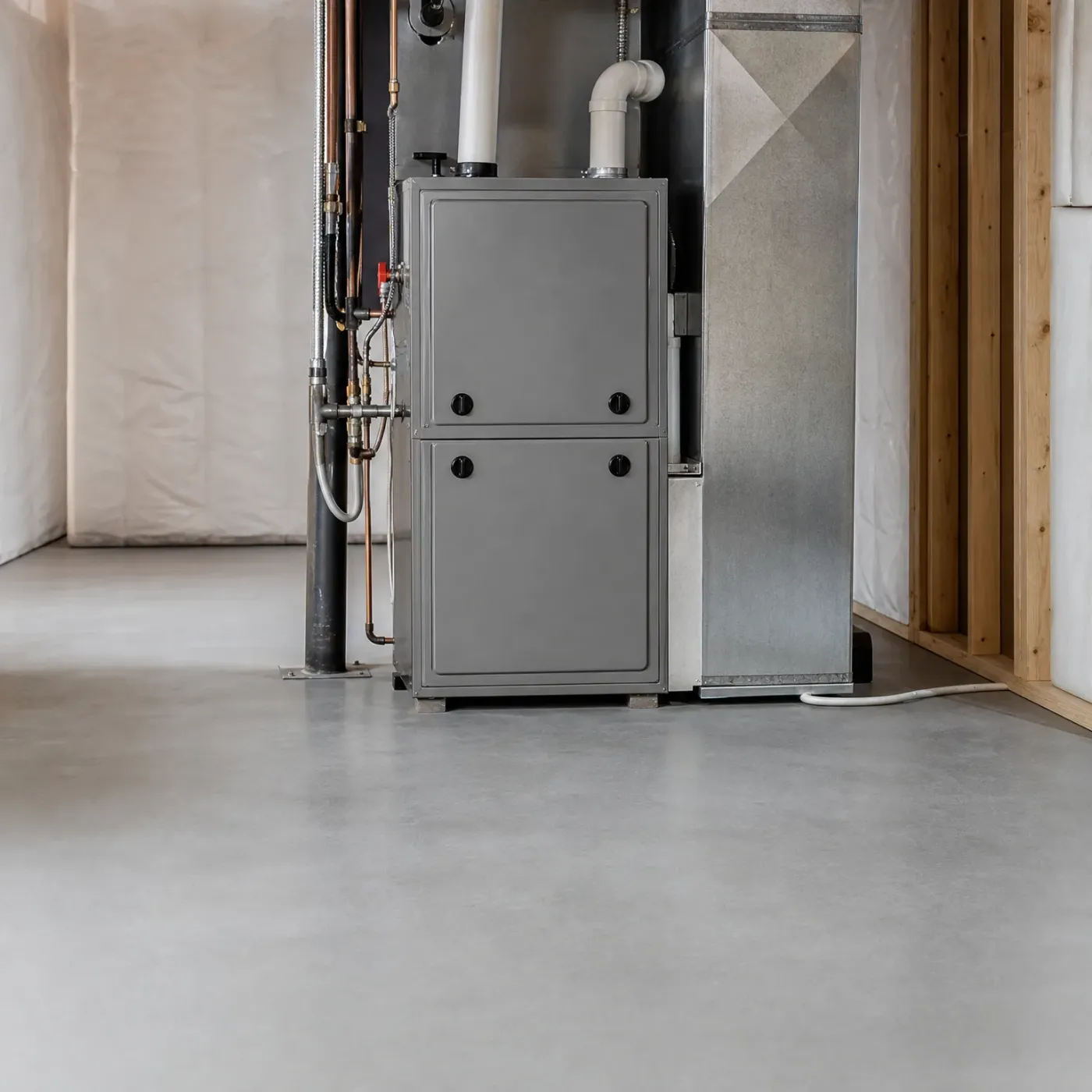
A gray furnace with white PVC vent pipes stands beside sheet-metal ductwork in a basement with a smooth concrete floor, exposed wood framing, and plastic sheeting on the walls.
A pilot that holds steady burns a clean blue flame behind the burner, with the gas and condensate lines running tight along the wall exactly as installed.
A beige furnace with two access panels stands against a concrete basement wall, with galvanized sheet-metal ductwork, a white PVC pipe, flexible conduit and insulated ducting around it.
Rust creeping across the cabinet and a flue pipe working harder than it should are signs the pilot trouble has been going on for a while.
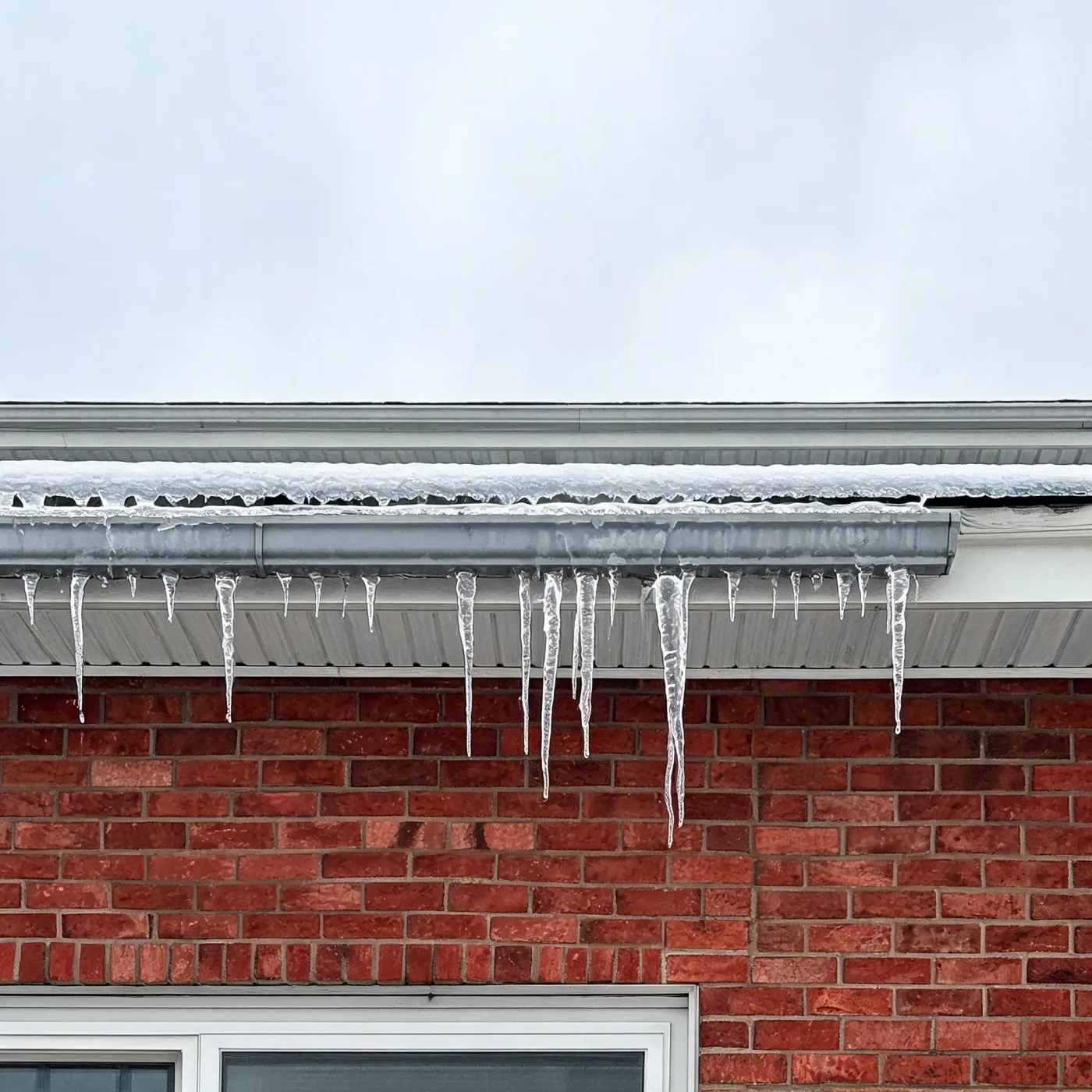
Icicles hang from a snow-covered gutter along the eave of a red brick house, with a white soffit and the top of a window below against an overcast sky.

A furnace that keeps losing its pilot light gets tested hardest at night, and here the nights don't let up. Winter nights average 14°F across Story County, National Weather Service data shows, and that's the average, not the extreme. At that temperature a furnace that cuts out at 2 a.m. means a house that's noticeably cold by the time anyone's awake to notice. That's a different problem than calling around the next afternoon trying to find someone free. Instead of phoning one contractor after another and explaining the same pilot light trouble each time, you can get matched with one who handles this and have them reach out to you.

NOAA nClimDiv 1991-2020

A pro who works on furnaces

A pilot you keep relighting is a furnace you can't count on, and by now you've probably worked out it isn't fixing itself. Most likely it's a worn thermocouple no longer sensing the flame, or a draft finding its way to the pilot from somewhere it shouldn't. Either way it takes someone who can pull the panel, test the part, and know which one it is. Finding that person usually means searching around, calling a few places, explaining the same problem each time, then sitting with quotes trying to guess who's worth it. That's the part you can hand off. Submit the request once and it goes to a contractor who works on furnaces like yours in Story County, and they'll reach out to you directly. No more calls to make tonight while the house keeps cooling down.

A thermocouple is a small, specific part, and it fails the same way in every gas furnace that uses one: it stops sensing the flame it's sitting in.

Once it can't sense the flame, the gas valve reads that as no flame at all and shuts down, so relighting the pilot without replacing the part just repeats the cycle.

How cold does it have to get before a dead pilot light matters?

  • Winter nights average 14°F

    Overnight lows average 14°F across December, January and February here, per National Weather Service data. A furnace that can't hold its pilot has no backup on a night like that.

  • Heat runs October through May

    Heat runs from October through May in Story County. A pilot that won't stay lit isn't a one-week problem, it's most of the year you're relighting it.

  • 62.6% of homes heat with gas

    62.6% of homes in Story County heat with gas, per Census data. A failing pilot or thermocouple is the kind of problem most of your neighbors deal with too.

NOAA nClimDiv 1991-2020 · ACS 2020-2024

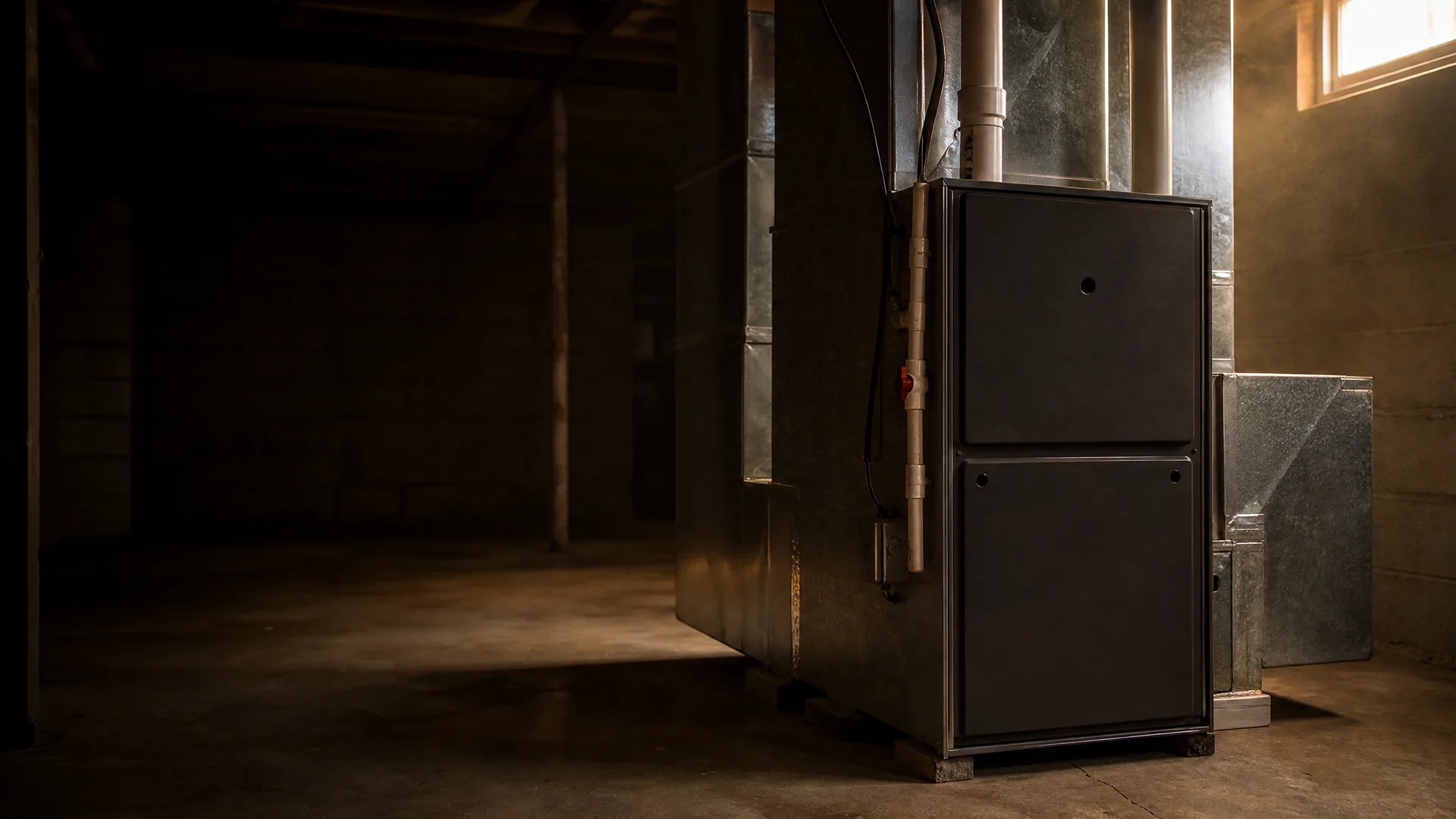
A dark residential basement with a concrete floor and block walls, containing a furnace with two access panels connected to galvanized sheet-metal ductwork and a white vent pipe, lit by a small window at upper right.

The clock on the wall by the stairs reads a little past six. Outside it's already dark, the kind of November dark that settles in fast once the sun's down. You come down to check on the furnace because the house has that flat, cool feel to it, and there it is: dark, quiet, nothing moving. No hum, no low blue glow behind the burner. Just the metal cabinet sitting there like it's waiting on something. A thin haze of dust hangs in the air near the access panel, stirred up from when you opened it last. You crouch down and look for the flame you already know isn't there.

A pilot that won't hold means the thermocouple has worn out or a draft is reaching a flame it shouldn't touch, and either way relighting it again tonight won't fix what's wrong tomorrow. That's the plain answer. What's left is finding someone who can get to the thermocouple or the draft and settle it for good, and that part is usually the slow part: searching for a furnace contractor near Ames, calling a few, explaining the same thing about the pilot going out every time someone new picks up, then waiting on quotes to compare before you even know who's showing up. You don't have to do that part. Once you're matched with a contractor who works on furnaces like yours, they'll reach out to you directly, and the back and forth of finding someone stops being your problem. The furnace still needs the same repair either way. What changes is whether you spend the next few days chasing that down yourself or let it come to you.

A single-story stone-clad house with low-voltage path lights along a gravel bed and lawn at dusk, with a tree line and orange sky on the horizon.

Furnace Repair

Get your furnace to the right pro

Step 1 of 3: Equipment
  • A cream chunky cable-knit throw draped over a beige upholstered armchair beside a bright window, with a wooden side table holding a book and a vase of leafy branches at left.
    • Get matched with a pro who works on furnaces in Story County.
    • Your request goes to a Story County pro who takes furnace jobs.
  • Living room corner with a gray sofa holding beige pillows and a knit throw, a round wooden coffee table with a dark planter and shallow bowl, a jute rug, a floor lamp, a framed landscape print on the wall, and a window showing trees.
    • Send it once and finding someone is no longer on you.
    • Send the request today and let a furnace pro reach out to you.
  • A living room corner with a cream sofa and cushion, knit throw, wooden coffee table holding a shallow bowl and dark ceramic vase with green foliage, a floor lamp, potted plant in a woven basket, and linen curtains at a window.
    • Skip searching for a furnace pro and answer a few questions instead.
    • One form replaces the calls you'd make to find a furnace pro.
  • A round reclaimed-wood coffee table with a black metal base sits on a woven rug in front of a cream sofa with cushions, with a lit built-in fireplace and a tall indoor tree in the background.
    • The pro who gets in touch is licensed in Iowa and works in Story County.
    • The pro who reaches out is licensed in Iowa.