Tell us about the job
Takes about a minute. No obligation.
A furnace repair in Howard County starts with what the unit has actually been through, and the contractor has to sort that out before settling on a fix. 85 severe weather events were recorded in Howard County, Iowa between 2015 and 2024. At that rate, severe weather is a standing part of life here, not a rare event, so it does not point a contractor toward one failed component over another. What does point there is the age of the heat exchanger, the condition of the igniter, and how consistently the filter got changed. A system that has been ignored through those years will show it in the repair scope, and the weather is rarely the deciding variable.
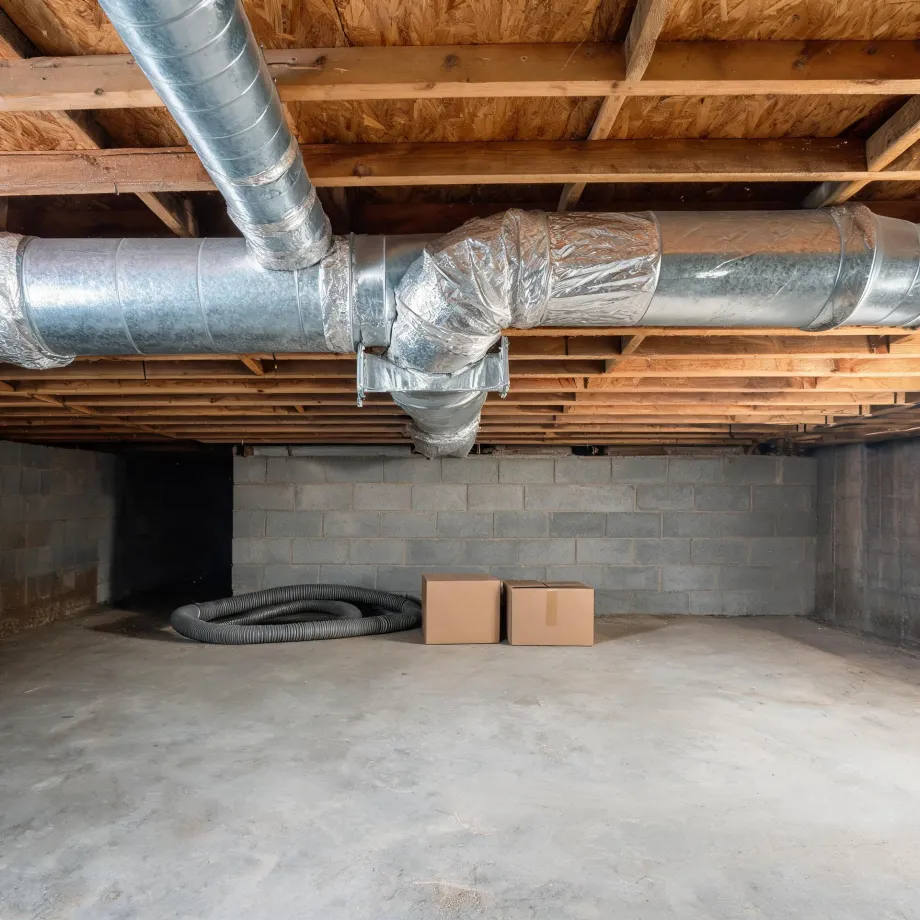
Older ductwork and aging systems are the background noise of furnace repair in Howard County, but parts availability is where a job can genuinely stall. Half the homes in Howard County, Iowa were built in 1960 or earlier (2020-2024 ACS 5-year). A furnace running in a house that old has likely been replaced at least once, yet the unit in place now may still sit outside the range current distributors stock for. When a contractor opens the cabinet, what decides the repair timeline is whether the failed component has a current equivalent or requires a search. That is the variable a quote has to account for before any other number goes on paper.
The Parts of a Furnace a Contractor Checks First
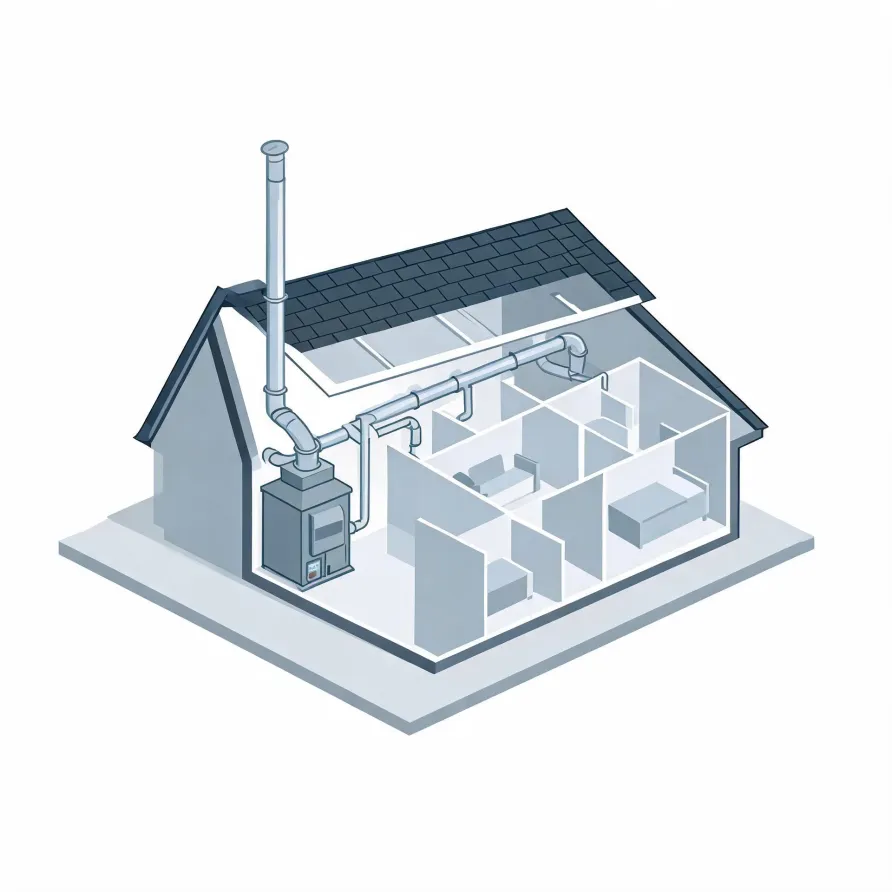
The furnace itself sits in a basement, utility closet, or mechanical room and is the piece a contractor goes to first. Inside it, the heat exchanger is the part that warms air without mixing combustion gases into it, and cracks or corrosion there are a common reason a furnace stops working safely. The burners, which fire beneath the heat exchanger, are another early suspect when a system runs poorly or won't ignite.
The blower motor sits at the base of the furnace cabinet and pushes conditioned air out through the supply side of your duct system. Alongside it, the flue pipe carries exhaust gases up and out of the house, and the control board ties the electrical signals together so each component fires in the right order. A contractor checks all of these when tracing a fault.
The drawing shows a typical furnace layout, and a licensed contractor determines which components apply to your specific system and situation.
Get matched in Howard CountyHoward County, Iowa, by the numbers
85 severe weather events were recorded in Howard County, Iowa between 2015 and 2024.
NOAA National Centers for Environmental Information, Storm Events Database, bulk CSV export, events 2015-01-01 through 2024-12-31.Half the homes in Howard County, Iowa were built in 1960 or earlier (2020-2024 ACS 5-year).
U.S. Census Bureau, 2020-2024 American Community Survey 5-Year EstimatesHoward County, Iowa holds 4,320 housing units (2020-2024 ACS 5-year).
U.S. Census Bureau, 2020-2024 American Community Survey 5-Year EstimatesOwners occupy 77.4% of the occupied homes in Howard County, Iowa (2020-2024 ACS 5-year).
U.S. Census Bureau, 2020-2024 American Community Survey 5-Year EstimatesCodes & Standards Governing Furnace Repair in Howard County, Iowa5 sourced rules and standards
What the repair visit looks like
Non-weatherized gas furnaces manufactured on or after November 19, 2015 must reach 80.0 percent AFUE.
Non-weatherized oil-fired furnaces manufactured on or after November 19, 2015 must reach 83.0 percent AFUE.
Mobile home gas furnaces manufactured on or after November 19, 2015 must reach 80.0 percent AFUE.
Non-weatherized gas furnaces manufactured on or after December 18, 2028 must reach 95.0 percent AFUE, up from the 80.0 percent minimum that applies to units manufactured before that date.
Licensing and Legal Requirements in Howard County, Iowa
Iowa requires a state licence to install or repair HVAC, refrigeration, mechanical or plumbing systems, and to operate as a contractor, with exceptions listed in section 105.11.
Severe Weather Events in Howard County
Hard weather puts real hours on a furnace. Every season that pushes Howard County toward an extreme is a season the heating system works harder, and that load accumulates in ways that show up as repair calls.
85 severe weather events, 2015–2024. Source: NOAA National Centers for Environmental Information, Storm Events Database.