How long a furnace lasts in Council Bluffs, IA

Get a furnace pro

A furnace that's starting to struggle doesn't wait for the right time. Winters in Pottawattamie County are hard, and most homes here run on gas, so a furnace that's on its way out tends to show it when you can least afford the wait. Maybe yours is older and you're wondering if it'll make it through another season, or maybe it already quit and you need a straight answer about what comes next. Either way, figuring out whether to repair or replace, and finding someone licensed to do the work right, is a lot to sort through on your own. Send the form and that part stops being yours to figure out. You'll be matched with a contractor who takes on jobs like this one in Council Bluffs and the surrounding area, and they'll reach out to you directly. No more calling around or reading reviews at midnight. Just one less thing sitting on your list while the temperature drops.

A gas furnace in Council Bluffs lasts about 15 to 20 years. The ones that make it to 20 are usually the ones that got a yearly look from a technician, had their filters changed on schedule, and never ran through a winter with a cracked heat exchanger or a failing igniter dragging on them. Winters here put a lot of hours on a furnace between November and March, and that steady demand is what wears out the parts first: the igniter, the blower motor, the heat exchanger itself. If your furnace came with the house and you're not sure of its age, the data plate inside the cabinet will have a manufacture date. Past 15 years, a furnace can still run, but it starts asking for more repairs, and each one is a sign to start thinking about what comes next rather than waiting for the one that leaves you without heat on a cold night.

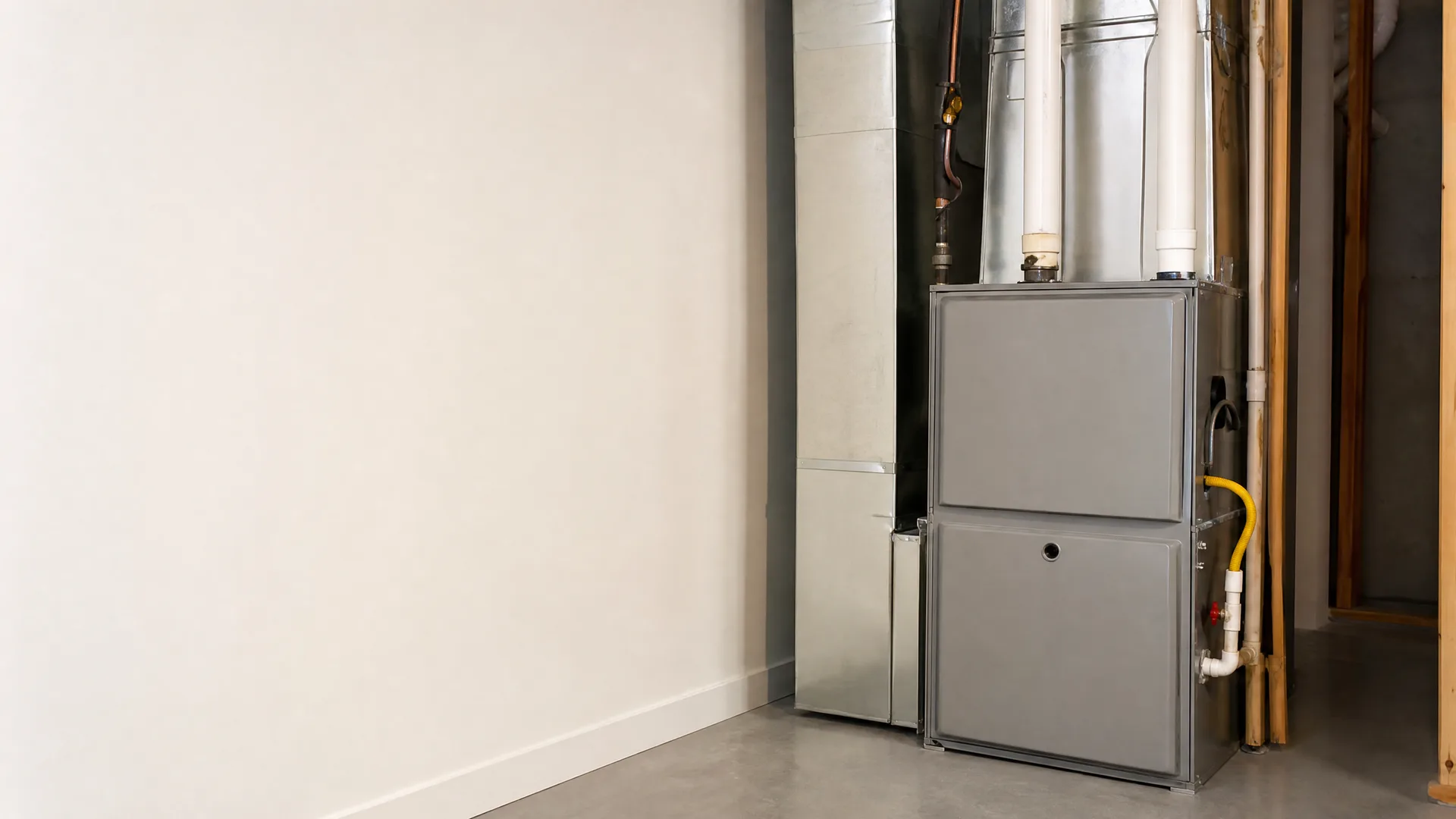
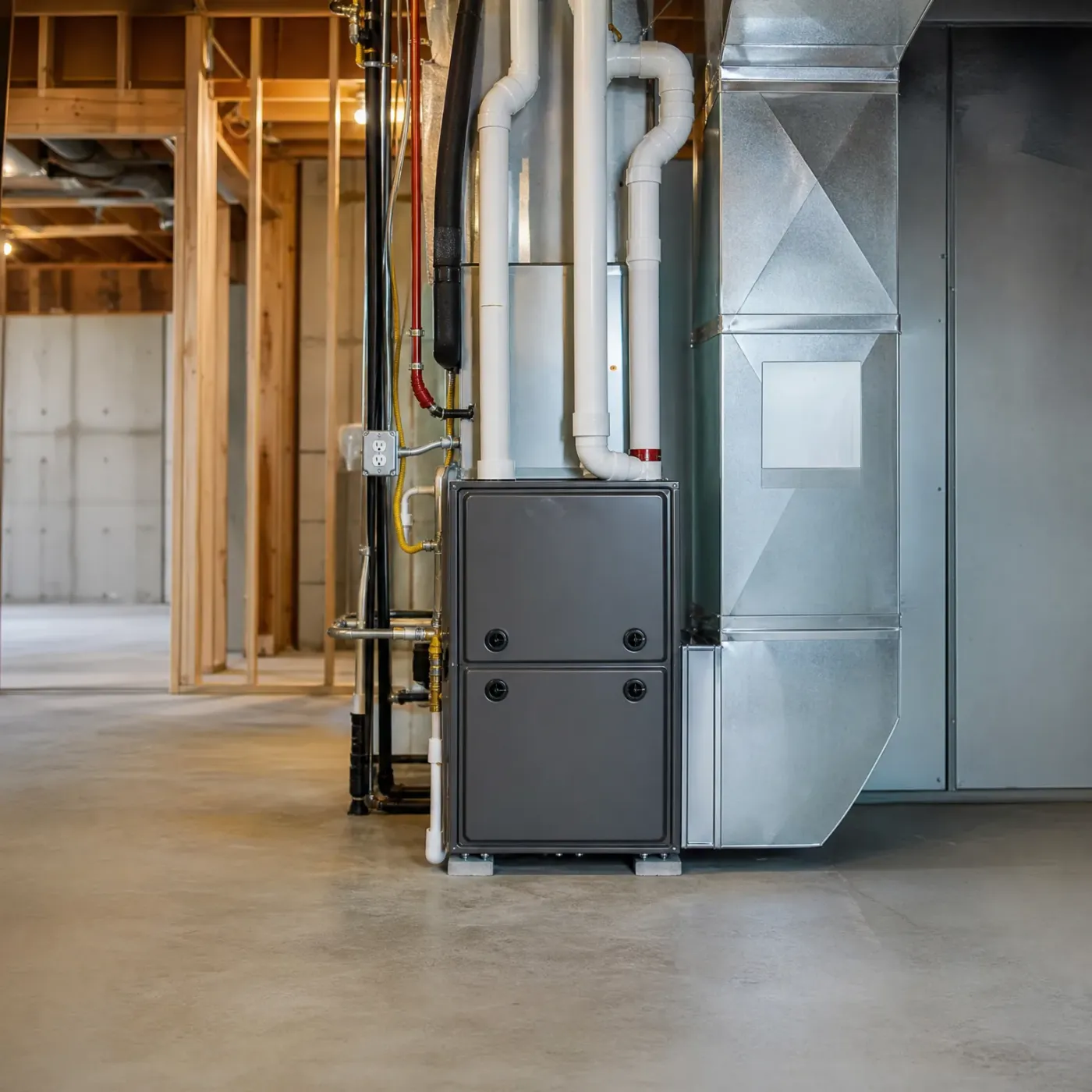
A gray high-efficiency furnace stands on a concrete basement floor beside galvanized sheet-metal ductwork, with white PVC vent pipes, gas and water lines, and unfinished wood framing behind it.

Running the way it should

A furnace like this heats evenly and holds a steady flame, no short cycling or cold rooms. The air coming through the ducts feels warm and steady, and the burners light on the first try every time. A furnace in this shape has no reason not to see 15 years or more.
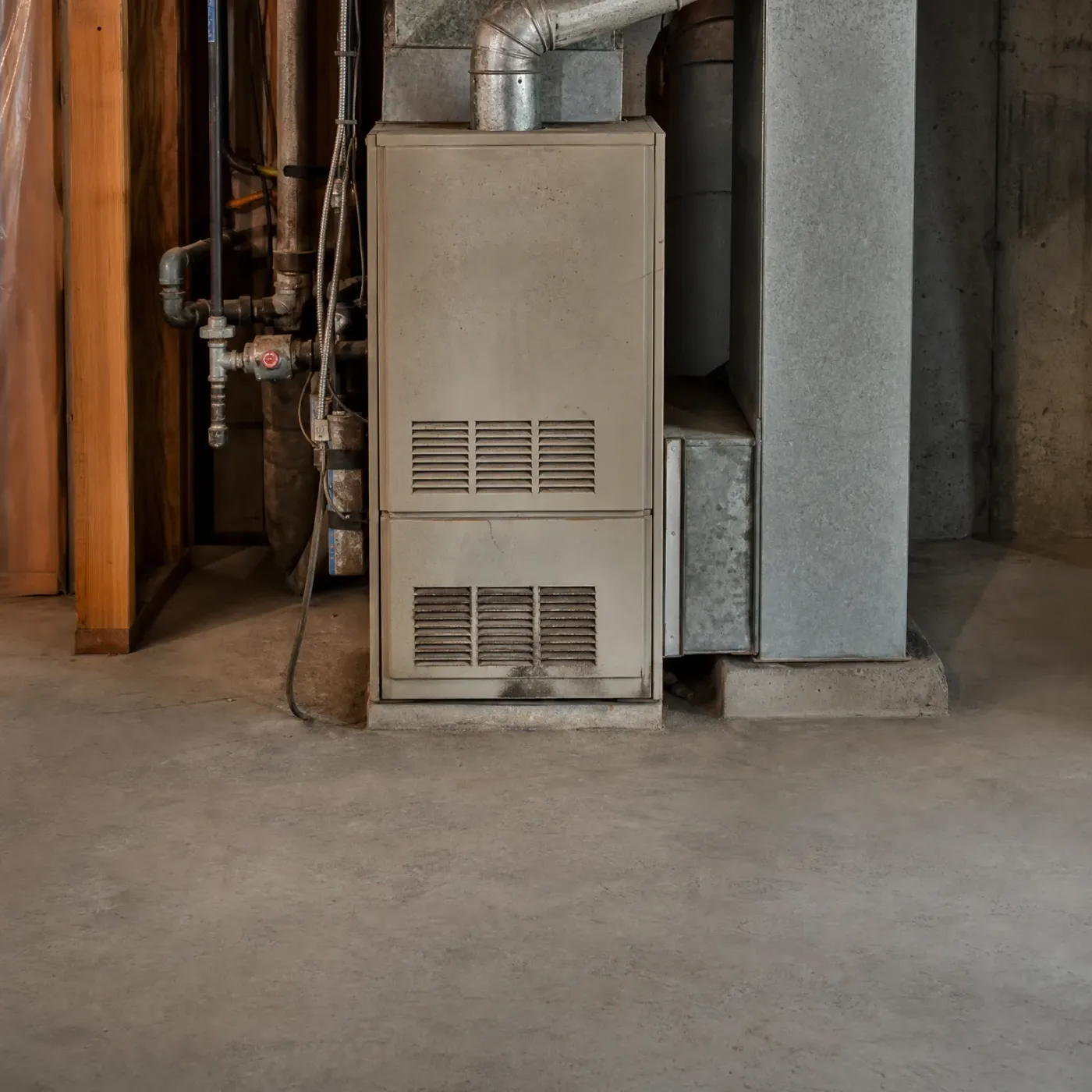
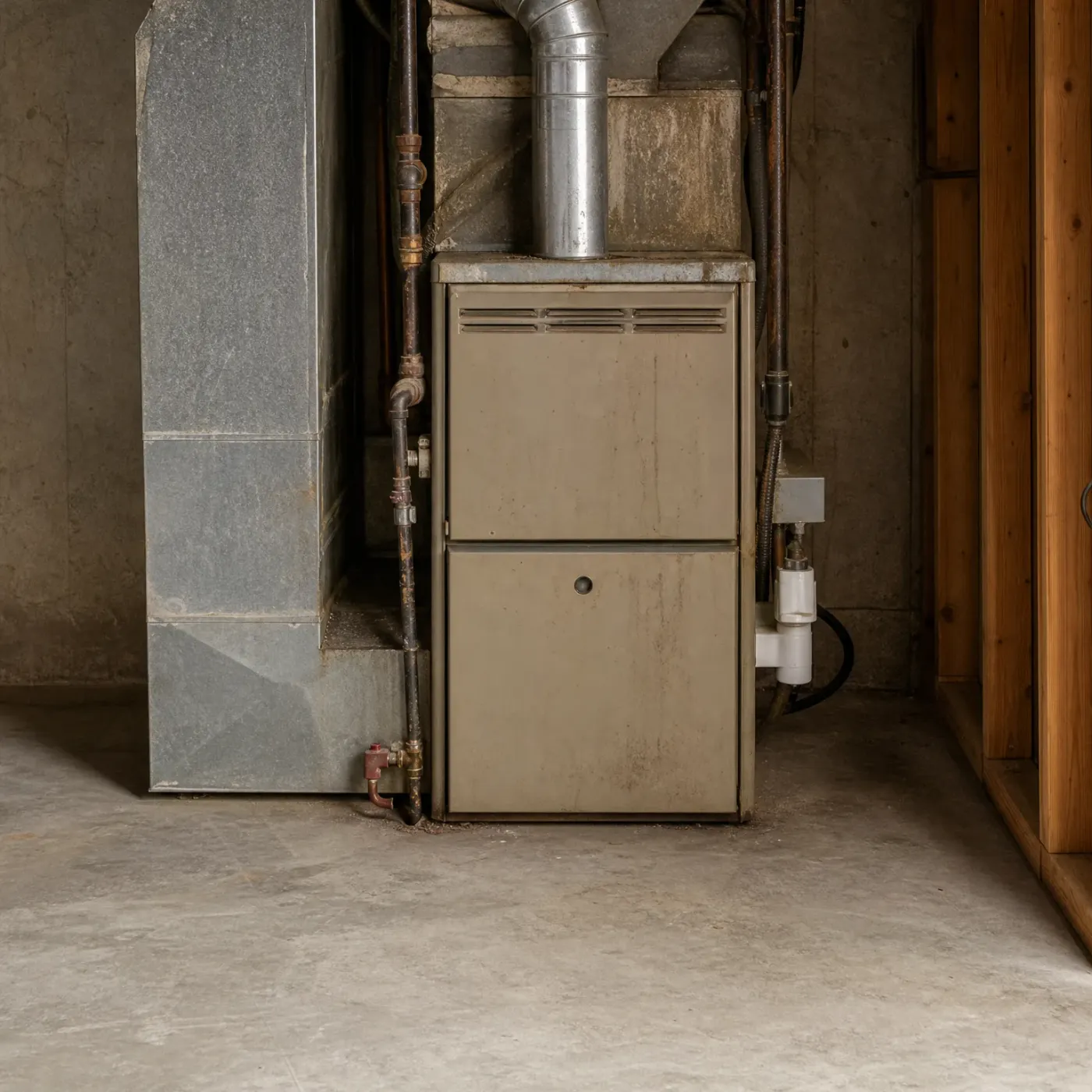
A beige furnace with two louvered front panels stands on a concrete basement floor beside galvanized ductwork, metal pipes, and a wooden post.

Showing its age

A furnace like this is working harder than it should, running longer cycles just to hold the temperature. You might notice a burnt smell, a yellow flame instead of blue, or rooms that never quite warm up. At this point a technician should look at it before the next cold snap.

Repair It or Replace It

Keep repairing

  • A single repair, a new igniter or a draft inducer motor, costs far less than a new furnace up front.
  • If the furnace is under 15 years old and the repair is a one-time part failure, fixing it usually makes sense.
  • A furnace with a good repair history and a clean heat exchanger can still get through another Council Bluffs winter safely.
  • Repairs let you spread out the bigger cost of replacement to a time you choose instead of a time the furnace chooses.
  • If this is the first breakdown in years, replacing the whole unit over one repair is hard to justify.

Replace now

  • A furnace past 15 to 20 years is working against age itself, and parts fail more often as it goes.
  • A cracked heat exchanger isn't a repair, it's a safety issue, and it means the furnace needs to go.
  • If you're calling a technician out more than once a season, the repairs are adding up toward the cost of a new unit anyway.
  • A new furnace holds a steadier flame and even heat through a Pottawattamie County winter without the short cycling an aging one develops.
  • Gas is cheap here, so a more efficient furnace pays back faster than it would somewhere with higher gas rates.
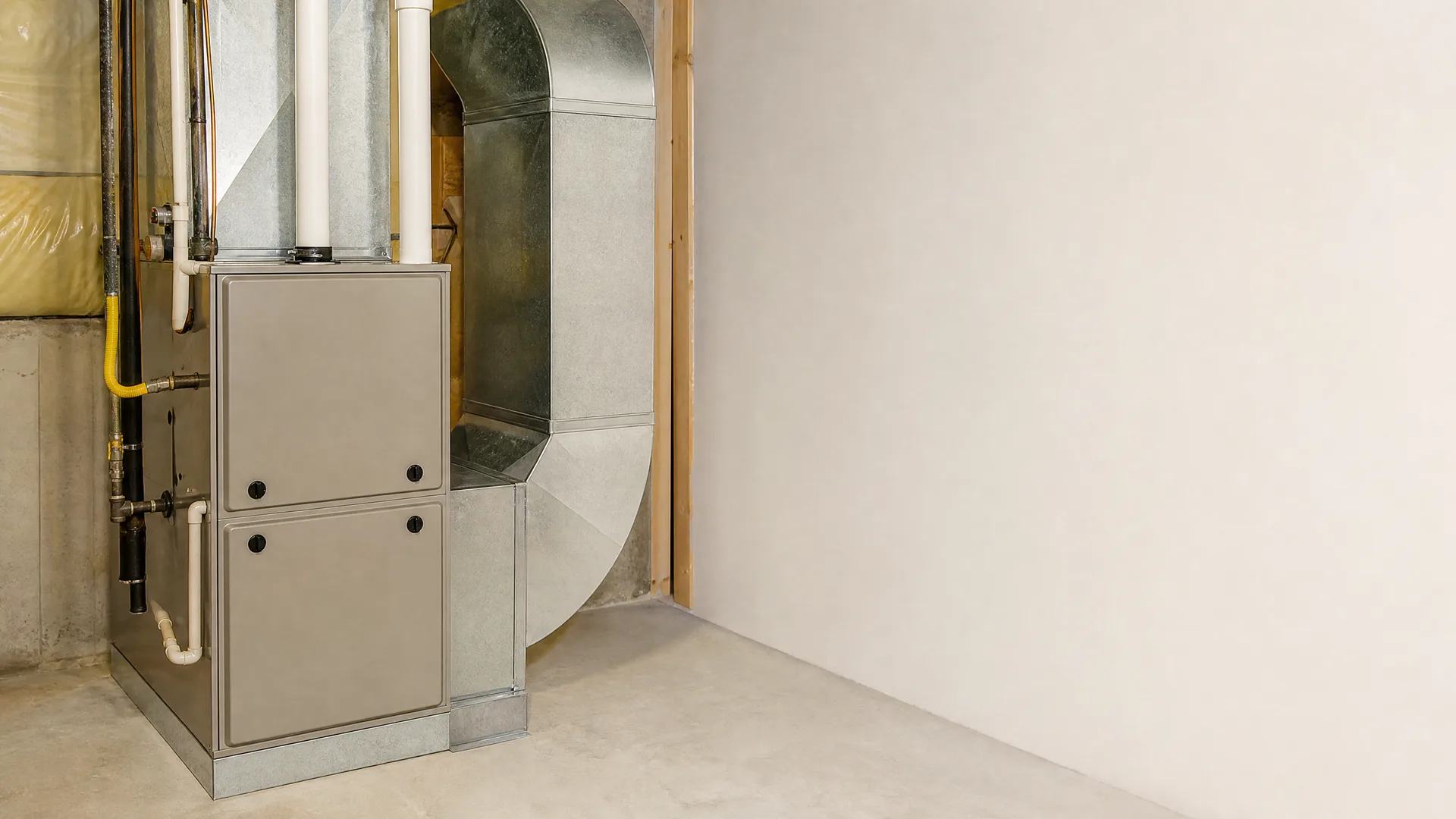
A gas furnace with sheet-metal ductwork, PVC vent pipes and copper and black piping stands against a wall in a basement with a bare light-colored wall and concrete floor.

What cuts a furnace's life short

A cracked heat exchanger ends a furnace long before 15 years if it's ignored. Short cycling wears the igniter and blower motor faster than steady runs do. Dust and pet hair packed into the burners make the flame uneven, so the furnace works harder to heat the same rooms. None of this fixes itself. A furnace that short cycles or runs a yellow flame all winter is burning through the years it had left.

A gray furnace with attached sheet-metal ductwork, white PVC vent pipes, copper and yellow gas lines stands against a wall in a room with a plain white wall and concrete floor.

What a yearly check actually catches

A technician checking a furnace once a year can see a cracked heat exchanger before it cracks further, or a flame sensor coated enough to cause trouble by February. Cleaning the burners keeps the flame blue and even instead of yellow and starved for air. None of this adds years to a furnace by itself, but it stops the small failures that end one early. A furnace that gets this kind of look every year is the one still running at 20.

Is your furnace telling you it's near the end?

You might notice the burners take a few tries to light, or the furnace clicks on and off more than it used to, running short bursts instead of warming the house evenly. Some rooms feel colder than others even with the thermostat set the same. The air coming out of the vents feels cooler than it should, or you catch a faint burning smell when it first kicks on. The furnace might sound different too, a rattle or a bang when it starts up. None of this means tonight's the night it quits, but a furnace that's skipped its yearly checkups or run for years on a dirty filter wears out faster, and in a Pottawattamie County winter, a furnace that fails means a house with no heat until someone can get there.

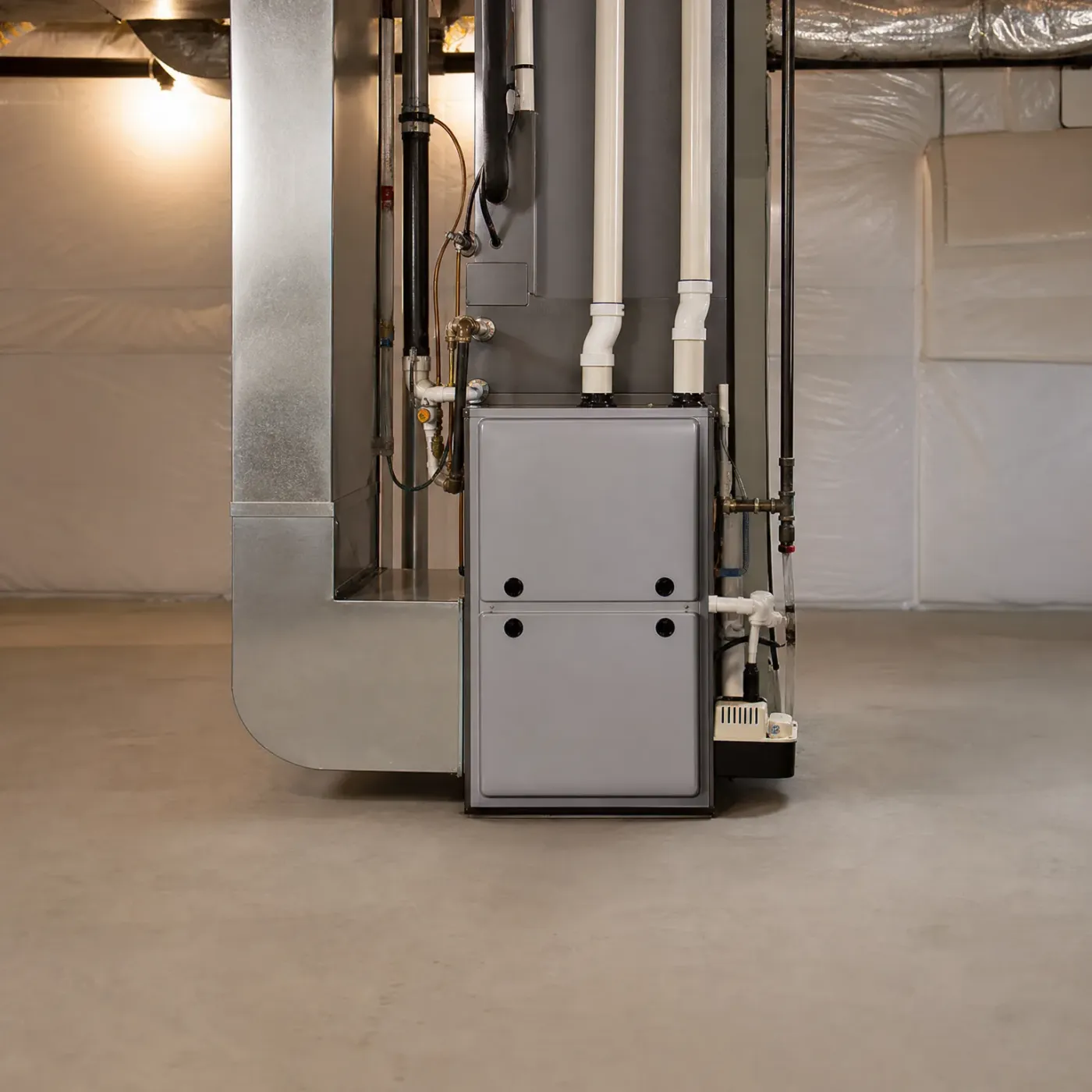
A gray high-efficiency furnace in a basement with white PVC vent pipes, sheet-metal ductwork, copper and black piping, a condensate pump, and insulated walls above a concrete floor.

Doing its job

This furnace vents through PVC and feeds off black gas pipe, with a condensate pump handling the runoff beside it. Clean connections, a dry floor, no scorch marks anywhere near the burner compartment. A furnace set up and maintained like this has years left in it.

A beige residential furnace stands on a concrete basement floor beside galvanized sheet-metal ductwork, a round flue pipe, copper gas piping, and a PVC condensate line, with a wood-paneled wall at right.

Running on borrowed time

This one vents through a round metal flue into a masonry chimney, an older setup you don't see installed anymore. Light grime on the panels, some age on the fittings. None of that means it quits tomorrow, but a furnace built this way is closer to the end of its 15 to 20 years than the start.

Winter nights average 16°F

At 16 below zero overnight, your furnace runs close to flat out most of the night to hold the house steady. That kind of stretch wears on an igniter or a blower motor that's already weak, which is why older furnaces tend to fail on the coldest nights, not the mild ones.

NOAA nClimDiv 1991-2020

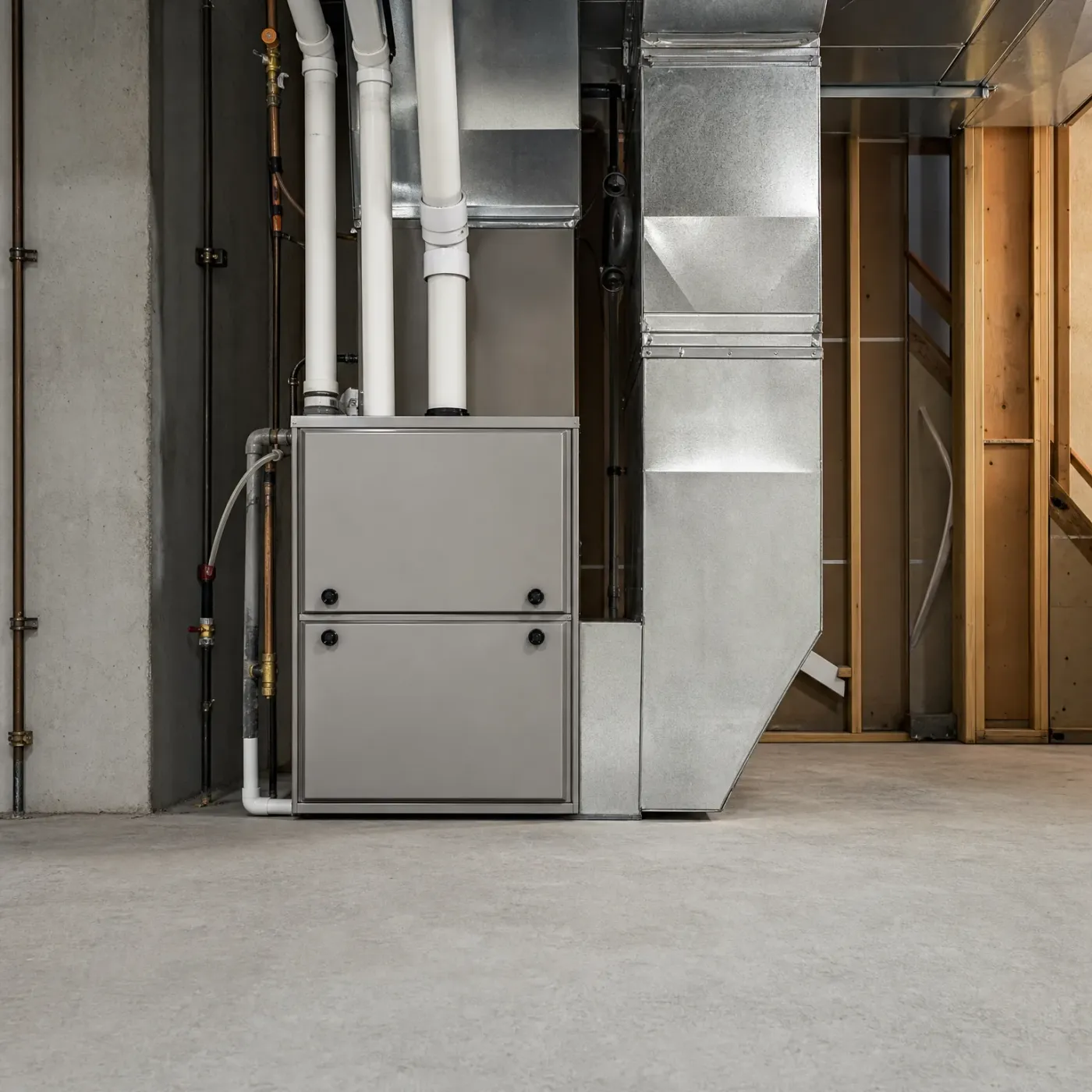
A gray high-efficiency furnace stands on a concrete basement floor beside galvanized sheet-metal ductwork, white PVC vent pipes, copper and black piping, and unfinished wood stud framing.
A furnace like this sits clean against the block wall, copper and gas lines run straight, and the ductwork above shows no rust or gaps.
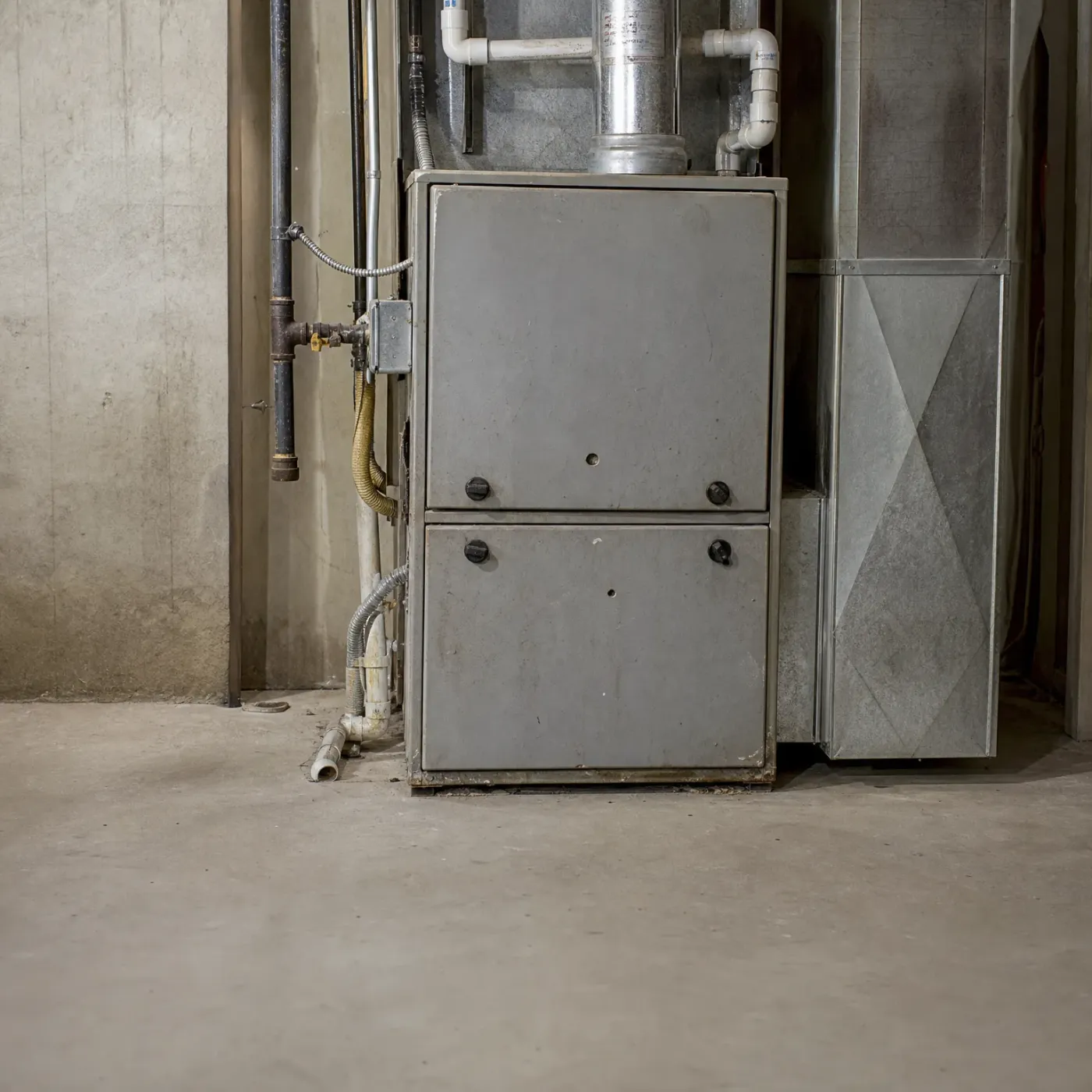
A gray furnace with two access panels stands on a concrete basement floor beside sheet-metal ductwork, with pipes, flexible conduit and an electrical box on the concrete wall to the left.
Panels hang loose or won't seat right, flex conduit and drain lines sag, and rust or soot near the access doors mean trouble underneath.
A gray-haired, bearded man in a dark coat dusted with snow stands smiling in a dimly lit room with a lamp, mirror, framed art, and a sofa in the background.
An older man with white hair and a beard, wearing a dark snow-dusted coat and scarf, stands in a warmly lit interior hallway with a framed landscape picture, a table lamp and a potted plant behind him, and a snowy view through a window at left.
An older man in a dark snow-flecked overcoat and scarf stands smiling in a warmly lit home entryway, with a glass-paned door showing darkness outside and a lamp-lit room visible through a doorway behind him.
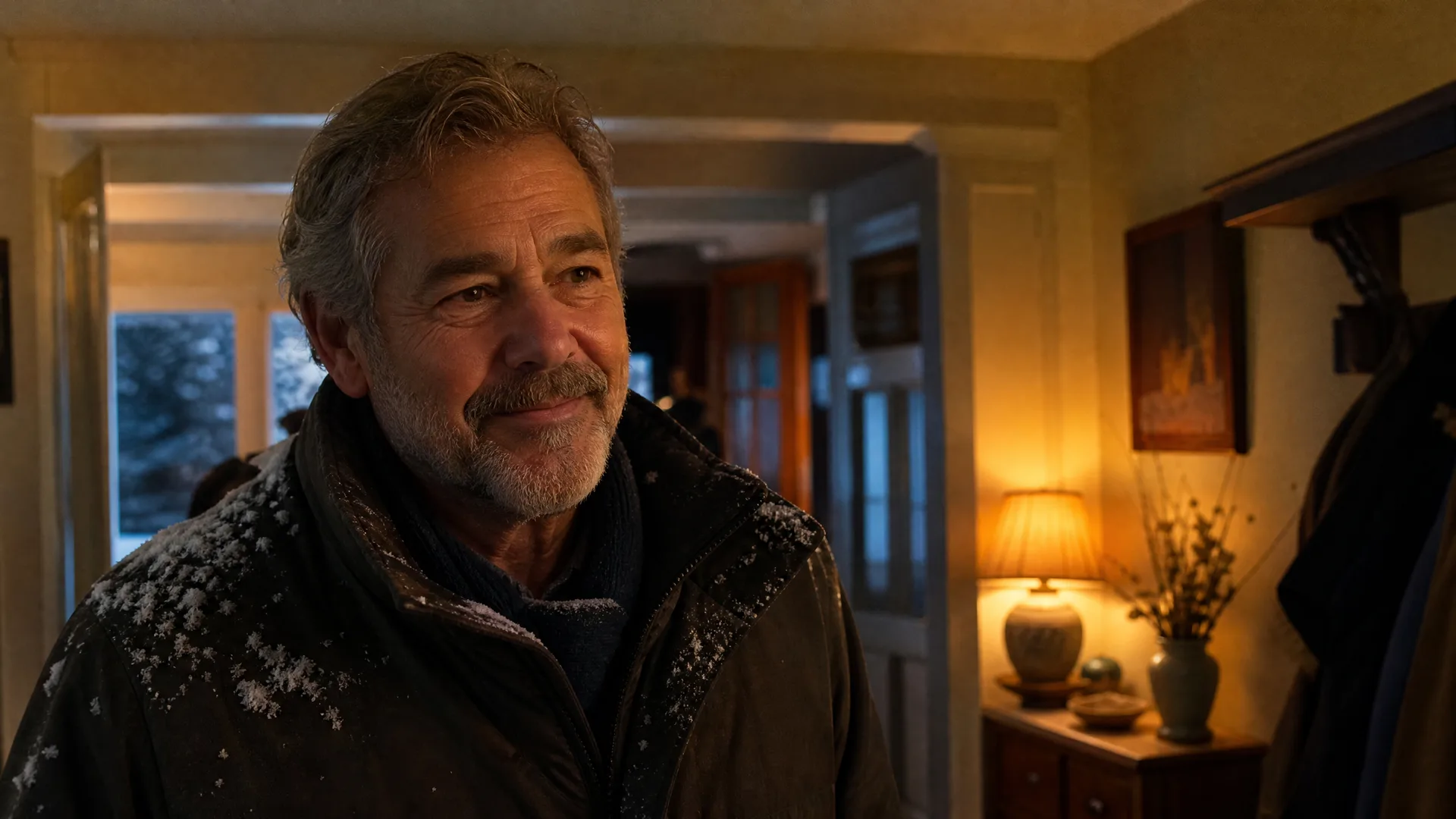
An older man with gray hair and a beard, wearing a dark snow-dusted jacket and scarf, stands smiling in a warmly lit interior hallway with a lit table lamp, a vase of dried branches, and a framed picture in the background.

The right pro for this job

A furnace that's past 15 years and showing any of this, a cold room, a flame that won't light clean, a blower that won't stop running, is worth having looked at before the next cold snap settles in. Waiting through one more hard freeze on a furnace that's already struggling is how a repair call turns into a house with no heat overnight. Getting a quote on a new furnace now doesn't mean replacing it today. It means knowing what the options are and what they cost before you're stuck deciding in a cold house at 10pm. A technician who looks at your specific furnace, your ductwork, your gas line, can tell you whether it's worth another repair or whether this winter is the one to plan around. That's worth knowing before the weather decides for you.

Replacing it before winter hits

A furnace installed in the fall has the rest of the season to prove itself before the first real cold snap. The contractor isn't rushing between emergency calls, so there's more room to talk through sizing and venting and get the install done right. You go into the hard months with a unit under warranty and nothing on its last leg. It costs more up front than waiting, since nothing's broken yet, but you're choosing the timing instead of the timing choosing you.

Waiting until it fails

Some homeowners get another winter or two out of an old furnace by waiting and hoping the next repair holds. That can work if the furnace is still lighting clean and heating evenly, and it saves the cost of replacing something that still runs. The risk is that furnaces in Pottawattamie County tend to quit on the coldest nights, not the mild ones, since that's when they're working hardest. If it goes out at 10 below with a houseful of people, you're finding a contractor and living without heat at the same time.

Why does a Council Bluffs furnace work harder than most?

  • Winter nights average 16°F

    Overnight lows averaging 16°F mean the furnace runs near its full output for hours at a stretch, all winter long.

  • Heat runs October through May

    Eight months of heat a year is more run time than most parts are built to coast through without a yearly check.

  • 70.5% of homes heat with gas

    With 70.5% of homes on gas, most furnaces in the county are burning fuel through a heat exchanger that has to be inspected, not just a motor spinning.

NOAA nClimDiv 1991-2020 · ACS 2020-2024

Where your furnace stands

  • A gas furnace in Council Bluffs runs about 15 to 20 years with a yearly checkup and regular filter changes.
  • Furnaces here tend to fail on the coldest nights, when overnight lows near 16 degrees push them hardest.
  • A cold room, a flame that won't light clean, or a blower that won't shut off are signs worth a look before the next freeze.
  • A one-time repair on a furnace under 15 years old usually makes more sense than replacing it.
  • A furnace installed in fall has the rest of the season to run before the first hard cold settles in.
  • Once you send the form, a contractor reaches out, and the search for one is off your plate.

Fifteen to twenty years is the range for a gas furnace in Council Bluffs, and where yours falls in it depends on how it's been treated and what it's showing you right now. A furnace that's had a yearly checkup and clean filters tends to land at the far end of that range. One that's been ignored usually doesn't. Pottawattamie County winters don't give a weak furnace anywhere to hide. The nights that drop near 16 degrees are the nights an aging igniter or a tired blower motor finally gives out, not the mild ones in between. So the real question isn't just the furnace's age, it's whether it's lighting clean, holding a steady flame, and heating every room the way it used to. If the furnace is younger and the problem traces to one part, a repair is usually the right call and the cheaper one. If it's older and struggling on multiple fronts, replacement before the next freeze avoids the worse timing of a breakdown mid-winter. Fall is the easier season to make that move, since a new furnace installed then has months to prove itself before it's tested hard. Whichever side of that line your furnace is on, the next step doesn't have to be something you sort out alone. Send the form, and a contractor who knows this furnace and this climate takes it from there. The looking around is no longer yours to do.

A modern two-story house with dark siding and stone base at dusk, with lit soffit lights, a path of large rectangular pavers set in dark gravel, planting beds, a lawn, and an orange and blue sunset sky above distant trees and water.

Furnace Installation

Matched to your furnace job

Step 1 of 3: Equipment
  • A pale ceramic vase holding dried hydrangea blooms sits on a wooden windowsill in sunlight, with green foliage blurred beyond the window glass.
    • Your request goes to a Pottawattamie County pro who takes furnace jobs.
    • Get matched with someone who does this kind of work in Pottawattamie County.
  • Sunlit window seat with a cushioned bench and three textured throw pillows beside a dark wooden round side table holding a small stone bowl and a potted green plant.
    • After you send the request, you're done searching.
    • Send the form and the search for an installer is over.
  • A potted olive-like tree in a wide beige ceramic planter sits on a pale stone ledge beside a black-framed window with blurred greenery outside.
    • Skip collecting and comparing quotes for the new furnace.
    • Skip the round of in-home estimates for a new furnace.
  • A wooden bench by a black-framed window holds a beige striped pillow, a fringed knit throw, and a pale ceramic vase with olive branches, with green foliage and a white house visible outside.
    • A licensed installer who works in Pottawattamie County gets your project.
    • One installer gets your project, so there's no bidding war over it.