How long a furnace lasts in Des Moines, IA

Get matched with a pro who works on furnaces in Polk County.

Find a furnace pro

A furnace in the Des Moines area lasts about 15 to 20 years. Gas furnaces are what most homes here run, and the long heating season from October through April puts real hours on the burners and the heat exchanger every winter. The furnace earns its keep on the coldest nights, and that steady work over two decades is what wears it down, not any one hard freeze. Past 15 years, parts get harder to find and the heat exchanger is more likely to be the thing that finally fails rather than something smaller. If your furnace came with the house and you're not sure of its age, a service tag inside the cabinet usually gives you the install date. Once a furnace is past that mark, a bigger repair bill is often a sign it's cheaper to replace it than to keep patching it.

Why does a Des Moines furnace wear out this fast?

  • Winter nights average 16°F

    Overnight lows averaging 16°F through December, January and February mean the burners run hard and often, not just on the coldest days.

  • Heat runs October through May

    Eight months of heat a year, October through May, is more run time than most of the country asks of a furnace.

  • 65.7% of homes heat with gas

    Most homes in Polk County, 65.7% of them, heat with gas, so it's the burners and heat exchanger carrying that load winter after winter.

NOAA nClimDiv 1991-2020 · ACS 2020-2024

Keep a furnace running past 20 years and you're betting on a heat exchanger that's seen thousands of cycles. When it cracks, it's not a repair, it's a safety issue, and most contractors will tell you to replace rather than patch it.

Replace it on schedule, somewhere in that 15 to 20 year window, and you're choosing the timing instead of a furnace in January forcing it on you. A new furnace also runs more efficiently than the one it replaces.

A smiling bearded man in a dark green hooded jacket and blue t-shirt sits on a couch in a living room with shelves, a potted plant, and a bowl of popcorn on a wooden table.
A smiling man in a green long-sleeved shirt sits on a beige sofa in a living room, with a bowl of popcorn in the foreground, a large potted plant and shelving behind him.
A smiling man in a dark blue T-shirt sits on a couch in a dimly lit living room with a bowl of popcorn and a remote on a wooden table, a lit floor lamp and bookshelves behind him, and windows showing greenery.
A smiling bearded man in a dark green long-sleeved shirt sits on a leather couch in a living room, with a bowl of popcorn and a remote control on a wooden table in the foreground.

Why the heat exchanger is what matters

The heat exchanger is the part that decides when a furnace is done. It's the metal chamber that separates the burning gas from the air moving through your ducts, and it expands and contracts every time the burner fires. Do that for 16 winters in a row with lows averaging in the teens and the metal fatigues. A contractor checking an older furnace is looking at that part first, not the blower or the thermostat. Cracks there let combustion gases mix with the air headed into your living room, which is why most contractors won't patch one. A furnace can pass every other check and still be finished because of this one part.

What a gas furnace needs to keep running

A gas furnace needs clean air moving across the heat exchanger and a clear path for exhaust out the flue. Polk County homes run their furnace eight months of the year, and that's eight months of dust, pet hair and whatever else is in the air getting pulled across the burners and the blower. A dirty filter makes the heat exchanger work harder to push heat through, and that's extra stress across thousands of cycles each winter. None of that stops a furnace from aging out at 15 to 20 years, but it decides whether a given furnace gets the full 20 or stalls out closer to 15.

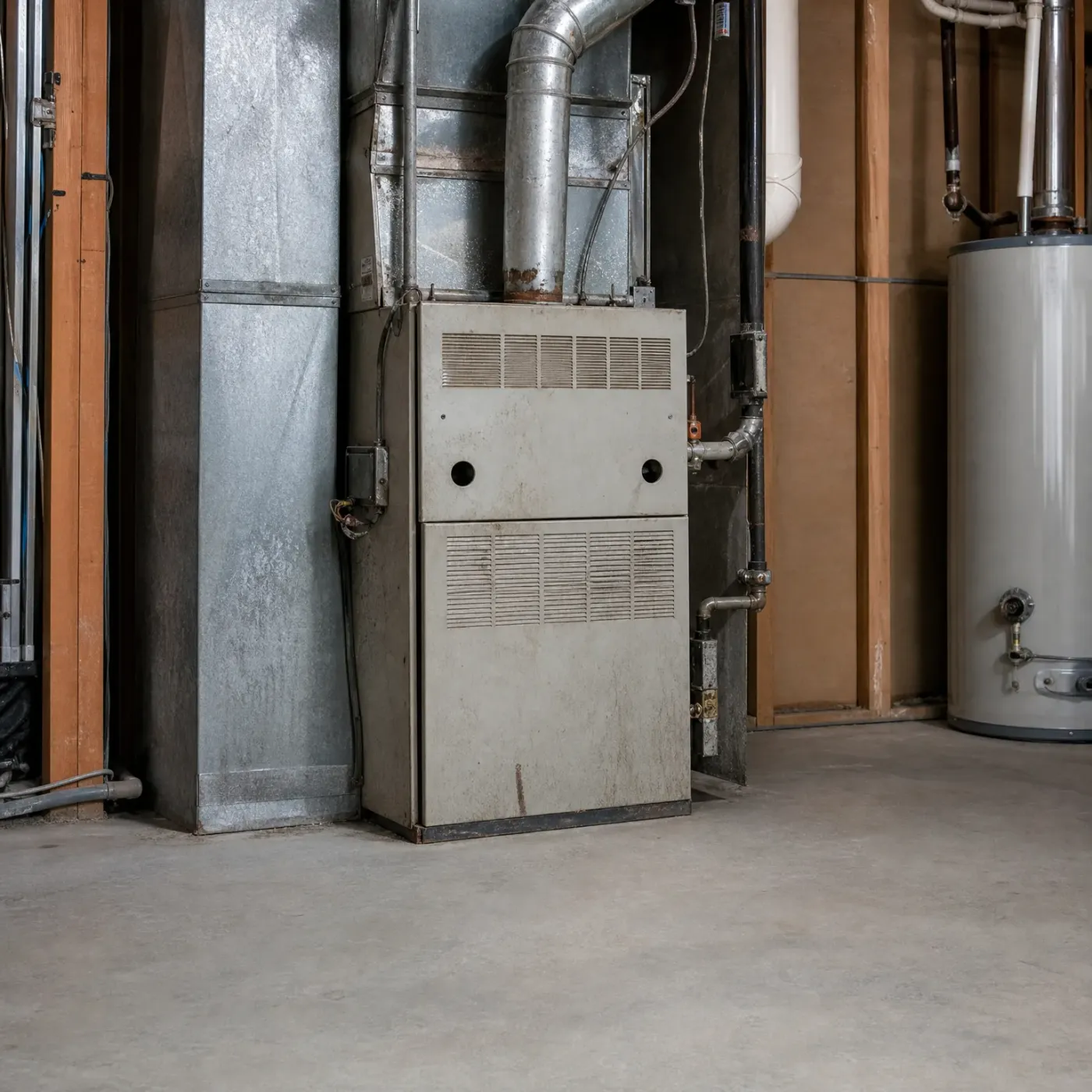
An older beige furnace with louvered front panels stands on a concrete basement floor beside galvanized ductwork, metal and plastic pipes, exposed wood framing, and a cylindrical water heater at right.
Before you get your furnace installation
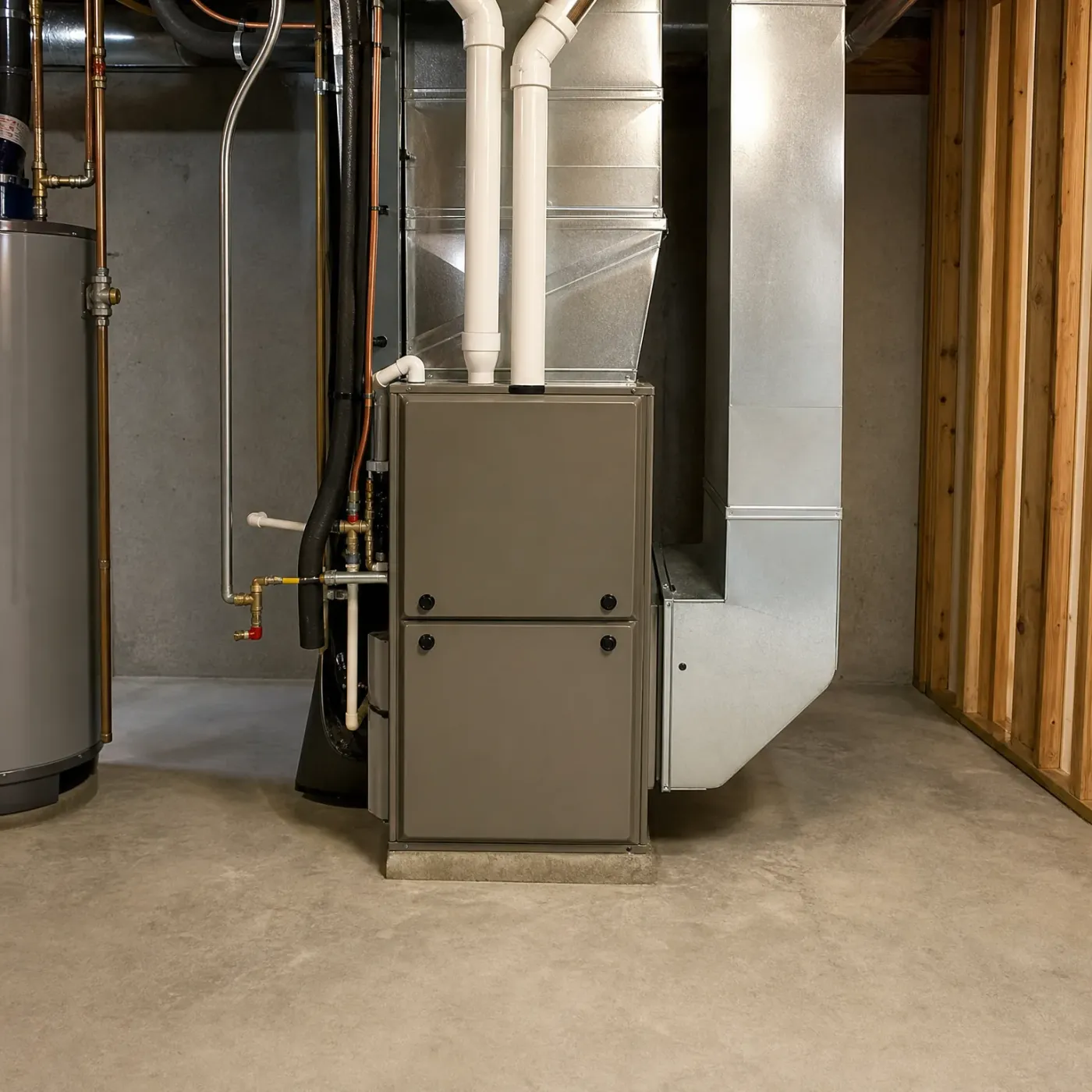
A gray high-efficiency furnace in a basement with PVC vent pipes, sheet-metal ductwork, copper and insulated pipes, a water heater at left, and an unfinished wood-stud wall at right.
After you get your furnace installation

How a gas furnace fires up

  • The thermostat calls for heat and the igniter glows hot before any gas is allowed to flow.
  • A pressure switch checks that the inducer motor is pulling exhaust properly before the burners light.
  • Gas reaches the burners and the flame heats the heat exchanger, not the air directly.
  • A blower pushes house air across the outside of the heat exchanger, warming it without ever touching the flame.
  • A flame sensor watches the burners the whole time and shuts off gas within seconds if the flame drops out.
  • The blower keeps running a couple minutes after the burners stop, clearing leftover heat from the exchanger before it shuts off.

A furnace cycle runs in a set order, and every part is there to check the one before it before moving on. The thermostat sends the call for heat, and the igniter starts heating up first, before any gas is let through. Once it's hot enough, the inducer motor spins up to pull exhaust out through the vent, and a pressure switch confirms that draft is actually happening. If that switch doesn't see the right pressure, the burners never light, because a furnace that can't clear its own exhaust has no business burning gas. Only after that check passes does gas reach the burners and ignite against the hot igniter. The flame heats the heat exchanger from inside, and the blower pulls house air across the outside of that metal surface, so the air you feel from the vents never touches the flame or the exhaust. A flame sensor stays on the burners through the whole run, and if the flame drops out for any reason, it cuts the gas within seconds rather than letting unburned gas keep flowing. When the thermostat is satisfied and the burners shut off, the blower doesn't stop right away. It keeps moving air across the heat exchanger for a couple minutes, pulling off the heat that's still sitting in the metal before the whole system powers down. That last step matters as much as the first one. A furnace that short-cycles, shutting off and firing again and again, puts more wear on the igniter and the heat exchanger than one that runs a full, even cycle.

Winter nights average 16°F

At 16°F, your thermostat is likely set 50 degrees above what's outside most winter nights. That gap is what keeps the burners cycling on for hours at a stretch rather than running in short bursts, and it's the steady load that ages a furnace faster than any single cold snap.

NOAA nClimDiv 1991-2020

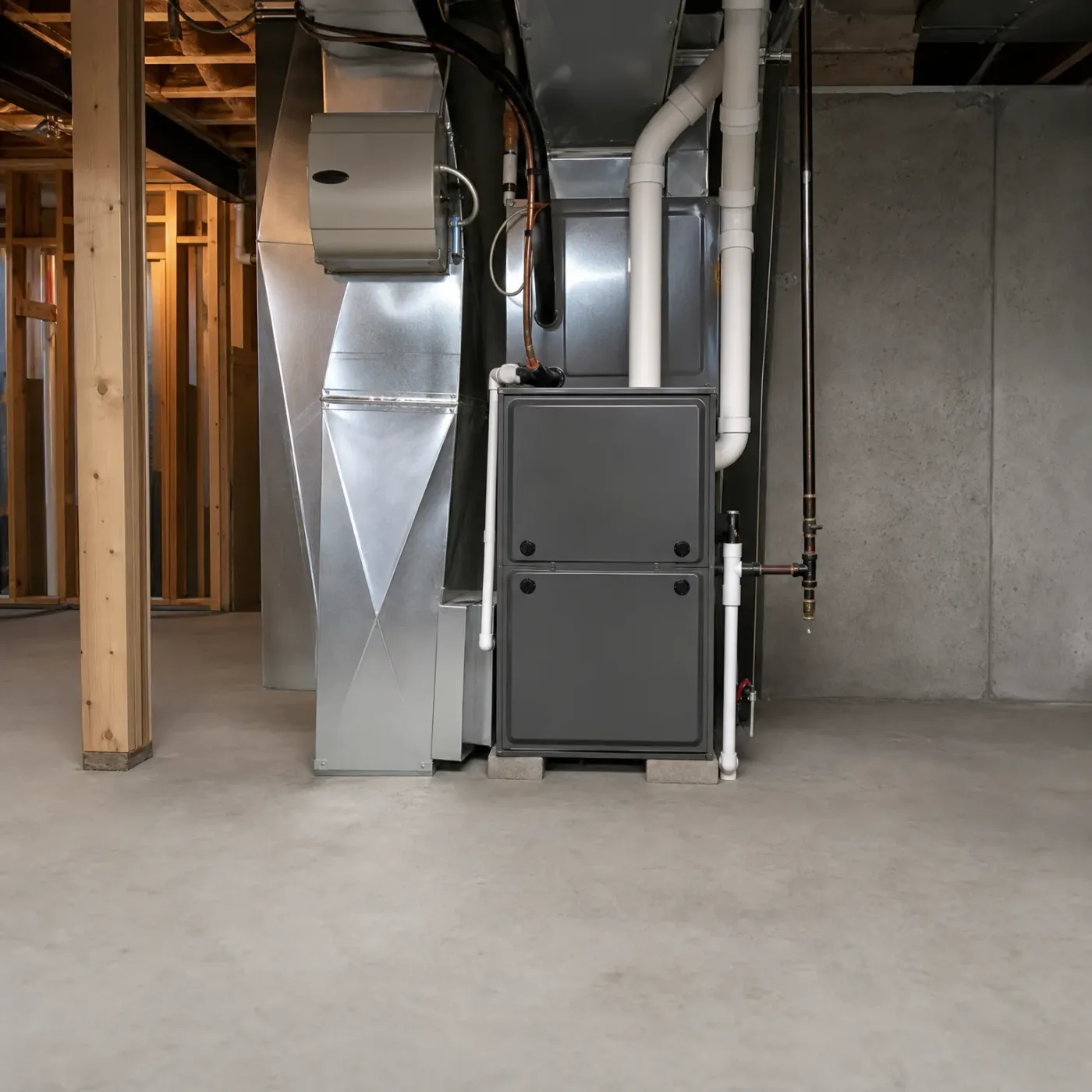
A gray high-efficiency furnace with white PVC venting pipes stands on blocks in a basement next to sheet-metal ductwork, with exposed wood framing on the left and a concrete wall and floor.

A furnace running clean

This is what a furnace should look like at ten years or twenty. Tight connections, a clear flue, nothing scorched or rigged. A furnace kept up like this is the one that gets you close to 20 years before the heat exchanger gives out.

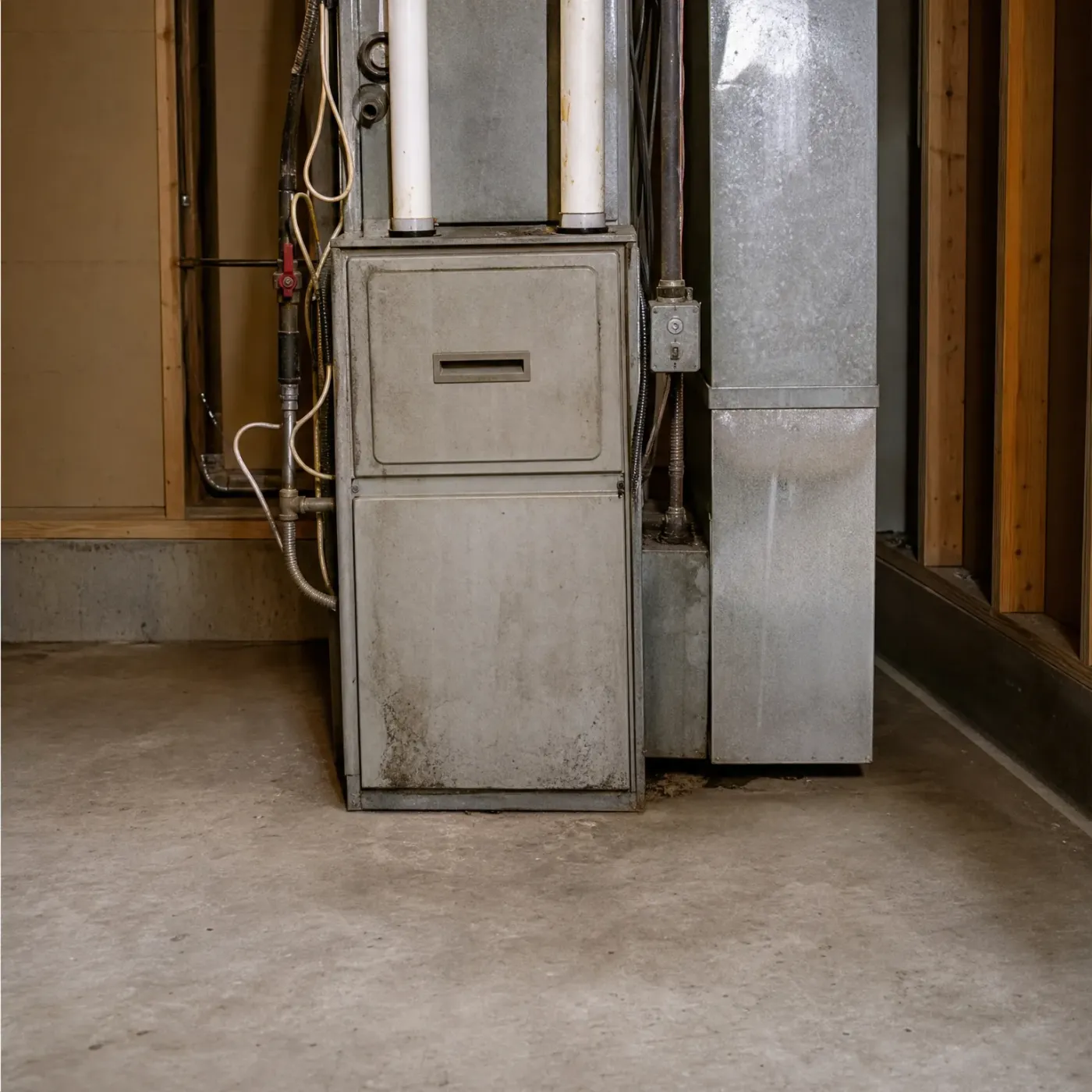
An older gas furnace with two white PVC vent pipes stands on a concrete basement floor beside galvanized sheet-metal ductwork, flexible conduit, and piping along a wall.

A furnace on borrowed time

The cabinet's worn, the gas line is flexible instead of hard-piped, and nothing here has been touched in a while. A furnace left alone like this past 15 or 20 years is more likely to fail on a hard January night than give you warning first.

A woman in a dark gray sweater reclines on a light sofa with eyes closed and a slight smile, under a textured gray blanket with an open book resting on her lap, with a lit table lamp and plant in the background.
A smiling bearded man in a navy crewneck sweater sits at a dinner table with a glass of red wine, plates and glasses in the foreground, in a dimly lit room with a lamp and framed picture behind him.

Get matched with a furnace pro in Polk County

If your furnace is past 15 years and you're watching it for signs of trouble, you already know the stakes in a Des Moines winter. A failed heat exchanger at 16 degrees outside isn't something that waits until a convenient weekend. The furnaces that make it to 20 years are the ones that got replaced on a plan, not a breakdown, by someone who caught the wear before the exchanger cracked. Figuring out whether yours has another winter left in it means someone looking at the actual unit, the burners, the flue, how it's cycling, not a guess based on its age alone. That's a judgment call worth getting from a contractor who does this work daily in Polk County homes, not something to sort out after the blower stops on a January night. Sending the request now means that judgment is already lined up before you need it.

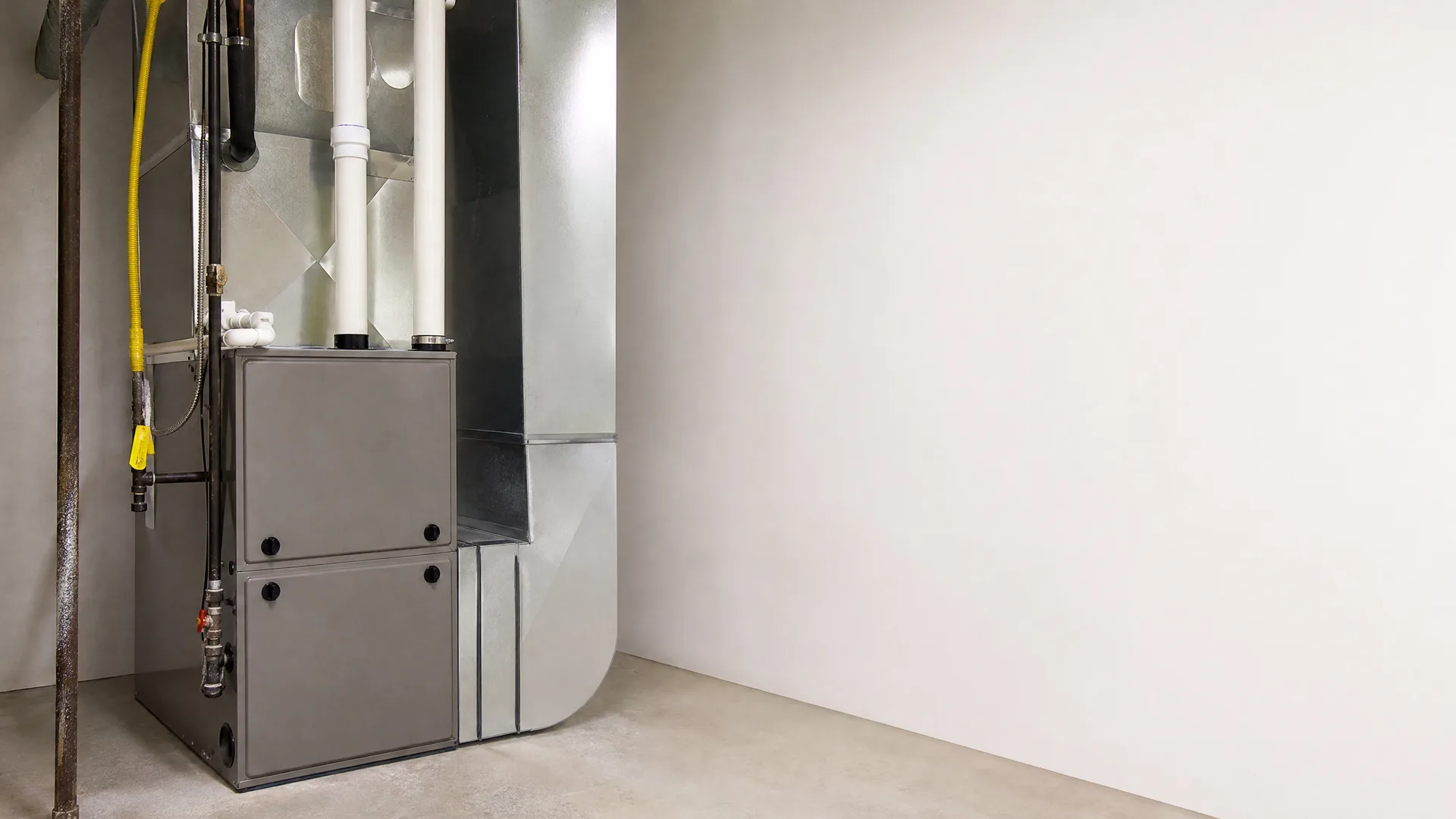
A gas furnace with two gray access panels stands against a plain wall in a basement, connected to sheet-metal ductwork, white PVC vent pipes, and a yellow gas line.

What an aging furnace costs you

A furnace past 15 years doesn't fail all at once. The blower runs longer to push the same heat through your ducts, and that shows up on the power bill even with Iowa's cheap electricity. Rooms farther from the furnace start running cooler than the thermostat reading. You turn the set point up a degree or two to compensate, and that's one more thing pushing the heat exchanger toward the end of its life.

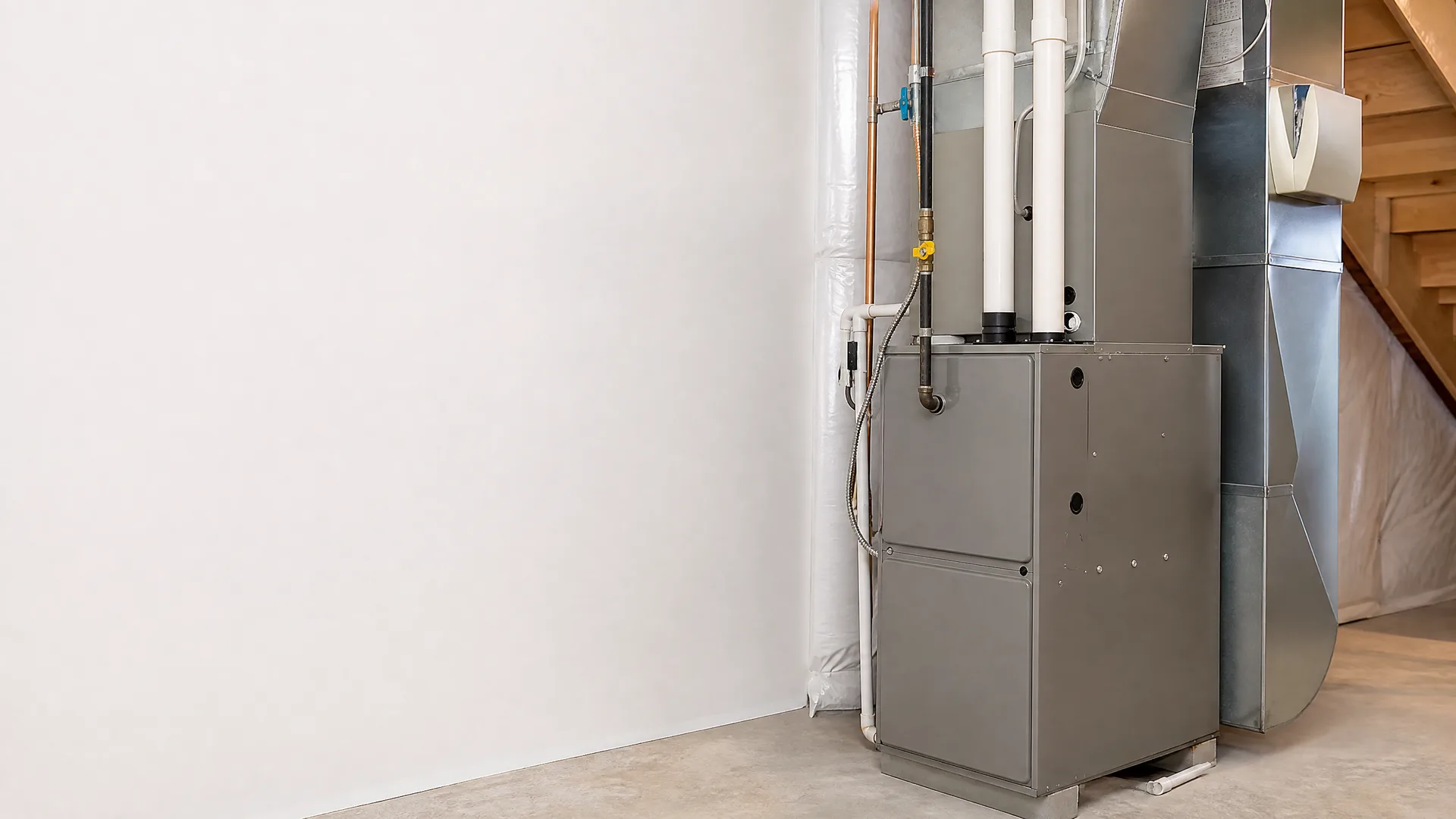
A gray high-efficiency furnace in a basement corner with white PVC vent pipes, copper and black gas piping, and sheet-metal ductwork beside a plain white wall and wooden stair framing.

What a failure actually looks like

Most furnaces don't die quietly. A cracked heat exchanger can trip the limit switch and shut the system down mid-cycle, often on the coldest night of the stretch, since that's when the burners are working hardest. Some homes notice a burning smell or a yellow flame instead of blue. Either way it's not a wait-and-see repair. A furnace that quits at 16°F outside means pipes at risk within hours, not days.

How does a furnace actually fail when it's worn out?

You've seen the number, 15 to 20 years, and you've read about the heat exchanger. But what you actually want to know is what the failure looks like when it happens. Does the furnace just stop one morning, or does it give you warning first. That answer changes how closely you need to be watching yours right now.

Most furnaces fail gradually, then stop for good on a cold night

A furnace doesn't usually die without warning. The blower motor starts straining, the burners take longer to light, or the furnace short cycles, running a few minutes then shutting off before the room warms up. Those are signs the heat exchanger or the ignition system is on its way out. The actual end usually comes when the heat exchanger cracks or the igniter fails completely, and the furnace either won't light at all or a safety switch shuts it down to keep exhaust from leaking into the house. In Des Moines that moment tends to land on one of the coldest nights of the year, since that's when the furnace is working hardest and whatever was already weak finally gives.

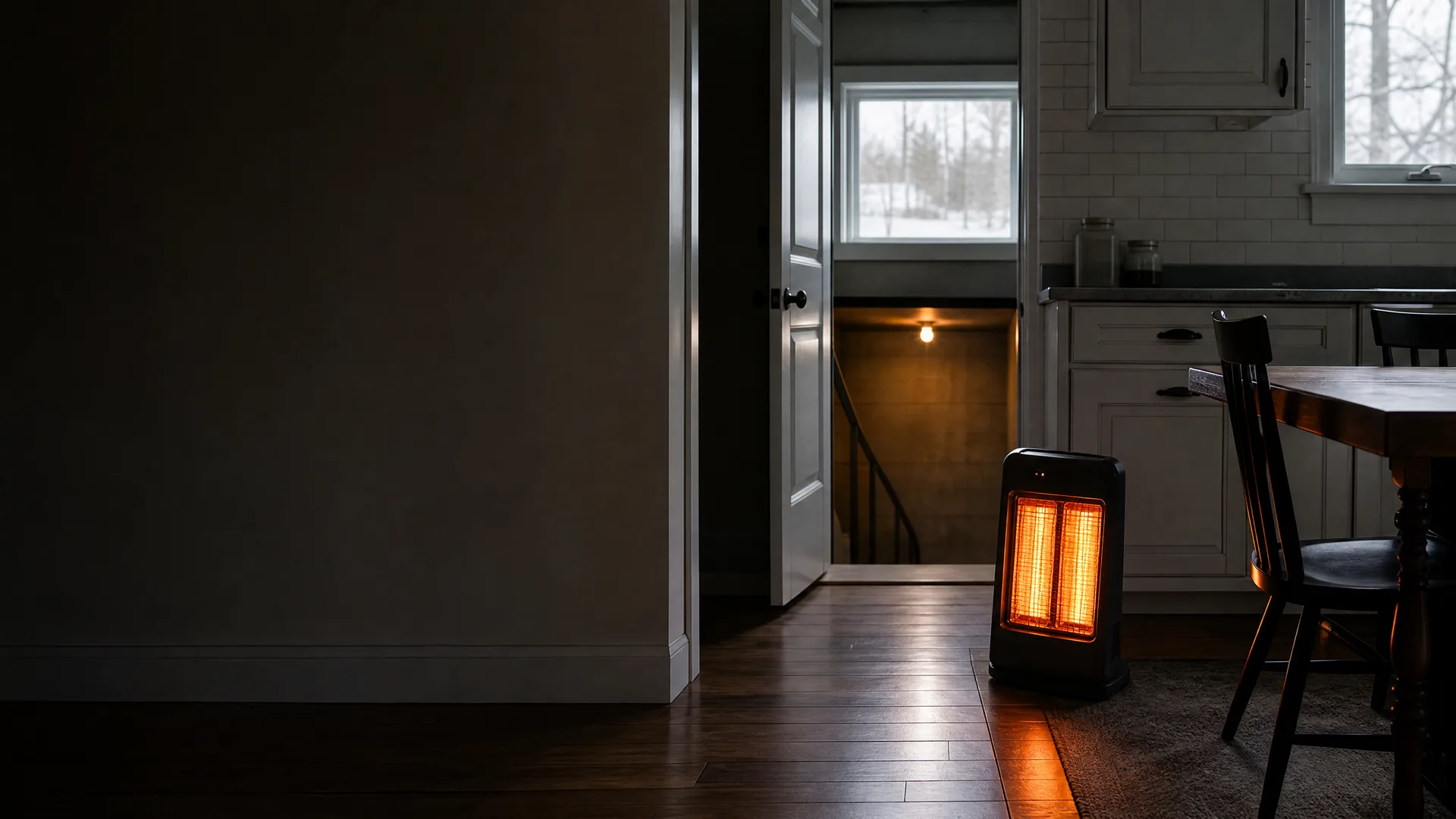
A portable electric space heater with glowing orange elements stands on a dark wood floor in a dim room beside an open door leading to a lit stairway, with a kitchen counter, window and wooden table and chairs at right.

The power went out sometime after 2 a.m., one of those January nights when the wind off the plains pushes a line down through Polk County and takes a transformer with it. By six the house had dropped into the low 50s. You dragged the space heater up from the basement and set it by the kitchen table, close enough to keep your hands warm while the coffee brewed, and left the basement door open behind you so what heat there was could still reach downstairs. Outside it was 16 degrees and getting light. The furnace sat quiet in the basement, waiting on power it didn't have. You kept checking your phone for word on when the lines would be back up, doing the math on how many hours the house could hold what little warmth was left.

A man in a dark blue shirt stands in an open front doorway of a stucco and wood-clad house, facing a blond woman seen from behind in the foreground on a stone walkway.

So that's the number: 15 to 20 years

A Des Moines furnace earns its 15 to 20 years the hard way, with eight months of heat a year and nights in the teens that keep the burners cycling long after midnight. Where yours lands in that range comes down to how it's been run and kept up, not luck. Past 15, the heat exchanger is the thing to watch, because that's the part that decides when the furnace is actually done.

If yours is already past that mark, or you're seeing the signs, you don't have to sort through contractors on your own to get it looked at or replaced. Answer a few questions about your furnace and your house, and a contractor who works in Polk County will get in touch to go over what you're dealing with. That's one less thing to carry into a January night.

A living room corner with a beige sofa and cushion, a round wooden coffee table holding a pale ceramic vase of eucalyptus stems and a wooden bowl, and a curtained window with a potted plant above a latticed radiator cover in the background.
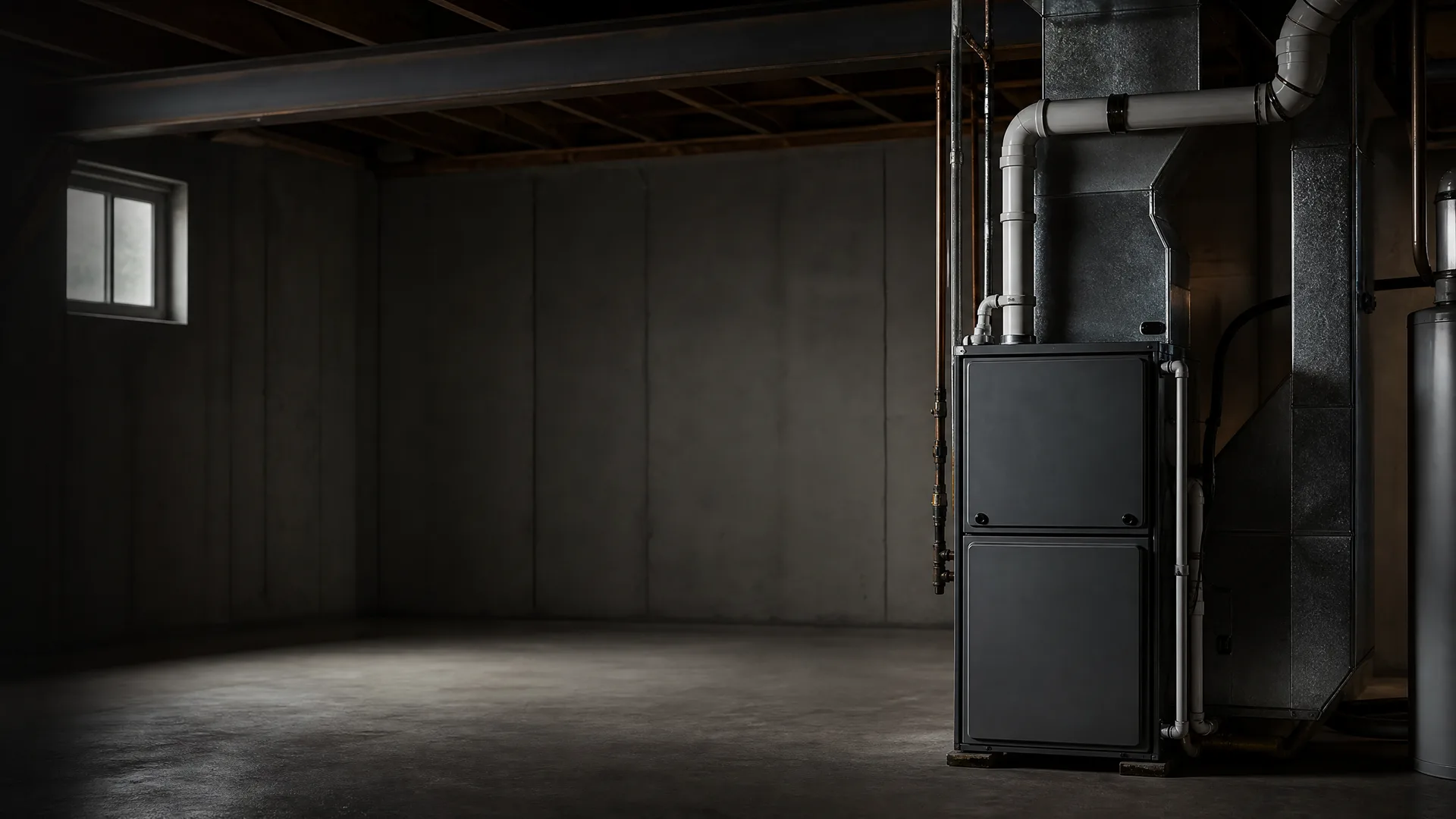
A dimly lit unfinished basement with concrete walls and floor, exposed floor joists, a small window at left, and a dark furnace with PVC venting and sheet metal ductwork at right.

Find a furnace installation pro in Polk County

After this form, you can stop searching for a furnace pro.

Step 1 of 3: Equipment