

Profile view of a bearded man wearing a black baseball cap and a dark gray T-shirt against a plain light background.

How to restart a furnace after an Iowa power outage

Step 1 of 3: Equipment

Most gas furnaces will fire back up on their own once power returns, no switch-flipping needed. Give it a few minutes. The igniter has to glow, the inducer motor has to spin up and prove a clear vent before the gas valve opens, and that takes a short cycle to complete. Check the thermostat is still set where you left it, since some models lose their programming in an outage and default to a lower temperature. If the furnace stays dark, look at the breaker it runs on, not just the ones for your lights. A furnace that blew a fuse or tripped a breaker during the outage won't restart just because the power's back, and one that short-cycled during the surge when power returned can trip a safety switch that needs a reset. If you've waited twenty minutes and still have no heat, something beyond the outage itself is keeping it off.

A man with grey hair and stubble in a dark sweater sits on a grey sofa indoors, looking off to the side, with a potted plant and a sunlit window behind him.
A man with gray hair, a beard and glasses, wearing a dark green sweater, sits on a gray sofa in a sunlit living room with a potted plant, table lamp and wooden sideboard behind him.
A middle-aged man with graying hair and a short beard sits on a blue sofa in a living room, looking toward a window, with a bookshelf, lamp and framed picture in the background.
A man with graying curly hair and a dark green sweater sits on a gray sofa in a sunlit living room, looking off to the side, with a framed picture, shelving, an armchair and a window with sheer curtains behind him.

What the thermostat should show

Once power is back, give the thermostat a minute to boot up the same as any other plugged-in display. If it's calling for heat and the temperature in the house is below the setpoint, the furnace should start its cycle on its own. If the screen is blank or stuck, check the breaker for the furnace circuit before anything else. A tripped breaker is common after an outage, especially if several things in the house came back on at once and drew a surge.
When it won't catch on its own

If the furnace clicks and tries to start but shuts off again, that's usually the igniter failing to prove flame, or the inducer motor not building enough draft for the control board to open the gas valve. This can happen even on a furnace that ran fine before the outage, since the start-up draws more from every part than a steady burn does. A furnace that cycles like this repeatedly needs a technician before you run it again, since repeated failed starts can be a sign of a worn part rather than a one-time fluke.

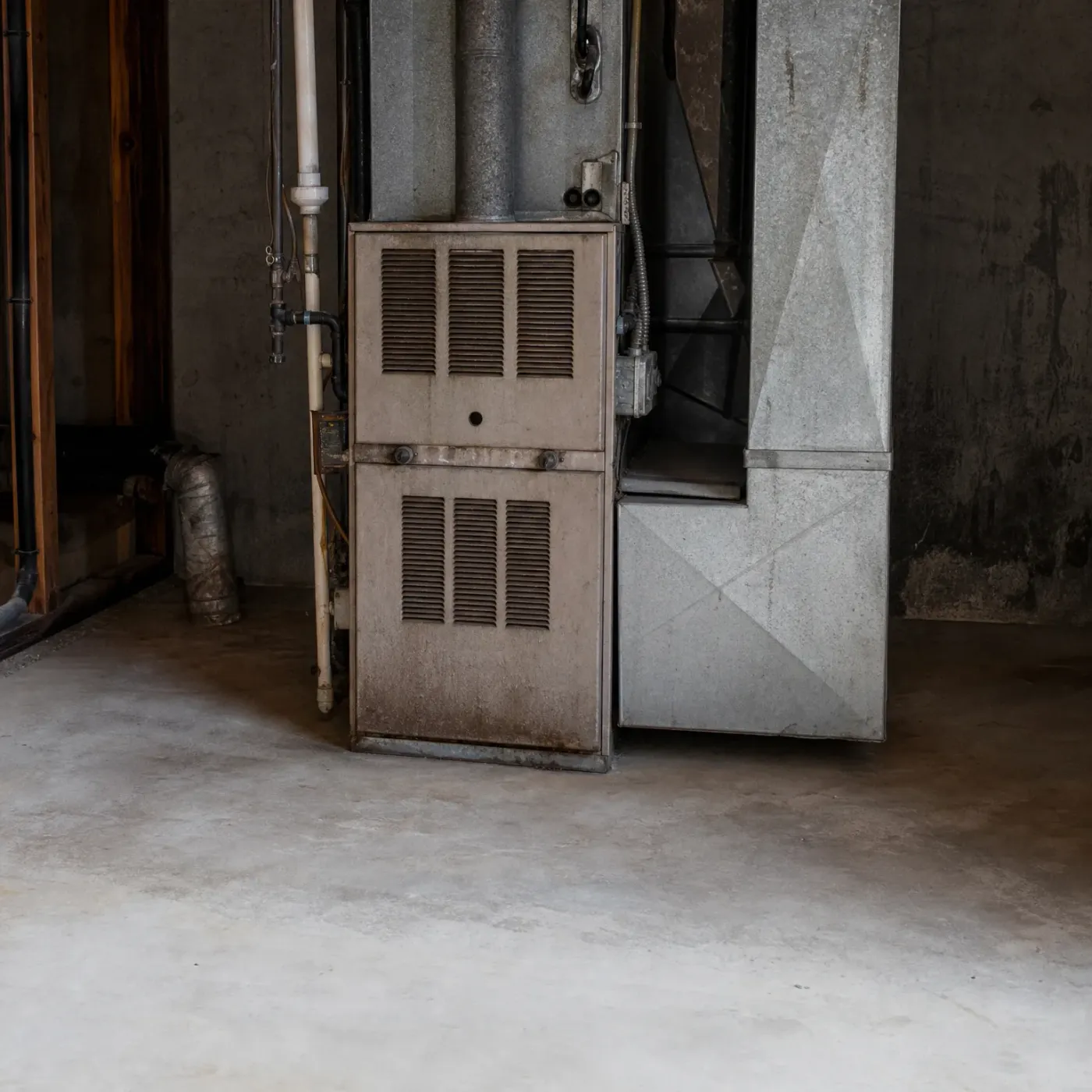
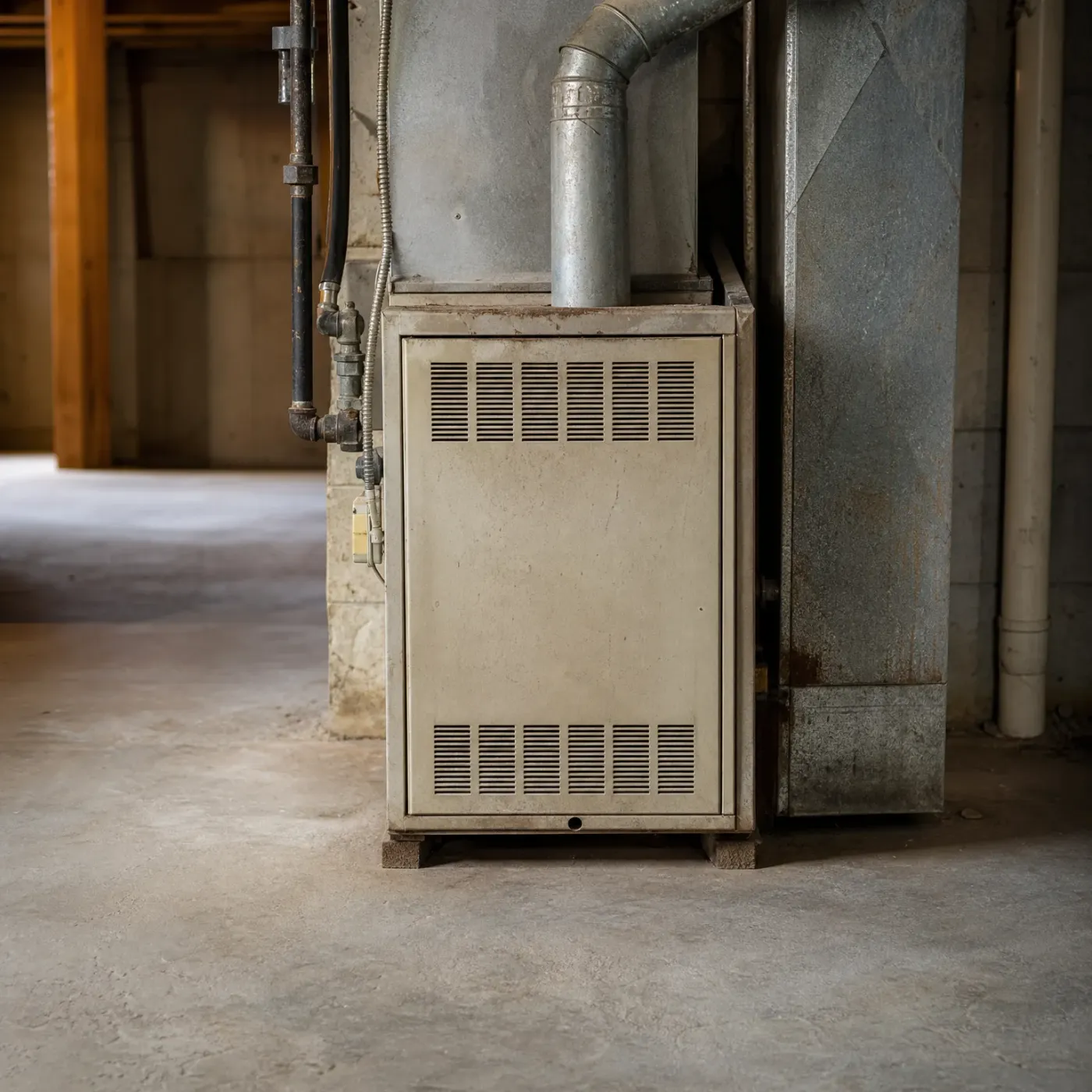
An older beige furnace with two louvered vent panels stands on a concrete basement floor, connected to galvanized ductwork and a metal flue pipe, with gas piping and flexible conduit on the wall behind.
Before you get your furnace repair
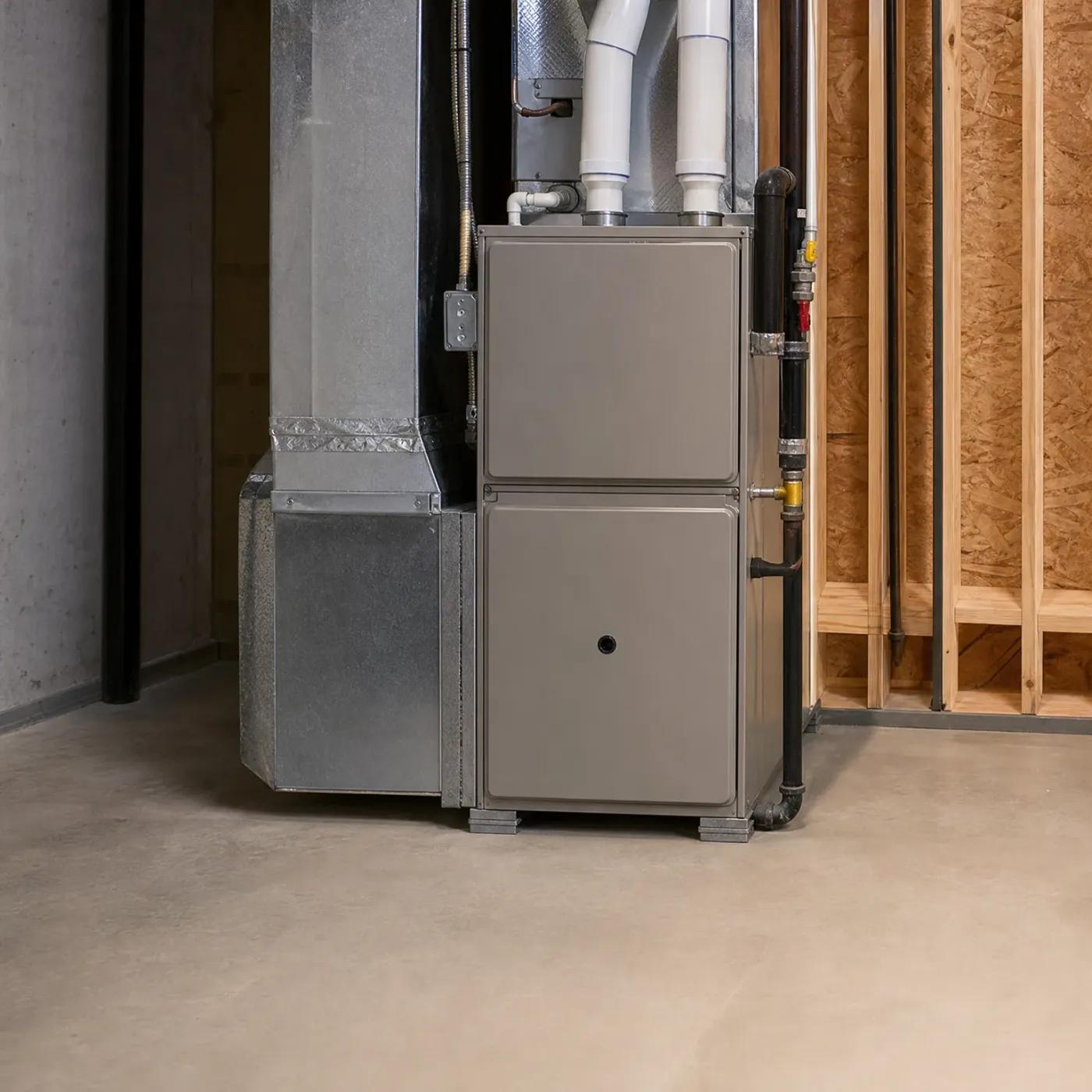
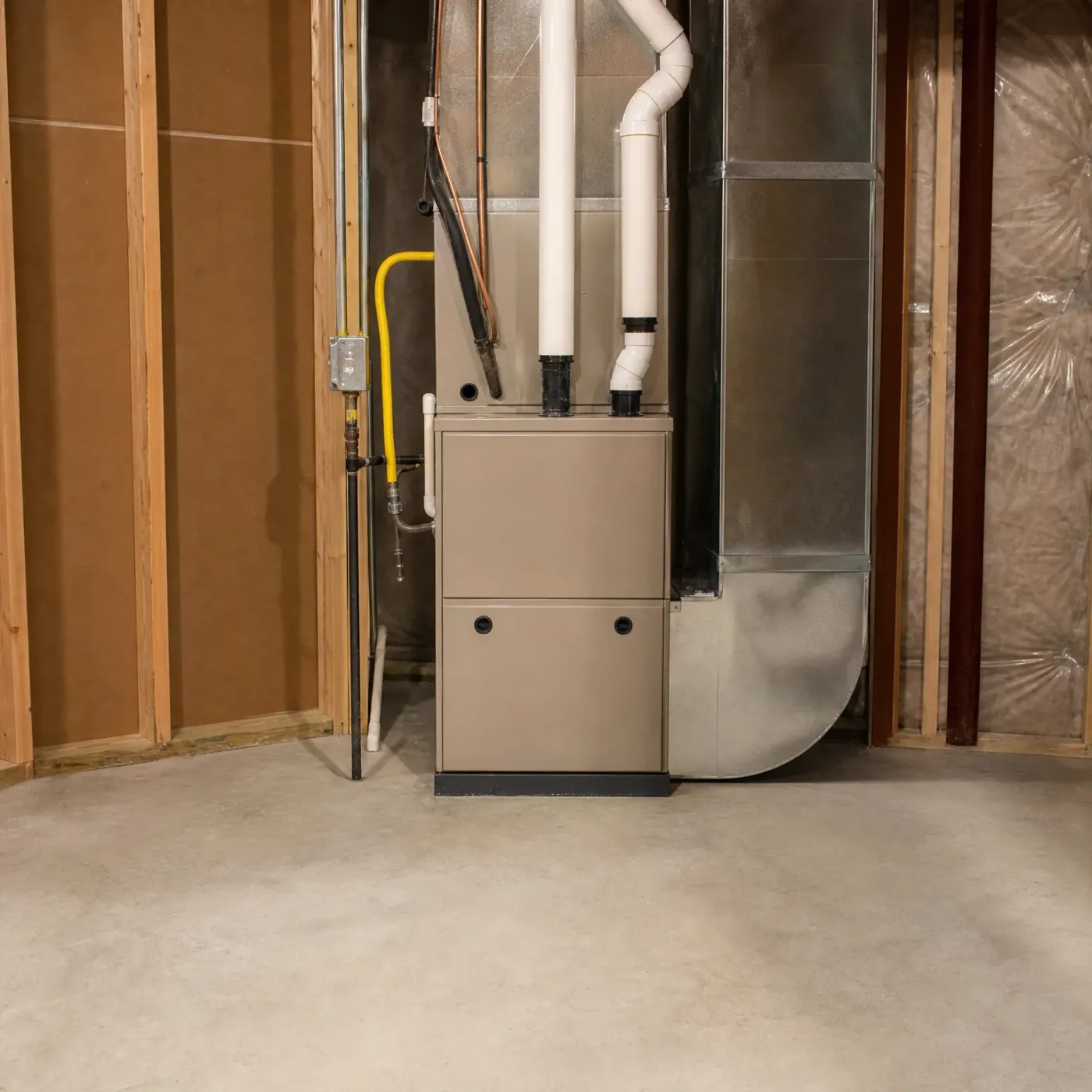
A beige high-efficiency furnace in an unfinished basement, with white PVC vent pipes, a yellow gas line, metal ductwork, and exposed wood framing on a concrete floor.
After you get your furnace repair

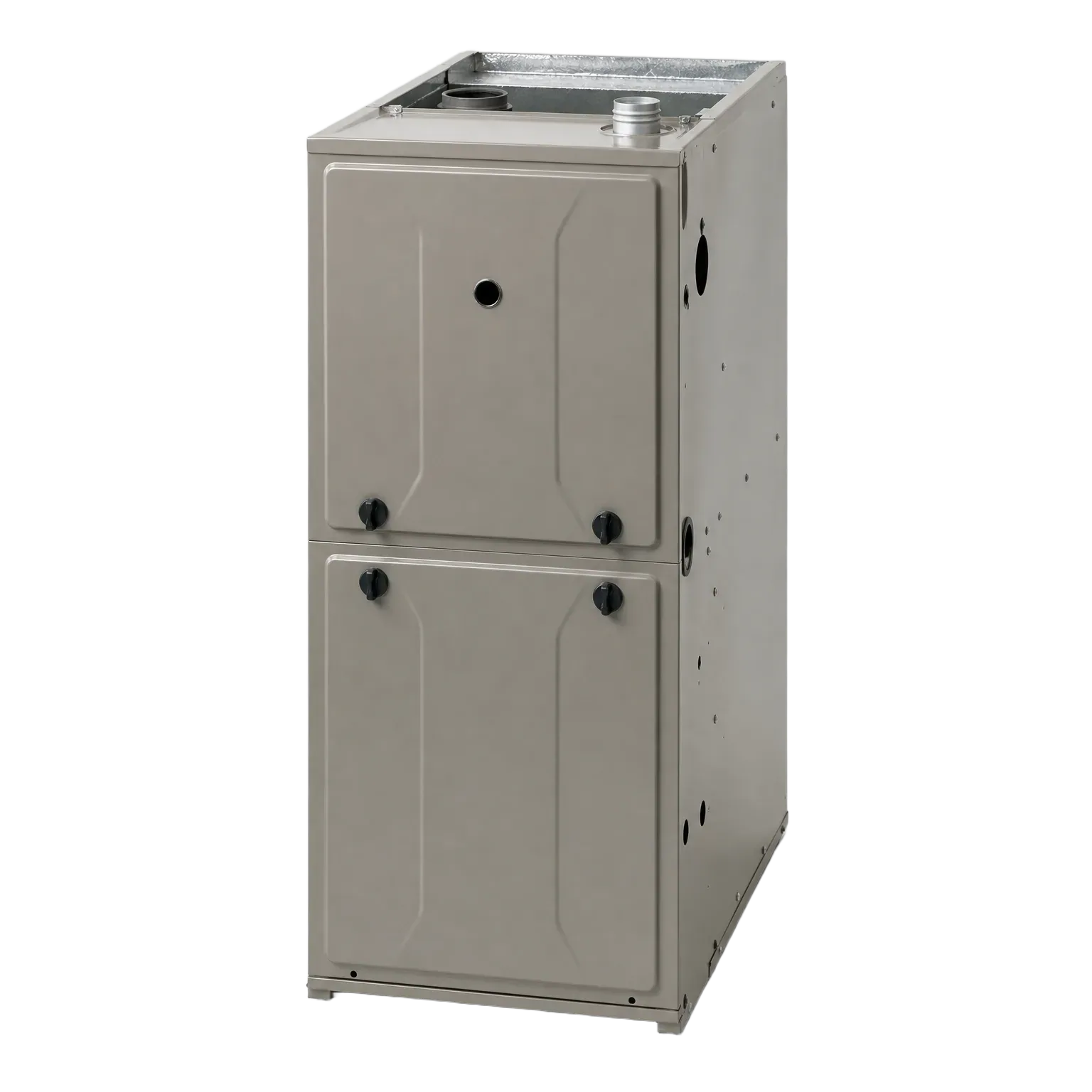
When power comes back, the control board doesn't just light the burners right away. It runs through a safety check first, so a few minutes can pass before you hear anything. The inducer motor spins up to clear the vent, and a pressure switch confirms that draw before the gas valve gets permission to open. If the igniter doesn't glow after a few tries, the board stops trying rather than keep feeding gas to an unlit burner. Once the flame does light, a sensor reads a small electrical current through it to confirm it's really burning. Even a little buildup on that rod can read as no flame and shut the gas back off. You might also feel cold air out of the vents at first. That's just the ducts clearing, not a sign anything's wrong. And if your furnace shares a breaker with a sump pump or well pump, several motors trying to start together can trip it, which looks like a furnace problem but isn't one.

What's happening inside the cabinet

  • The control board runs a safety check at power-up, so a full restart can take three to five minutes before you hear the inducer kick on.
  • If the inducer motor spins but the igniter never glows, the board will lock out after a few tries rather than keep sending gas to an unlit burner.
  • A furnace that sat off during a long outage may pull cold air through the ducts first, which is normal and not a sign the burners failed.
  • Flame sensors read a tiny electrical current through the pilot flame, and a speck of buildup on that rod is enough to shut gas flow back off.
  • Pressure switches check that the vent is drawing properly before the gas valve is allowed to open, so a blocked exhaust pipe will stop the cycle at that step.
  • Furnaces on the same breaker as a sump pump or well pump sometimes trip that breaker on restart if several motors try to start at once.
A gray high-efficiency furnace in a basement, connected to sheet-metal ductwork on the left and white PVC vent pipes above, with black gas and drain piping and an exposed wood-stud wall with OSB sheathing on the right.
A furnace like this restarts on its own: the inducer clears the vent, the igniter glows, and heat is back in minutes.
An older gas furnace with two louvered front panels stands on a concrete basement floor beside galvanized sheet-metal ductwork, pipes, and a weathered concrete wall.
A furnace like this one, older and sitting on a damp floor, is more likely to need a hand getting going again after an outage.
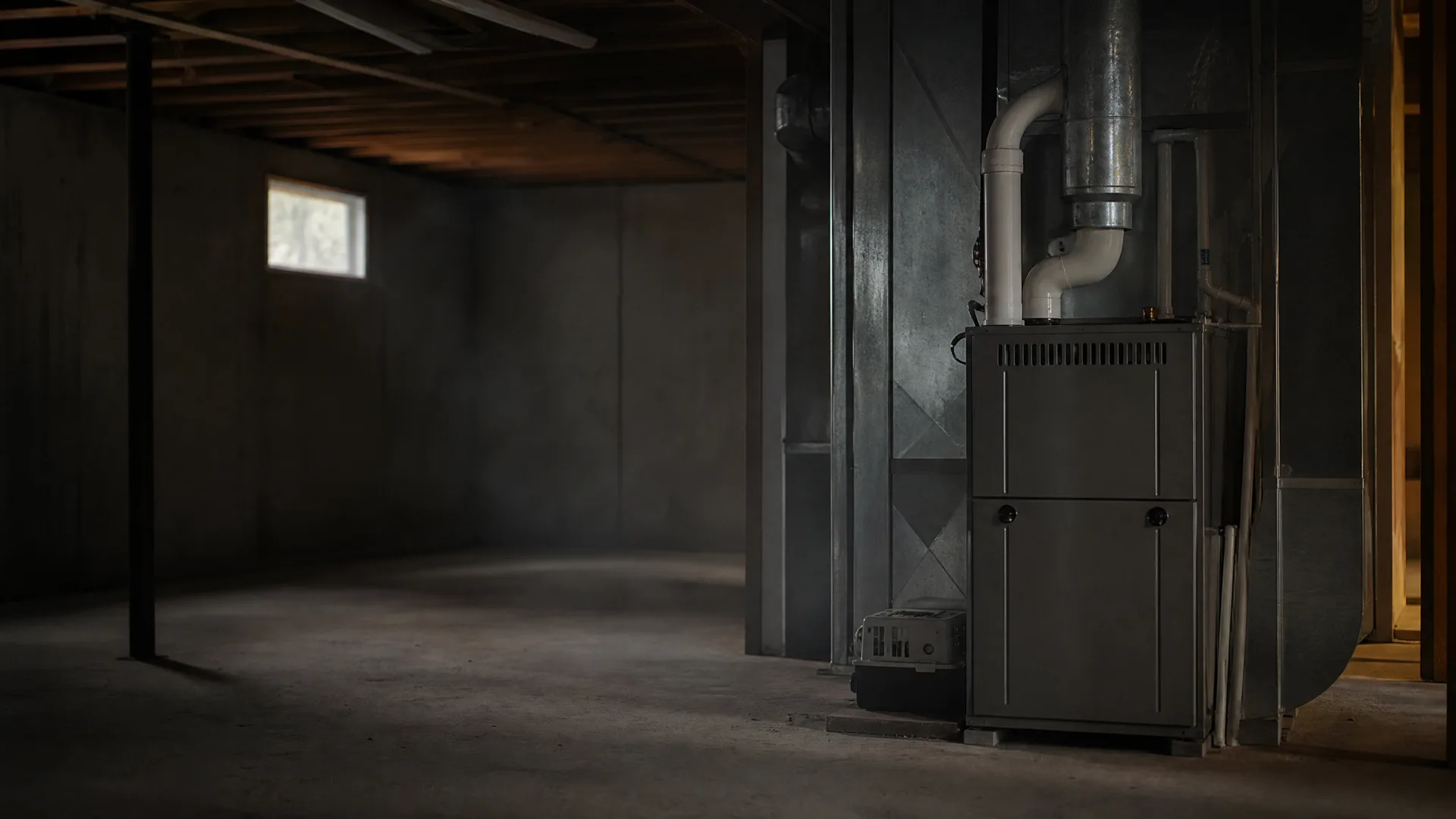
A dim unfinished basement with concrete walls, exposed floor joists, a small window, and a furnace connected to metal ductwork and PVC venting.

The outage knocked out around six, and now it's past eight. The house has gone quiet in the way it does when the furnace isn't running, no hum from the vents, no warm air moving. Down in the basement the furnace sits dark against the wall, a thin layer of dust catching the light from the bare bulb overhead. You crouch by the access panel and wait for some sign of life. Outside, a November wind pushes against the basement window. The thermostat upstairs still reads sixty-two. Nothing in the house moves to change that. If it stays this way much longer, this is where a local furnace tech who sees Iowa basements all winter would start looking.

A local pro for your furnace repair

Only one pro gets your request, so you hear from one company.

Asking costs nothing, and the choice to hire stays yours.

When it restarts on its own

Give it fifteen minutes after the power comes back. If the inducer motor kicks on, runs for a bit, and you hear the igniter catch, the furnace is doing what it's built to do. Warm air should follow within a few minutes of that. This is the normal case for most gas furnaces in Iowa, especially ones that aren't too old and have been running fine all along. No switches to flip, no reset button to find. The outage interrupted it, and now it's picking back up where it left off. If this is what's happening in your house right now, there's nothing to do but wait it out and let the system finish its cycle.

When it needs a hand

If fifteen or twenty minutes pass and the house is still cold and quiet, that's a different situation. Maybe the inducer never started. Maybe it started and stopped. Maybe it ran for a few seconds and the whole thing went silent again. A furnace that won't restart after an outage usually has a specific reason, a part that didn't come back the way it should have, or a safety lockout that tripped during the power interruption. That's not something to keep waiting on. A contractor who works on furnaces all winter in this area has seen this exact situation plenty of times and can tell you, often over the phone or within a short visit, what's keeping yours from starting back up.

A woman with shoulder-length brown hair wearing a beige knit cardigan sits in a gray upholstered armchair near a window, looking off to the side with a slight smile, with bookshelves blurred in the background.
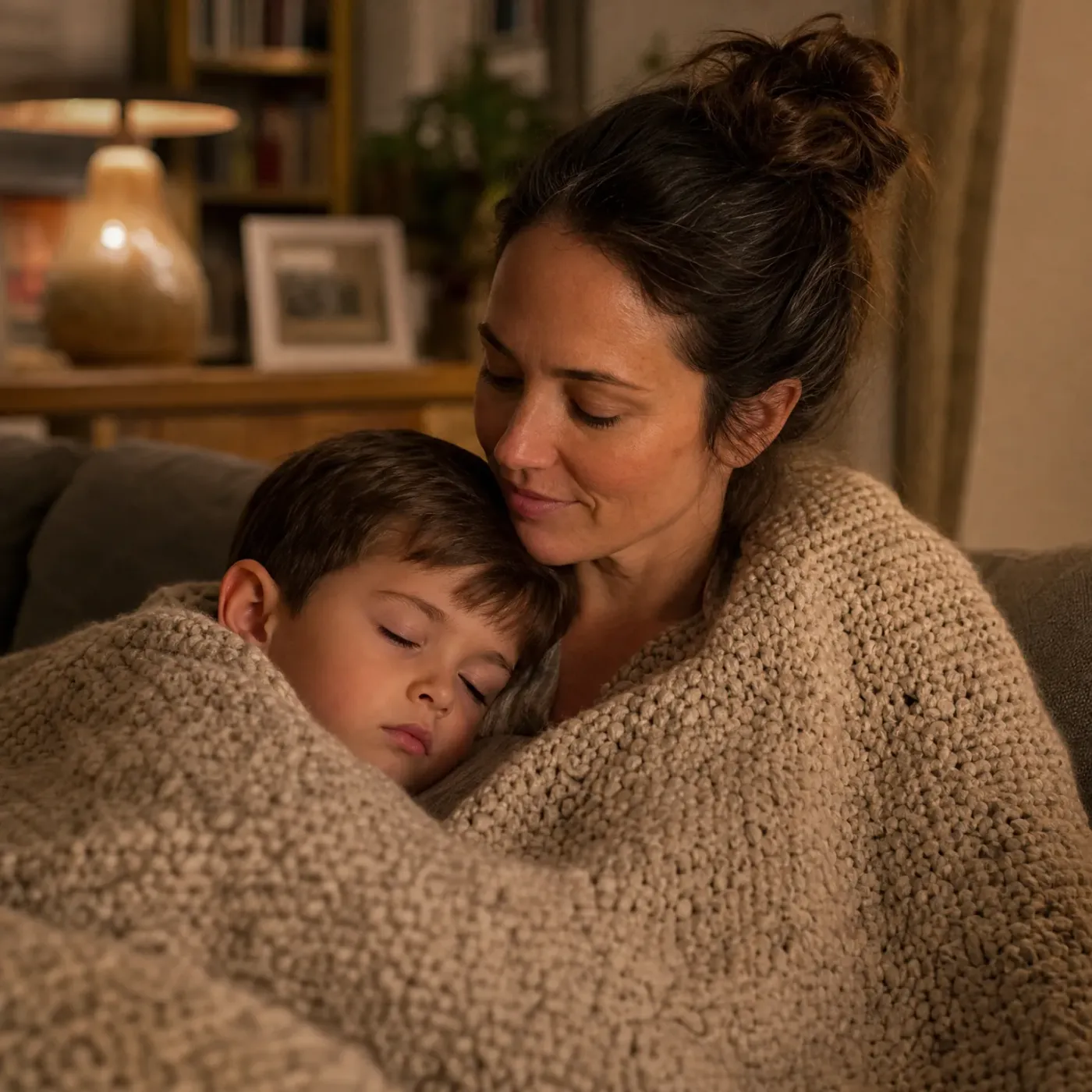
A woman with her hair in a bun holds a sleeping young child against her chest, both wrapped in a textured beige knit blanket on a sofa in a dimly lit room with a lamp, framed picture, and bookshelf behind them.

Still cold after 20 minutes

If the inducer never kicks on, or it runs and the igniter still doesn't glow, the board is likely locked out. That calls for a diagnosis, not another reset.

Get a local pro

One call, one contractor

You'll be matched with a licensed furnace contractor near you in Iowa, someone who sees these lockouts every winter and knows what to check first.

Get a local pro

Reset It or Get It Checked

Try the reset

  • Turn the thermostat down below room temperature, wait a minute, then set it a few degrees above and see if the furnace responds.
  • Check the switch that looks like a light switch near the furnace or at the top of the basement stairs, since outages sometimes bump it off.
  • Confirm the breaker for the furnace hasn't tripped, since a surge when power comes back can knock it out along with the outage itself.
  • Give the furnace a full fifteen minutes before trying anything twice, since the control board runs its safety check on its own time.
  • If it starts, let it run a full cycle rather than adjusting the thermostat again right away.

Call for a diagnosis

  • If the igniter never glows after a couple of tries, the board has locked out and another reset won't change that.
  • A furnace that's sat on a damp basement floor is more likely to need a hand restarting than one that's dry and newer.
  • Repeated lockouts point to a part that's failing, not a fluke from the outage, and that part has to be found and replaced.
  • A contractor who works on furnaces all winter in Iowa has seen which parts an outage tends to expose.
  • You'll be matched with one licensed local contractor rather than several, so you're not fielding calls from companies you didn't ask to hear from.
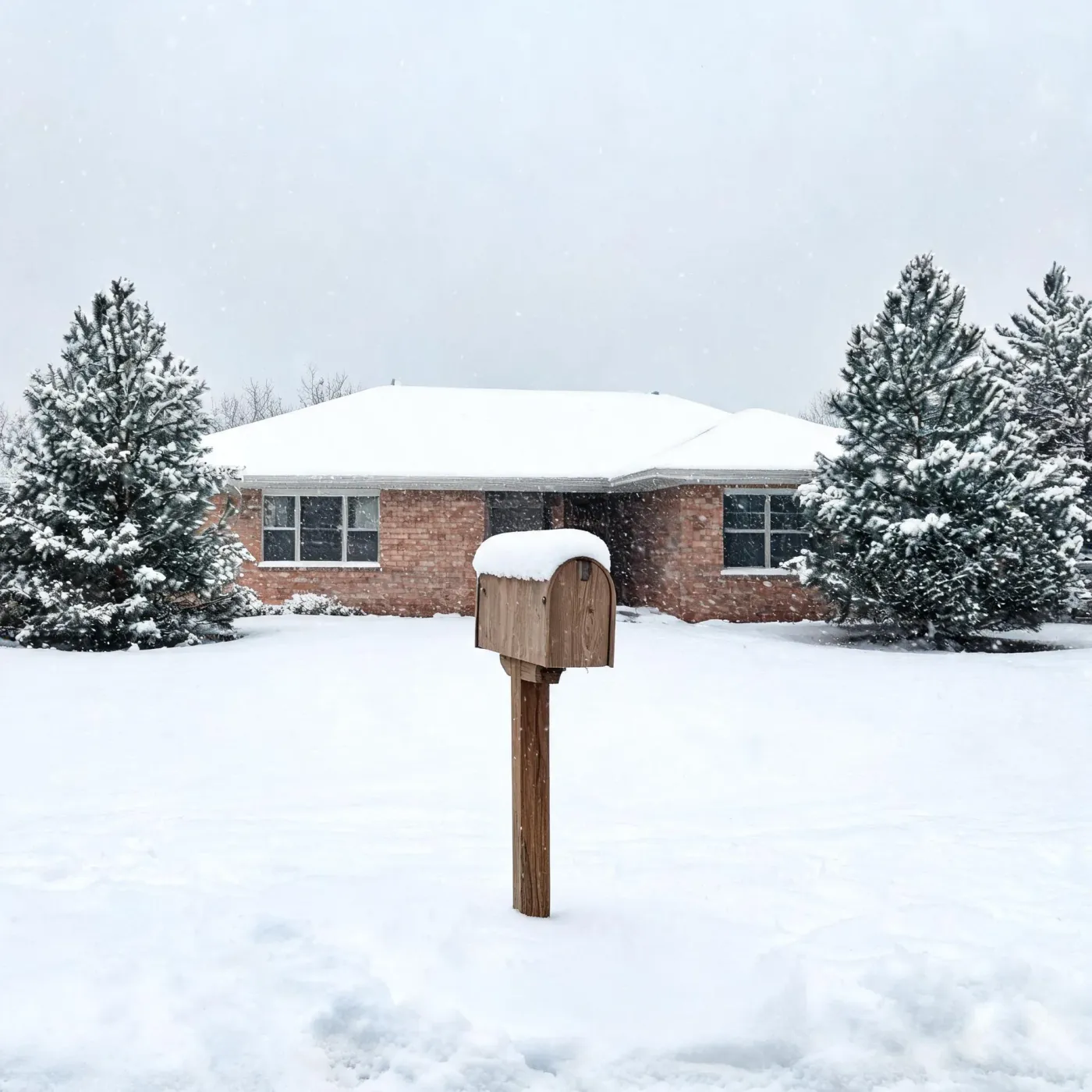
A snow-covered wooden mailbox on a post stands in a snowy yard in front of a single-story brick house flanked by snow-laden evergreen trees during falling snow.

Winter nights average 15°F across Iowa, per NOAA climate data, and that's the stretch where a slow restart actually matters. At that temperature a house loses heat fast once the furnace stops running, and a basement floor or a cold air return can feel it within the hour. If a power outage hits on a night like that, the few minutes it takes the furnace to relight are the difference between a house that's merely cool and pipes that start to worry you. It's also why a furnace that doesn't come back on its own needs a look sooner rather than later out here. A mild fall evening gives you room to wait it out. A 15°F night doesn't.

NOAA nClimDiv 1991-2020 county normals weighted by homes

Why does the house still feel cold and quiet

You'll notice it before you think about it. No hum from the vents, no warm air at the registers, and the thermostat screen either blank or showing a temperature that keeps dropping instead of holding. Some furnaces click and try to start, then go quiet again after a few seconds, that's the board giving up partway through its check. Others just sit dark no matter how many times you bump the thermostat. If this drags on, pipes near outside walls and in the basement are what to watch. In a long outage followed by a furnace that won't restart, those are the first to feel a hard freeze, and a frozen line is a bigger repair than the furnace itself.

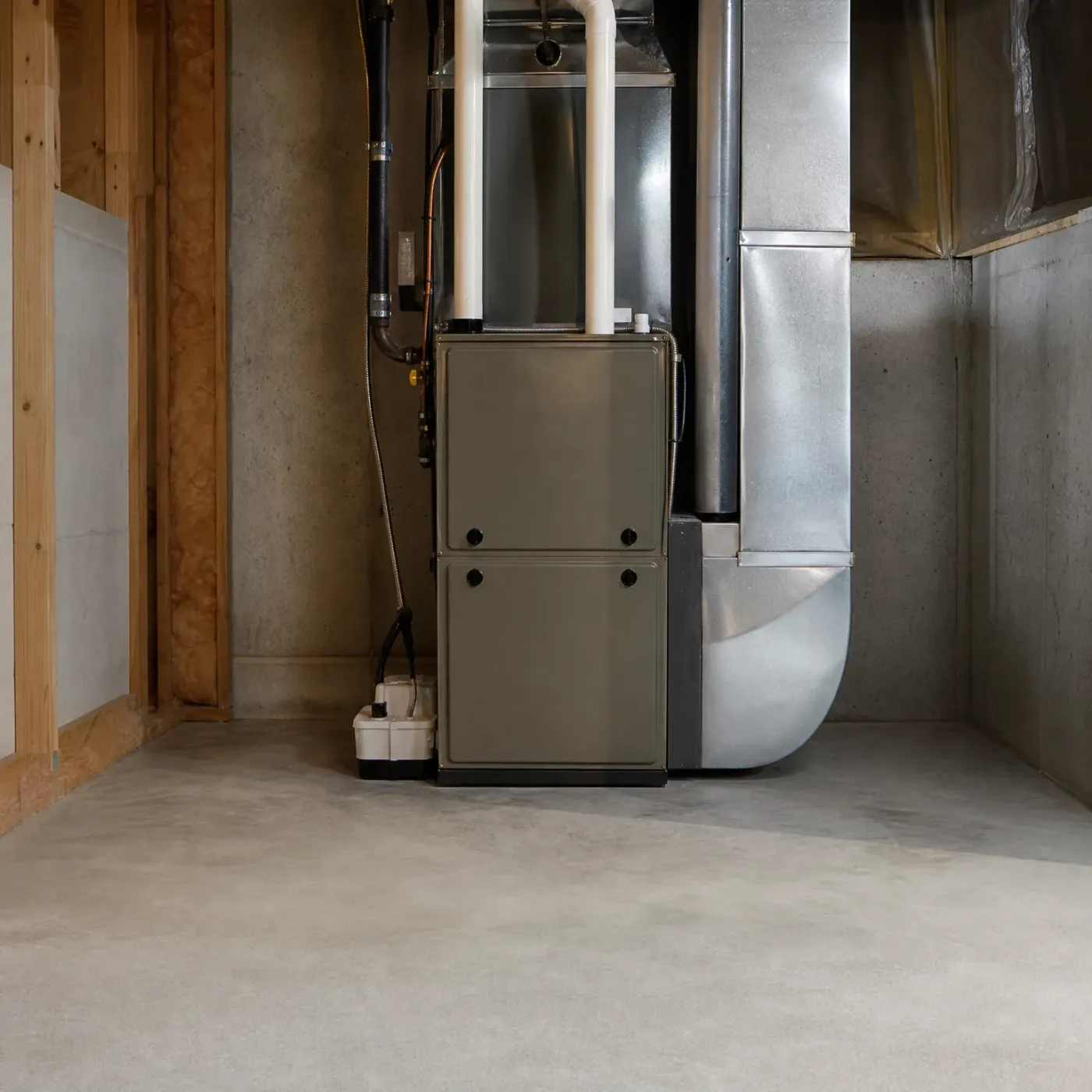
A gray high-efficiency furnace with white PVC vent pipes stands against a concrete basement wall beside sheet-metal ductwork, a small condensate pump on the floor, and exposed wood framing at left.

Running clean

This is what a furnace looks like doing its job. The flue pipes are clear, the ductwork is tight to the trunk line, and the condensate pump sits ready to drain what the unit produces. A furnace like this on a dry floor comes back from an outage without much fuss.

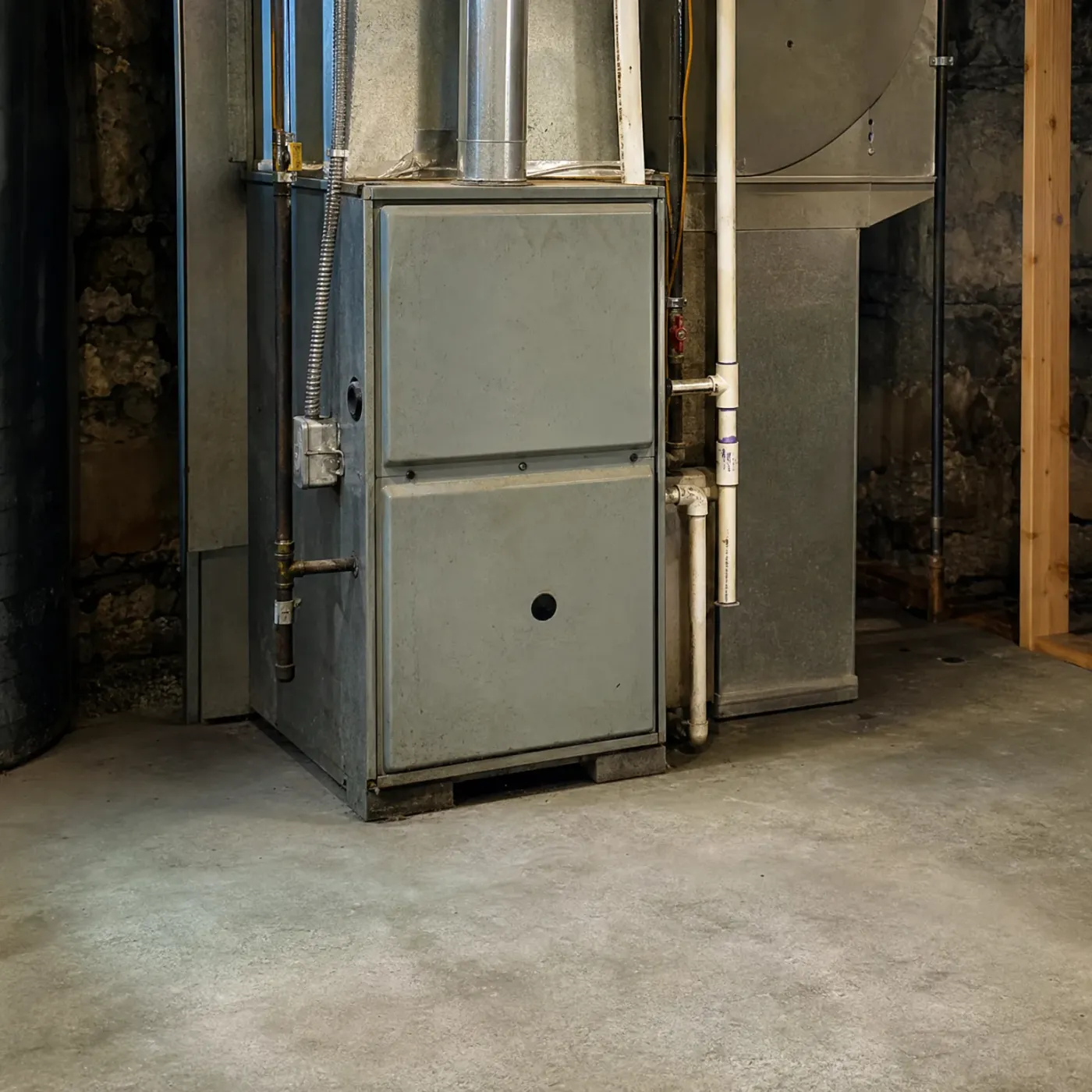
A gray sheet-metal furnace with flue pipe and adjacent ductwork stands against a stone basement wall on a concrete floor, with white PVC and metal pipes running nearby.

Working against it

Gas lines, flex tubing, and condensate pipes all feed into a furnace that's seen a lot of winters. Stone and block walls like these hold damp, and an older unit sitting low in a basement like this has more that can go wrong when the power cuts and comes back.

Winter nights average 15°F statewide

At 15°F, a furnace that won't restart isn't a problem you sit with. A house this cold loses its warmth fast, and pipes along outside walls start to matter within a few hours, not overnight.

NOAA nClimDiv 1991-2020 county normals weighted by homes

A man seen from behind raises his hand to wave at a woman standing in the open front doorway of a single-story house with gray shingle siding, white columns and a gabled porch entry.

So that's where you stand

Most furnaces in Iowa come back on their own once the power does. Give it a few minutes, check the thermostat, check the switch at the top of the stairs. If the inducer kicks on and the igniter glows, you're done, and the house will be warm again before long.

If it doesn't, that's not something to keep trying on your own. A locked-out control board needs someone who knows why it locked out, not another reset. You'll be matched with one licensed furnace contractor local to your part of Iowa, someone who sees this exact furnace model every winter and knows what tends to fail after an outage. They'll reach out to you directly. Just the one contractor, so you're not fielding calls from five different companies while your house sits cold.

A living room corner with a beige upholstered armchair holding navy and striped cushions, a small round wooden side table with a carved bowl and a potted green plant, a framed landscape picture on a pale wall, built-in shelving, and a curtained window.
Kitchen corner with cream upper cabinets, oak lower cabinets, white marble-look countertop, beige tile backsplash, a ceramic vase of greenery, a wooden cutting board and bowl, and a black-framed window at right.
Interior corner of a room with a white-framed window and wide sill, beige walls with panel molding, a wooden cabinet holding a ceramic vase with a green leafy plant, and blurred shrubs and trees outside.
A wood-framed armchair with beige cushions and a woven lumbar pillow sits in a corner beside a large window overlooking green trees, with a tall ceramic vase holding leafy branches on the left and plaster walls and wood flooring.
Interior corner with a white-framed window above a sill, beige walls with baseboard molding, a greige shaker-style cabinet with brass knobs and a potted plant on top, light wood flooring and a woven jute rug.
A dark-framed six-pane window with white trim and sill set in gray horizontal lap siding, with hydrangea shrubs below and a white column and shingled roof section at left.

A pro who works on furnaces

Your request goes to one pro, not a list of companies.

Match me with a pro

Sending the form costs nothing.