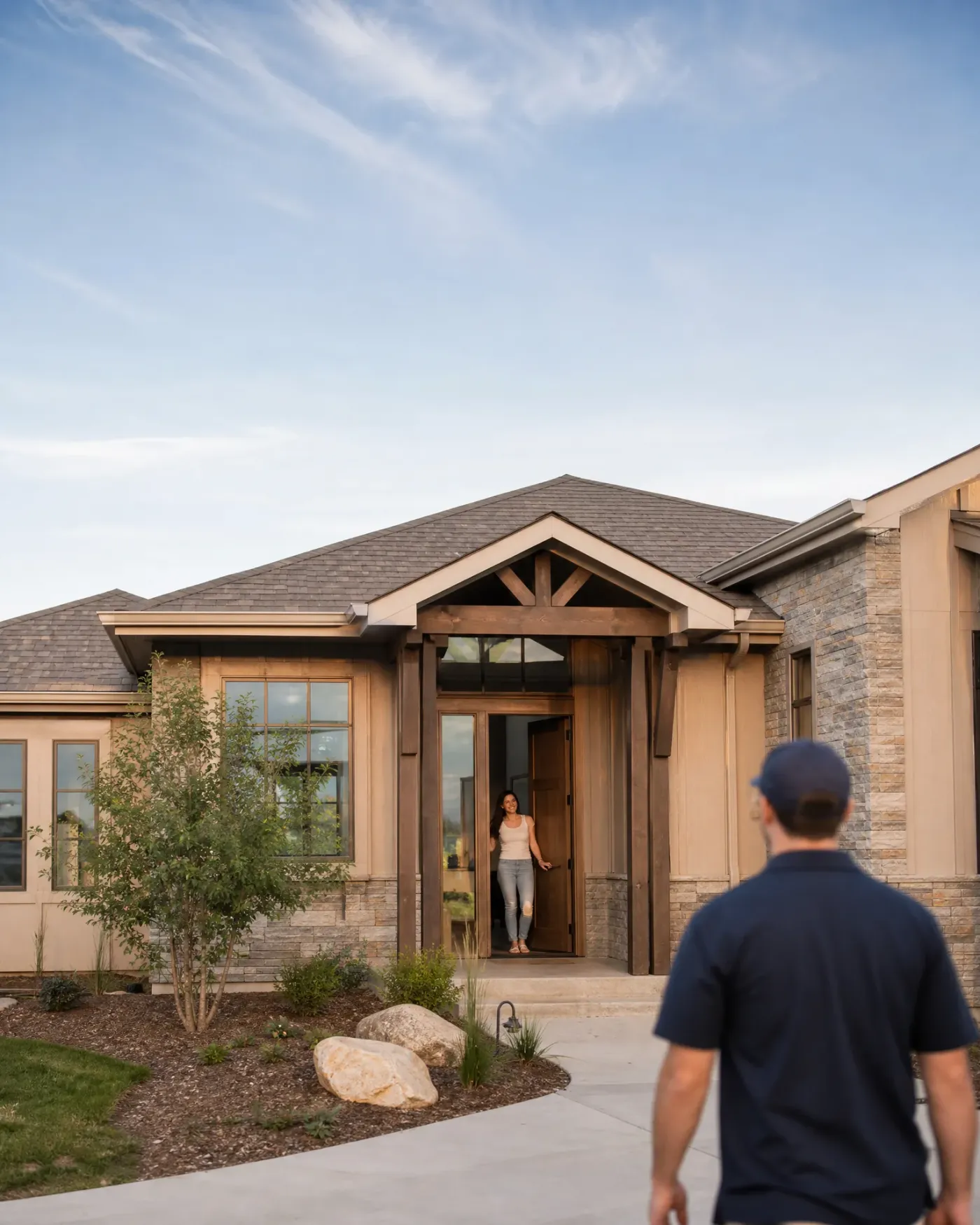
A Story County pro who repairs furnaces gets your request.
A furnace that quits in January in Ames is not something to sit on. Most homes here run on gas, and when the furnace stops, it stops the only heat the house has. Pipes freeze faster than you'd think once the house drops below 50.
A dead furnace usually comes down to a handful of things: the igniter won't light, the flame sensor is dirty, the pressure switch isn't catching, or the thermostat lost its mind. Some of these you can check yourself. A tripped breaker or a thermostat with dead batteries takes two minutes to rule out. A cracked heat exchanger or a failed inducer motor does not. If the furnace is dead, cold, and the breaker is fine, that's a repair call, not a project.
What happens next matters more than the diagnosis. You should not have to call around Story County in the cold hoping someone picks up, or wait days for a callback while the house gets colder. Send the details once, and a contractor who works on furnaces like yours and knows the area gets them and reaches out to you directly. You're not left holding a list of numbers to try one by one.
Power here is cheap, so a space heater or two can hold you over in a room or two while you wait, but that's not a fix for a house this size in a Story County winter. The furnace needs someone who can get a hand on it, see what's actually failed, and get the heat back on.
That's the part that's out of your hands once you send the details. Finding the right contractor, one who handles this kind of repair and can get to a furnace in Ames, stops being something you have to chase down yourself.
First, check the thermostat is set to heat and the temperature is set above room temperature, then check the breaker for the furnace and the switch that looks like a light switch near the unit, since that cuts power to it for service and sometimes gets bumped off. If those are fine, check the filter. A filter clogged with dust can choke airflow until the furnace overheats and shuts itself down as a safety measure. Gas furnaces also need the pilot or igniter to light the burners, and if that part has failed, the blower may run but no warm air comes out. None of this is something to leave for later. Story County winters push nights well below freezing, and a house with no heat loses warmth fast enough that pipes become a real risk within a day. If the basic checks don't bring it back, the furnace needs a hand from someone who can get inside it.
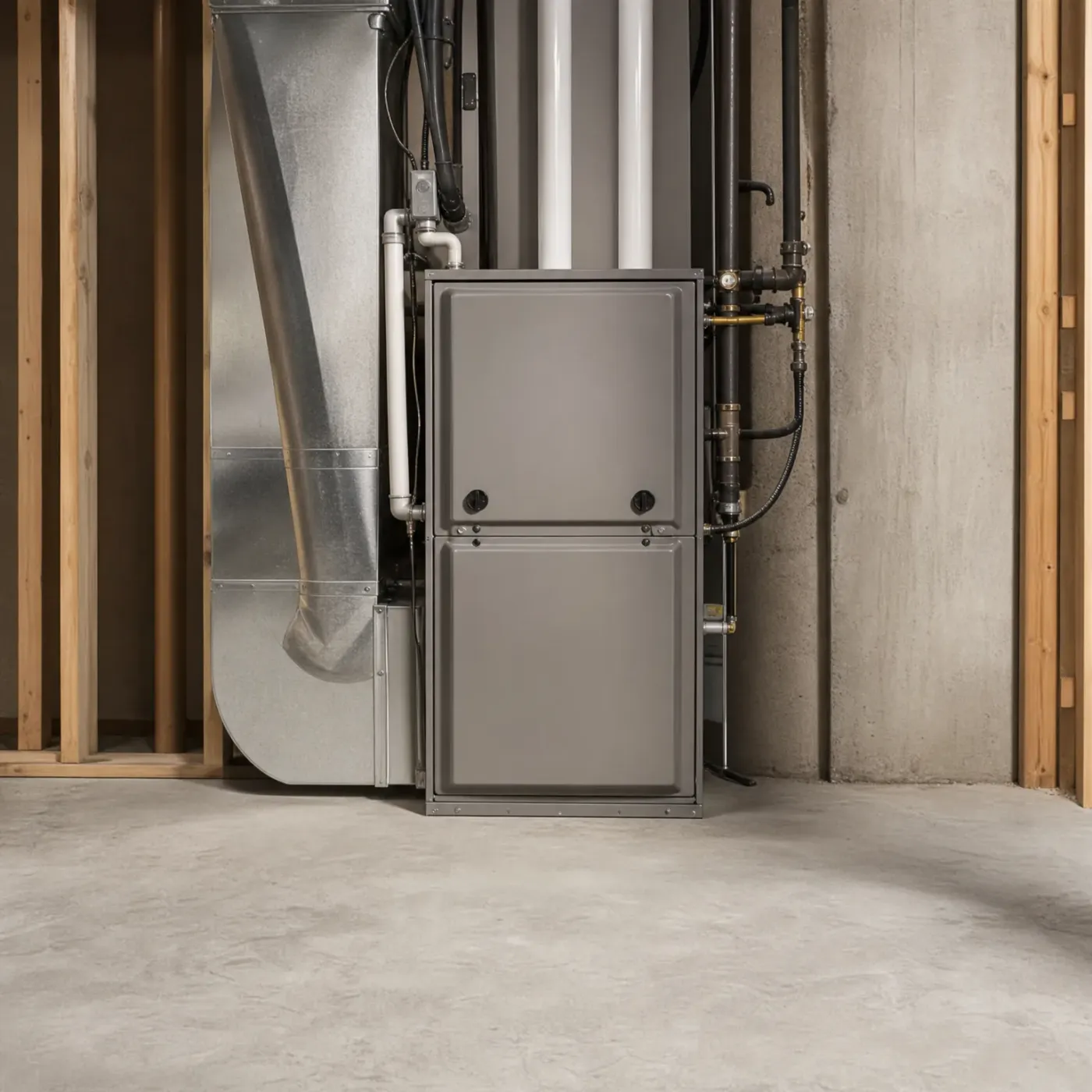
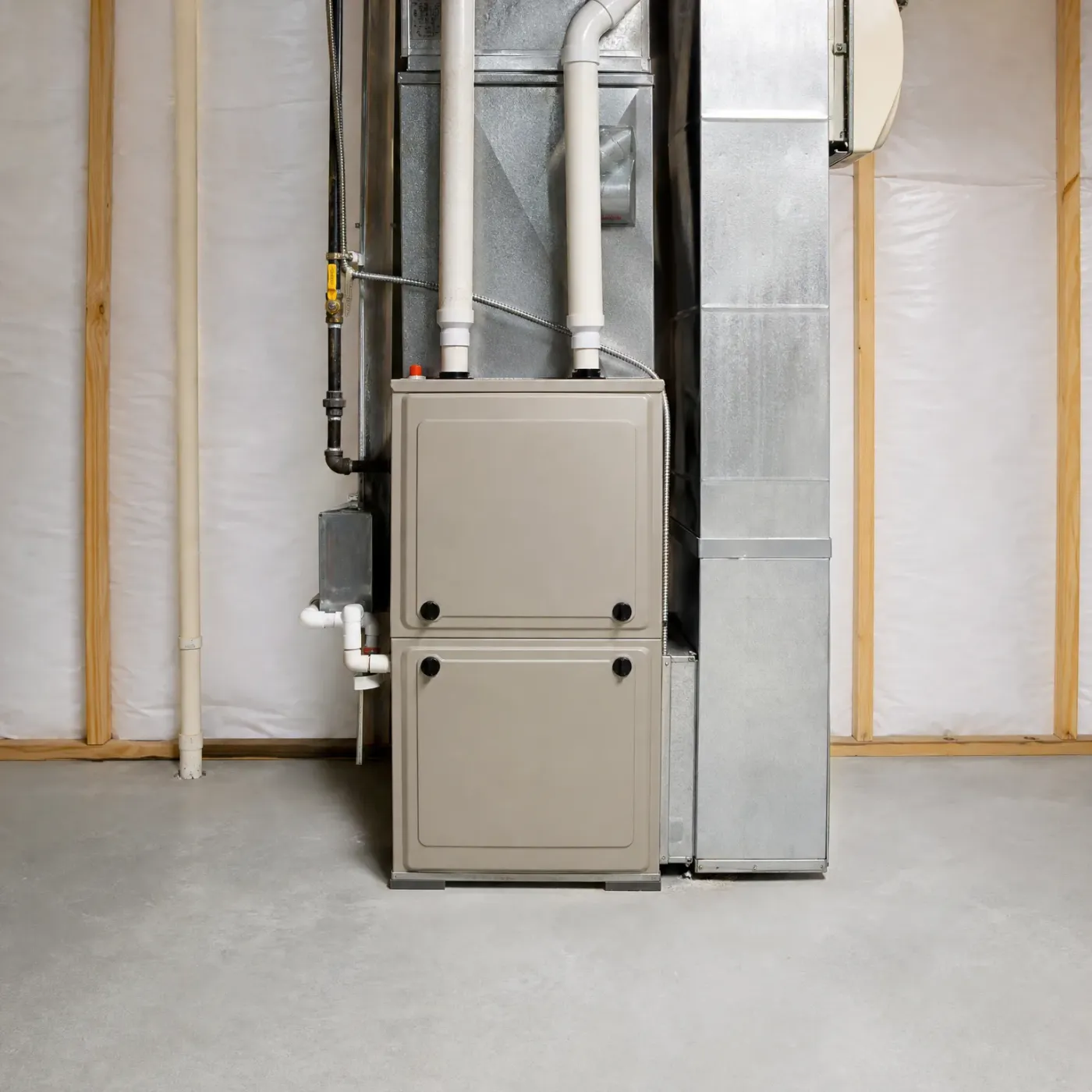
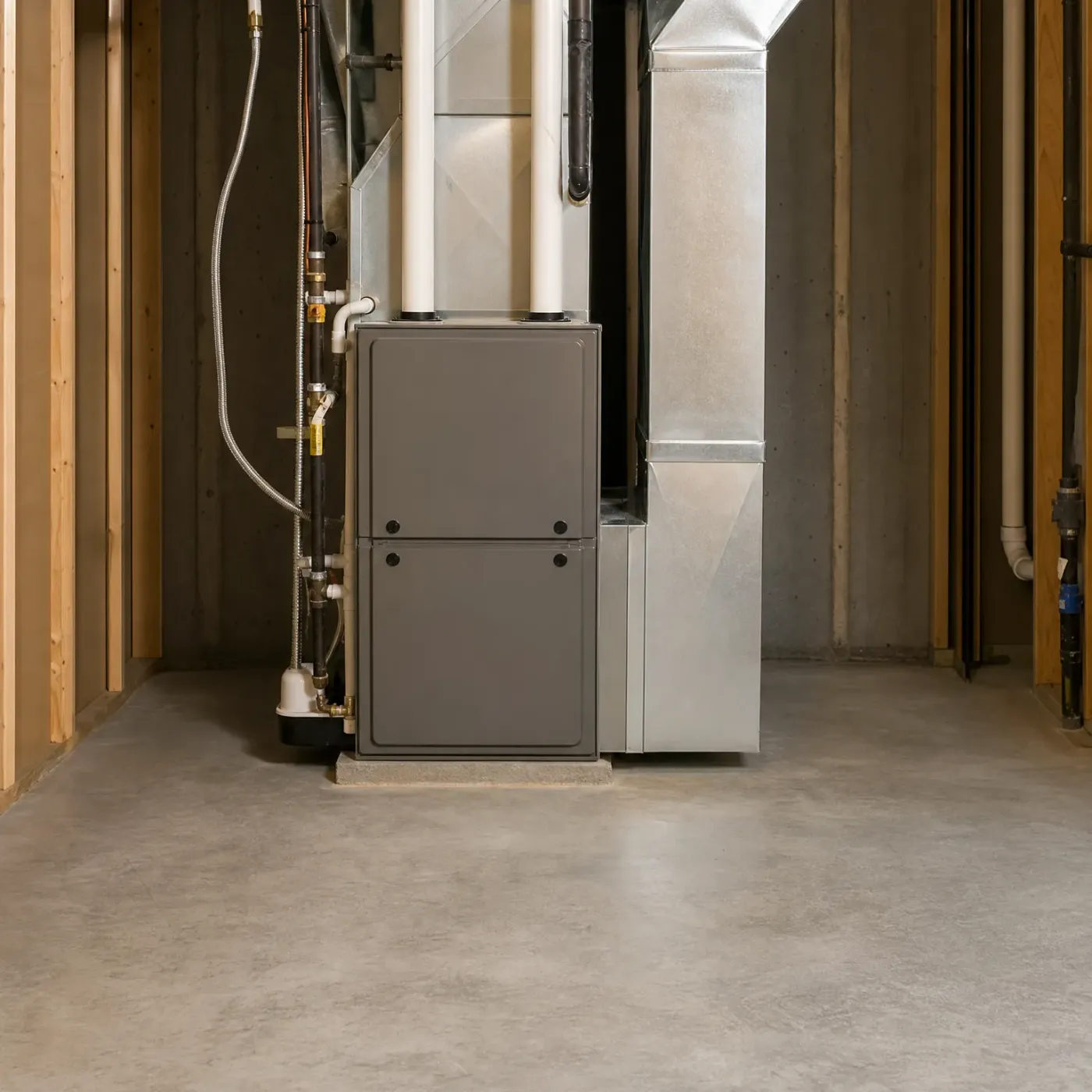
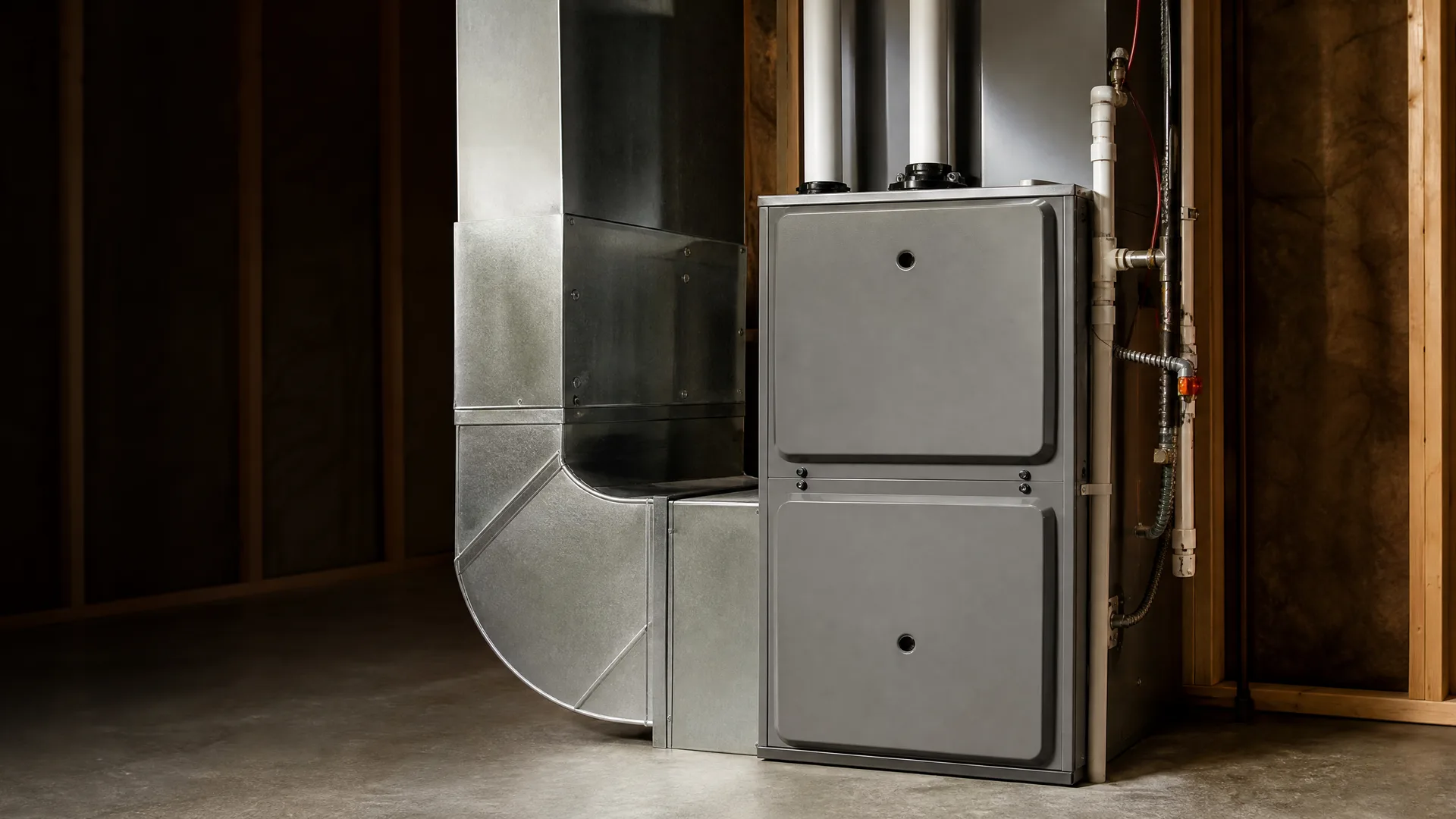
A furnace like this one is doing its job: no rust on the cabinet, a steady connection to the ductwork, nothing straining the eye.
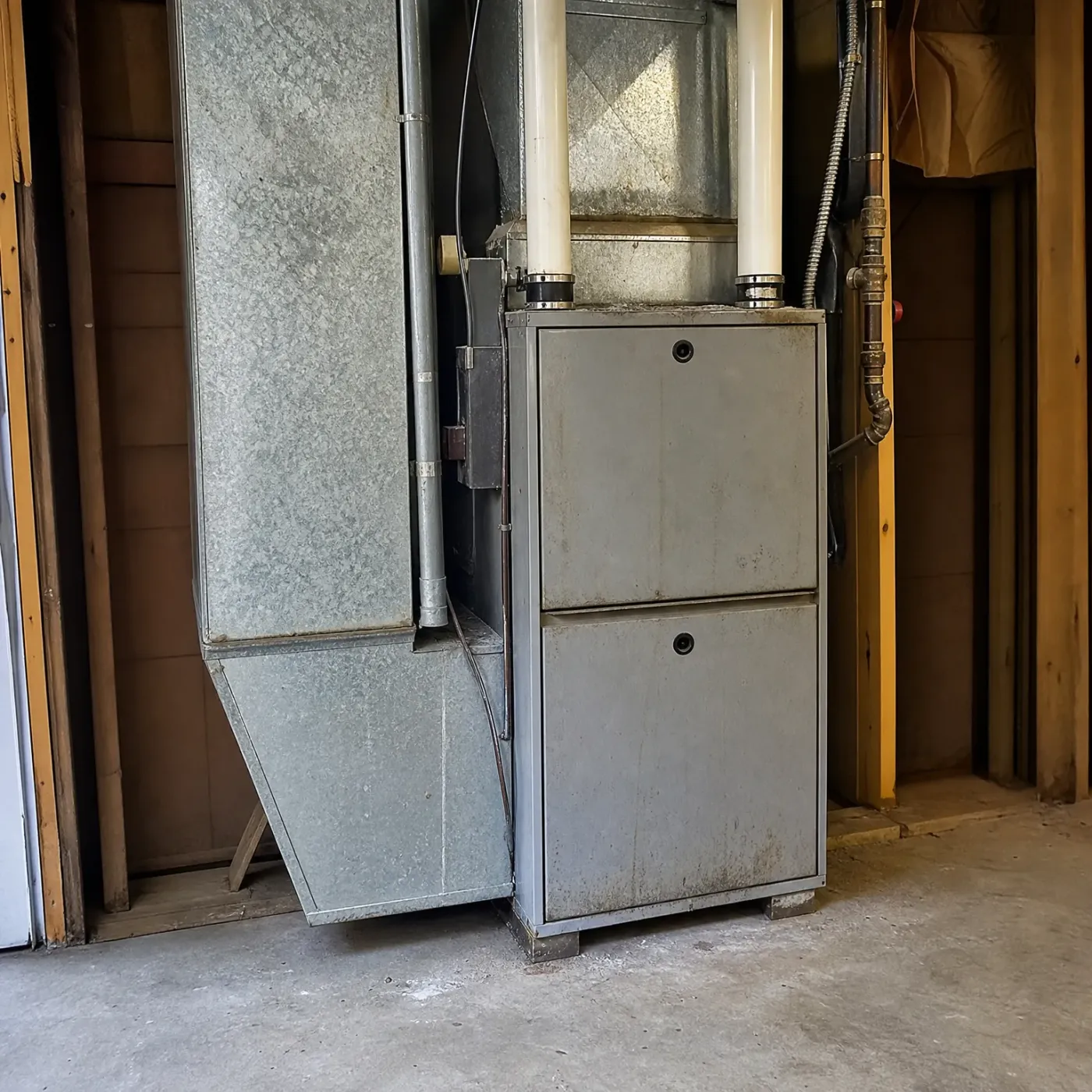
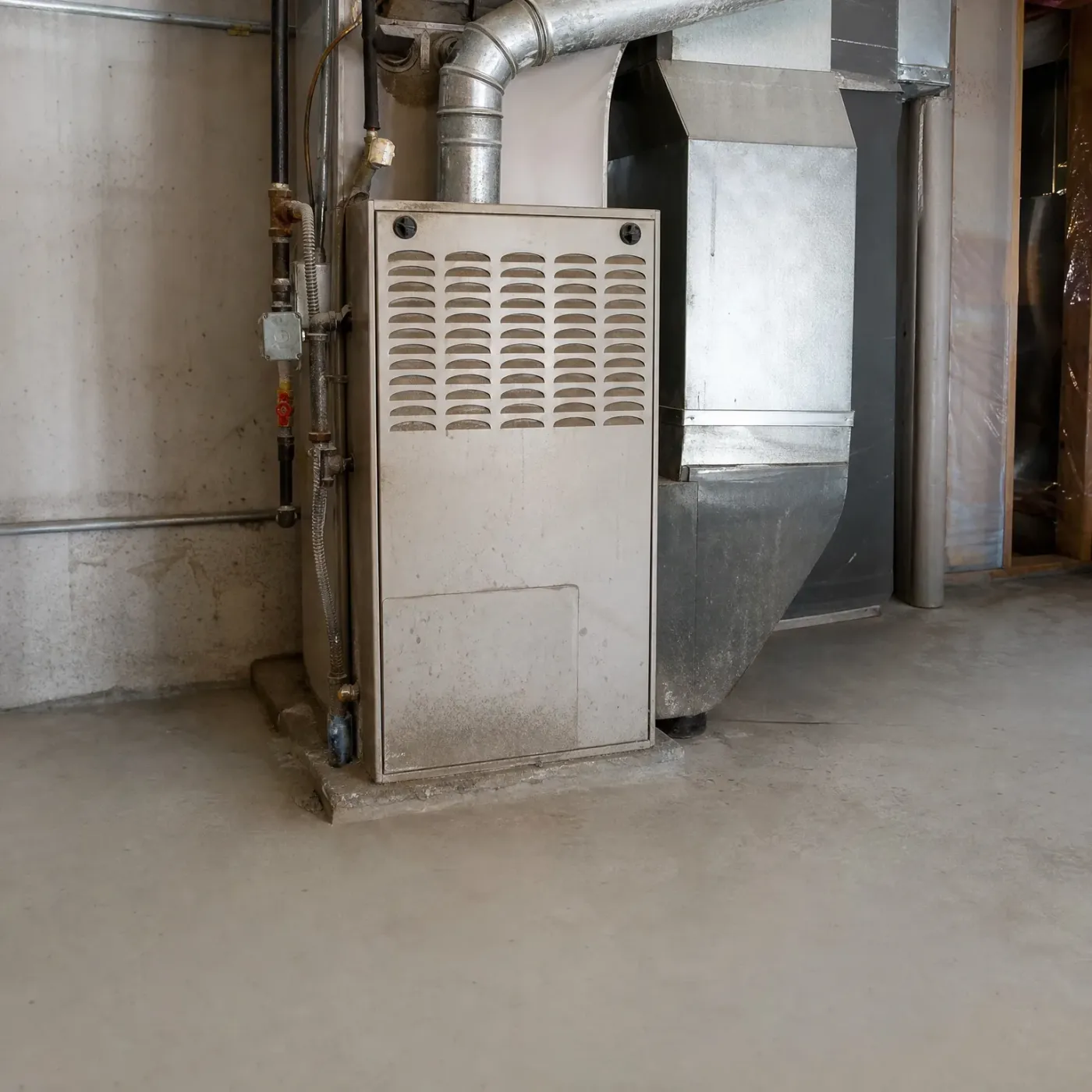
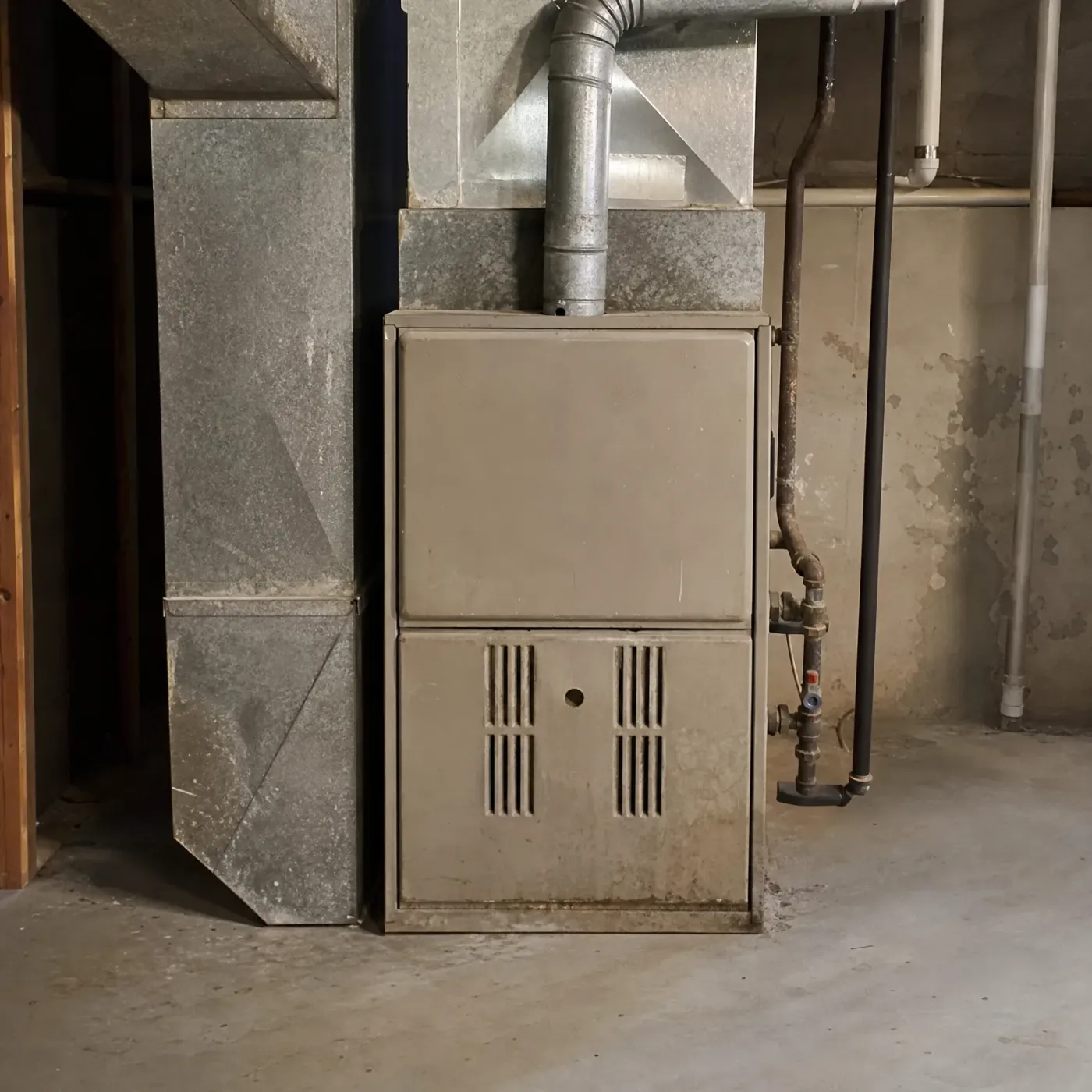
Rust on the cabinet and aging pipes like these are a sign a furnace is wearing out, not just acting up for a day.
A furnace does not just click on. The thermostat calls for heat, and the inducer motor starts first, pulling old gas and exhaust out of the heat exchanger before anything sparks. A pressure switch is watching that draft. If the inducer is not moving enough air, the switch holds everything off right there, no igniter, no gas. Once it sees proper draft, the igniter heats up or sparks, the gas valve opens, and the flame sensor has about a second to prove there is real fire. No flame, and the control board shuts the valve again rather than letting gas flow with nothing burning it off. It will try a few more times before it locks out for good. Only after the heat exchanger has had time to warm does the blower kick on, usually thirty to ninety seconds after the burners light, pushing that heat through the ducts and into the house. Each step depends on the one before it. A furnace that won't start is usually stuck at one of these, not broken all the way through.
How a Gas Furnace Actually Fires
A gas furnace has to prove three things in order before the burners light: a call for heat, a safe draft, and a spark or hot surface to ignite the gas.
The inducer motor runs first, clearing the heat exchanger of old gas and pulling in fresh air so nothing ignites in a space that is not venting right.
A pressure switch checks that the inducer is actually moving air before the igniter gets power, and it will hold the furnace off if the venting is blocked.
The igniter heats up or sparks, the gas valve opens, and the flame sensor has about a second to confirm a flame is burning before the valve closes again.
If the flame sensor does not see fire, the control board shuts the gas valve as a safety step, and the furnace tries again or locks out after a few attempts.
Once the heat exchanger is warm, the blower motor starts moving house air across it and through the ducts, usually thirty to ninety seconds after the burners light.
A furnace that won't stay lit or won't fire at all isn't something you can wait out when it's this cold in Story County. You can check the thermostat, the breaker, the switch, maybe even the filter. If none of that brings the heat back, what's left is usually inside the cabinet, the igniter, the inducer motor, the gas valve, and that's not a repair most people are set up to make themselves. A furnace this age might need a part replaced, or it might be telling you it's done. Either way, someone has to look at it before you know which. Sending the request means you're not the one making calls and comparing schedules while the house keeps cooling off. A contractor who works on furnaces in this area takes it from here.
What a Cold House Costs You
A house in Story County can drop below 50 within hours once a gas furnace quits in January.
Water left standing in pipes along outside walls can freeze before you have time to call anyone.
Space heaters running all night in several rooms can trip breakers that are already carrying the cold load.
A furnace that short-cycles for a day or two before quitting was already failing, not just unlucky.
Pets and older adults in the house feel a cold snap faster than the thermostat reading suggests.
A frozen pipe that bursts behind a wall costs far more to fix than the furnace did.
A furnace going out in Story County turns into a bigger problem than cold feet if it sits for long. Once the house starts losing heat, it doesn't lose it evenly. Rooms over an unheated garage or along the north wall drop first. Pipes running through outside walls or an unheated basement are the real risk, since water sitting still in cold metal freezes well before the rest of the house feels unlivable. That's a burst pipe and a wall torn open, on top of the furnace repair you already needed. Space heaters feel like the obvious fix, but running two or three of them overnight pulls more than an old circuit was built for, especially one already strained by a cold snap. A breaker trip at 2 a.m. leaves you worse off than when you started. Watch how the furnace was acting before it quit. Short-cycling, a longer run time than usual, or heat that felt weaker than it used to are signs the system was already failing. That one's not coming back with a reset. The people and animals in the house are the real measure here, not the number on the thermostat. Older adults and pets feel a drop in temperature long before a reading would call it urgent. None of this is a reason to panic. It's a reason not to wait it out and see.
Before you get your furnace repairAfter you get your furnace repair
Why the pilot or igniter quits first
Most no-heat calls in Story County trace back to ignition, not the blower or the ductwork. A standing pilot can blow out if a draft gets into the cabinet, and it won't relight on its own. An electronic igniter is worse off: it's a thin strip that wears out after enough cycles and just stops glowing, with nothing a homeowner can do to restart it. Either way the furnace still runs its fan and still draws power, so the breaker and thermostat can check out fine while the burners never light. That's why ignition is usually the first thing a contractor checks, even before touching anything else.
Why a short cycle wastes a cold night
A furnace that lights, runs for a minute or two, then shuts off is still failing, even though it looks like it's working. That pattern usually means a safety switch is cutting power on purpose, often because the heat exchanger is overheating or airflow is restricted somewhere past the filter. Letting it keep cycling overnight doesn't warm the house, since each burst of heat is too short to raise the temperature before the switch trips again. It also puts more wear on the parts tripping it. A furnace doing this needs a contractor's attention the same night, not a wait to see if it sorts itself out.
Winter nights average 14°F
At 14 below zero overnight, your furnace runs nearly nonstop trying to hold the house at temperature. That's the stretch when a weak igniter or a tired inducer motor finally gives out, usually overnight when the cold is hardest on it.
NOAA nClimDiv 1991-2020
Running the way it should
A furnace like this holds a clean connection to the ductwork above it, a steady flame, and a cabinet without rust or scorch marks. The gas lines and condensate pipes run where they should, and nothing around it looks strained.
Showing its age
This furnace is older, and it shows in the metal and the pipework beside it. Shutoff valves and fittings like these corrode over years, and a furnace running this long is closer to the day it stops lighting than the day it was installed.
How cold does it get, and how long does your furnace have to handle it?
Winter nights average 14°F
Overnight lows average 14°F across December, January and February here, so the furnace runs hardest at night, when a weak part is most likely to fail.
Heat runs October through May
Furnaces in Story County run from October through May, about eight months of the year. That's a lot of hours for one igniter or inducer motor to carry.
62.6% of homes heat with gas
62.6% of homes in Story County heat with gas, more than any other fuel. If yours is one of them, a repair means finding someone who works on gas furnaces.
NOAA nClimDiv 1991-2020 · ACS 2020-2024
When the furnace quits, the answer is the same
Check the thermostat, the breaker, the switch by the unit. If the furnace still won't fire, it needs someone who can get inside the cabinet and find out whether it's the igniter, the inducer motor, or something else further along. That part isn't a homeowner job, not at 14 below, not with gas involved.
Once you send the request, the search is off your plate. A contractor who works on furnaces in Story County gets your information and reaches out to you directly. You don't have to track down who's available or explain the problem twice. You've already done the part that mattered: you ruled out the easy fixes and called it right.