



When to replace a furnace in Des Moines, IA

Step 1 of 3: Equipment

Most furnaces in Des Moines need replacing between 15 and 20 years of service, and once yours passes that mark, a breakdown in January is a real risk, not a maybe. Polk County winters push a furnace hard for months at a stretch, and that kind of steady, heavy use wears out a heat exchanger or blower motor faster than mild weather would. Age is only part of it. If yours is cycling on and off more than it used to, running up your gas bill without heating the house any better, or needing a repair call every season, those are signs the furnace is closer to the end than the middle. A cracked heat exchanger is the one that matters most, since it can leak carbon monoxide into the house, and a furnace that old is worth having checked rather than pushed through another winter. Replacing it before it fails outright means you get to choose the unit and the timing, instead of having a cold house choose it for you.

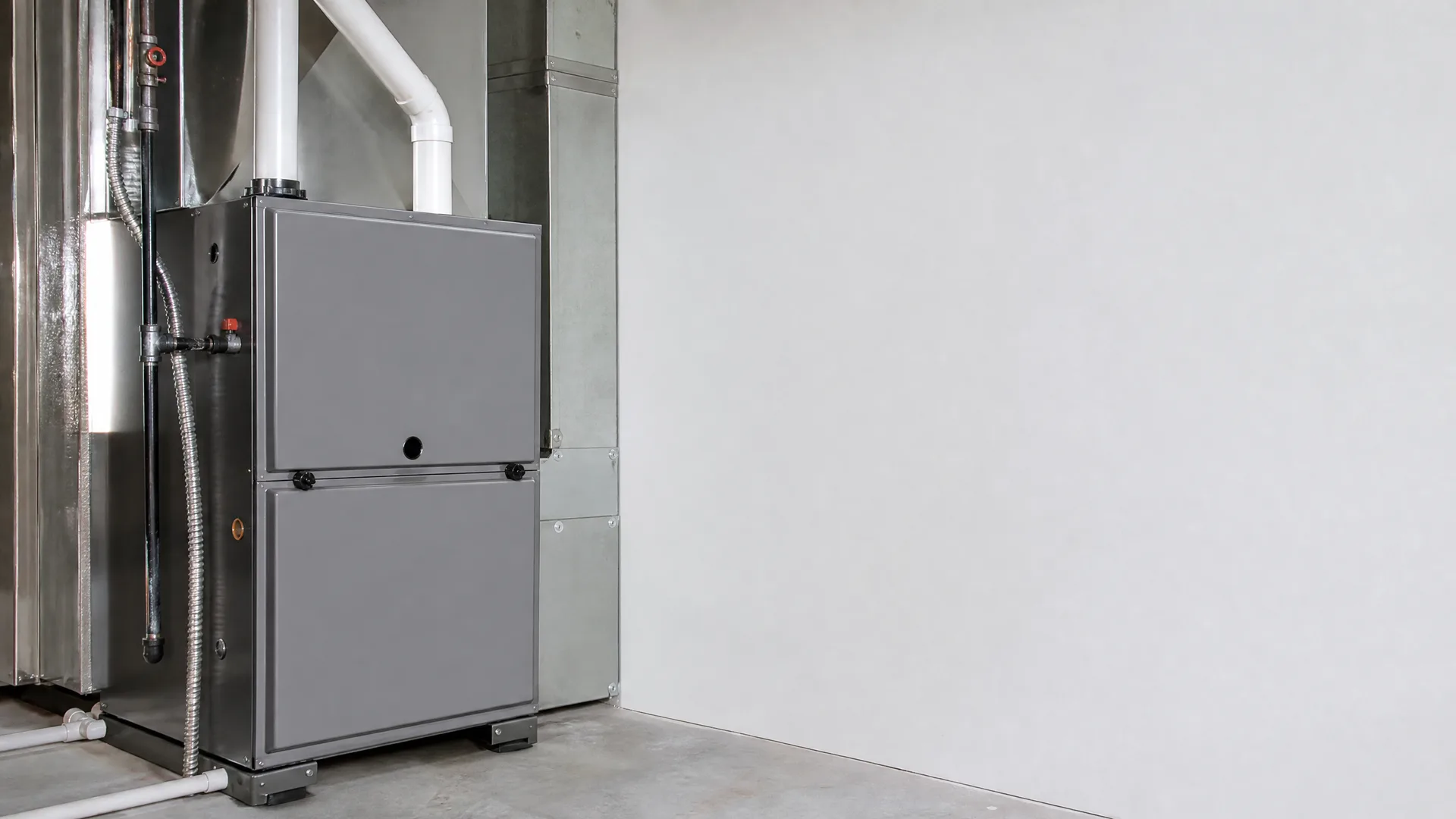
A gray high-efficiency furnace with two access panels stands in a bare basement corner, connected to sheet-metal ductwork, white PVC vent pipes, and flexible gas and electrical lines.

What that steady winter run does

A furnace in Des Moines isn't cycling on for an hour here and there. Once it gets cold, it runs for months without much of a break, and the heat exchanger, blower motor and igniter all take that load the whole time. Parts rated for a certain number of hours wear toward that limit faster here than in a place with a shorter winter. That's a big part of why the 15 to 20 year range holds up across Polk County.

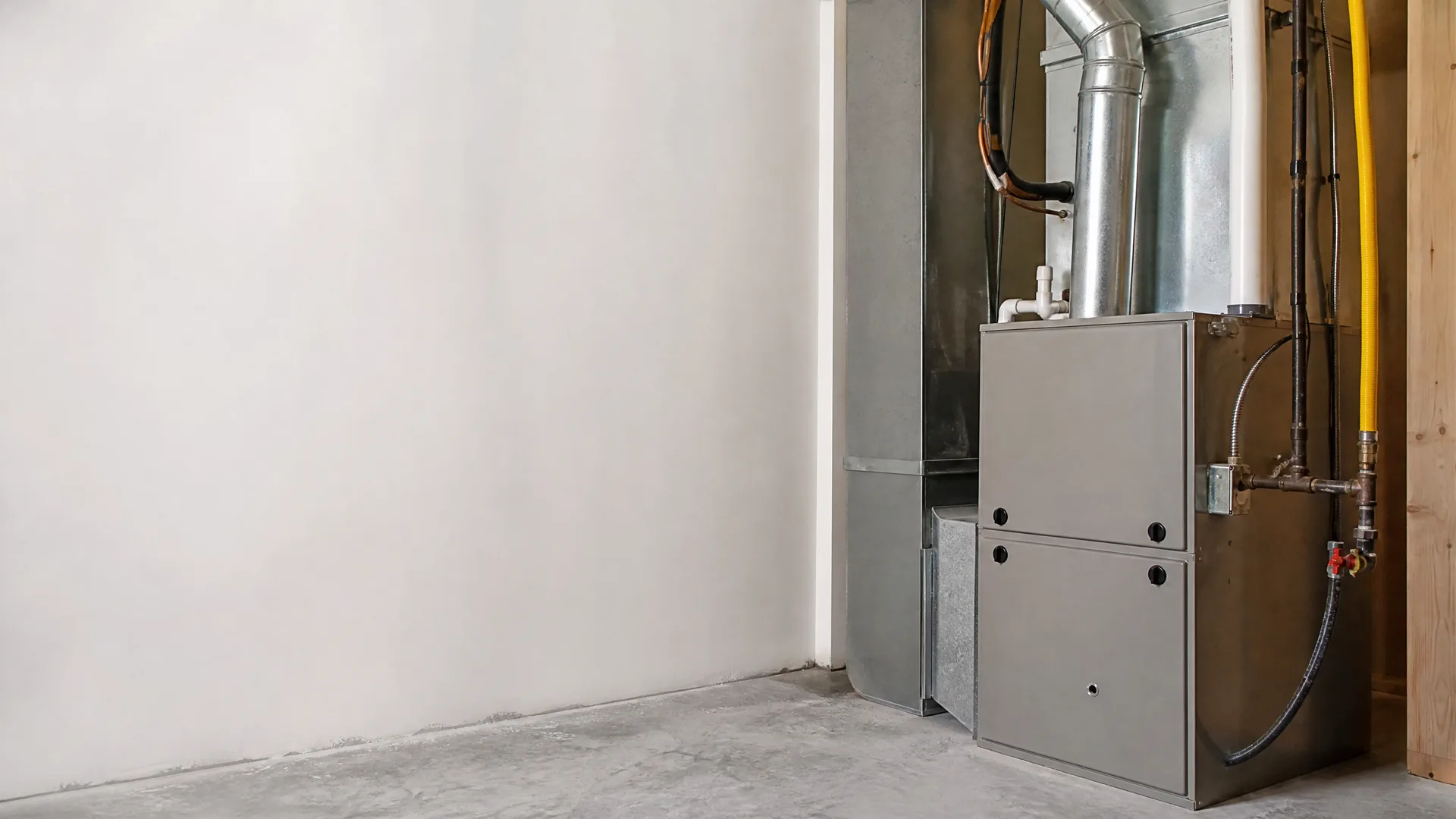
A gas furnace with metal ductwork, copper and yellow gas piping stands against a wall in an empty room with a bare concrete floor.

A sign worth checking yourself

Look at the flame through the viewing window. It should burn blue, steady, with maybe a small yellow tip. A flame that's mostly yellow or flickering orange points to a combustion problem, and that's not something to wait out. An older furnace running near the end of its life is more likely to show this than a newer one, since the burners and ignition components degrade with age and use.

What does a Des Moines winter actually ask of your furnace?

  • Winter nights average 16°F

    Overnight lows average 16°F in December, January and February, so your furnace has to recover that heat every single night for three months straight.

  • Heat runs October through May

    Heat runs here from October through May, about eight months of the year, which is most of your furnace's working life spent carrying the house.

  • 65.7% of homes heat with gas

    65.7% of homes in Polk County heat with gas, same as yours likely does, so the wear this page describes is what gas furnaces here see season after season.

NOAA nClimDiv 1991-2020 · ACS 2020-2024

A gray-haired man in a dark sweater sits on a light gray sofa in a living room, looking toward a sunlit window with trees outside.
A gray-haired man in a dark blue sweater sits on a light gray sofa in a sunlit living room, looking off to the side, with a potted plant, shelving unit, and large glass doors behind him.
A bearded man with graying hair in a dark green sweater sits on a sofa in a living room, looking off to the side, with a sliding glass door and a dim kitchen doorway behind him.
A gray-haired man in a dark knit sweater sits on a light gray sofa in a living room, looking toward a sunlit window, with houseplants, a lamp, and framed art in the background.

Send one request and you're done looking

The pro who gets in touch is licensed in Iowa and works in Polk County.

There's no charge for the request.

Repair makes sense

If your furnace is under 15 years old and this is the first trouble it's given you, a repair is the right call. A failed igniter, a bad flame sensor or a stuck blower motor are straightforward fixes on a furnace that's otherwise sound. You get the rest of its service life without paying for a new system before you have to. Most furnaces this age have plenty of winters left once the broken part is replaced. A contractor can tell you in one visit whether what failed is a one-time part or a sign the whole unit is wearing out, and that answer should drive the decision, not guesswork.


Replacement is the better call

Past 15 years, every repair is a bet that the next part won't fail too, and on an old furnace one often does. If you're already looking at a major repair, a cracked heat exchanger or a second breakdown this winter, replacing it ends the guessing. A new furnace won't leave you without heat on a night when it's 16°F outside, and you stop paying to patch a unit that's working against months of hard winter use every year. For a furnace near the end of its life, that's often less money spent overall, not more.

A middle-aged woman with shoulder-length dark hair, wearing a gray cardigan over a cream top, sits in an upholstered armchair and looks toward a sunlit window, with a shelf holding framed pictures and a plant behind her.
A woman and a child wrapped together in a thick knitted blanket on a sofa, both with eyes closed, with a lit table lamp and houseplant in the dim background.

Deciding When It's Time

  • A furnace past 15 years in Des Moines is a candidate for replacement, and past 20 it's the smart move no matter how it's running today.
  • Age alone isn't the whole picture, so weigh it against how often repairs have come up and what the last one cost to fix.
  • A furnace that's struggled through two or three Polk County winters with repeat trouble has already told you what it's going to do this January.
  • Someone who services furnaces in this area all winter has seen which parts give out first on a unit your age and can size a replacement to your house.
  • Working with one local, licensed contractor instead of fielding calls from several means you're dealing with someone who knows this equipment, not a stranger quoting over the phone.
  • Whichever side of 15 years your furnace falls on, you now have what you need to decide instead of guessing.

Fifteen years is where you start paying attention. Twenty is where you stop waiting for a reason. In between, let the repair history do the talking. One service call on a ten-year-old furnace doesn't mean much. Two or three winters in a row with the same unit acting up, that's a furnace telling you what January is going to look like before it happens.

Des Moines winters don't give a struggling furnace much room to hide. Months of steady run time will find whatever is already weak, and a unit that's been patched together the last two seasons usually has one more failure left in it, not none. If yours is in that stretch, between showing its age and still technically running, the smarter move is to get someone to look at it now, not in February when the parts counter is backed up and you've got no heat.

That's where having one contractor matters more than it sounds like it would. Someone who works on furnaces around Polk County all winter has seen this exact unit fail in this exact way before. They know what a furnace this age usually needs replaced first, and they can size a new system to your house instead of guessing. You're not explaining your situation from scratch to a different voice on the phone each time. One person, local, who already knows this equipment, looks at your furnace and tells you straight whether it's a repair or a replacement.

Either way, you're not guessing anymore. The age, the repairs and the winters it's already been through add up to an answer, and now you have it.

Corner of a room with a white window at left, a white fireplace mantel with dark stone surround at right holding a weathered clay vase of leafy branches, and a cream upholstered sofa with a knit throw and tan pillow in the foreground.
A cushioned window seat with a brown lumbar pillow beside a white-framed window overlooking green trees, next to built-in cream cabinetry with shelves holding ceramic vessels and a wooden bowl.
An entryway with a dark wood console table holding a stone vase of olive branches and a shallow wooden bowl, a woven basket on the lower shelf, a framed landscape print on the wall, and a glass-paned wood door at left.
A wooden vanity cabinet with dark knobs and a beige stone countertop holding a round terracotta vase with leafy branches, beside a wood-framed mirror and a white sink.
Sunlit room corner with wide-plank oak flooring, white baseboard molding and beige walls, a window at left showing green trees, and a dark cabinet at right topped by a stone vase holding a leafy branch.

Finding a pro stops being your job

One installer gets your project, so there's no bidding war over it.

Reach a local pro

You only hire the pro if you want to.