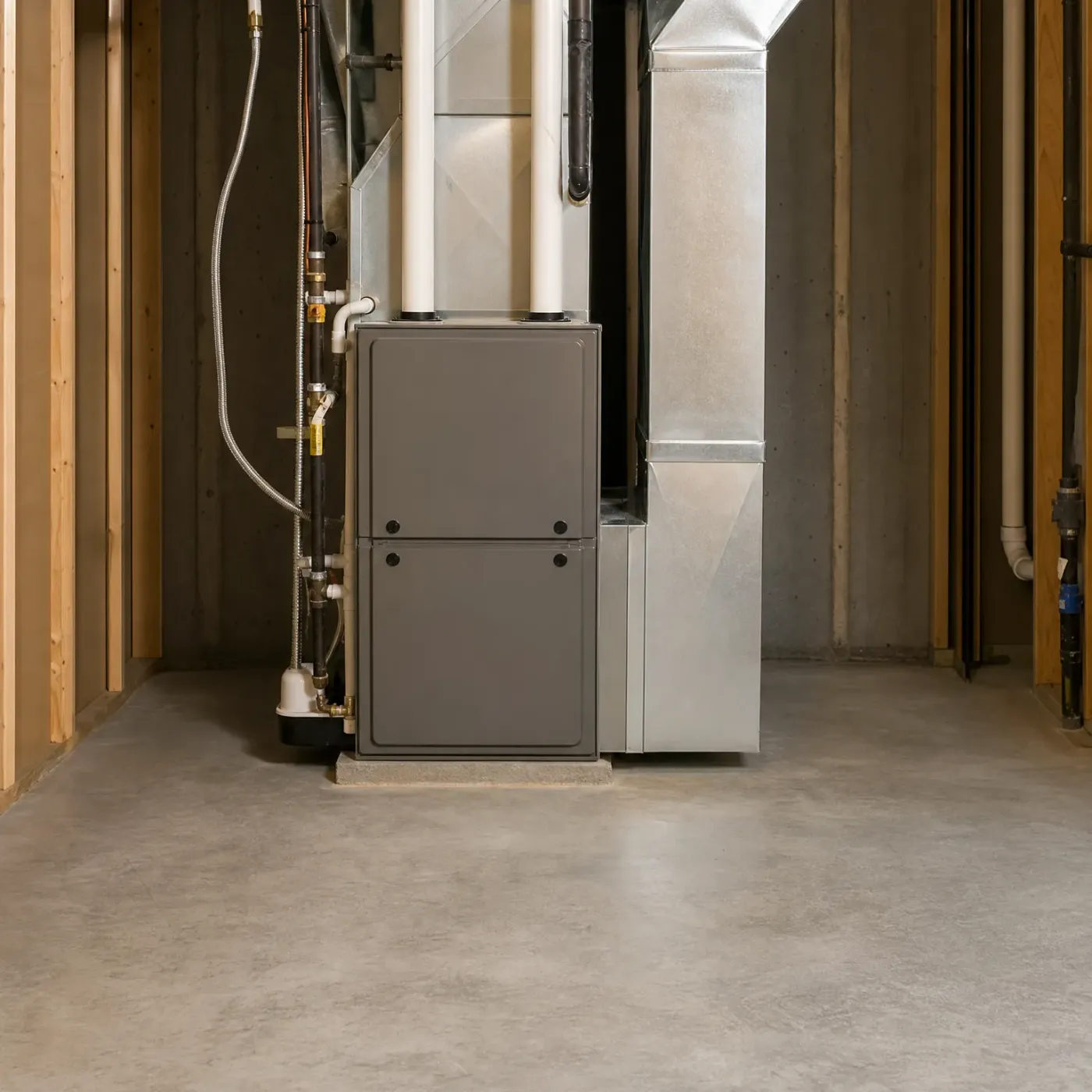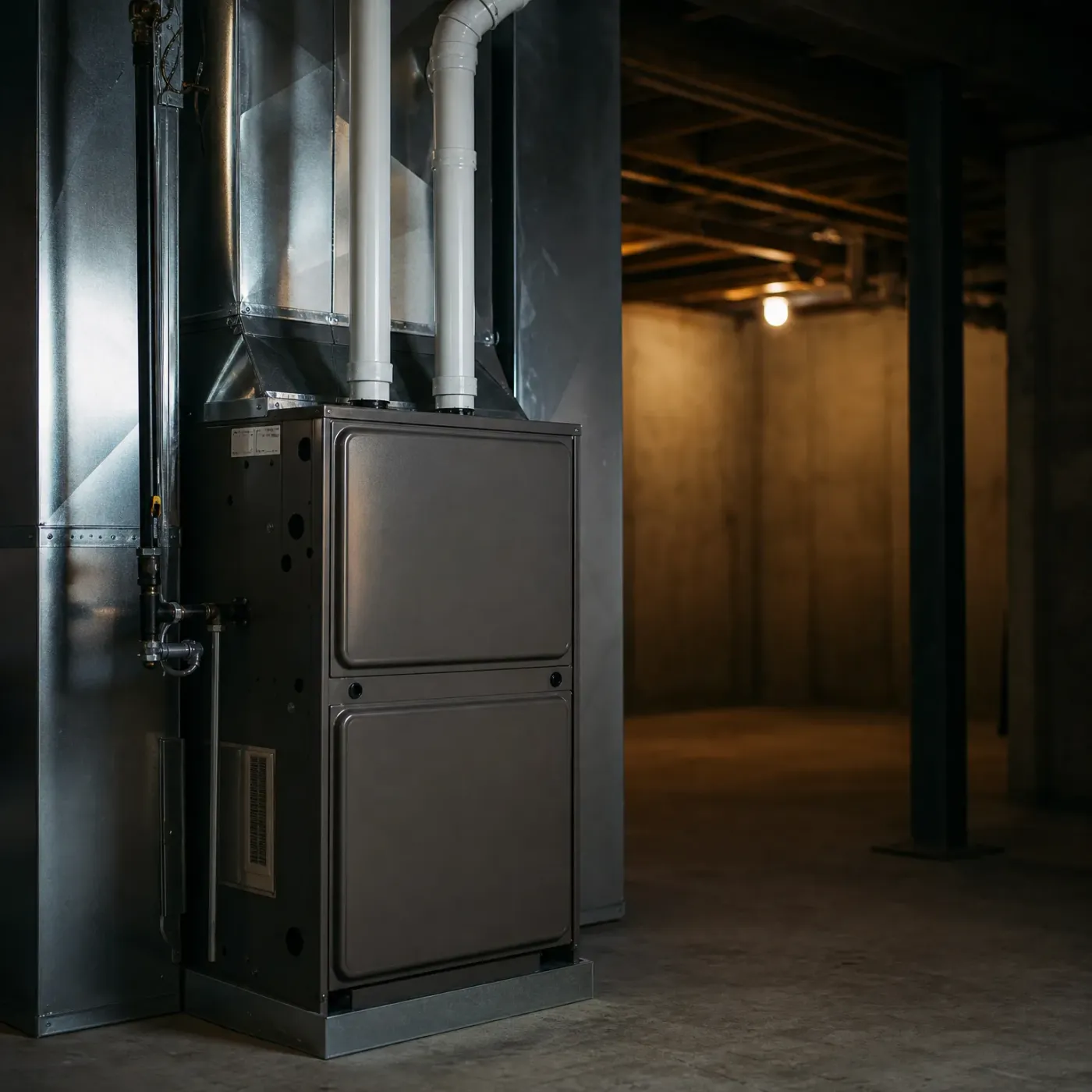


A gray high-efficiency furnace with two white PVC vent pipes stands beside galvanized sheet-metal ductwork in a dim basement with exposed joists and a concrete floor.

A local pro for your furnace maintenance

Why your house is dry with the heat on in Iowa

Cold air just holds less moisture, so once your furnace starts running, the air in your house dries out fast. It's not a sign anything is wrong, but it can crack skin, static shocks, and wood floors and furniture. This page gets into why it happens and what you can check on your furnace and ductwork, plus how to get matched with a contractor who knows Iowa furnaces instead of calling around to find one yourself.

Get matched

Cold winter air holds very little moisture to start with, and your furnace doesn't add any back. It just heats the same dry air and pushes it through the house over and over. Outside, Iowa air in January might sit near 30 percent relative humidity. Once your furnace warms that air to 70 degrees indoors, the relative humidity drops even further, often down into the teens. That's why your lips crack, your hands feel rough, and you get shocked touching doorknobs. It also pulls moisture out of wood floors, trim, and furniture, which is why doors stick differently in July and January. A whole-house humidifier tied into your furnace adds moisture back as the air circulates, which a portable unit in one room can't do for the whole house. Keeping the furnace itself running well, clean burners, a good filter, a working blower, matters too, since a furnace working harder moves even more dry air through your rooms.

A woman wrapped in a thick beige fleece blanket sits on a sofa with an open book on her lap, beside a lit table lamp, with a frost-covered window behind her.
A smiling older woman with gray hair in a cream knit sweater stands in a dimly lit kitchen beside a window showing snow outside, with a round loaf of bread on the counter in the foreground.

Why heating dries the air further

Furnace air itself doesn't lower humidity. The problem is what happens once that heated air spreads through the house. Warm air can hold more moisture than cold air, so as the furnace heats the room, the relative humidity drops even though no moisture left the house. That dry air then pulls moisture out of anything it touches, your skin, your furniture, the wood in your floors. The furnace runs again a few minutes later and does the same thing. By the time January settles in, the air inside can sit well below what it was outside before the furnace ever turned on.


Where a maintenance visit fits in

A furnace that's dirty or out of adjustment can run longer than it needs to, which pushes the dry air problem further than it has to go. A technician checking the system can catch a clogged filter, a dirty blower, or a furnace short-cycling, any of which makes a house feel drier than it should. Maintenance won't put moisture back into the air. What it does is keep the furnace running the way it's supposed to, instead of working harder and longer than the house actually calls for.

A gray-haired bearded man in a dark coat and scarf dusted with snow stands smiling in a dimly lit entryway with a white front door, a side table with a lit lamp, an oval mirror, and a patterned rug.
An older bearded man in a dark snow-dusted coat and gray scarf stands just inside a dimly lit home entry, with a framed picture, lit table lamp, and an adjoining room with a fireplace behind him, and snow visible through the open door.
A gray-haired, bearded man in a dark snow-dusted coat stands smiling in a dimly lit entry hall with a staircase, a lit table lamp, a framed picture, and a living room visible through a doorway.
An older man with gray hair and a beard, wearing a dark jacket dusted with snow, stands smiling in a dimly lit hallway with lamps and a living room visible behind him.

A furnace is built to heat air, not treat it. Air comes in through the return, crosses the heat exchanger, and goes back out the supply ducts, and nothing in that path adds a drop of moisture. That's why running the furnace longer just means drier air circulated more often. Adding moisture back takes a separate piece of equipment, a whole-house humidifier mounted to the ductwork, feeding water into the air as it passes through. It only works as well as it's set up and kept up. The humidistat controlling it has to be adjusted as outdoor temperatures drop, because colder air outside lowers the indoor humidity level you can safely run without fogging up or sweating your windows. Inside the humidifier, the water panel or drum collects mineral deposits from hard water over a season, and once that happens, water stops passing into the airstream the way it should. At that point the unit can be running, fan on, water line open, and still not be doing much for the air in your house.

Where the moisture actually comes from

  • A furnace moves air through a heat exchanger and out the supply ducts, and no part of that path adds moisture.
  • Gas furnaces here cycle on and off all day through an Iowa winter, so the same dry air gets reheated and pushed through the house again and again.
  • A whole-house humidifier mounts to the supply duct or return and feeds water into the airstream as it passes, which a furnace alone cannot do.
  • The humidistat that controls it needs to be checked against the outside temperature, since colder air outside means the target indoor humidity has to be set lower to avoid condensation on your windows.
  • A humidifier's water panel or drum needs cleaning or replacing each season, since mineral buildup from hard water stops it from passing moisture into the air.
  • Without that upkeep, a humidifier can sit there running without actually raising the humidity in the house at all.
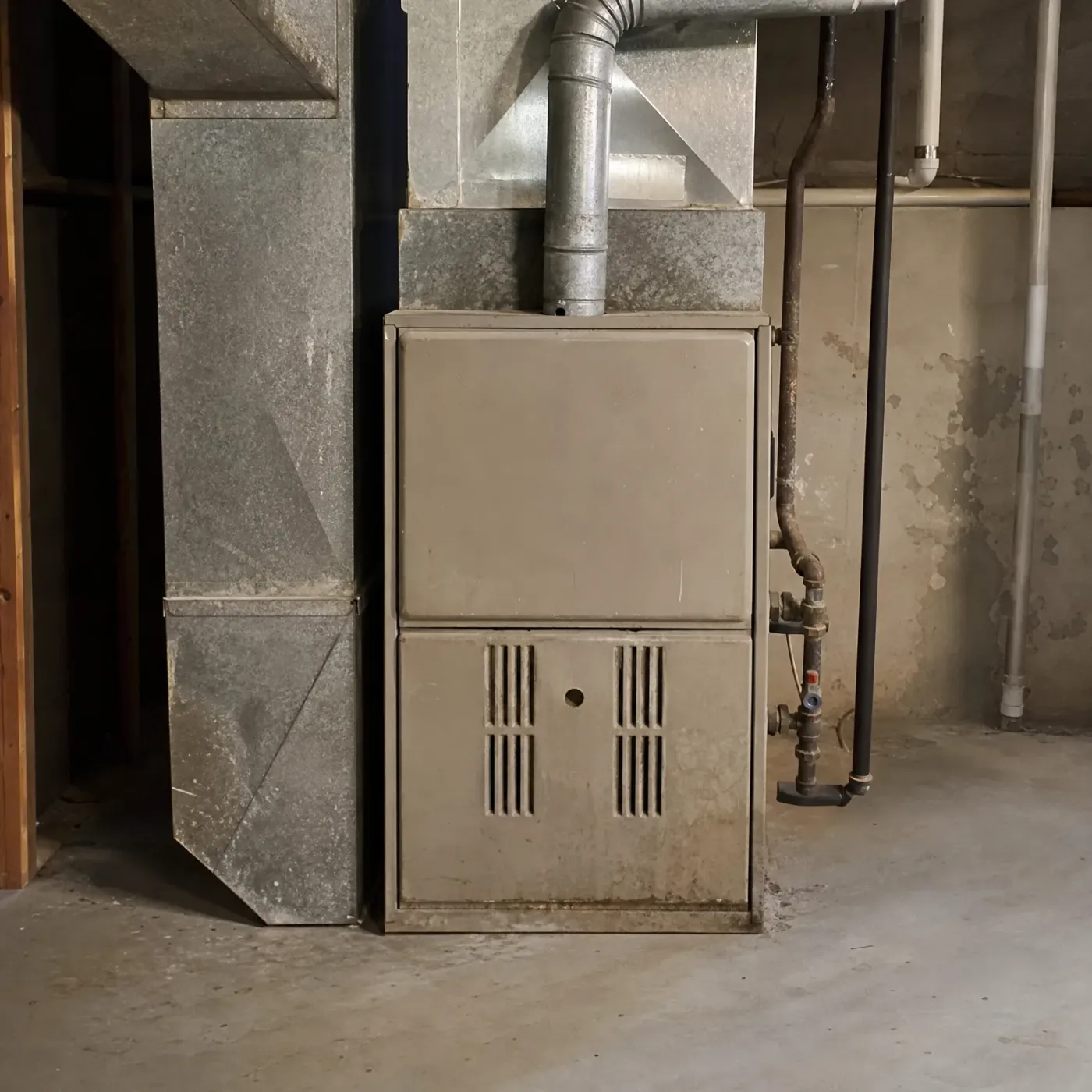
A beige gas furnace in a basement with a metal flue pipe, galvanized sheet-metal ductwork to its left, and gas and water pipes along the concrete wall to its right.
Before you get your furnace maintenance
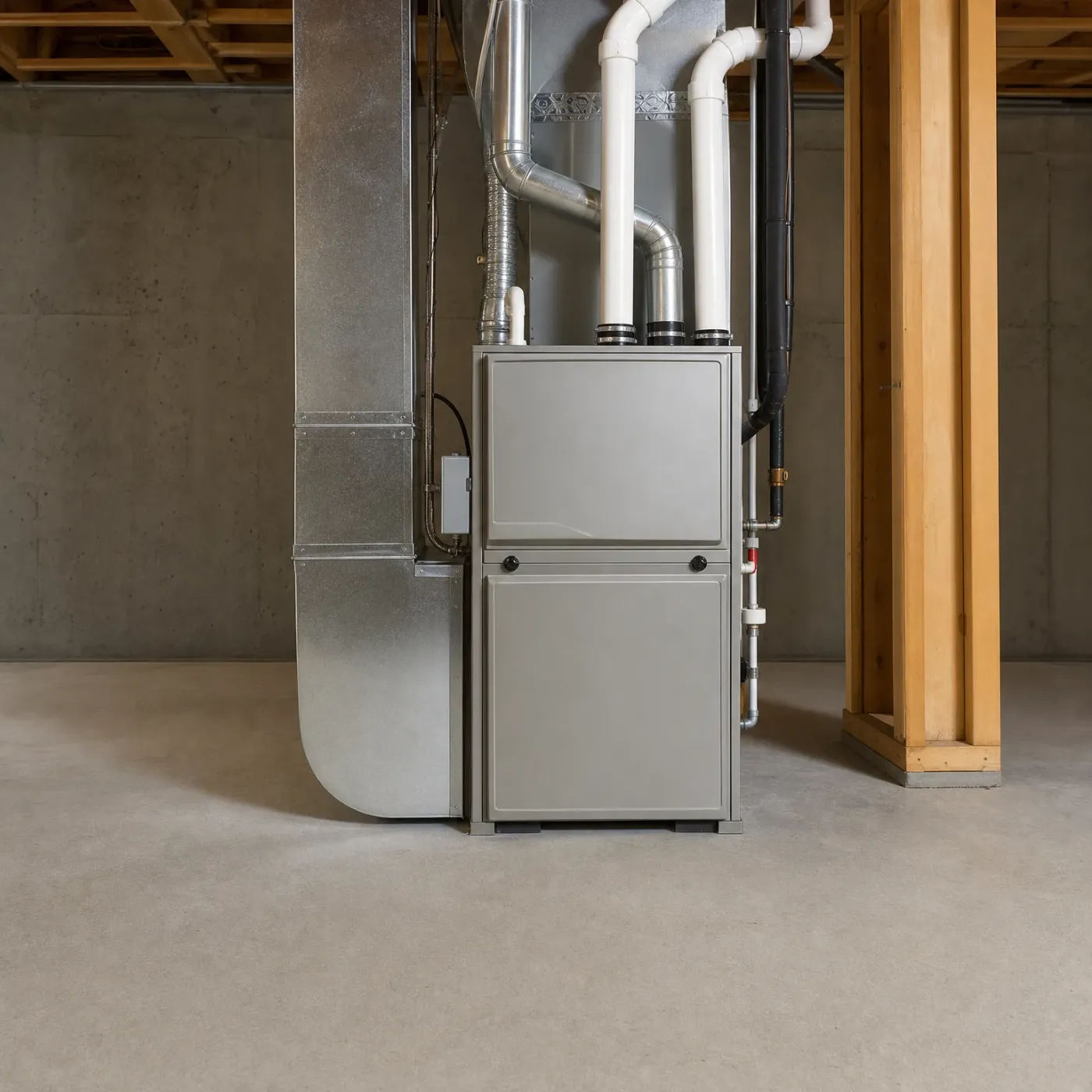
A gray high-efficiency furnace with white PVC vent pipes stands on a concrete pad in a basement, beside sheet-metal ductwork, copper piping and a poured concrete wall with wood framing at left.
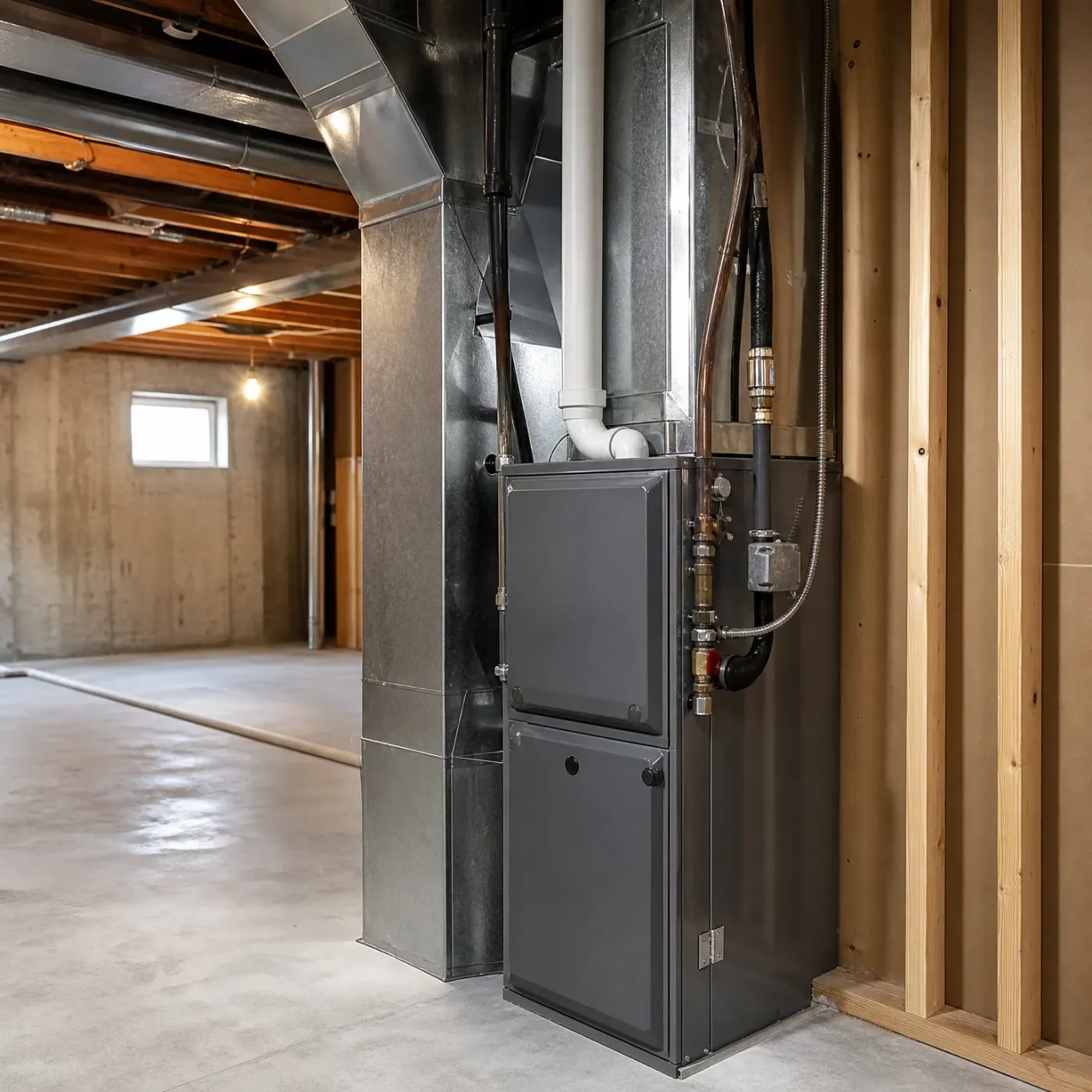
After you get your furnace maintenance
A gray furnace with copper and flexible piping stands against a wood-framed wall in an unfinished basement, connected to galvanized sheet-metal ductwork and PVC venting, with a concrete floor and exposed joists.

Get the right pro for your furnace

One form instead of hunting for a pro who does furnace tune-ups.

A local pro who services furnaces gets in touch about the tune-up.

Skip calling around

Sending the form costs nothing.

What are you noticing around the house right now

Your skin feels tight after a shower, and the lotion only helps for an hour. You're getting shocked touching doorknobs or the dog. Your lips crack. Wood floors creak more than they did in October, and a door that used to shut easily now sticks or leaves a gap, because the wood itself is giving up moisture to the dry air around it. If you have a wood instrument or furniture with tight joints, dry air pulls moisture out of the wood and loose joints or small cracks can follow. None of this means your furnace is broken. It means the air it's heating was already dry, and nothing in the system is putting moisture back in.

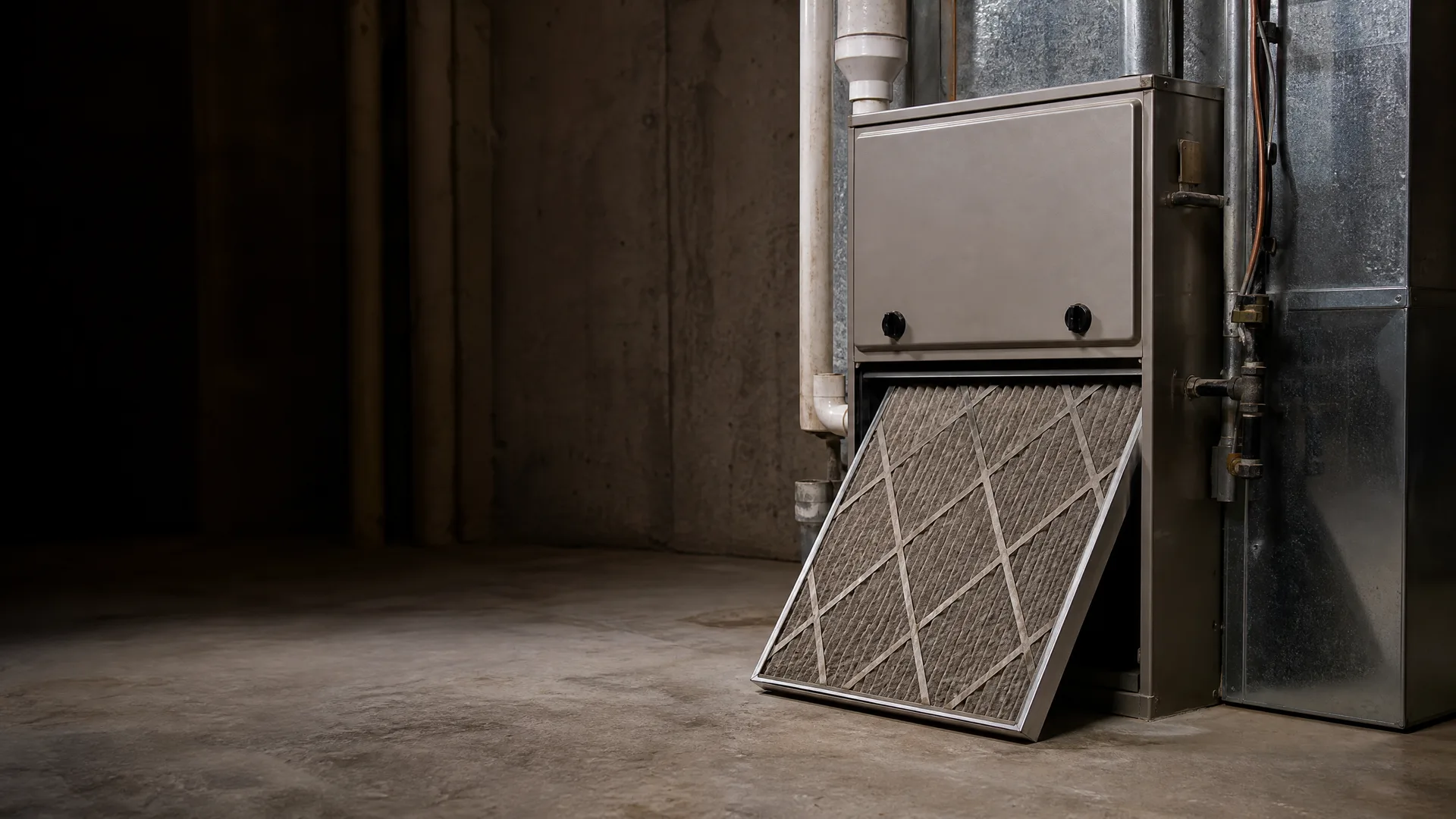
A dirty pleated air filter leans against a furnace with metal ductwork in a dim concrete basement.

You're down in the basement on a Saturday afternoon, the light coming in low through the one window. You'd noticed the static getting worse this week, bad enough that you got shocked twice just walking across the living room, so you came down to check the filter. It slides out grey, dust packed into it thick enough that you can't see through to the pleats underneath. The furnace is running while you stand there, you can hear it, and you know that air coming through the ducts right now is picking up whatever this filter isn't catching anymore. You set it against the wall and head upstairs for a new one, already thinking about what else you haven't checked since last October.

Winter nights average 15°F statewide

Average that out and winter nights in Iowa sit around 15°F. Air that cold can barely hold any moisture to begin with, so by the time your furnace warms it up, there's that much less for it to work with. The colder it gets outside, the drier your house gets inside.

NOAA nClimDiv 1991-2020 county normals weighted by homes

A gray high-efficiency furnace stands on a concrete basement floor beside sheet-metal ductwork, with white PVC vent pipes and a black flexible line running up to exposed wood floor joists, next to a wood-framed post against a concrete wall.

A furnace running clean

This is what a furnace looks like when it's been looked at. The connections are tight, the flue runs clear, and the burners fire the way they're supposed to. It still can't put moisture into the air, but it's not adding any other problems on top of the dry air you're already dealing with.

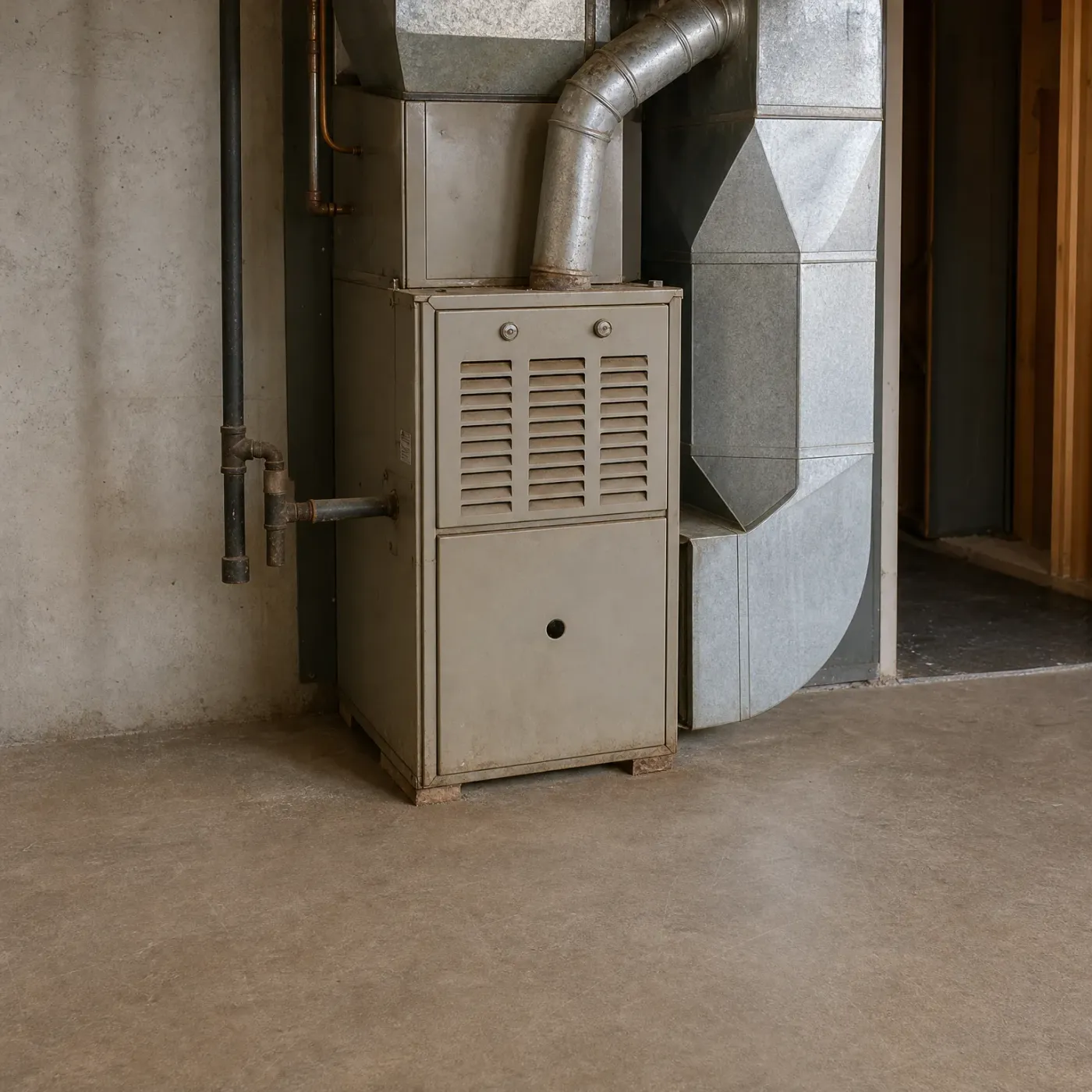
A beige metal furnace with a louvered front panel stands on a concrete floor against a concrete wall, connected to galvanized sheet-metal ductwork and a metal pipe.

A furnace left alone

Dust builds on the burners, the flame sensor gets coated, and the blower works harder to push the same air. None of that makes your house any drier than it already is, but it means the furnace is working against itself to do the one job it has.

A woman in a cream sweater and jeans stands in the open doorway of a white stucco house, holding the dark door, while a man in a dark quilted jacket seen from behind walks toward the entry past potted plants.

Dry air is the air, not the furnace

Your house is dry in January because the air coming in from outside is dry, and heating it doesn't change that. A furnace that's running well and one that isn't will dry the house out about the same amount. What maintenance actually changes is everything else that rides along with a furnace working harder than it needs to: uneven heat, higher gas use, a burner or igniter that's starting to struggle.

If you've been putting off a look at the system, this is a fine reason to stop putting it off. You won't have to track down who's any good, sit on hold, or explain the same thing to three different shops before you get a quote. Answer a few questions about your house and a contractor who covers your part of Iowa will reach out to you directly.

Interior corner with a beige sofa holding a dark green and a light cushion and a textured throw, a potted small-leaved tree beside a white-framed window, and a dark shallow bowl on a wooden coffee table in the foreground.
A single-story stucco house at dusk with a lit paver walkway lined by low path lights, desert plants and boulders in front, and distant mountains under an orange and blue sky.

Furnace Maintenance

A pro who works on furnaces

Step 1 of 3: Equipment
  • A corner of a room with an upholstered wood-framed armchair holding a floral pillow, a round side table with a ceramic lamp, books and a vase of greenery, a framed landscape painting on the wall, a patterned rug, and a sunlit multi-pane window.
    • Say what's going on with your furnace, and a pro who works on them reaches out.
    • A local pro who knows furnaces gets your details and gets in touch.
  • Interior corner with a wood-framed window showing green foliage outside, a framed landscape print on a beige wall, and a rounded stone vase of leafy branches on a wooden cabinet.
    • Send the form, and lining up the furnace tune-up stops being yours to chase.
    • Send the form and the furnace tune-up stops being something to remember.
  • A pale ceramic vase holding olive branches sits on a dark wooden countertop beside a carved wooden dough bowl, next to a wood-framed window and a light painted plank wall.
    • Fill out one form instead of calling around for a furnace tune-up.
    • Fill out one short form instead of calling around.
  • A dark wood round side table holding a brass lamp with a cream shade, a blue-and-white patterned bowl, and a white textured pot of greenery, beside an upholstered chair with a gray patterned cushion and a white-framed window showing green trees and flowering shrubs.
    • A licensed local pro takes the request for your furnace tune-up.
    • The pro who reaches out is licensed in Iowa.