Tell us about the job
Takes about a minute. No obligation.
A furnace installation in Scott County is a local engineering decision, not a catalog selection. 338 severe weather events were recorded in Scott County, Iowa between 2015 and 2024. At that rate, severe weather is part of the normal operating life of every system in the county, so a contractor sizing a new furnace has to account for a structure that has been heating against real, repeated load. Duct connections, equipment ratings, and combustion airflow all get specified against what this climate actually delivers. A furnace undersized or loosely installed for somewhere milder will show the gap within a few heating seasons.
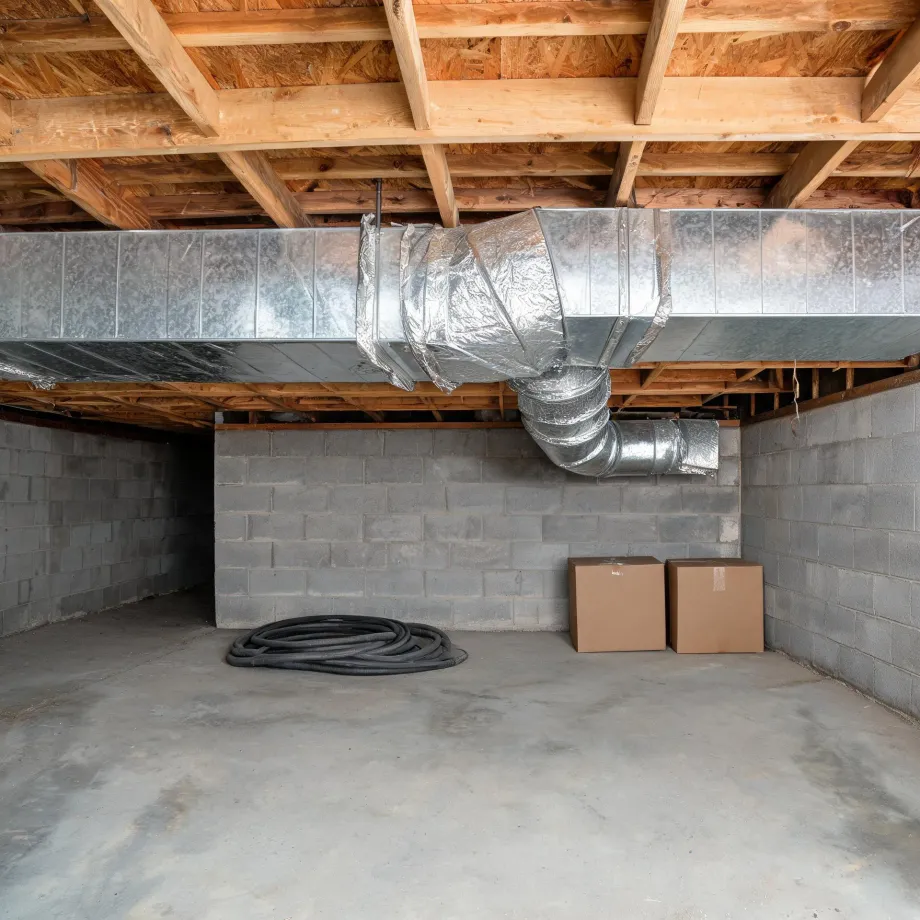
Older ductwork carries assumptions about airflow that the original builder made for a different system. Half the homes in Scott County, Iowa were built in 1972 or earlier (2020-2024 ACS 5-year). That gap between what the ducts were laid out for and what a new furnace delivers is where a contractor spends the most time on a job here: checking static pressure, assessing trunk line sizing, and deciding what the existing supply and return runs will actually support. The electrical service gets the same look. What the house already contains sets the terms of the installation before the new unit is ever selected.
What Gets Installed With a New Furnace
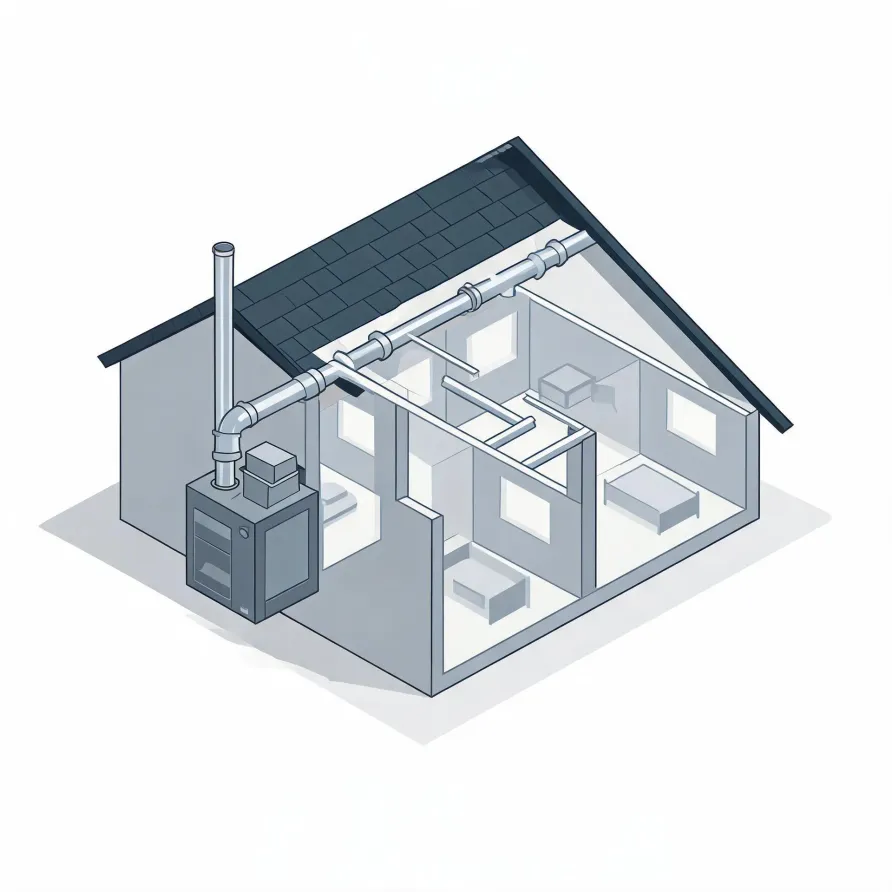
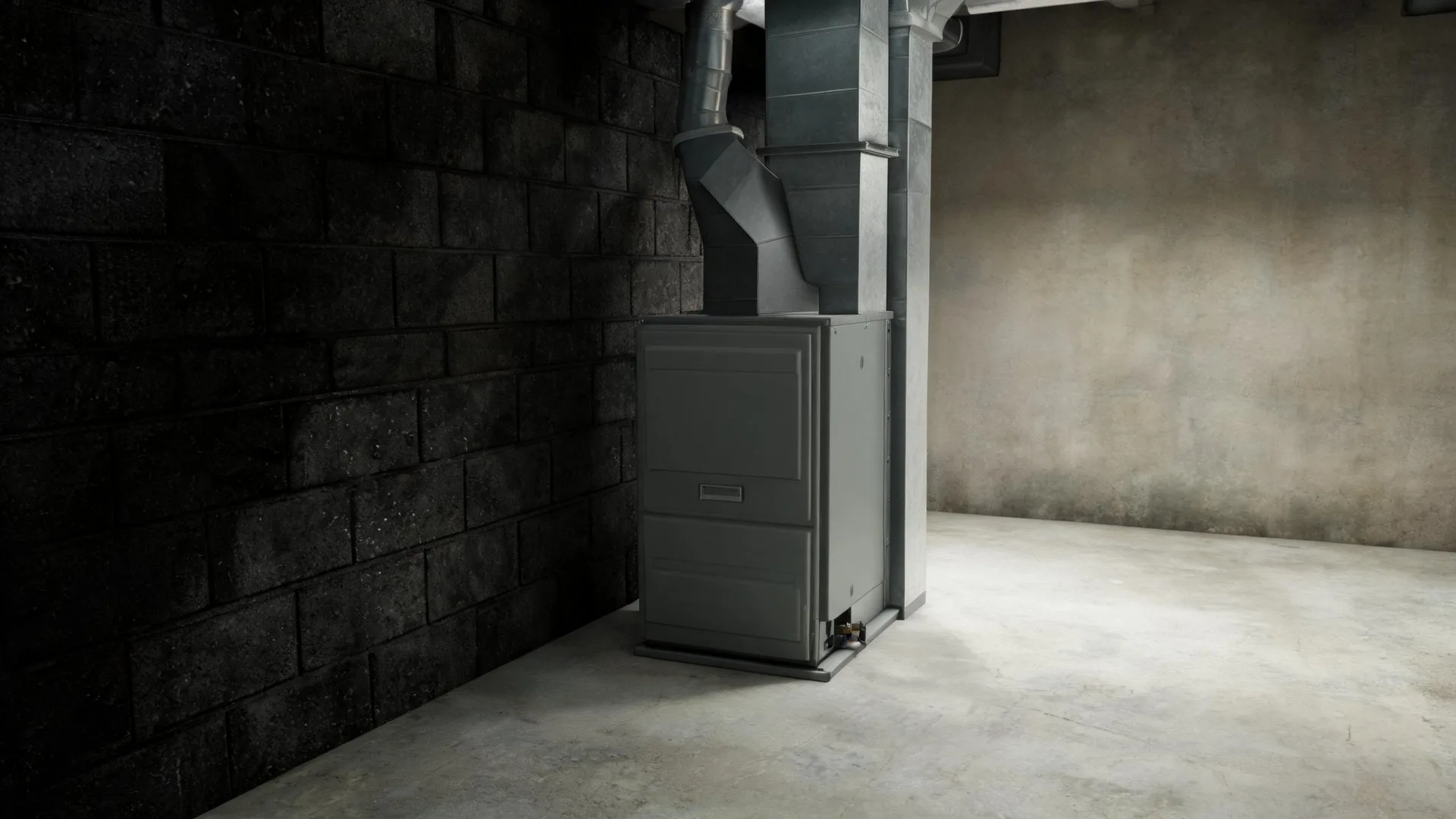
The furnace itself sits in a utility space, a basement, or a dedicated mechanical closet and is the unit that produces heated air. A contractor mounts the air handler or blower assembly inside or directly alongside it, moving conditioned air into the duct system. The two pieces together are the core of what a new installation puts in place.
The flue or venting pipe runs from the furnace to an exterior wall or up through the roof, carrying combustion exhaust out of the house. A thermostat goes on an interior wall and gives the homeowner control over the whole system. A filter housing seats at the return-air intake, positioned where air re-enters the system before passing through the furnace again.
The drawing beside this text shows a typical layout, and a licensed contractor determines what the configuration looks like in your specific home.
Get matched in Scott CountyScott County by the numbers
338 severe weather events were recorded in Scott County, Iowa between 2015 and 2024.
NOAA National Centers for Environmental Information, Storm Events Database, bulk CSV export, events 2015-01-01 through 2024-12-31.Half the homes in Scott County, Iowa were built in 1972 or earlier (2020-2024 ACS 5-year).
U.S. Census Bureau, 2020-2024 American Community Survey 5-Year EstimatesScott County, Iowa holds 78,537 housing units (2020-2024 ACS 5-year).
U.S. Census Bureau, 2020-2024 American Community Survey 5-Year EstimatesOwners occupy 70.0% of the occupied homes in Scott County, Iowa (2020-2024 ACS 5-year).
U.S. Census Bureau, 2020-2024 American Community Survey 5-Year EstimatesFurnace Installation Rules & Standards for Scott County, Iowa5 sourced codes and standards
What the Installation Actually Looks Like
Non-weatherized gas furnaces manufactured on or after November 19, 2015 must reach 80.0 percent AFUE.
Non-weatherized oil-fired furnaces manufactured on or after November 19, 2015 must reach 83.0 percent AFUE.
Mobile home gas furnaces manufactured on or after November 19, 2015 must reach 80.0 percent AFUE.
Non-weatherized gas furnaces manufactured on or after December 18, 2028 must reach 95.0 percent AFUE, up from the 80.0 percent minimum that applies to units manufactured before that date.
Licensing and Legal Requirements in Scott County, Iowa
Iowa requires a state licence to install or repair HVAC, refrigeration, mechanical or plumbing systems, and to operate as a contractor, with exceptions listed in section 105.11.
Severe Weather Events in Scott County
Scott County's weather puts real demand on heating equipment, and how hard a furnace has to work over its life is partly a function of what the local climate throws at it. That makes weather history a useful backdrop for any conversation about what to install and how to size it.
338 severe weather events, 2015–2024. Source: NOAA National Centers for Environmental Information, Storm Events Database.