Tell us about the job
Takes about a minute. No obligation.
A furnace installation in Cedar County starts with questions about load, not just square footage. 149 severe weather events were recorded in Cedar County, Iowa between 2015 and 2024. At that rate, severe weather is a standing feature of what any system installed here runs against, and a contractor who treats sizing as a catalog lookup will undersize the equipment for what the winters here actually demand. Duct layout, equipment ratings, and how the unit is anchored all get closer scrutiny when the climate puts this kind of sustained pressure on a system.
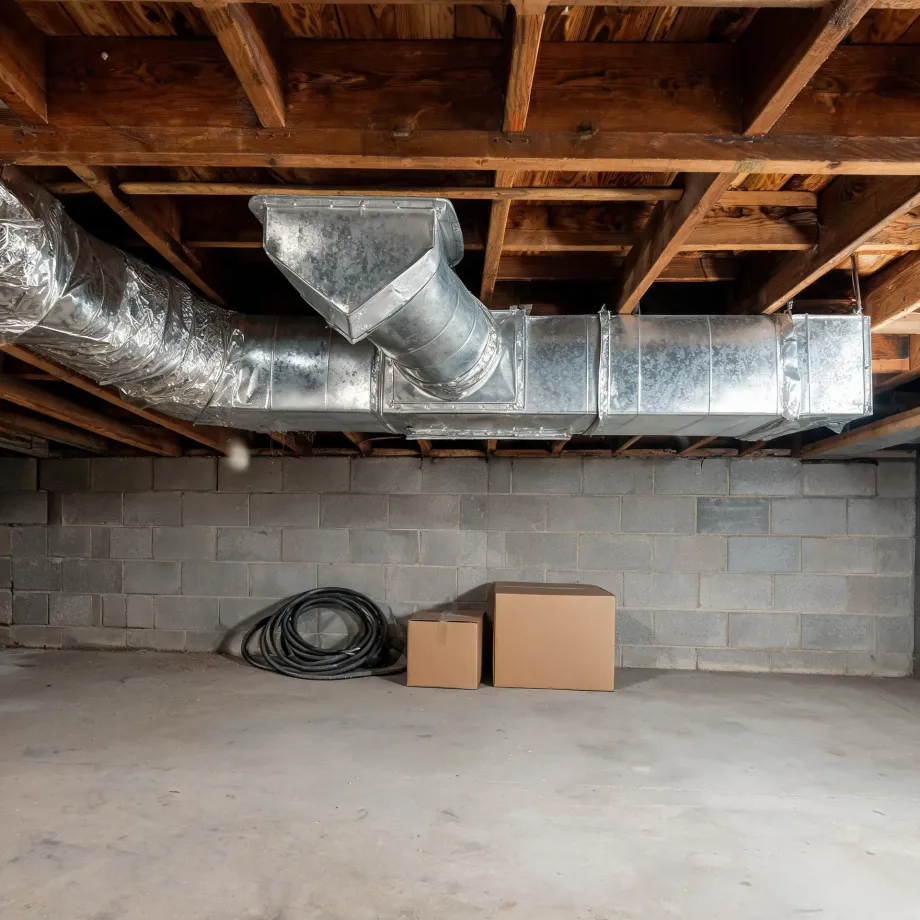
Older ductwork carries a specific story about the system it was built for, and a furnace going in today is almost certainly not that system. Half the homes in Cedar County, Iowa were built in 1965 or earlier (2020-2024 ACS 5-year). Trunks and branches sized for earlier equipment may run too narrow, or branch in ways that leave certain rooms short on airflow, once a modern unit is attached. The electrical service gets the same review. What a contractor finds in the walls and ceiling decides the scope before the new unit is ever quoted.
What Gets Installed With a New Furnace
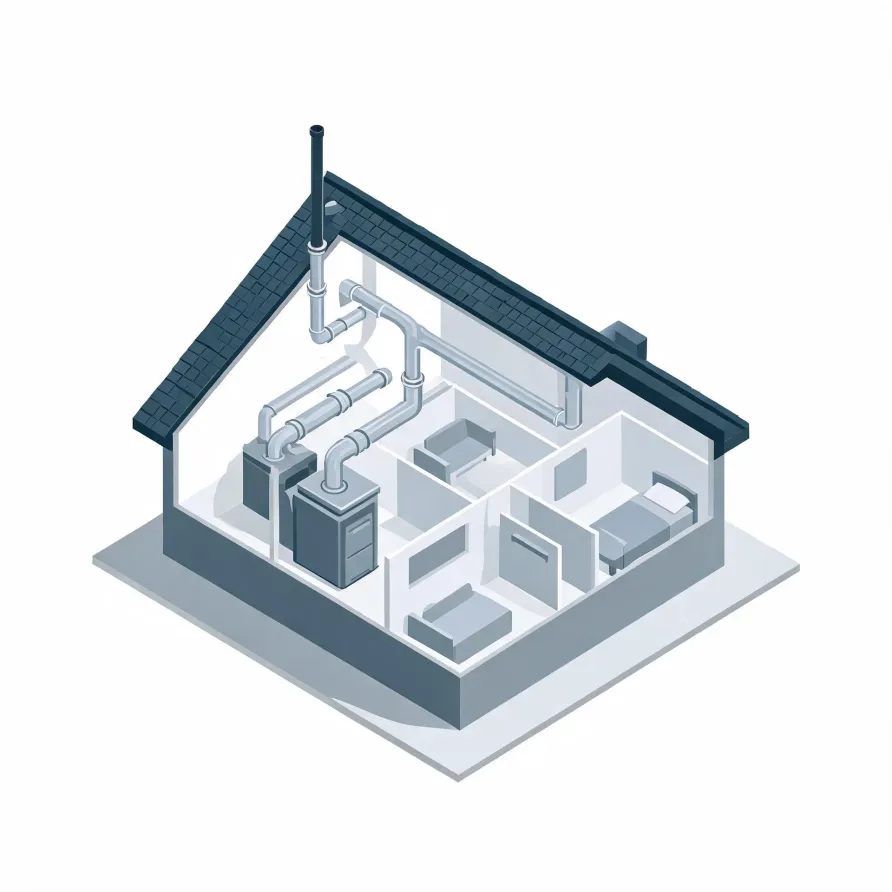
The furnace itself sits in a mechanical room, basement, or utility closet and is the unit a homeowner sees when they look at the system. A contractor mounts the heat exchanger and burner assembly inside that cabinet, along with the blower that pushes conditioned air out into the house.
The flue pipe runs from the furnace up and out through a wall or roof, carrying combustion gases outside. Alongside it, the contractor connects the gas line, the thermostat wiring that runs back to the wall unit a homeowner touches every day, and the filter housing where the return air enters the system before it reaches the furnace.
The drawing shows the general layout of a furnace system, and a licensed contractor determines which configuration and components apply to this particular house.
Get matched in Cedar CountyCedar County, Iowa, by the numbers
149 severe weather events were recorded in Cedar County, Iowa between 2015 and 2024.
NOAA National Centers for Environmental Information, Storm Events Database, bulk CSV export, events 2015-01-01 through 2024-12-31.Half the homes in Cedar County, Iowa were built in 1965 or earlier (2020-2024 ACS 5-year).
U.S. Census Bureau, 2020-2024 American Community Survey 5-Year EstimatesCedar County, Iowa holds 8,300 housing units (2020-2024 ACS 5-year).
U.S. Census Bureau, 2020-2024 American Community Survey 5-Year EstimatesOwners occupy 81.5% of the occupied homes in Cedar County, Iowa (2020-2024 ACS 5-year).
U.S. Census Bureau, 2020-2024 American Community Survey 5-Year EstimatesFurnace Installation Rules and Codes for Cedar County, Iowa5 sourced rules and standards
What the installation actually looks like
Non-weatherized gas furnaces manufactured on or after November 19, 2015 must reach 80.0 percent AFUE.
Non-weatherized oil-fired furnaces manufactured on or after November 19, 2015 must reach 83.0 percent AFUE.
Mobile home gas furnaces manufactured on or after November 19, 2015 must reach 80.0 percent AFUE.
Non-weatherized gas furnaces manufactured on or after December 18, 2028 must reach 95.0 percent AFUE, up from the 80.0 percent minimum that applies to units manufactured before that date.
Licensing and Legal Requirements in Cedar County, Iowa
Iowa requires a state licence to install or repair HVAC, refrigeration, mechanical or plumbing systems, and to operate as a contractor, with exceptions listed in section 105.11.
Severe Weather Events in Cedar County
Weather puts a measurable load on heating equipment, and that load varies by where you live. A furnace sized and installed for Cedar County conditions handles local pressure better than one spec'd to a national average.
149 severe weather events, 2015–2024. Source: NOAA National Centers for Environmental Information, Storm Events Database.