Tell us about the job
Takes about a minute. No obligation.
A contractor sizing a furnace in Mills County starts with heating load, not storm history. 90 severe weather events were recorded in Mills County, Iowa between 2015 and 2024. That puts severe weather in the moderate range for this area, which means the install is built around how hard Iowa winters run a system and how well the ductwork and equipment match the house, not around bracing for punishing weather as the primary variable. Vent placement, heat exchanger fit, and airflow balance are the decisions that determine whether a furnace performs here.
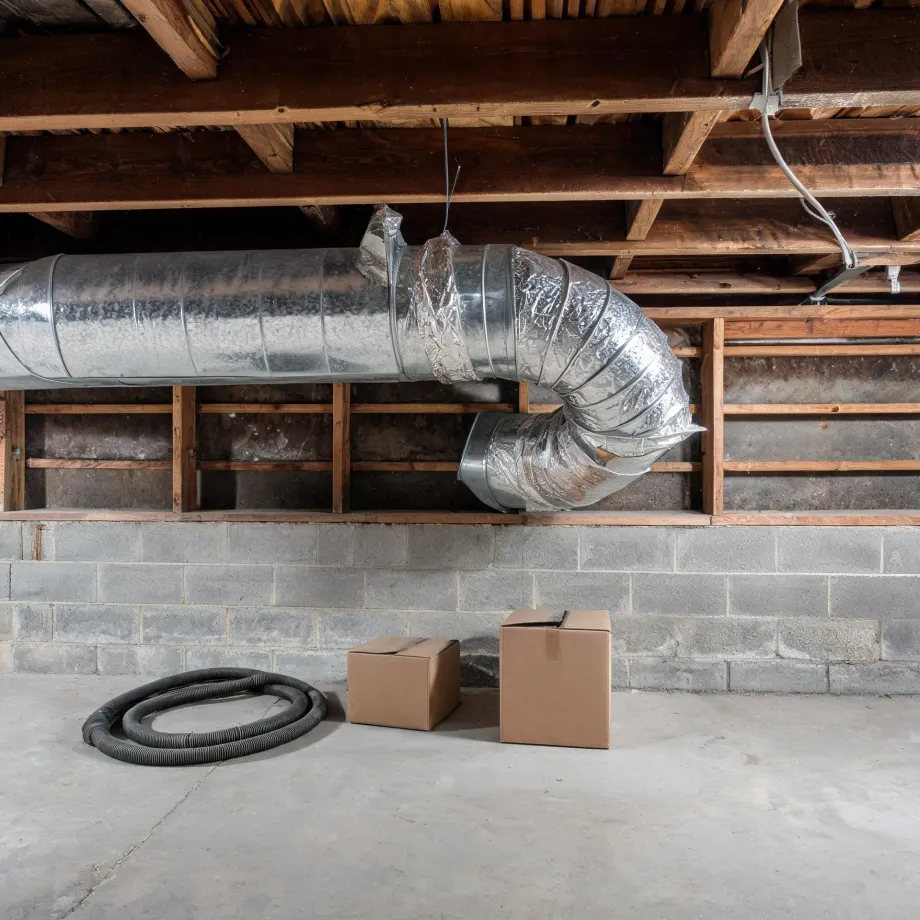
Ductwork laid down for a furnace from a different generation carries assumptions about airflow and return air that a new unit does not share. Half the homes in Mills County, Iowa were built in 1972 or earlier (2020-2024 ACS 5-year). A contractor installing a furnace in a house from that part of the stock has to assess whether the existing runs, trunk lines, and return capacity can move air the way the new equipment requires. If they cannot, the duct system becomes the job, not just the box at the center of it. The electrical service warrants the same look, since panel capacity that was adequate then does not automatically cover what a modern furnace and its controls draw.
What Gets Installed With a New Furnace
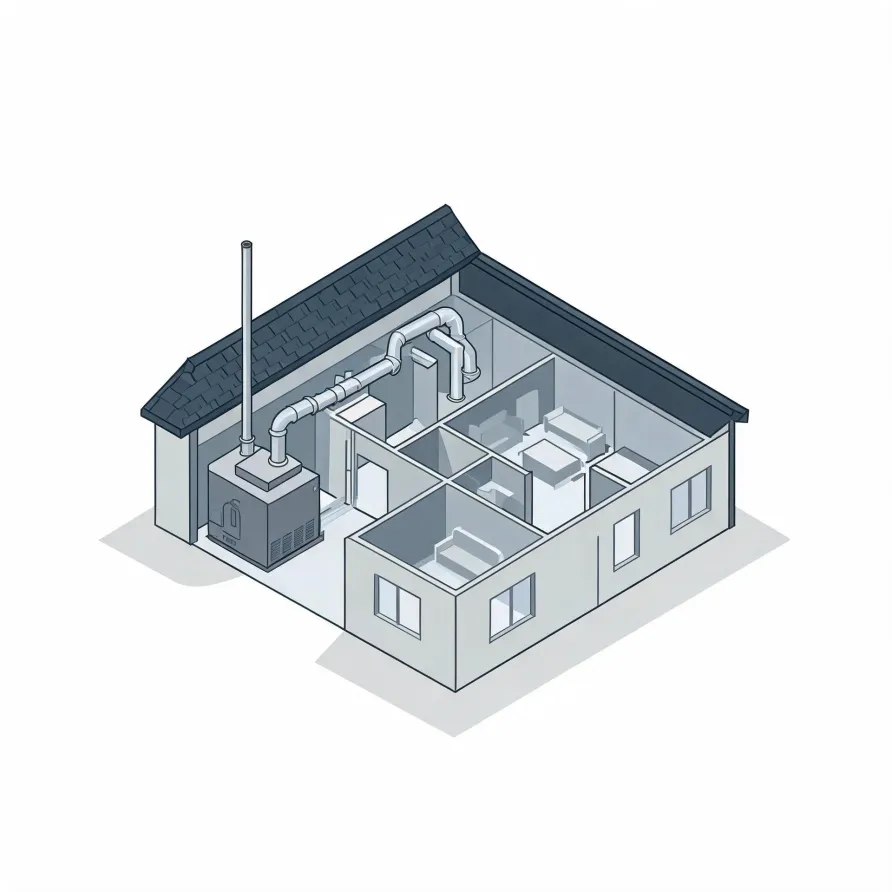
The furnace itself sits in a mechanical room, basement, or utility closet and is the unit that produces the heat. Attached directly to it is the air handler, which draws air across the heat exchanger and pushes warm air into the supply side of the duct system. Together these two units are the core of what a contractor sets in place.
The flue pipe runs from the furnace up and out of the house, carrying combustion gases away from the living space. The thermostat mounts on an interior wall and gives the homeowner a single point of control over the whole system. A condensate drain line also connects to high-efficiency units, routing moisture produced during operation to a floor drain or pump.
The drawing shows a general layout of these components, and a licensed contractor determines exactly what applies to your house.
Get matched in Mills CountyMills County by the Numbers
90 severe weather events were recorded in Mills County, Iowa between 2015 and 2024.
NOAA National Centers for Environmental Information, Storm Events Database, bulk CSV export, events 2015-01-01 through 2024-12-31.Half the homes in Mills County, Iowa were built in 1972 or earlier (2020-2024 ACS 5-year).
U.S. Census Bureau, 2020-2024 American Community Survey 5-Year EstimatesMills County, Iowa holds 6,134 housing units (2020-2024 ACS 5-year).
U.S. Census Bureau, 2020-2024 American Community Survey 5-Year EstimatesOwners occupy 83.5% of the occupied homes in Mills County, Iowa (2020-2024 ACS 5-year).
U.S. Census Bureau, 2020-2024 American Community Survey 5-Year EstimatesFurnace Installation Rules for Mills County, Iowa5 codes, standards, and statutes
What the Installation Actually Looks Like
Non-weatherized gas furnaces manufactured on or after November 19, 2015 must reach 80.0 percent AFUE.
Non-weatherized oil-fired furnaces manufactured on or after November 19, 2015 must reach 83.0 percent AFUE.
Mobile home gas furnaces manufactured on or after November 19, 2015 must reach 80.0 percent AFUE.
Non-weatherized gas furnaces manufactured on or after December 18, 2028 must reach 95.0 percent AFUE, up from the 80.0 percent minimum that applies to units manufactured before that date.
Licensing and Legal Requirements in Mills County, Iowa
Iowa requires a state licence to install or repair HVAC, refrigeration, mechanical or plumbing systems, and to operate as a contractor, with exceptions listed in section 105.11.
Severe Weather History in Mills County
Mills County's climate puts real demand on heating equipment over the course of a year. A furnace sized and installed for local conditions handles that load differently than one that is not, which is why weather patterns here are a practical part of the installation conversation.
90 severe weather events, 2015–2024. Source: NOAA National Centers for Environmental Information, Storm Events Database.