Tell us about the job
Takes about a minute. No obligation.
A furnace failing in Mills County is almost certainly failing for reasons that have nothing to do with the weather outside. 90 severe weather events were recorded in Mills County, Iowa between 2015 and 2024. That puts this county near the midpoint of what counties across the country see, which means severe weather is a real but ordinary background condition, not a punishing one. A contractor working a furnace repair here will check heat exchangers for fatigue, look at ignition components, and ask about service history, because those are what give out on equipment that has simply been running a long time without attention.
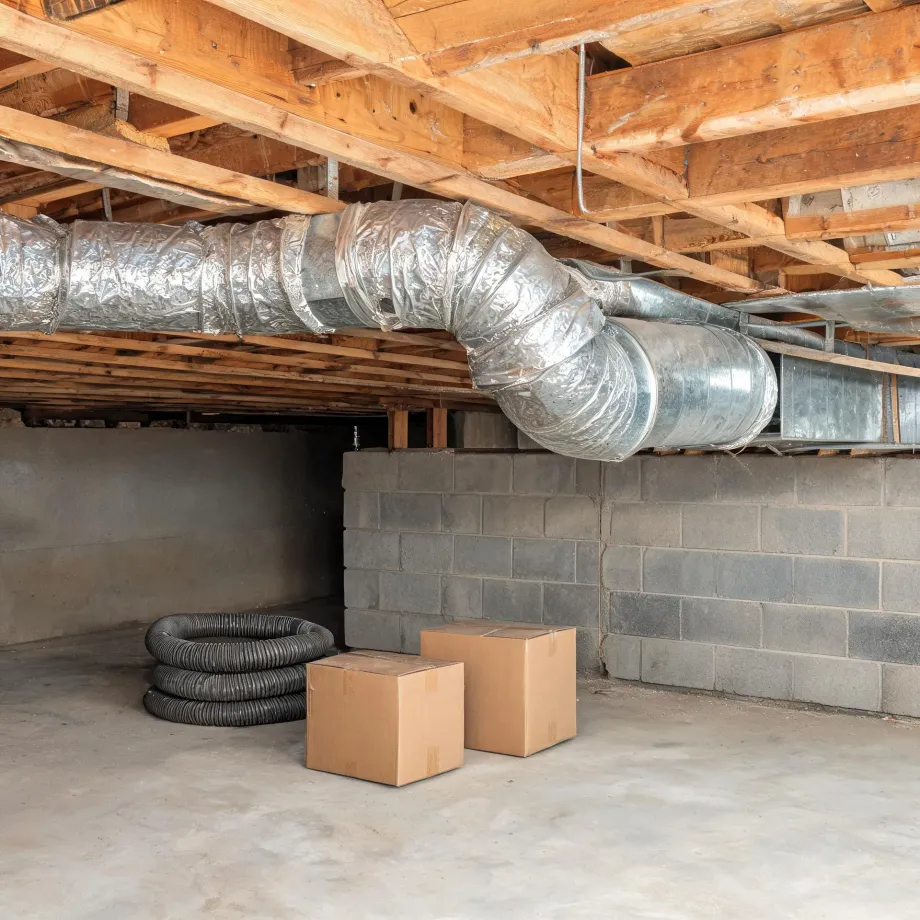
Ductwork in a house built for a furnace that no longer exists carries residue, separation, and wear that a new thermostat call will not fix. Half the homes in Mills County, Iowa were built in 1972 or earlier (2020-2024 ACS 5-year). When a contractor opens the furnace, what they find in the heat exchanger and the flue connections reflects decades of cycling in conditions the original builder never designed for. A cracked heat exchanger in stock this old is a different repair conversation than a failed igniter, and the difference shows up in parts availability as much as labor.
The Parts of a Furnace a Contractor Checks First
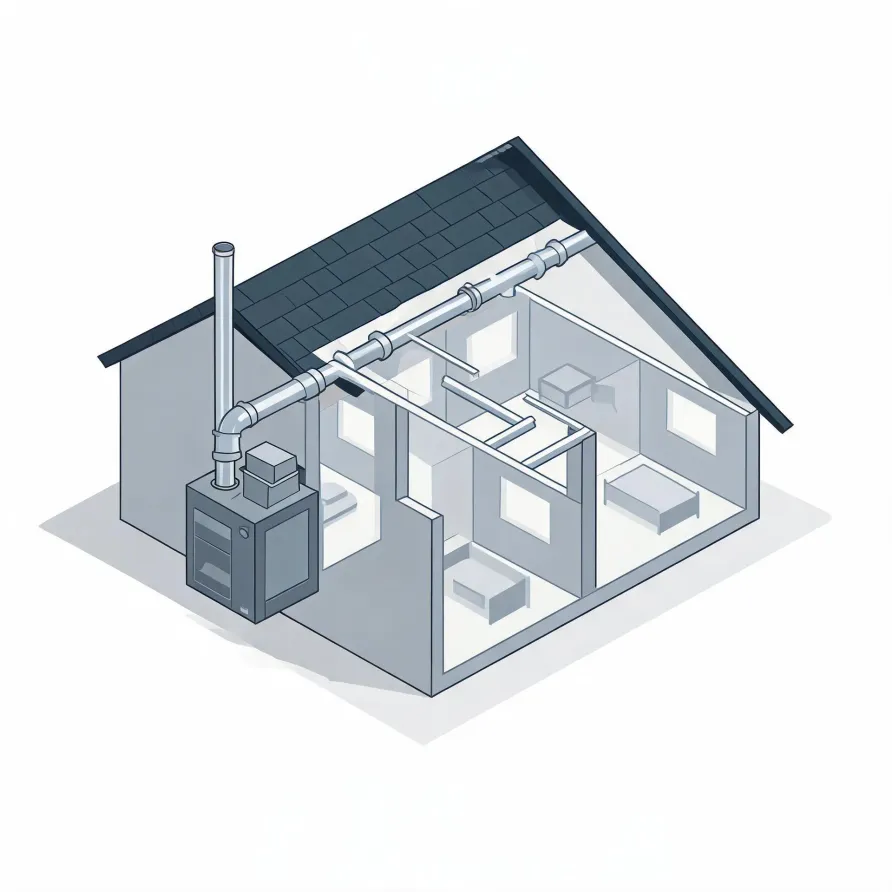
The furnace itself sits in a utility space, basement, or closet and is the piece a contractor goes to first. Inside it, the heat exchanger is the part most worth understanding: cracks or corrosion there let combustion gases into the air supply, so a contractor looks at it carefully. The burners, which sit just below it, are checked for uneven flame or buildup that disrupts ignition.
The blower motor pulls air through the system and pushes conditioned air back out through the supply side. It sits inside the furnace cabinet, and worn bearings or a failing capacitor show up as weak airflow or noise. The flue pipe runs from the cabinet to an exterior vent and is checked for blockage or separation that would redirect exhaust back into the house.
The drawing shows a representative layout, and a licensed contractor determines which components apply to your particular system and home.
Get matched in Mills CountyMills County, Iowa, by the numbers
90 severe weather events were recorded in Mills County, Iowa between 2015 and 2024.
NOAA National Centers for Environmental Information, Storm Events Database, bulk CSV export, events 2015-01-01 through 2024-12-31.Half the homes in Mills County, Iowa were built in 1972 or earlier (2020-2024 ACS 5-year).
U.S. Census Bureau, 2020-2024 American Community Survey 5-Year EstimatesMills County, Iowa holds 6,134 housing units (2020-2024 ACS 5-year).
U.S. Census Bureau, 2020-2024 American Community Survey 5-Year EstimatesOwners occupy 83.5% of the occupied homes in Mills County, Iowa (2020-2024 ACS 5-year).
U.S. Census Bureau, 2020-2024 American Community Survey 5-Year EstimatesCodes & Standards Governing Furnace Repair in Mills County, Iowa5 sourced rules and standards
What happens when a contractor comes out for HVAC repair in Mills County
Non-weatherized gas furnaces manufactured on or after November 19, 2015 must reach 80.0 percent AFUE.
Non-weatherized oil-fired furnaces manufactured on or after November 19, 2015 must reach 83.0 percent AFUE.
Mobile home gas furnaces manufactured on or after November 19, 2015 must reach 80.0 percent AFUE.
Non-weatherized gas furnaces manufactured on or after December 18, 2028 must reach 95.0 percent AFUE, up from the 80.0 percent minimum that applies to units manufactured before that date.
Licensing and Legal Requirements in Mills County, Iowa
Iowa requires a state licence to install or repair HVAC, refrigeration, mechanical or plumbing systems, and to operate as a contractor, with exceptions listed in section 105.11.
Severe Weather Events in Mills County
Hard weather puts hours on a furnace fast, cycling it through conditions it was never sized to hold indefinitely. How much of that load lands on equipment in Mills County is a local question, and the answer shapes what repair work looks like here.
90 severe weather events, 2015–2024. Source: NOAA National Centers for Environmental Information, Storm Events Database.