Tell us about the job
Takes about a minute. No obligation.
A contractor sizing or installing a furnace in Decatur County starts with the local climate, but the weather record here puts things in perspective. 54 severe weather events were recorded in Decatur County, Iowa between 2015 and 2024. At that rate, severe weather is an event in this county, not a standing condition every system fights through season after season. A furnace in trouble here is far more likely failing because of how it was originally sized, how well the installation was executed, or how consistently it has been serviced. Those are the variables a contractor pins down before recommending equipment or quoting a replacement.
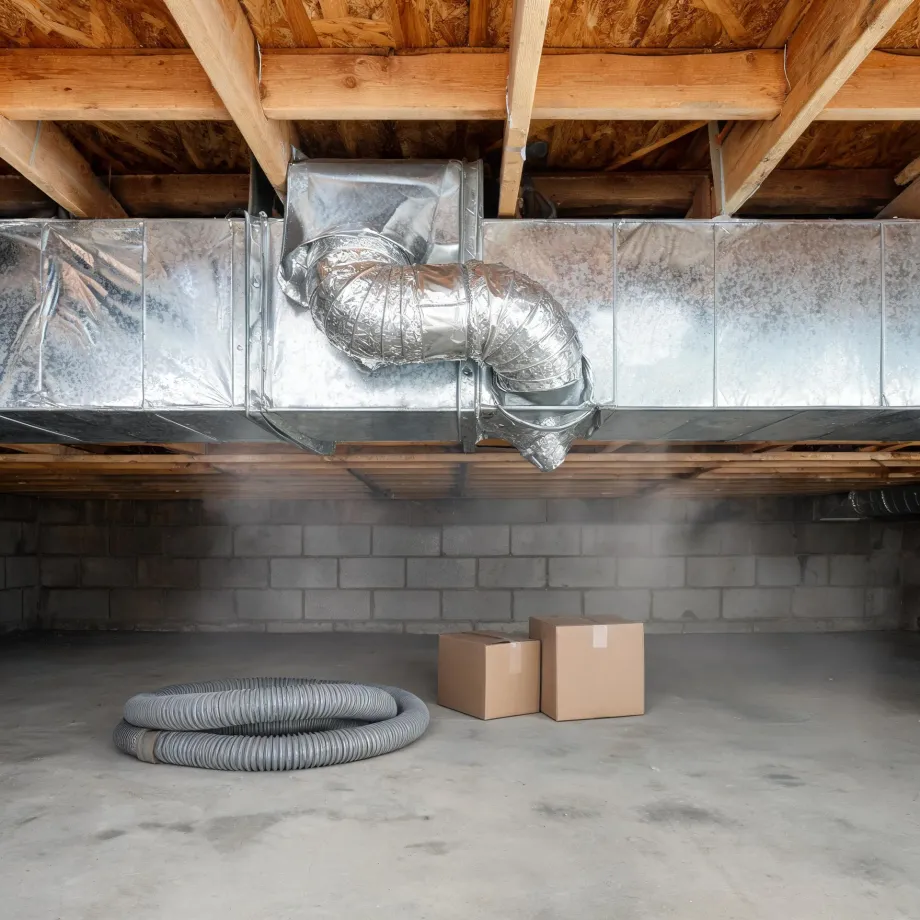
Ductwork sized for older heating equipment is what a contractor runs into in a house that has stood through multiple generations of technology. Half the homes in Decatur County, Iowa were built in 1970 or earlier (2020-2024 ACS 5-year). That means the ducts already in the walls were laid out for something with different flow requirements than what a new furnace will push through them. A contractor installing a furnace here has to establish whether the existing trunk lines and branches can carry the new unit's output before any equipment gets priced or ordered.
What Gets Installed With a New Furnace
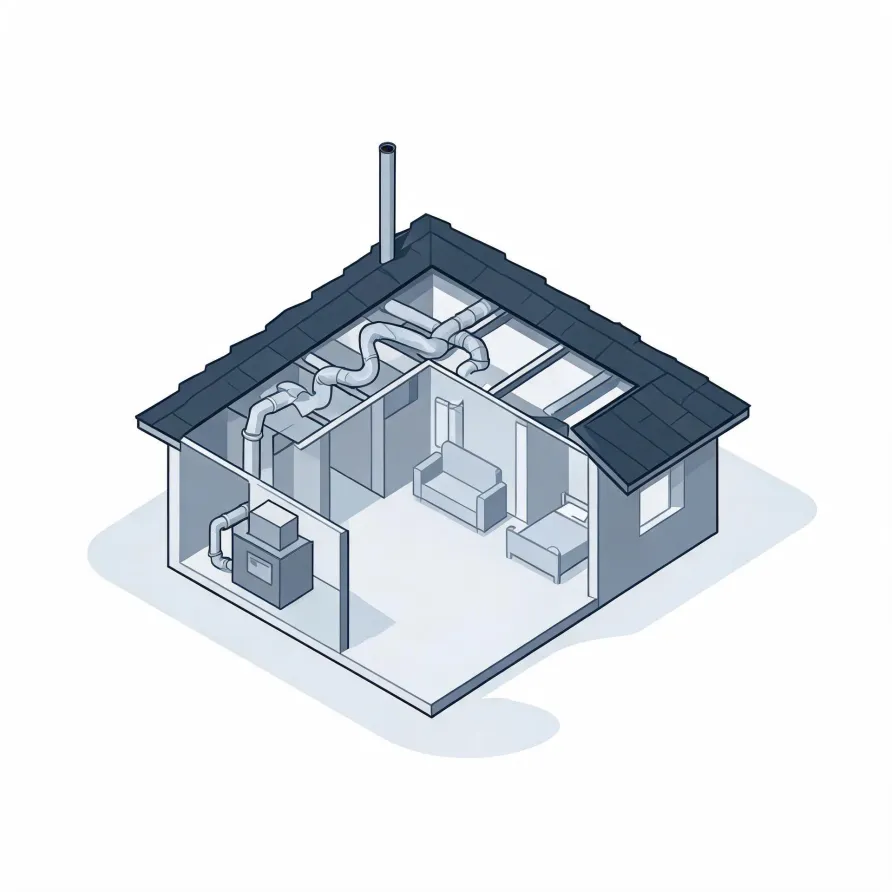
The furnace itself sits in a utility space, basement, or closet, and it is the unit that generates heat by burning fuel or running electric heating elements. Attached to it, the air handler moves conditioned air into the duct system. These are the two pieces a homeowner is buying when they commission a new installation.
The flue or venting pipe exits the furnace and runs through the house to carry combustion gases outside. Alongside it, the thermostat mounts on an interior wall and serves as the control point, telling the furnace when to fire and when to stop. A new installation also includes a fresh filter housing where the return air enters the system.
The drawing shows a general layout of these components, and a licensed contractor determines exactly what applies to this particular home.
Get matched in Decatur CountyDecatur County, Iowa, by the numbers
54 severe weather events were recorded in Decatur County, Iowa between 2015 and 2024.
NOAA National Centers for Environmental Information, Storm Events Database, bulk CSV export, events 2015-01-01 through 2024-12-31.Half the homes in Decatur County, Iowa were built in 1970 or earlier (2020-2024 ACS 5-year).
U.S. Census Bureau, 2020-2024 American Community Survey 5-Year EstimatesDecatur County, Iowa holds 3,659 housing units (2020-2024 ACS 5-year).
U.S. Census Bureau, 2020-2024 American Community Survey 5-Year EstimatesOwners occupy 69.7% of the occupied homes in Decatur County, Iowa (2020-2024 ACS 5-year).
U.S. Census Bureau, 2020-2024 American Community Survey 5-Year EstimatesFurnace Installation Rules for Decatur County, Iowa5 codes & standards
What the installation looks like from your side
Non-weatherized gas furnaces manufactured on or after November 19, 2015 must reach 80.0 percent AFUE.
Non-weatherized oil-fired furnaces manufactured on or after November 19, 2015 must reach 83.0 percent AFUE.
Mobile home gas furnaces manufactured on or after November 19, 2015 must reach 80.0 percent AFUE.
Non-weatherized gas furnaces manufactured on or after December 18, 2028 must reach 95.0 percent AFUE, up from the 80.0 percent minimum that applies to units manufactured before that date.
Licensing and Legal Requirements in Decatur County, Iowa
Iowa requires a state licence to install or repair HVAC, refrigeration, mechanical or plumbing systems, and to operate as a contractor, with exceptions listed in section 105.11.
Severe Weather Events in Decatur County
Decatur County's weather places real demands on home heating equipment, and a furnace sized and installed for local conditions holds up where a generic job falls short. The chart below tracks recorded severe weather events in the county so you can see what the equipment here contends with.
54 severe weather events, 2015–2024. Source: NOAA National Centers for Environmental Information, Storm Events Database.