Tell us about the job
Takes about a minute. No obligation.
A contractor sizing and quoting a furnace replacement in Wayne County has to read what the existing system was set up to handle and whether that setup was done right. 50 severe weather events were recorded in Wayne County, Iowa between 2015 and 2024. At that rate, severe weather is something a system here meets now and then, not a constant it runs against. That means the installation decisions that matter most are equipment selection matched to the actual heat load of the house and ductwork that was not undersized from the start. A poor original install compounds itself over years and drives the kind of heating failure that looks like storm damage but is not.
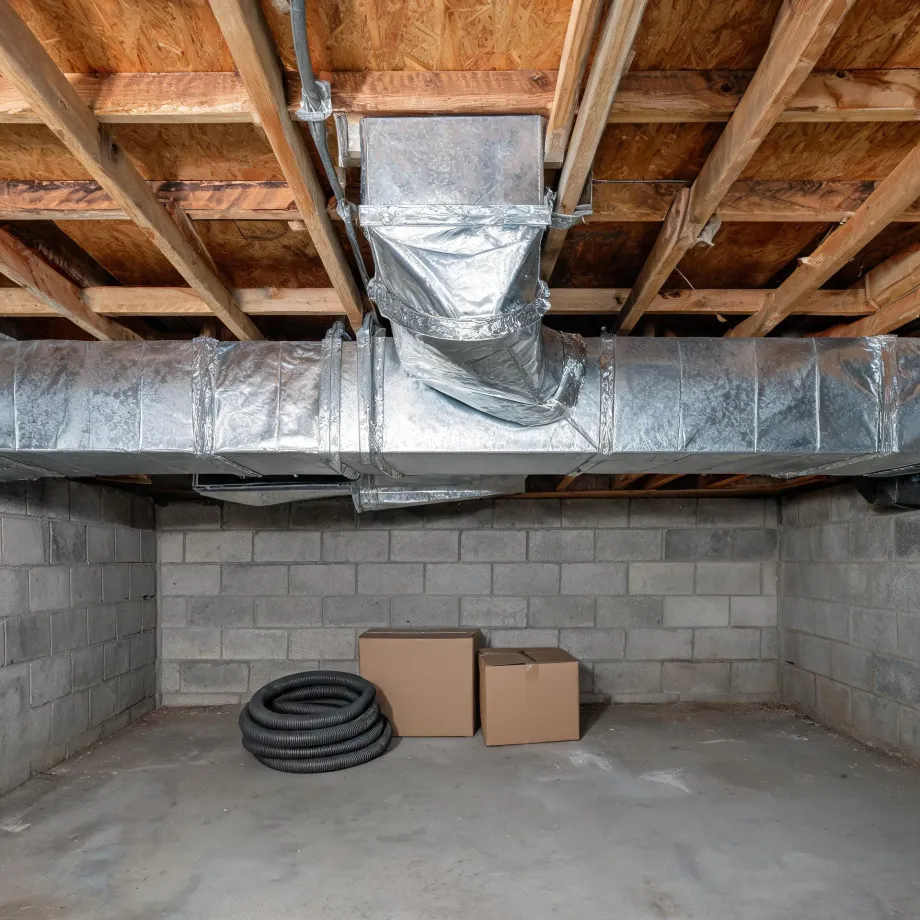
Ductwork laid down for one generation of heating equipment does not automatically carry the next. Half the homes in Wayne County, Iowa were built in 1969 or earlier (2020-2024 ACS 5-year). That span between when these houses were built and what a contractor is now asked to install is where the real decisions in a furnace job live. Before a new unit can be quoted accurately, a contractor walks the existing trunk lines and branch runs, checking diameter, routing, and condition, because a duct system designed around the equipment of its era may restrict airflow enough to undercut whatever efficiency the new furnace is rated for. The electrical service gets the same look. What those two checks turn up sets the actual scope of the job.
What Gets Installed With a New Furnace
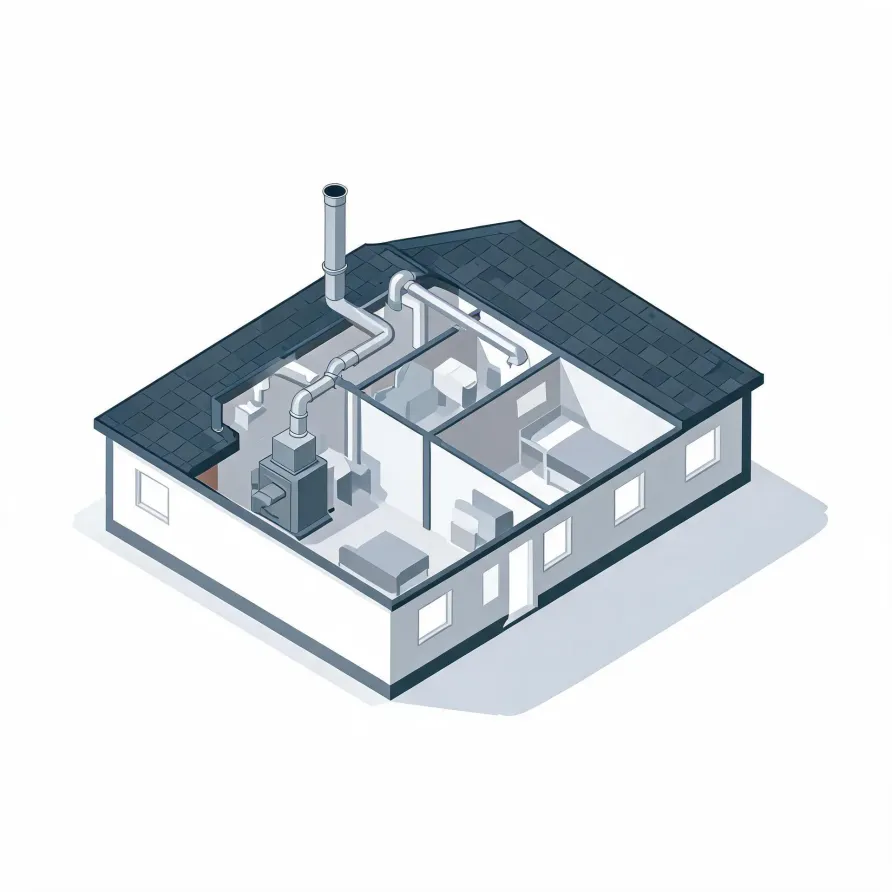
The furnace itself sits in the basement, utility room, or crawlspace and is the unit a homeowner is most likely to have seen before. It holds the burner assembly, the heat exchanger, and the blower. The burner produces heat, the exchanger transfers it to the air stream, and the blower pushes that air into the duct system.
The flue pipe runs from the furnace to an exterior wall or the roof and carries combustion gases out of the house. Alongside it, the thermostat mounts on an interior wall and serves as the control point for the whole system, telling the furnace when to fire and when to stop.
The drawing shows a representative layout, and a licensed contractor will determine exactly what applies to this house.
Get matched in Wayne CountyWayne County, Iowa, by the numbers
50 severe weather events were recorded in Wayne County, Iowa between 2015 and 2024.
NOAA National Centers for Environmental Information, Storm Events Database, bulk CSV export, events 2015-01-01 through 2024-12-31.Half the homes in Wayne County, Iowa were built in 1969 or earlier (2020-2024 ACS 5-year).
U.S. Census Bureau, 2020-2024 American Community Survey 5-Year EstimatesWayne County, Iowa holds 3,019 housing units (2020-2024 ACS 5-year).
U.S. Census Bureau, 2020-2024 American Community Survey 5-Year EstimatesOwners occupy 80.9% of the occupied homes in Wayne County, Iowa (2020-2024 ACS 5-year).
U.S. Census Bureau, 2020-2024 American Community Survey 5-Year EstimatesFurnace Installation Rules on the Books for Wayne County, Iowa5 codes, standards & laws
What the Installation Actually Looks Like
Non-weatherized gas furnaces manufactured on or after November 19, 2015 must reach 80.0 percent AFUE.
Non-weatherized oil-fired furnaces manufactured on or after November 19, 2015 must reach 83.0 percent AFUE.
Mobile home gas furnaces manufactured on or after November 19, 2015 must reach 80.0 percent AFUE.
Non-weatherized gas furnaces manufactured on or after December 18, 2028 must reach 95.0 percent AFUE, up from the 80.0 percent minimum that applies to units manufactured before that date.
What Wayne County, Iowa Requires for HVAC Installation
Iowa requires a state licence to install or repair HVAC, refrigeration, mechanical or plumbing systems, and to operate as a contractor, with exceptions listed in section 105.11.
Severe Weather History in Wayne County
Heating equipment works harder in places where the climate swings hard, and Wayne County's weather record is part of what shapes how a furnace is sized and specified here. That makes local conditions a practical factor, not a background detail.
50 severe weather events, 2015–2024. Source: NOAA National Centers for Environmental Information, Storm Events Database.