Tell us about the job
Takes about a minute. No obligation.
A contractor quoting a furnace repair in this area has to decide whether a failed part gave out under accumulated weather stress or simply ran its course. 140 severe weather events were recorded in Kossuth County, Iowa between 2015 and 2024. At that rate, severe weather is a standing condition of operating here, not an occasional interruption, and the load it puts on heat exchangers, igniters, and blower motors shows up as accelerated wear rather than dramatic single-event damage. A part that looks worn through might have reached its limit sooner than it would have elsewhere, which changes what a contractor recommends replacing while they have the unit open.
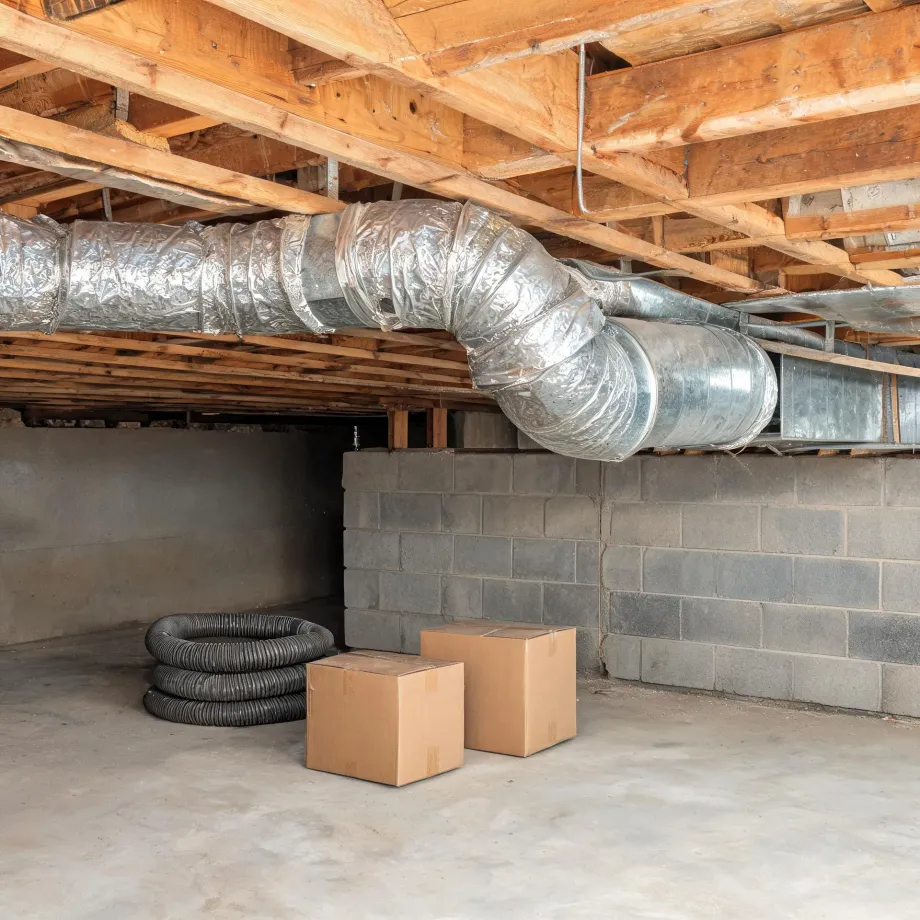
Ductwork in a house this old was put in for whatever system the house first ran, and a furnace that has lived through multiple replacements in that same shell tends to carry heat exchangers, burner assemblies, and control boards that are generation-specific. Half the homes in Kossuth County, Iowa were built in 1962 or earlier (2020-2024 ACS 5-year). That age of stock means a contractor opening a furnace here may find a component whose part number has been discontinued, superseded, or absorbed into a product line that no longer matches the original spec. The repair scope then depends not on what failed but on what the supply chain still carries for it.
The Parts of a Furnace a Contractor Checks First
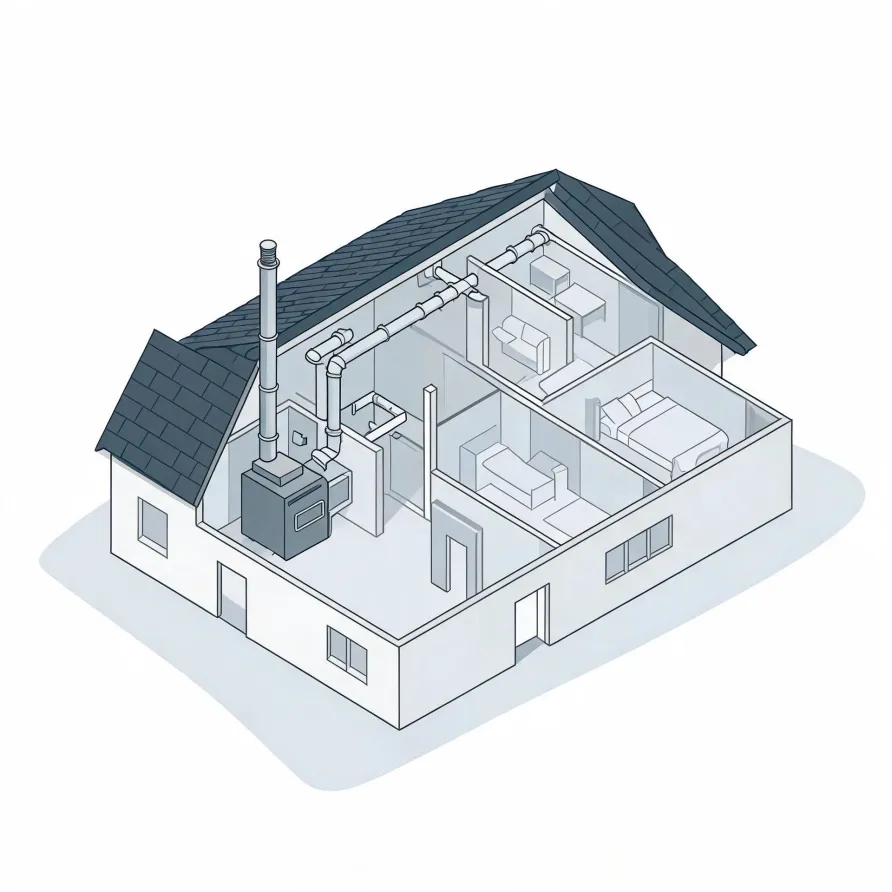
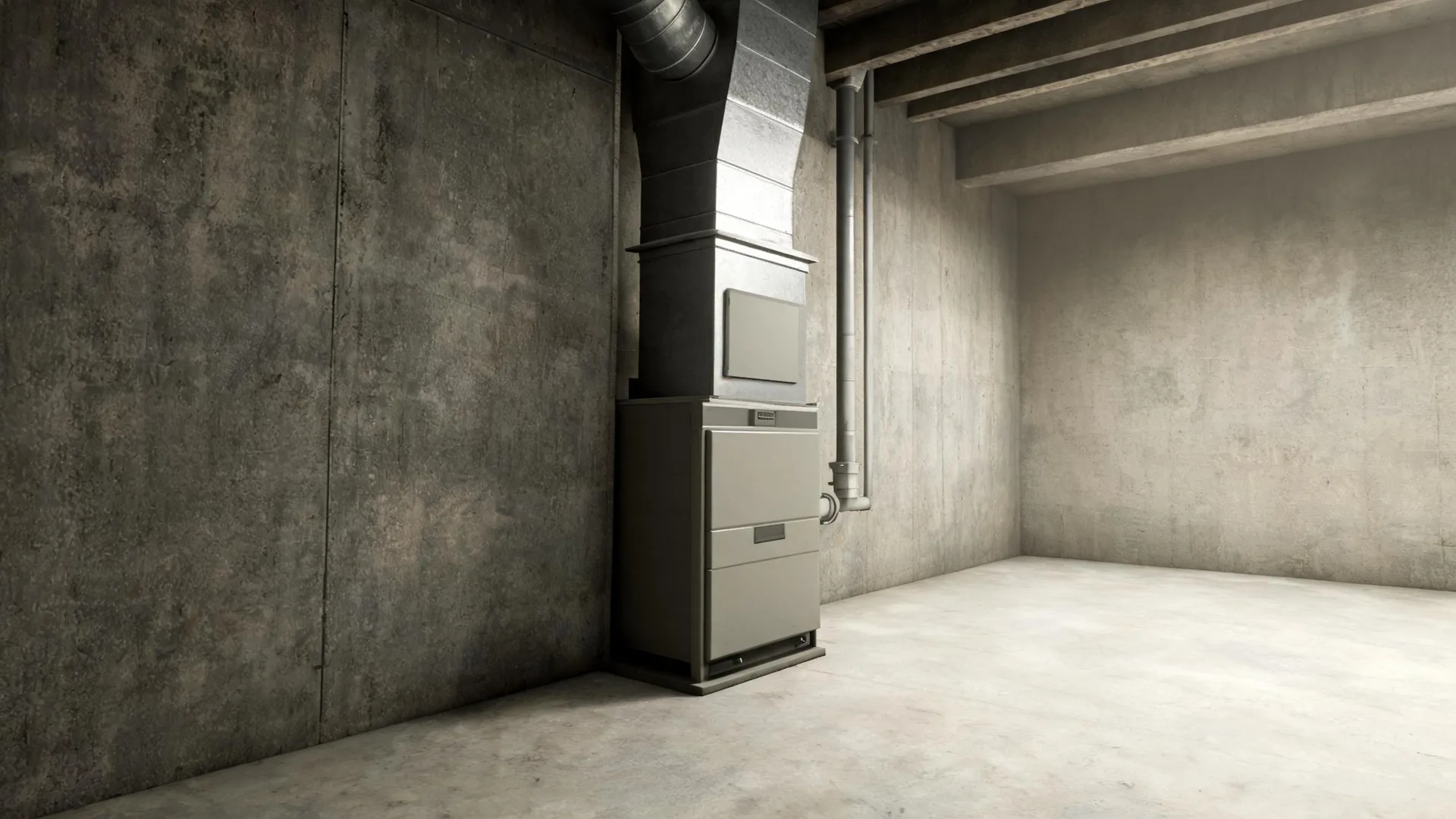
The furnace cabinet sits in a basement, utility room, or closet and is where heat is produced. Inside it, the heat exchanger is the first place a contractor looks when something is wrong: cracks or corrosion there let combustion gases leak into living air. The burners, also inside the cabinet, are checked next, since weak or uneven flame is a common source of heating loss.
The blower motor sits at the base of the cabinet and pushes conditioned air out through the supply plenum and into the duct system. The flue pipe runs from the cabinet up through the roof and removes combustion exhaust; a blockage or breach there affects both safety and performance. The thermostat on the interior wall is the control point, and a faulty signal from it can mimic a mechanical failure inside the cabinet itself.
The drawing shows a typical furnace layout, and a licensed contractor will determine which components need attention in your specific home.
Get matched in Kossuth CountyKossuth County, by the numbers
140 severe weather events were recorded in Kossuth County, Iowa between 2015 and 2024.
NOAA National Centers for Environmental Information, Storm Events Database, bulk CSV export, events 2015-01-01 through 2024-12-31.Half the homes in Kossuth County, Iowa were built in 1962 or earlier (2020-2024 ACS 5-year).
U.S. Census Bureau, 2020-2024 American Community Survey 5-Year EstimatesKossuth County, Iowa holds 7,205 housing units (2020-2024 ACS 5-year).
U.S. Census Bureau, 2020-2024 American Community Survey 5-Year EstimatesOwners occupy 78.6% of the occupied homes in Kossuth County, Iowa (2020-2024 ACS 5-year).
U.S. Census Bureau, 2020-2024 American Community Survey 5-Year EstimatesCodes & Standards Governing Furnace Repair in Kossuth County, Iowa5 sourced rules and standards
What HVAC Repair Looks Like in Kossuth County
Non-weatherized gas furnaces manufactured on or after November 19, 2015 must reach 80.0 percent AFUE.
Non-weatherized oil-fired furnaces manufactured on or after November 19, 2015 must reach 83.0 percent AFUE.
Mobile home gas furnaces manufactured on or after November 19, 2015 must reach 80.0 percent AFUE.
Non-weatherized gas furnaces manufactured on or after December 18, 2028 must reach 95.0 percent AFUE, up from the 80.0 percent minimum that applies to units manufactured before that date.
Licensing and Legal Requirements in Kossuth County, Iowa
Iowa requires a state licence to install or repair HVAC, refrigeration, mechanical or plumbing systems, and to operate as a contractor, with exceptions listed in section 105.11.
Severe Weather Events in Kossuth County
Kossuth County weather puts real demands on furnace equipment, and those demands compound over time. Repair needs here are shaped by local conditions, which is why the record below is relevant to anyone keeping a furnace running in this area.
140 severe weather events, 2015–2024. Source: NOAA National Centers for Environmental Information, Storm Events Database.