Tell us about the job
Takes about a minute. No obligation.
A furnace in Emmet County has been running against real load, and that shapes what a contractor looks at when something fails. 107 severe weather events were recorded in Emmet County, Iowa between 2015 and 2024. At that rate, severe weather is not a rare variable a technician can set aside. Stress accumulates in heat exchangers, igniters, and blower motors over seasons of hard cycling, and a contractor working a repair here checks those components for weather-driven fatigue before concluding the failure is simple age. The distinction changes the parts ordered and whether adjacent components get replaced in the same visit.
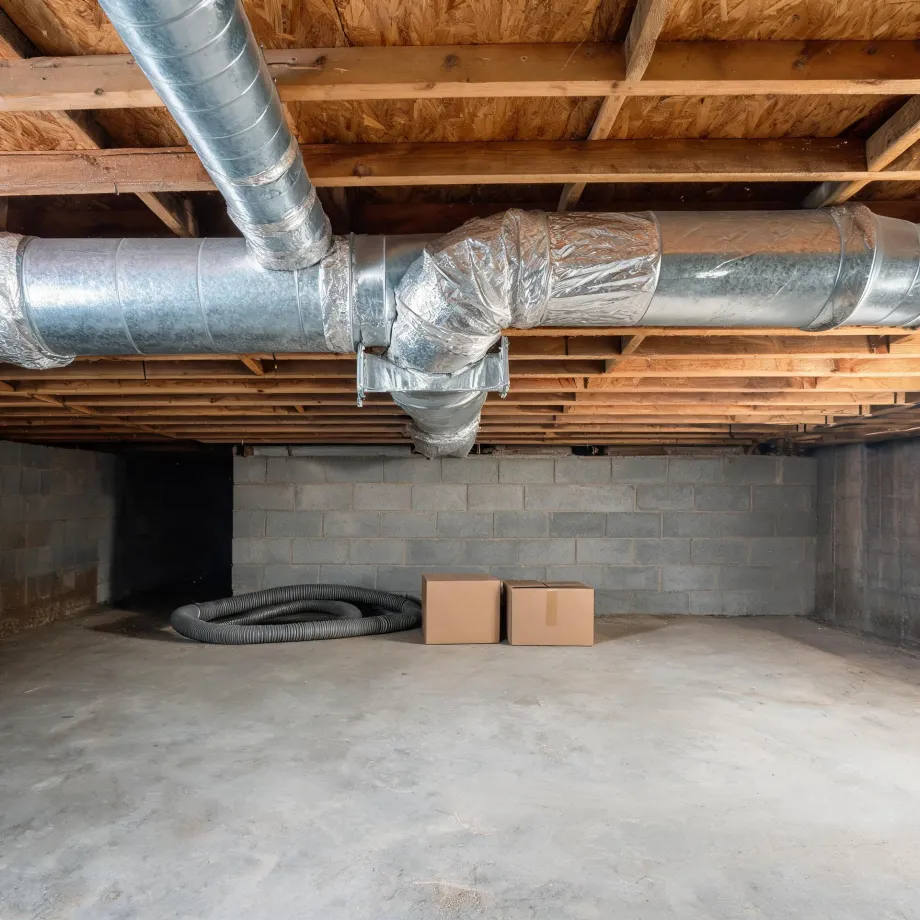
Furnaces in houses built before the midpoint of the last century have usually been replaced at least once, sometimes more, and what sits in a basement now is old equipment inside an even older shell. Half the homes in Emmet County, Iowa were built in 1955 or earlier (2020-2024 ACS 5-year). A contractor who opens a furnace in stock like this finds components that have run through decades of Iowa winters, and the question is not whether wear is present but which parts carry it. Heat exchangers crack. Inducer motors seize. And the harder problem is often sourcing: a unit that has run long enough can reach a point where the manufacturer no longer makes what it takes to fix it.
The Parts of a Furnace a Contractor Checks First
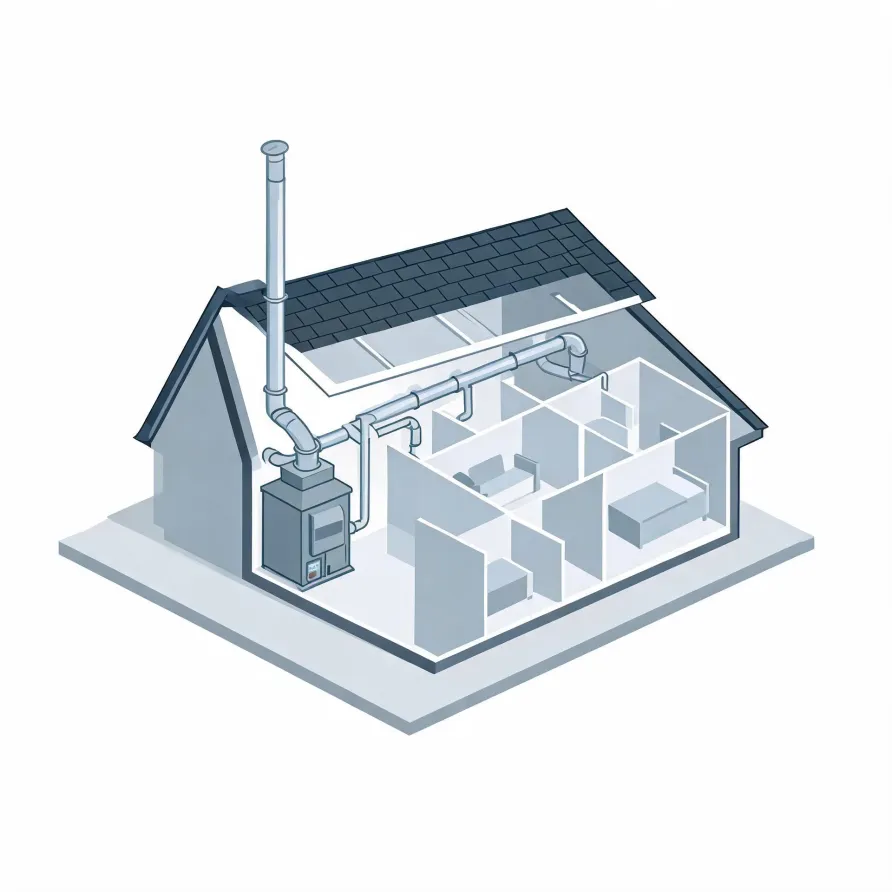
The furnace itself sits in a utility area, basement, or closet and is the piece a contractor goes to first. Inside it, the heat exchanger is the part most worth understanding: it separates combustion gases from the air that circulates through the house, and a crack or failure there is what takes a furnace out of service.
The blower motor sits inside the furnace cabinet and pushes conditioned air outward through the supply side of the system. The flue or exhaust vent runs from the furnace to an exterior wall or roof, carrying combustion gases out, and the thermostat on the wall is the control point that tells the whole system when to fire.
The drawing shows a representative layout, and a licensed contractor determines which components and conditions apply to your particular home.
Get matched in Emmet CountyEmmet County, Iowa, by the numbers
107 severe weather events were recorded in Emmet County, Iowa between 2015 and 2024.
NOAA National Centers for Environmental Information, Storm Events Database, bulk CSV export, events 2015-01-01 through 2024-12-31.Half the homes in Emmet County, Iowa were built in 1955 or earlier (2020-2024 ACS 5-year).
U.S. Census Bureau, 2020-2024 American Community Survey 5-Year EstimatesEmmet County, Iowa holds 4,520 housing units (2020-2024 ACS 5-year).
U.S. Census Bureau, 2020-2024 American Community Survey 5-Year EstimatesOwners occupy 79.4% of the occupied homes in Emmet County, Iowa (2020-2024 ACS 5-year).
U.S. Census Bureau, 2020-2024 American Community Survey 5-Year EstimatesFurnace Repair Rules & Codes for Emmet County, Iowa5 sourced rules and standards
What the repair visit looks like
Non-weatherized gas furnaces manufactured on or after November 19, 2015 must reach 80.0 percent AFUE.
Non-weatherized oil-fired furnaces manufactured on or after November 19, 2015 must reach 83.0 percent AFUE.
Mobile home gas furnaces manufactured on or after November 19, 2015 must reach 80.0 percent AFUE.
Non-weatherized gas furnaces manufactured on or after December 18, 2028 must reach 95.0 percent AFUE, up from the 80.0 percent minimum that applies to units manufactured before that date.
Licensing and Legal Requirements in Emmet County, Iowa
Iowa requires a state licence to install or repair HVAC, refrigeration, mechanical or plumbing systems, and to operate as a contractor, with exceptions listed in section 105.11.
Severe Weather Events in Emmet County
Hard weather puts real hours on a furnace. The more a system is pushed to hold temperature against extreme cold or storm-driven pressure swings, the more its components wear, and repair needs in Emmet County follow that pattern.
107 severe weather events, 2015–2024. Source: NOAA National Centers for Environmental Information, Storm Events Database.