Tell us about the job
Takes about a minute. No obligation.
A furnace breaking down in Taylor County is almost always a story about the equipment itself, not the weather outside. 87 severe weather events were recorded in Taylor County, Iowa between 2015 and 2024. At that rate, severe weather is an occasional event for any given system, not a chronic load wearing components down season after season. When a contractor opens a furnace here and finds a cracked heat exchanger or a failing inducer motor, the honest diagnosis points to age and maintenance history before it points to anything the sky has done. Those are the variables that explain most of what goes wrong with furnaces in this area.
Ductwork and wiring in houses built for a different era get adapted over time, but the furnace itself sits inside that history in a specific way. Half the homes in Taylor County, Iowa were built in 1951 or earlier (2020-2024 ACS 5-year). A contractor who opens a furnace in stock like this is not always dealing with a parts question that a supplier can answer same-week. Discontinued heat exchangers, obsolete igniters, and burner assemblies that have been out of standard production for years are a real possibility in a repair call here, and that affects whether a repair is the right path before a quote is ever written.
The Parts of a Furnace a Contractor Checks First
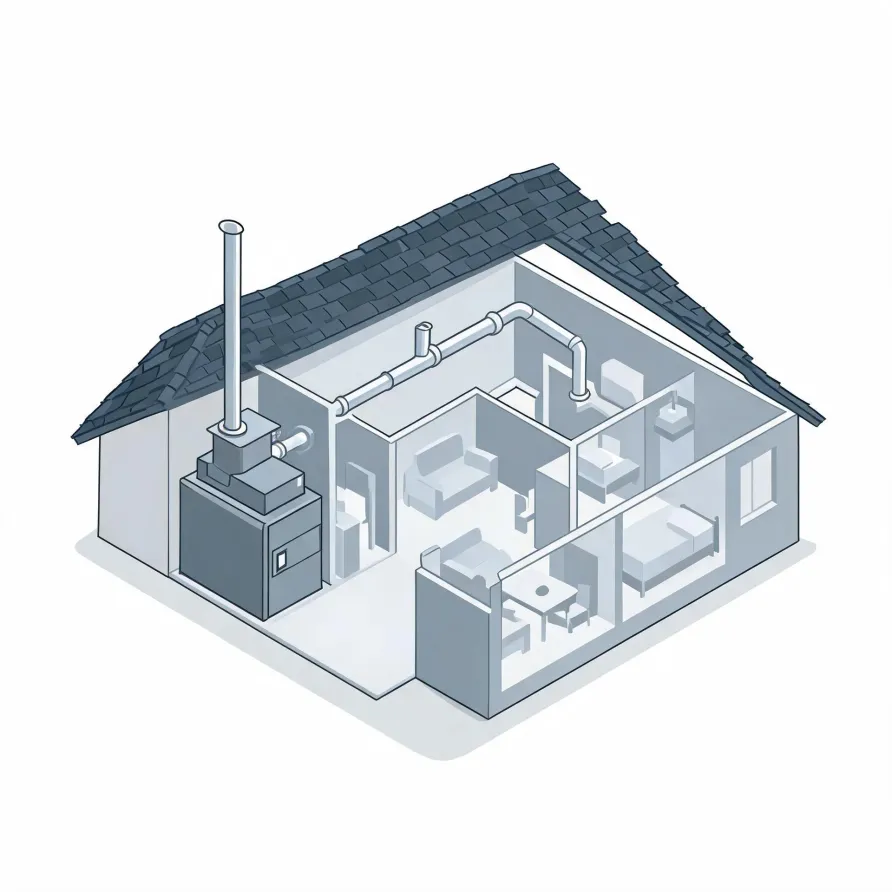
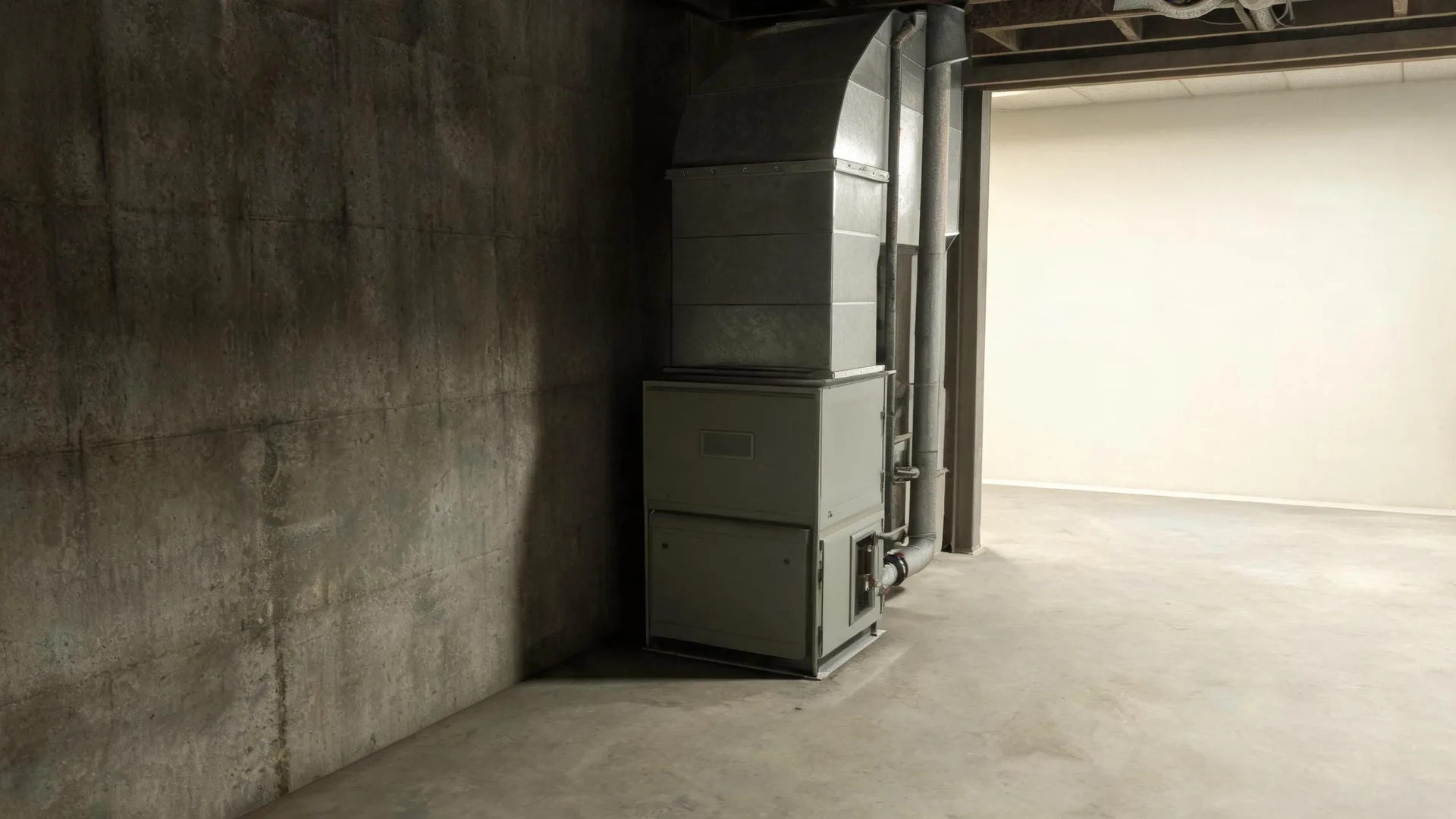
The furnace itself sits in a mechanical room, basement, or utility closet and is the piece a contractor opens first. Inside it, the heat exchanger is the part that takes the most abuse and is a common source of both heating failure and safety concerns. The burners, which sit directly beneath it, are the next place a contractor looks when the system is not producing heat.
The blower motor sits at the base of the furnace cabinet and moves conditioned air into the duct system. Alongside it, the control board, igniter, and flame sensor work together to start each heating cycle and keep it running. When a furnace short-cycles, runs but blows cold air, or fails to start at all, those components are where the diagnostic work begins.
The drawing shows a typical furnace layout, and a licensed contractor determines which parts apply to the system in your house.
Get matched in Taylor CountyTaylor County, Iowa, by the numbers
87 severe weather events were recorded in Taylor County, Iowa between 2015 and 2024.
NOAA National Centers for Environmental Information, Storm Events Database, bulk CSV export, events 2015-01-01 through 2024-12-31.Half the homes in Taylor County, Iowa were built in 1951 or earlier (2020-2024 ACS 5-year).
U.S. Census Bureau, 2020-2024 American Community Survey 5-Year EstimatesTaylor County, Iowa holds 2,889 housing units (2020-2024 ACS 5-year).
U.S. Census Bureau, 2020-2024 American Community Survey 5-Year EstimatesOwners occupy 77.9% of the occupied homes in Taylor County, Iowa (2020-2024 ACS 5-year).
U.S. Census Bureau, 2020-2024 American Community Survey 5-Year EstimatesFurnace Repair Rules & Standards for Taylor County, Iowa5 codes, laws, and standards
What happens when a contractor comes out
Non-weatherized gas furnaces manufactured on or after November 19, 2015 must reach 80.0 percent AFUE.
Non-weatherized oil-fired furnaces manufactured on or after November 19, 2015 must reach 83.0 percent AFUE.
Mobile home gas furnaces manufactured on or after November 19, 2015 must reach 80.0 percent AFUE.
Non-weatherized gas furnaces manufactured on or after December 18, 2028 must reach 95.0 percent AFUE, up from the 80.0 percent minimum that applies to units manufactured before that date.
What Taylor County, Iowa Requires for HVAC Repair Work
Iowa requires a state licence to install or repair HVAC, refrigeration, mechanical or plumbing systems, and to operate as a contractor, with exceptions listed in section 105.11.
Severe Weather Events in Taylor County
Hard weather puts real hours on a furnace. Repair needs in Taylor County track closely with what the climate asks of the equipment, which is why local storm history belongs alongside a conversation about keeping that equipment running.
87 severe weather events, 2015–2024. Source: NOAA National Centers for Environmental Information, Storm Events Database.