Tell us about the job
Takes about a minute. No obligation.
A contractor diagnosing a failed furnace in Adams County is not working in a place where the climate grinds equipment down season after season. 56 severe weather events were recorded in Adams County, Iowa between 2015 and 2024. At that rate, most furnaces in this county have run their years without accumulating the kind of repeated storm load that reshapes a repair diagnosis. What a contractor finds instead is the ordinary story: a heat exchanger that cracked from age, a blower motor that ran dirty, an igniter that was never replaced on schedule. The weather record here does not explain those failures, and attributing them to it would send a repair in the wrong direction.
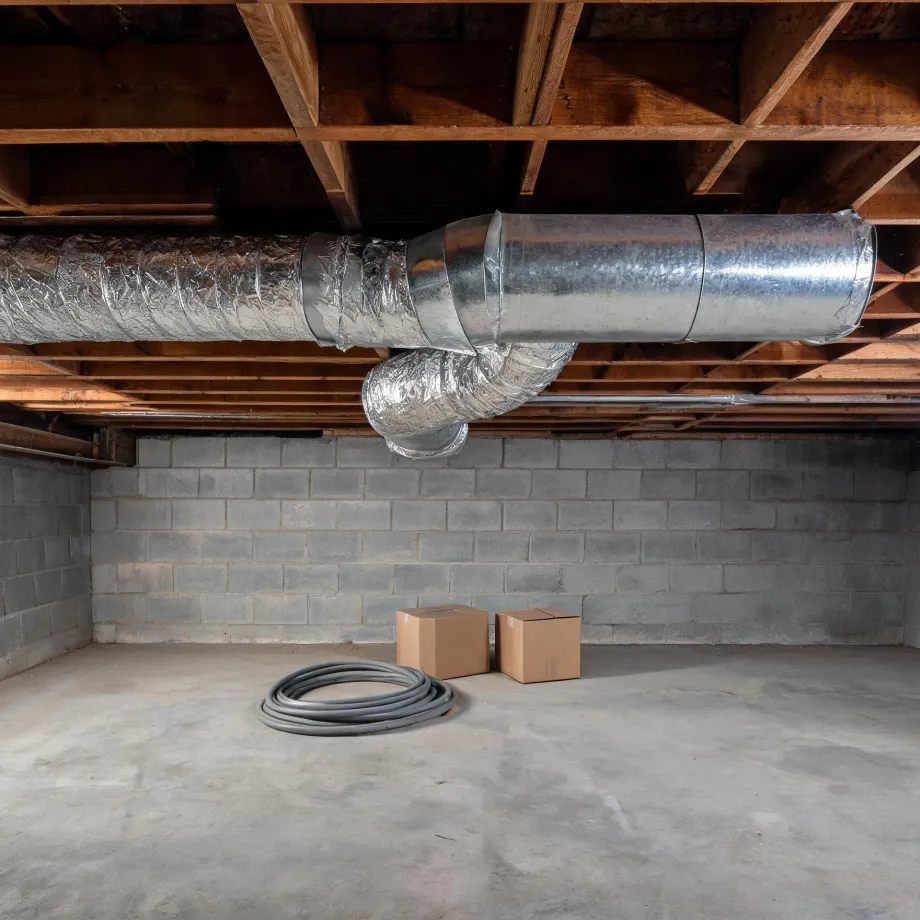
Ductwork and wiring in this county's older houses have already been through at least one generation of equipment. Half the homes in Adams County, Iowa were built in 1955 or earlier (2020-2024 ACS 5-year). A furnace running in a house that age is old enough that the parts it takes may no longer be in regular production, and a contractor opening the unit has to confirm availability before the repair scope is set. If a heat exchanger, inducer motor, or control board is discontinued, the job changes in scope and cost before a single part is ordered.
The Parts of a Furnace a Contractor Checks First
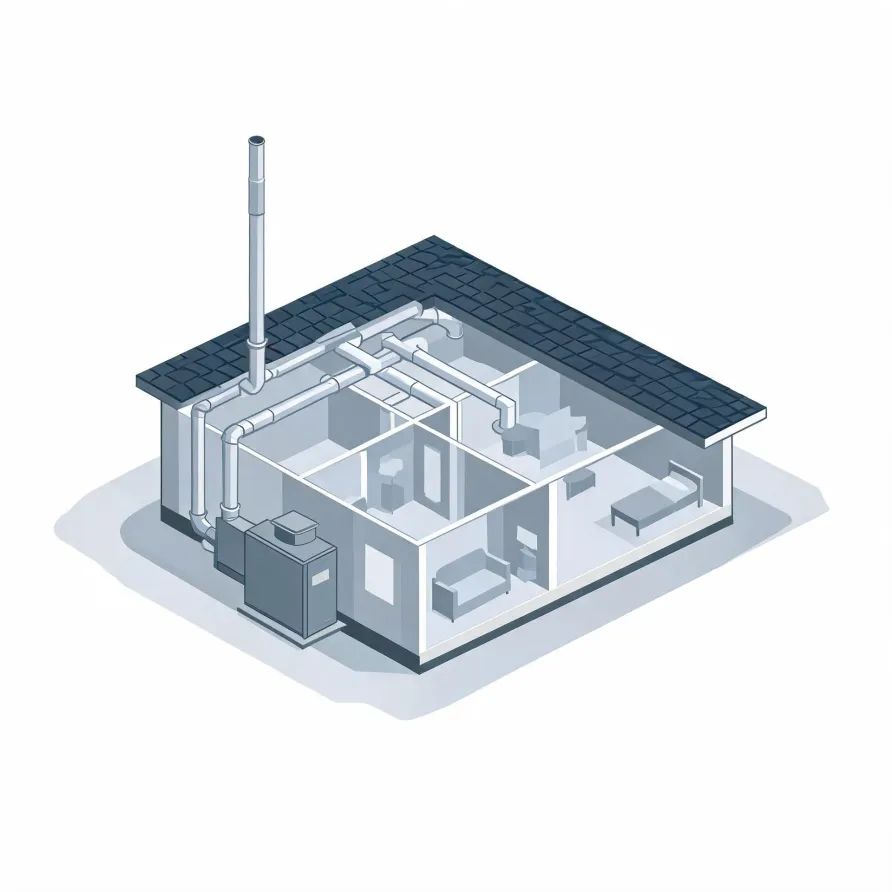
The furnace itself sits in a mechanical room, basement, or utility closet and is the heart of the system. Inside it, the heat exchanger is the piece a contractor looks at closely during a repair call. Cracks or failures there affect both heat output and safety, which is why it ranks among the first things examined.
The blower motor and its fan wheel sit within the furnace cabinet and push conditioned air into the supply side of the duct system. The burner assembly, the igniter, and the flame sensor work together to start and sustain combustion. The flue or exhaust vent runs from the cabinet to the outside, and problems along that path show up in how the burner behaves.
The drawing shows a representative layout, and a licensed contractor determines which components apply to the specific equipment and configuration in your home.
Get matched in Adams CountyAdams County, Iowa, by the numbers
56 severe weather events were recorded in Adams County, Iowa between 2015 and 2024.
NOAA National Centers for Environmental Information, Storm Events Database, bulk CSV export, events 2015-01-01 through 2024-12-31.Half the homes in Adams County, Iowa were built in 1955 or earlier (2020-2024 ACS 5-year).
U.S. Census Bureau, 2020-2024 American Community Survey 5-Year EstimatesAdams County, Iowa holds 1,889 housing units (2020-2024 ACS 5-year).
U.S. Census Bureau, 2020-2024 American Community Survey 5-Year EstimatesOwners occupy 77.1% of the occupied homes in Adams County, Iowa (2020-2024 ACS 5-year).
U.S. Census Bureau, 2020-2024 American Community Survey 5-Year EstimatesCodes & Standards Covering Furnace Repair in Adams County, Iowa5 sourced rules and standards
What happens when the contractor comes out
Non-weatherized gas furnaces manufactured on or after November 19, 2015 must reach 80.0 percent AFUE.
Non-weatherized oil-fired furnaces manufactured on or after November 19, 2015 must reach 83.0 percent AFUE.
Mobile home gas furnaces manufactured on or after November 19, 2015 must reach 80.0 percent AFUE.
Non-weatherized gas furnaces manufactured on or after December 18, 2028 must reach 95.0 percent AFUE, up from the 80.0 percent minimum that applies to units manufactured before that date.
Licensing and Legal Requirements in Adams County, Iowa
Iowa requires a state licence to install or repair HVAC, refrigeration, mechanical or plumbing systems, and to operate as a contractor, with exceptions listed in section 105.11.
Severe Weather Events in Adams County
Furnaces in Adams County work against whatever the climate puts on them, and that workload adds up over time. Repair needs here are shaped by local conditions, which is why the weather record below is part of the picture.
56 severe weather events, 2015–2024. Source: NOAA National Centers for Environmental Information, Storm Events Database.