Tell us about the job
Takes about a minute. No obligation.
A furnace repair here asks the contractor to do more than swap a part. 171 severe weather events were recorded in Clinton County, Iowa between 2015 and 2024. At that rate, severe weather is a standing condition of equipment life in this county, and a contractor working a furnace repair has to establish whether a failed heat exchanger, a burned control board, or a seized inducer motor reflects that accumulated load or simply the age of the unit, because the answer changes what else gets inspected and what ends up on the quote.
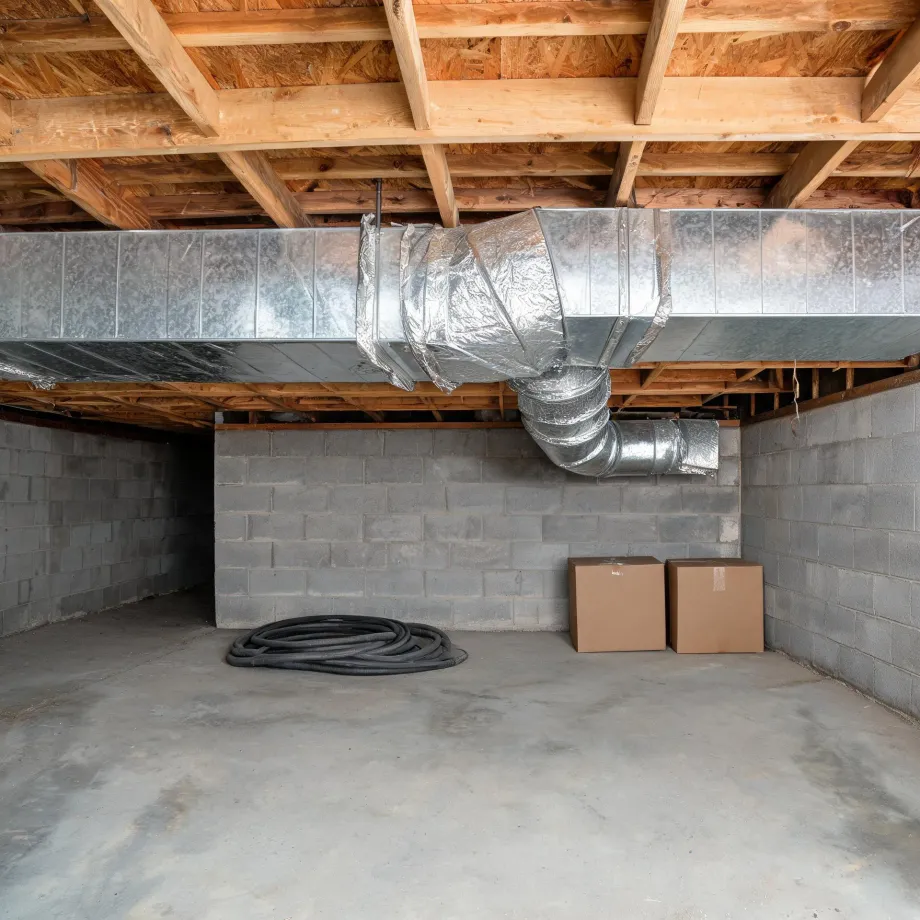
Opened equipment in a house this old can contain components from several different service generations, and the part a contractor pulls out may belong to a line a manufacturer stopped supporting years back. Half the homes in Clinton County, Iowa were built in 1957 or earlier (2020-2024 ACS 5-year). When a furnace in stock that old finally fails a heat exchanger inspection or loses a control board, the repair hinges on whether that specific component is still in production, and if it is not, the contractor is pricing a replacement before the diagnostic visit is finished. Sourcing is where jobs in housing this old slow down or change direction.
The Parts of a Furnace a Contractor Checks First
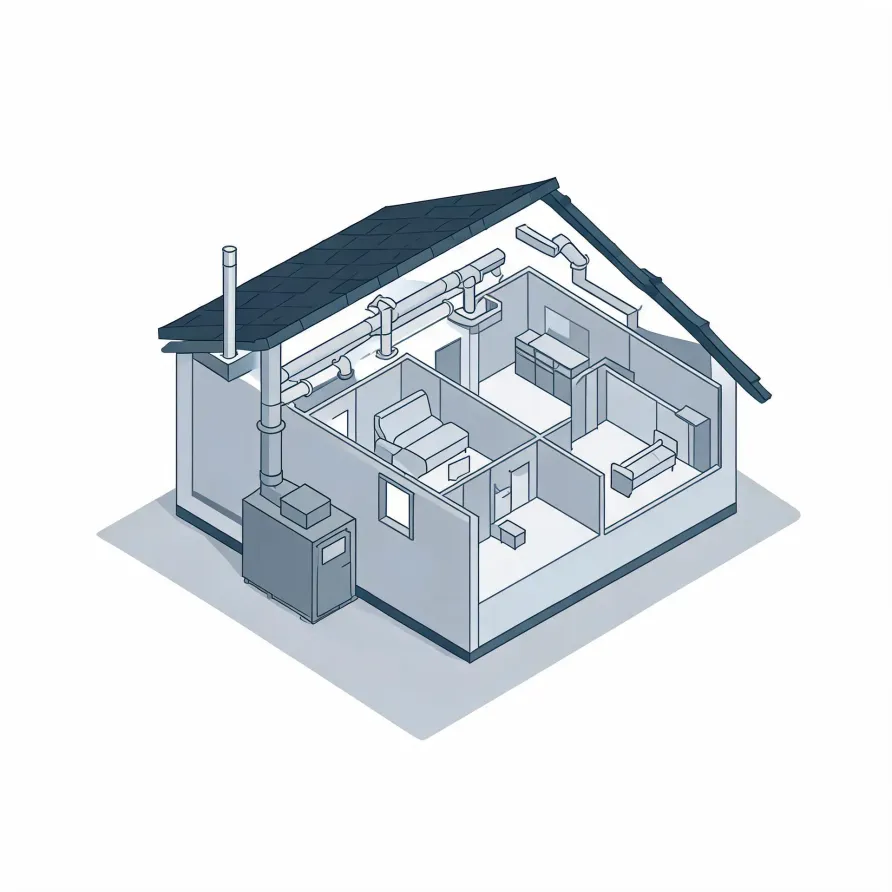
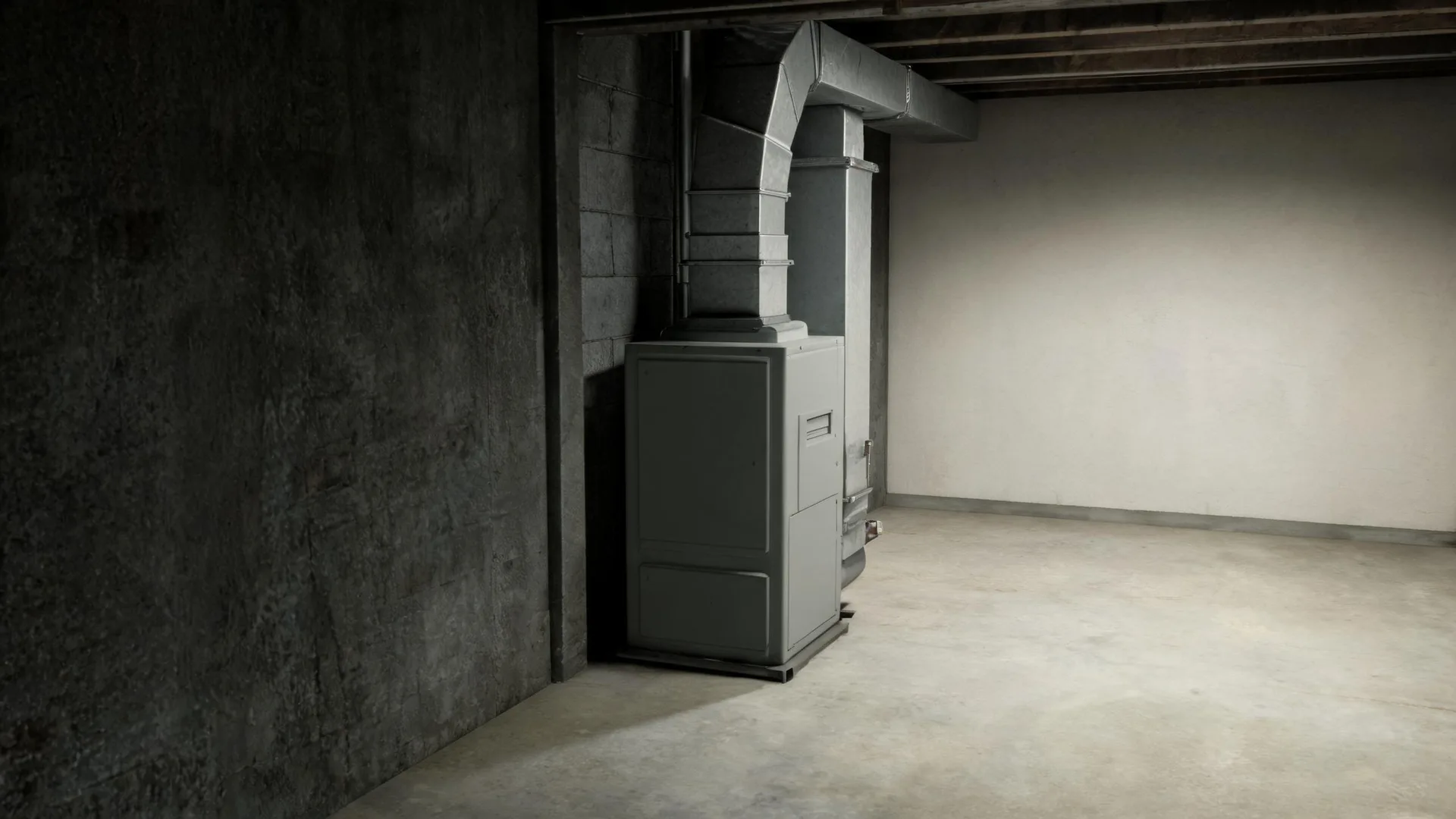
The furnace cabinet sits in a basement, utility closet, or mechanical room and holds the components a contractor examines when heat fails. Inside it are the heat exchanger, the burner assembly, and the blower motor. A cracked heat exchanger, a dirty burner, or a seized blower are each capable of stopping the system cold, so a contractor works through these first.
The flue or vent pipe exits the cabinet and runs to an outside wall or up through the roof, carrying combustion gases out of the house. Alongside it, the igniter and the flame sensor sit at the burner and work together to start and confirm a flame. A failed igniter or a fouled sensor will shut the furnace down before it can run.
The drawing shows a typical furnace layout, and a licensed contractor will determine which components apply to your specific system and what each one needs.
Get matched in Clinton CountyClinton County, Iowa, by the numbers
171 severe weather events were recorded in Clinton County, Iowa between 2015 and 2024.
NOAA National Centers for Environmental Information, Storm Events Database, bulk CSV export, events 2015-01-01 through 2024-12-31.Half the homes in Clinton County, Iowa were built in 1957 or earlier (2020-2024 ACS 5-year).
U.S. Census Bureau, 2020-2024 American Community Survey 5-Year EstimatesClinton County, Iowa holds 21,581 housing units (2020-2024 ACS 5-year).
U.S. Census Bureau, 2020-2024 American Community Survey 5-Year EstimatesOwners occupy 74.5% of the occupied homes in Clinton County, Iowa (2020-2024 ACS 5-year).
U.S. Census Bureau, 2020-2024 American Community Survey 5-Year EstimatesFurnace Repair Rules & Standards on the Books in Clinton County, Iowa5 sourced regulations and codes
What the repair visit looks like
Non-weatherized gas furnaces manufactured on or after November 19, 2015 must reach 80.0 percent AFUE.
Non-weatherized oil-fired furnaces manufactured on or after November 19, 2015 must reach 83.0 percent AFUE.
Mobile home gas furnaces manufactured on or after November 19, 2015 must reach 80.0 percent AFUE.
Non-weatherized gas furnaces manufactured on or after December 18, 2028 must reach 95.0 percent AFUE, up from the 80.0 percent minimum that applies to units manufactured before that date.
Licensing and Legal Requirements in Clinton County, Iowa
Iowa requires a state licence to install or repair HVAC, refrigeration, mechanical or plumbing systems, and to operate as a contractor, with exceptions listed in section 105.11.
Severe Weather Events in Clinton County
Extreme weather puts real strain on heating equipment, and furnaces in Clinton County work against local conditions that can push systems hard. Repair needs here are shaped by what the weather actually does, not by averages from somewhere else.
171 severe weather events, 2015–2024. Source: NOAA National Centers for Environmental Information, Storm Events Database.