Tell us about the job
Takes about a minute. No obligation.
A contractor quoting furnace repair in Jones County has to decide how much of what they find traces back to weather load and how much traces back to age and maintenance history. 133 severe weather events were recorded in Jones County, Iowa between 2015 and 2024. At that rate, severe weather is a real variable in how hard a furnace has been run, but it does not account for most failures on its own. Heat exchangers crack, igniters fail, and blower motors wear out for reasons a contractor has to trace part by part rather than blame on the weather. The repair scope follows from what the opened furnace shows, not from assumptions about the season.
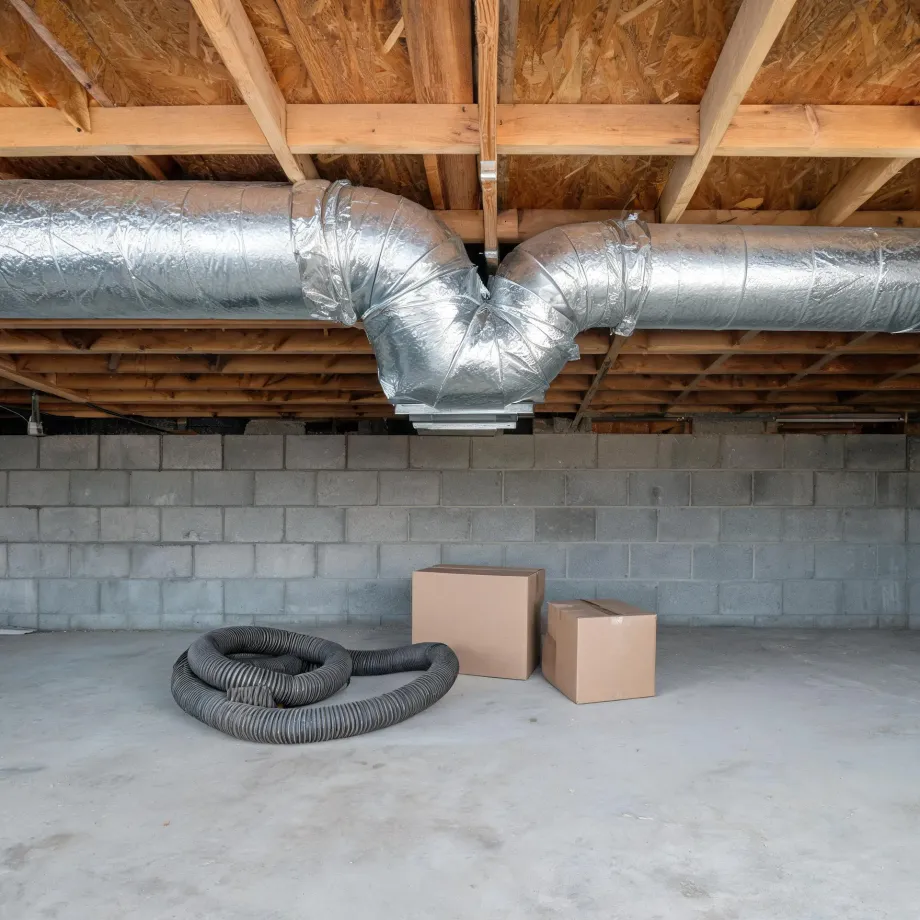
Furnaces in housing stock this old tend to hide their actual problems until a contractor opens them up. Half the homes in Jones County, Iowa were built in 1970 or earlier (2020-2024 ACS 5-year). A heat exchanger that looks intact from the outside can be cracked inside; a burner assembly may be running but firing unevenly in ways no external symptom clearly announces. The service call that looks like an igniter swap sometimes turns into a conversation about what else the opened unit shows. Parts availability matters here too, since components for systems that have been running since the housing was new are not always stocked locally.
The Parts of a Furnace a Contractor Checks First
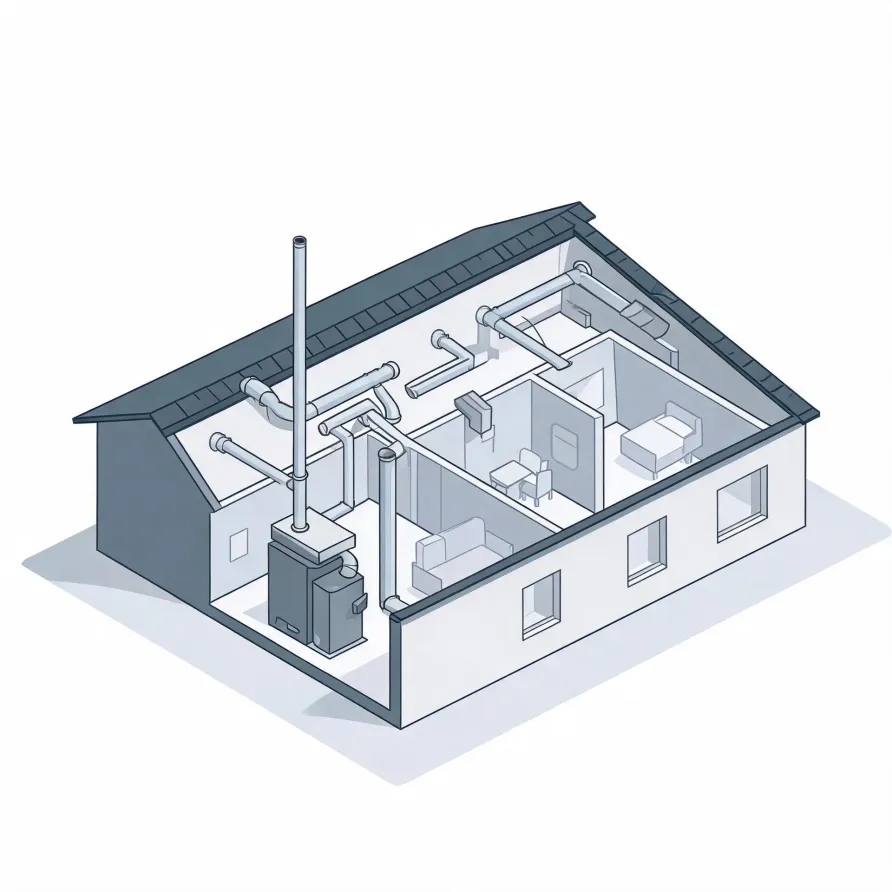
The furnace itself sits in a utility space, basement, or closet and is the piece a contractor goes to first. Inside it, the heat exchanger is the component most worth understanding: it carries combustion gases away from the living air, and a crack or failure there is what stops the whole system. The burners, which fire inside that exchanger, are another early stop.
The blower motor sits at the base of the furnace cabinet and pushes conditioned air into the supply side of the house. Next to it, the flue pipe runs from the cabinet up and out of the building, carrying exhaust gases out. The thermostat on the wall and the filter in its slot are the two points a contractor checks before opening the cabinet at all.
The drawing shows a typical furnace layout, and a licensed contractor determines which components and conditions apply to your specific home.
Get matched in Jones CountyJones County, Iowa, by the numbers
133 severe weather events were recorded in Jones County, Iowa between 2015 and 2024.
NOAA National Centers for Environmental Information, Storm Events Database, bulk CSV export, events 2015-01-01 through 2024-12-31.Half the homes in Jones County, Iowa were built in 1970 or earlier (2020-2024 ACS 5-year).
U.S. Census Bureau, 2020-2024 American Community Survey 5-Year EstimatesJones County, Iowa holds 8,889 housing units (2020-2024 ACS 5-year).
U.S. Census Bureau, 2020-2024 American Community Survey 5-Year EstimatesOwners occupy 80.6% of the occupied homes in Jones County, Iowa (2020-2024 ACS 5-year).
U.S. Census Bureau, 2020-2024 American Community Survey 5-Year EstimatesFurnace Repair Rules & Standards on the Books for Jones County, Iowa5 codes, laws, and standards
What the repair visit looks like
Non-weatherized gas furnaces manufactured on or after November 19, 2015 must reach 80.0 percent AFUE.
Non-weatherized oil-fired furnaces manufactured on or after November 19, 2015 must reach 83.0 percent AFUE.
Mobile home gas furnaces manufactured on or after November 19, 2015 must reach 80.0 percent AFUE.
Non-weatherized gas furnaces manufactured on or after December 18, 2028 must reach 95.0 percent AFUE, up from the 80.0 percent minimum that applies to units manufactured before that date.
Contractor Rules That Apply in Jones County, Iowa
Iowa requires a state licence to install or repair HVAC, refrigeration, mechanical or plumbing systems, and to operate as a contractor, with exceptions listed in section 105.11.
Severe Weather Events in Jones County
Hard weather puts real hours on a furnace. Every pressure swing, power fluctuation, and temperature extreme the county logs is a load the equipment had to handle, and that load is what drives repair work.
133 severe weather events, 2015–2024. Source: NOAA National Centers for Environmental Information, Storm Events Database.