Tell us about the job
Takes about a minute. No obligation.
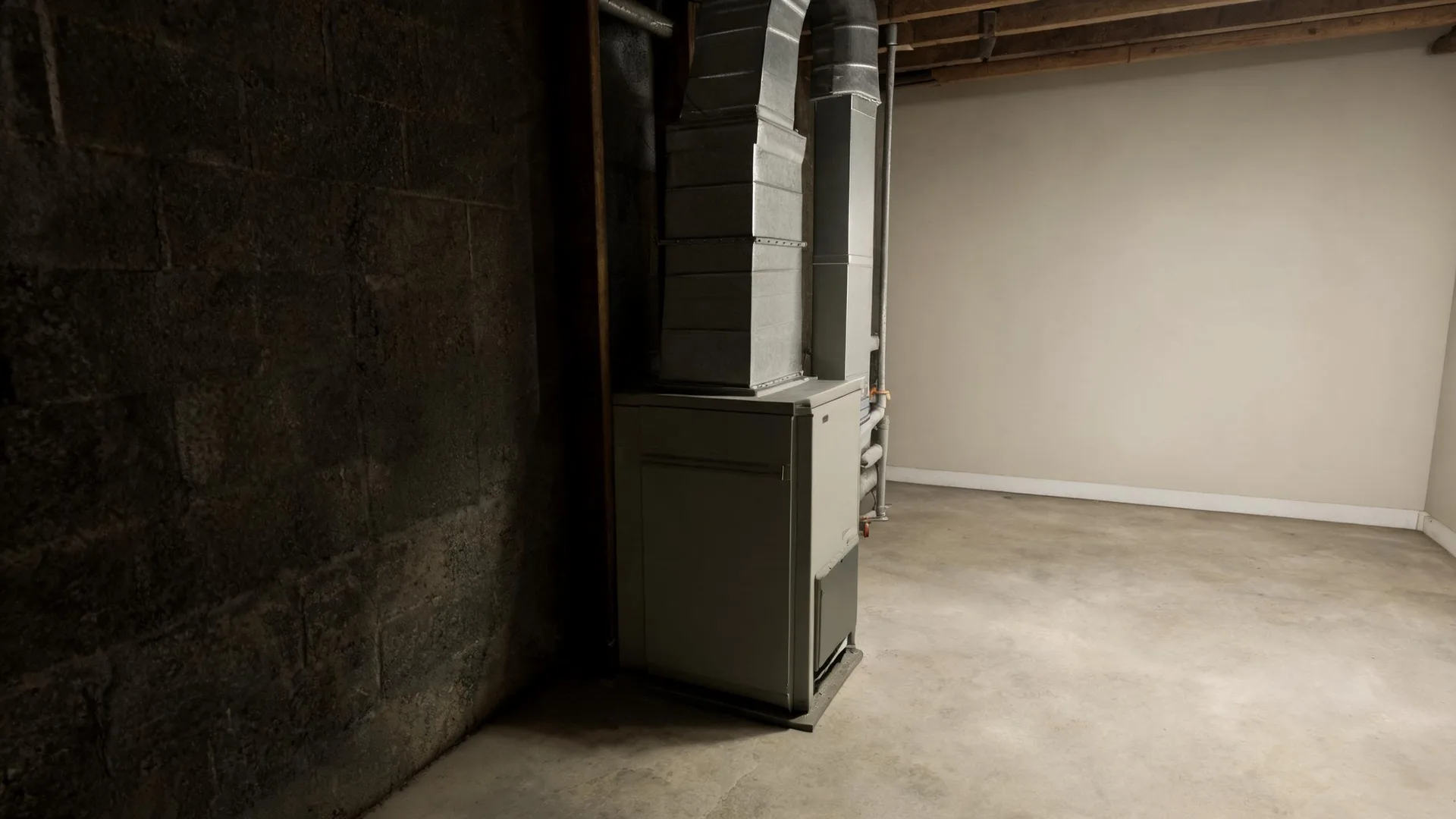
A furnace repair in Hardin County starts with the question of what the system has already been through. 116 severe weather events were recorded in Hardin County, Iowa between 2015 and 2024. At that rate, severe weather is part of the normal working life of every furnace in this area, and it shows up in specific places: heat exchangers that have cycled hard under stress, blower motors running against pressure swings, and controls that have taken repeated hits. A contractor here checks those components with that load in mind before pricing anything.
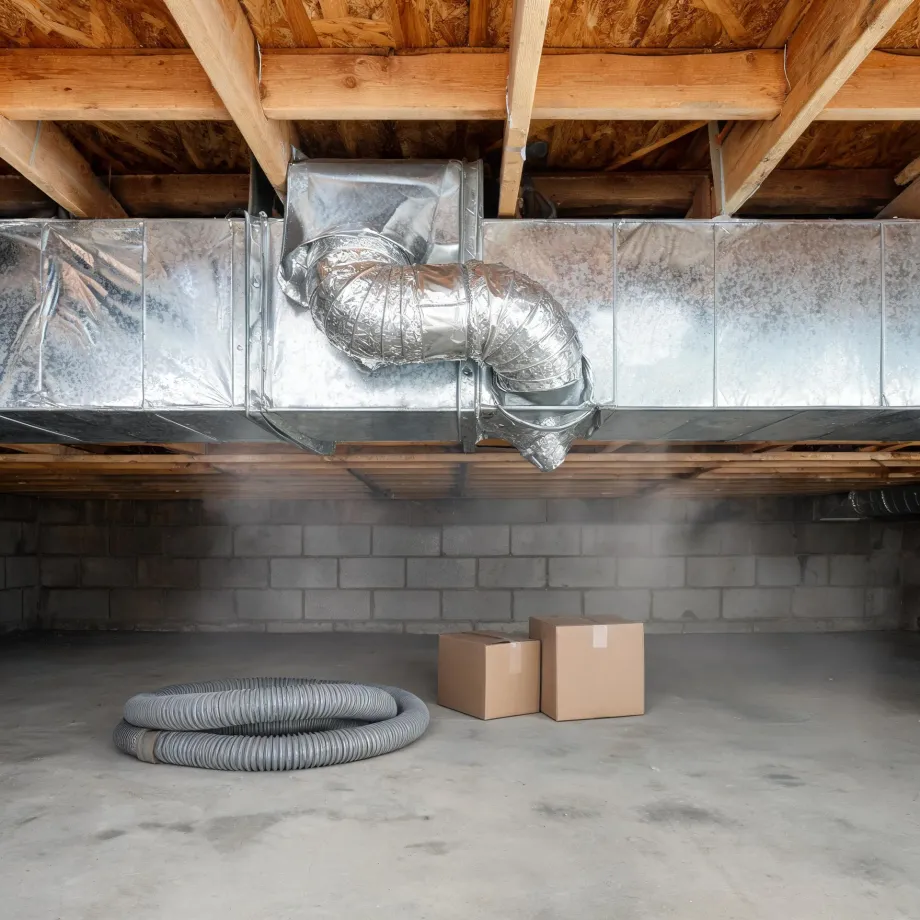
Furnace repair in housing this old turns up conditions that a work order rarely anticipates. Half the homes in Hardin County, Iowa were built in 1956 or earlier (2020-2024 ACS 5-year). A furnace that has run for years inside a house with ductwork laid down for a different system develops wear patterns tied to static pressure and airflow that the equipment was never spec'd for. When a contractor opens the unit, what they find reflects those conditions: heat exchangers stressed by restricted airflow, burners running outside their designed range, controls cycling to compensate. The parts question is real too. Components for equipment adapted into prewar infrastructure are not always in current supply, and a contractor has to confirm availability before a repair scope can be priced.
The Parts of a Furnace a Contractor Checks First
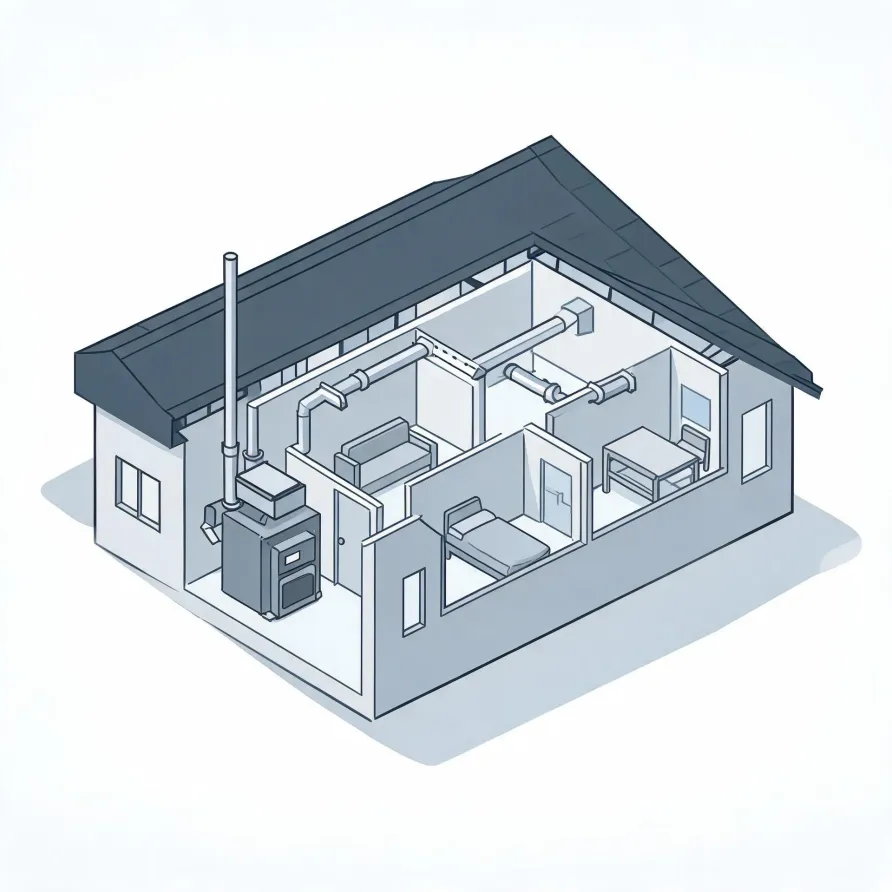
The furnace itself sits in a utility space, basement, or closet and is where heat is produced. Inside it, the heat exchanger is the piece a contractor looks at closely early on: cracks or failure there affect both output and safety. The burners, which fire inside the heat exchanger, and the ignitor, which lights them, are common starting points when a furnace stops heating.
The blower motor and its fan wheel sit at the base of the furnace cabinet and push conditioned air into the duct system. The flue pipe runs from the top of the furnace to an exterior vent and carries combustion gases out of the house. The control board ties these pieces together, and a fault there can show up as symptoms in any of them.
The drawing shows a general layout of these components, and a licensed contractor determines which parts apply and what condition they are in for your specific system.
Get matched in Hardin CountyHardin County, Iowa, by the numbers
116 severe weather events were recorded in Hardin County, Iowa between 2015 and 2024.
NOAA National Centers for Environmental Information, Storm Events Database, bulk CSV export, events 2015-01-01 through 2024-12-31.Half the homes in Hardin County, Iowa were built in 1956 or earlier (2020-2024 ACS 5-year).
U.S. Census Bureau, 2020-2024 American Community Survey 5-Year EstimatesHardin County, Iowa holds 8,011 housing units (2020-2024 ACS 5-year).
U.S. Census Bureau, 2020-2024 American Community Survey 5-Year EstimatesOwners occupy 73.6% of the occupied homes in Hardin County, Iowa (2020-2024 ACS 5-year).
U.S. Census Bureau, 2020-2024 American Community Survey 5-Year EstimatesCodes & Standards for Furnace Repair in Hardin County, Iowa5 sourced rules and standards
What the repair visit looks like
Non-weatherized gas furnaces manufactured on or after November 19, 2015 must reach 80.0 percent AFUE.
Non-weatherized oil-fired furnaces manufactured on or after November 19, 2015 must reach 83.0 percent AFUE.
Mobile home gas furnaces manufactured on or after November 19, 2015 must reach 80.0 percent AFUE.
Non-weatherized gas furnaces manufactured on or after December 18, 2028 must reach 95.0 percent AFUE, up from the 80.0 percent minimum that applies to units manufactured before that date.
Licensing and Legal Requirements in Hardin County, Iowa
Iowa requires a state licence to install or repair HVAC, refrigeration, mechanical or plumbing systems, and to operate as a contractor, with exceptions listed in section 105.11.
Severe Weather Events in Hardin County
Hardin County weather puts real stress on heating equipment, and that stress shows up as wear, breakdowns, and repair calls. How hard the climate pushes here is a local fact, and it shapes how much furnaces in this area are asked to do.
116 severe weather events, 2015–2024. Source: NOAA National Centers for Environmental Information, Storm Events Database.