Tell us about the job
Takes about a minute. No obligation.
A furnace repair in this county starts with a question a contractor in a quieter area rarely has to press hard on: how much has this system already been asked to carry? 180 severe weather events were recorded in Cerro Gordo County, Iowa between 2015 and 2024. At that rate, severe weather is part of the normal operating life of every furnace here, and wear on heat exchangers, pressure switches, and control boards reflects that load. A contractor who skips past it risks misreading a stress failure as a manufacturing defect or an installation error.
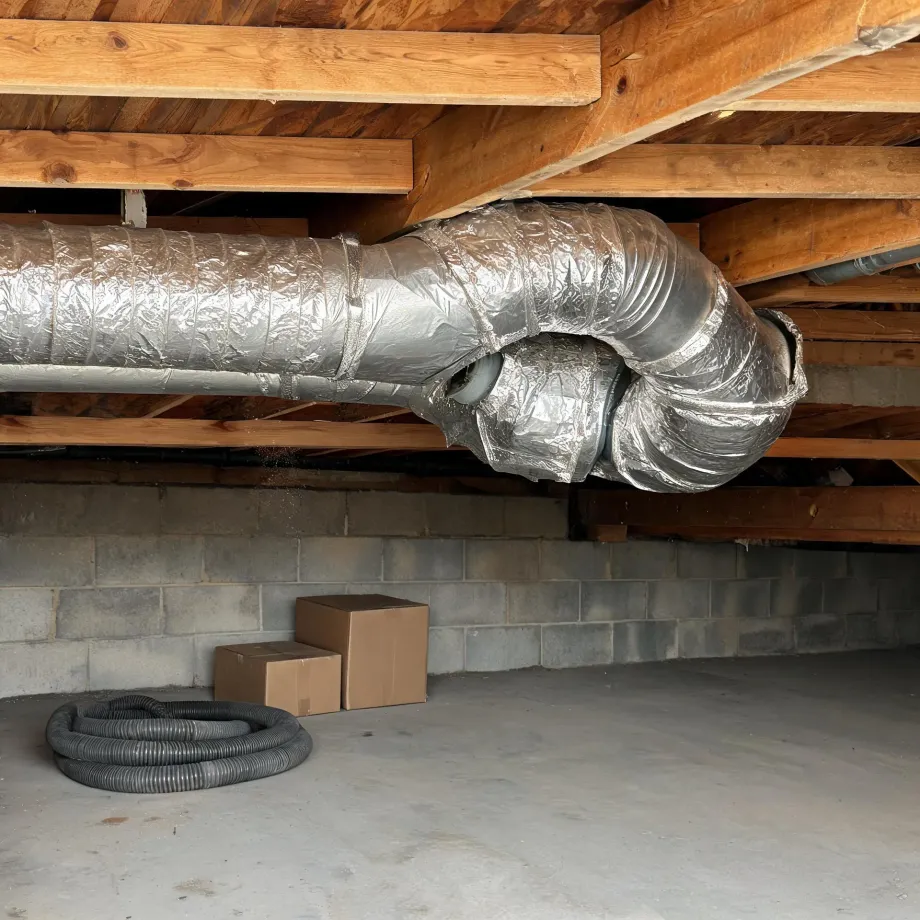
Stock this old carries furnaces that have already been repaired, adapted, and run past their designed service windows. Half the homes in Cerro Gordo County, Iowa were built in 1959 or earlier (2020-2024 ACS 5-year). When a contractor opens a unit here, the question of whether the needed component is still made for that model is a real one, not a formality. Discontinued parts mean the repair either goes to a specialty supplier or it becomes a different job than the one quoted at the door.
The Parts of a Furnace a Contractor Checks First
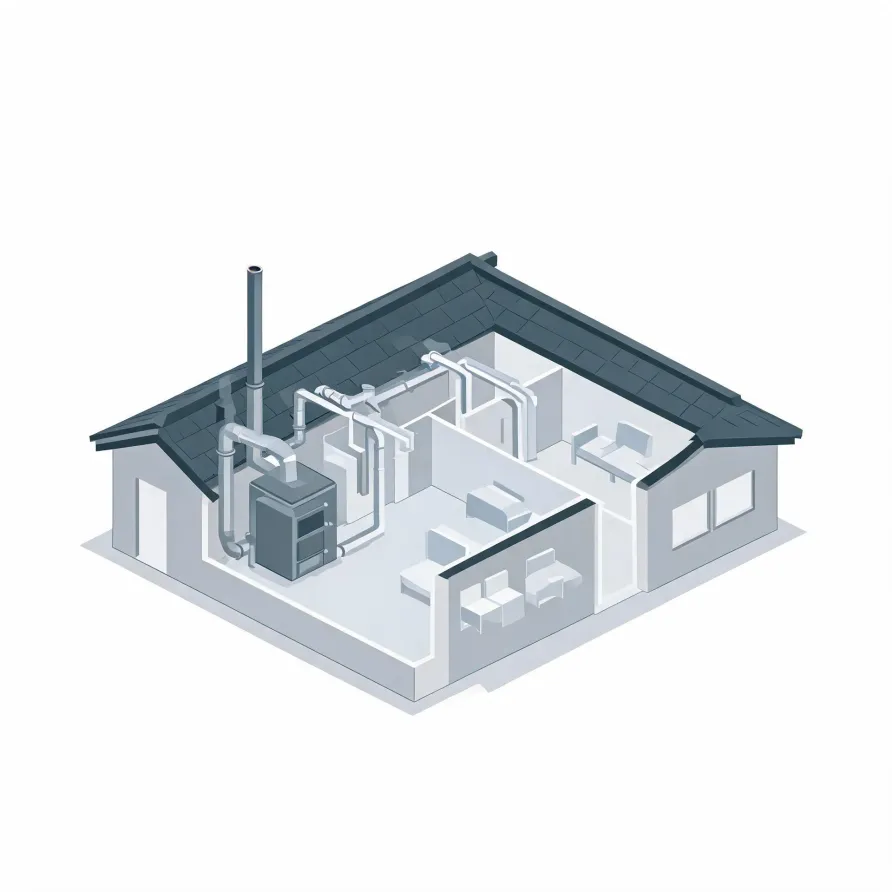
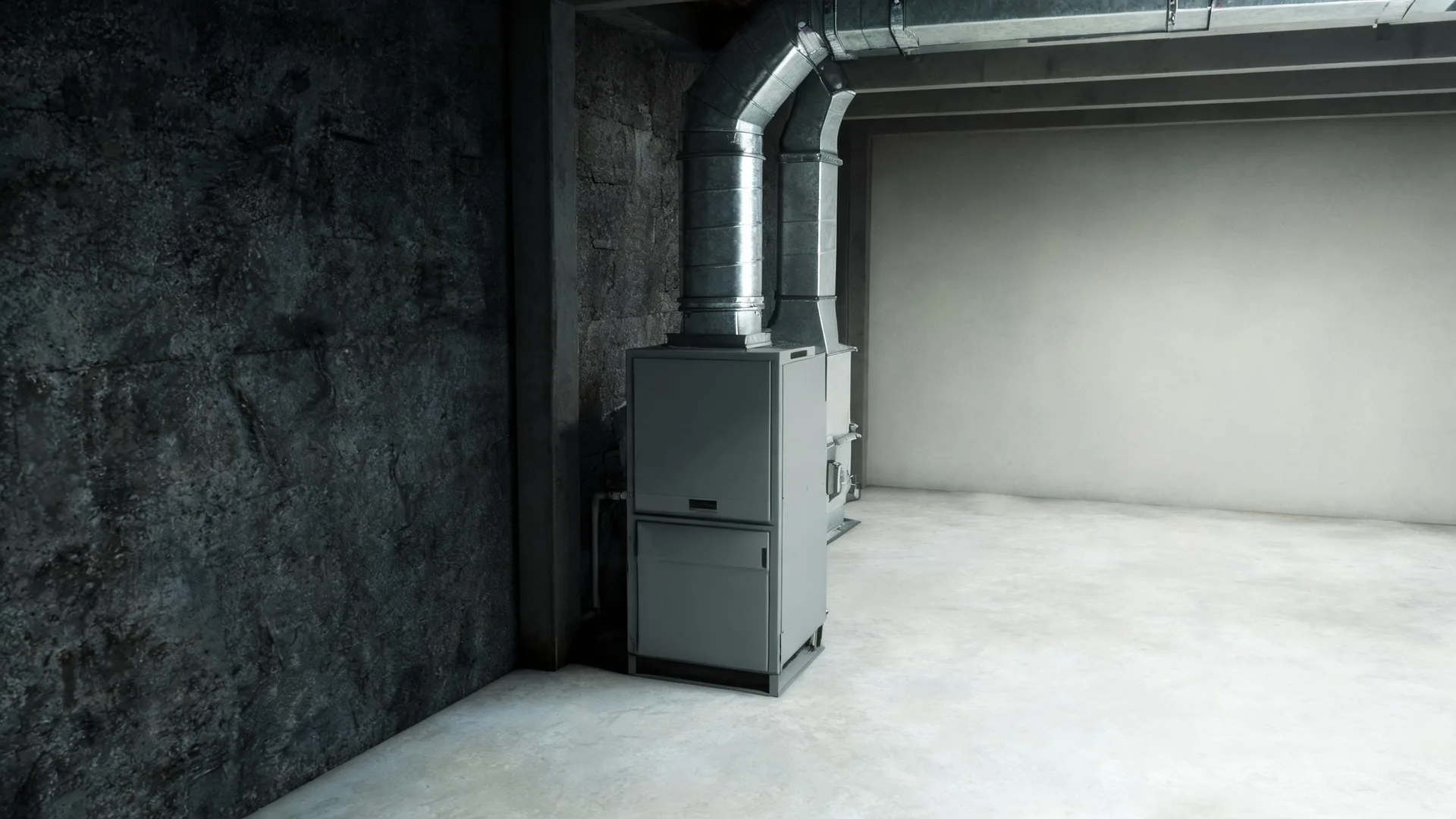
The furnace itself sits in a basement, utility room, or closet and is the piece a contractor goes to immediately when heat is lost or uneven. Inside it, the heat exchanger is one of the first suspects when something is wrong: a crack there lets combustion gases mix with circulated air, and the burners that fire beneath it are checked whenever the furnace fails to ignite or runs short cycles.
The blower motor pushes conditioned air out through the supply side of the system and pulls return air back in. Mounted nearby, the flue or exhaust vent carries combustion gases out of the house, and a fault there shows up as a safety lockout. The thermostat and its wiring sit at the other end of the chain and are checked when the furnace never starts at all.
The drawing shows a typical furnace layout, and a licensed contractor determines which components apply to your specific setup.
Get matched in Cerro Gordo CountyCerro Gordo County, by the record
180 severe weather events were recorded in Cerro Gordo County, Iowa between 2015 and 2024.
NOAA National Centers for Environmental Information, Storm Events Database, bulk CSV export, events 2015-01-01 through 2024-12-31.Half the homes in Cerro Gordo County, Iowa were built in 1959 or earlier (2020-2024 ACS 5-year).
U.S. Census Bureau, 2020-2024 American Community Survey 5-Year EstimatesCerro Gordo County, Iowa holds 22,786 housing units (2020-2024 ACS 5-year).
U.S. Census Bureau, 2020-2024 American Community Survey 5-Year EstimatesOwners occupy 70.4% of the occupied homes in Cerro Gordo County, Iowa (2020-2024 ACS 5-year).
U.S. Census Bureau, 2020-2024 American Community Survey 5-Year EstimatesCodes & Standards Governing Furnace Repair in Cerro Gordo County, Iowa5 sourced rules and standards
What HVAC Repair Looks Like in Cerro Gordo County
Non-weatherized gas furnaces manufactured on or after November 19, 2015 must reach 80.0 percent AFUE.
Non-weatherized oil-fired furnaces manufactured on or after November 19, 2015 must reach 83.0 percent AFUE.
Mobile home gas furnaces manufactured on or after November 19, 2015 must reach 80.0 percent AFUE.
Non-weatherized gas furnaces manufactured on or after December 18, 2028 must reach 95.0 percent AFUE, up from the 80.0 percent minimum that applies to units manufactured before that date.
Licensing and Legal Requirements in Cerro Gordo County, Iowa
Iowa requires a state licence to install or repair HVAC, refrigeration, mechanical or plumbing systems, and to operate as a contractor, with exceptions listed in section 105.11.
Severe Weather Events in Cerro Gordo County
Extreme weather puts real strain on heating equipment: hard freezes, sudden swings, and storm pressure all accelerate wear on components that are already working at capacity. Furnace repair needs in Cerro Gordo County track closely with what the local climate delivers, which is why weather history belongs alongside any honest look at service demand.
180 severe weather events, 2015–2024. Source: NOAA National Centers for Environmental Information, Storm Events Database.