Tell us about the job
Takes about a minute. No obligation.
A furnace repair in Worth County starts with what the system has been asked to do over its life. 87 severe weather events were recorded in Worth County, Iowa between 2015 and 2024. At that rate, severe weather is a real but not overwhelming part of what equipment here runs against, which means a contractor working a repair cannot lean on the weather record to explain a failed heat exchanger or a worn inducer motor. Age and service history are what drive most failures in this county. A system that has gone years without a filter change or a tune-up will show that before it shows storm wear.
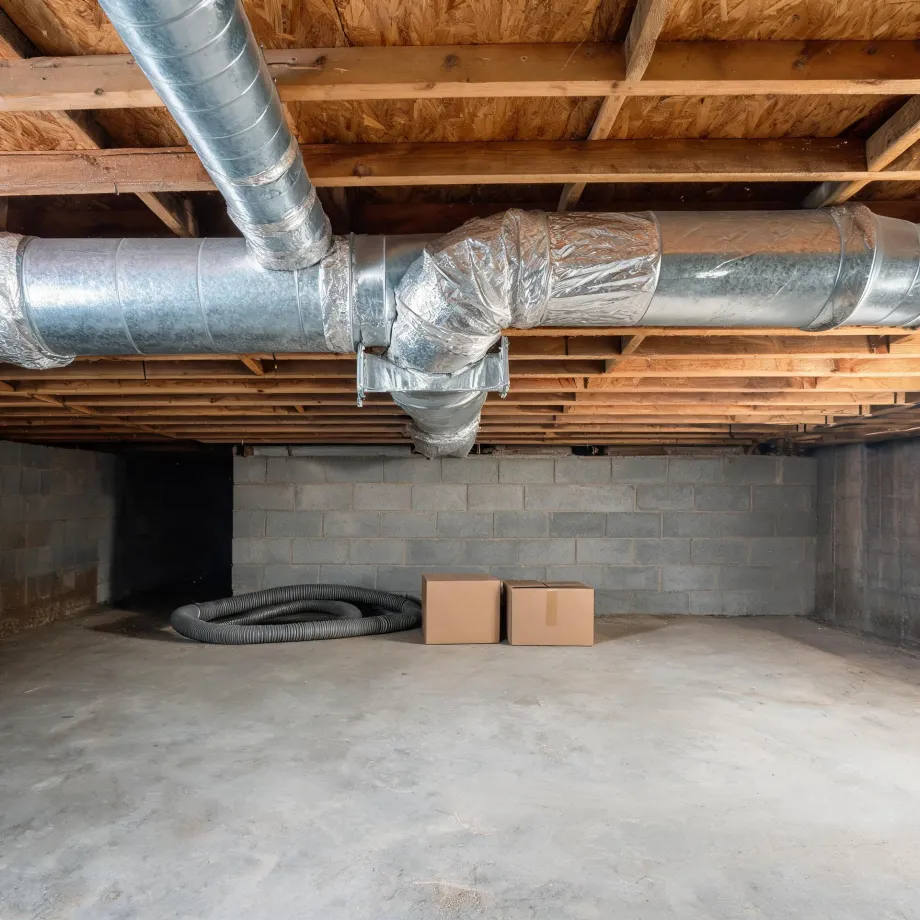
Ductwork in a house built before the postwar boom was sized and run for a different kind of heating altogether, and the furnace sitting in it now is likely several systems removed from the original. Half the homes in Worth County, Iowa were built in 1948 or earlier (2020-2024 ACS 5-year). When a repair opens a furnace in stock like this, the question that shapes the job is whether the failed component is still manufactured. A heat exchanger or a control board on a furnace of that vintage may have no current equivalent, which turns a repair call into a parts search before it becomes anything else.
The Parts of a Furnace a Contractor Checks First
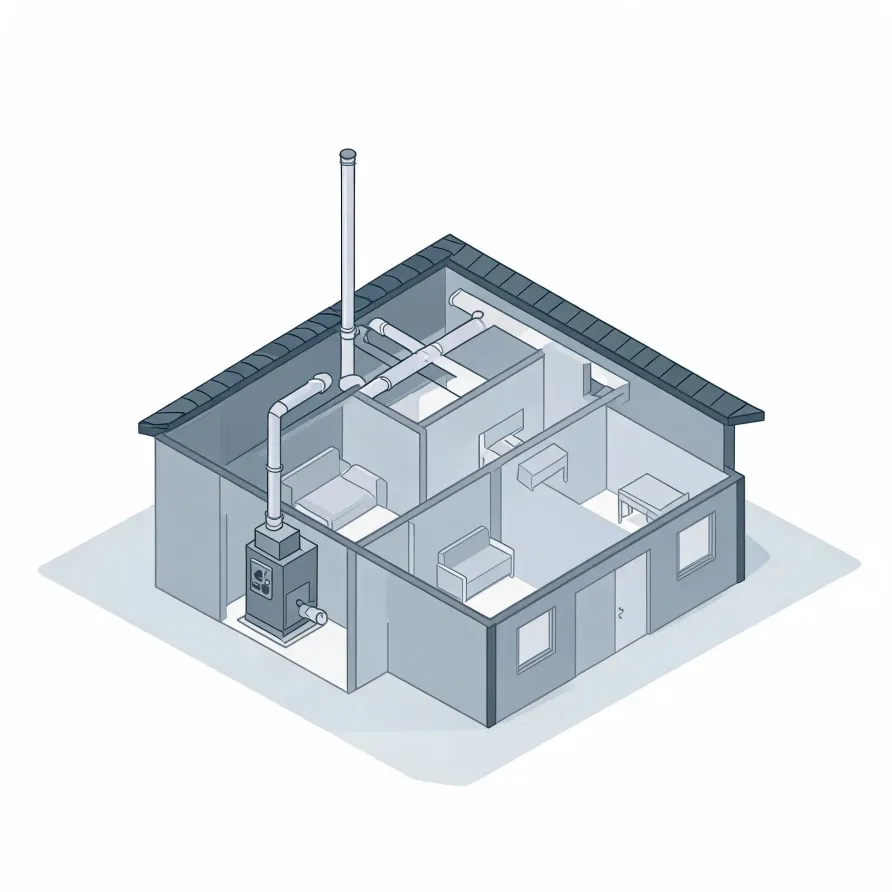
The furnace itself sits in a basement, utility room, or closet and is the piece a contractor examines most closely during a repair call. Inside it, the heat exchanger and burners are common sources of trouble. A cracked heat exchanger or a burner that won't fire cleanly will show up in the way the system heats, or won't.
The blower motor moves conditioned air out through the supply side and pulls return air back in. The flue or exhaust pipe runs from the furnace to an exterior wall or roofline and becomes a concern when combustion problems point that direction. The thermostat and the control board are smaller components, but either one can be the reason a furnace runs poorly or not at all.
The drawing shows how these parts relate in a typical system, and a licensed contractor determines what applies to the specific furnace in your home.
Get matched in Worth CountyWorth County, Iowa, by the numbers
87 severe weather events were recorded in Worth County, Iowa between 2015 and 2024.
NOAA National Centers for Environmental Information, Storm Events Database, bulk CSV export, events 2015-01-01 through 2024-12-31.Half the homes in Worth County, Iowa were built in 1948 or earlier (2020-2024 ACS 5-year).
U.S. Census Bureau, 2020-2024 American Community Survey 5-Year EstimatesWorth County, Iowa holds 3,474 housing units (2020-2024 ACS 5-year).
U.S. Census Bureau, 2020-2024 American Community Survey 5-Year EstimatesOwners occupy 83.2% of the occupied homes in Worth County, Iowa (2020-2024 ACS 5-year).
U.S. Census Bureau, 2020-2024 American Community Survey 5-Year EstimatesCodes & Standards Governing Furnace Repair in Worth County, Iowa5 sourced rules and standards
What the repair visit looks like
Non-weatherized gas furnaces manufactured on or after November 19, 2015 must reach 80.0 percent AFUE.
Non-weatherized oil-fired furnaces manufactured on or after November 19, 2015 must reach 83.0 percent AFUE.
Mobile home gas furnaces manufactured on or after November 19, 2015 must reach 80.0 percent AFUE.
Non-weatherized gas furnaces manufactured on or after December 18, 2028 must reach 95.0 percent AFUE, up from the 80.0 percent minimum that applies to units manufactured before that date.
Licensing and Legal Requirements in Worth County, Iowa
Iowa requires a state licence to install or repair HVAC, refrigeration, mechanical or plumbing systems, and to operate as a contractor, with exceptions listed in section 105.11.
Severe Weather Events in Worth County
Weather in Worth County puts real demands on heating equipment. Hard conditions accelerate wear, and a furnace that runs through them needs repair work matched to what local weather actually asks of it.
87 severe weather events, 2015–2024. Source: NOAA National Centers for Environmental Information, Storm Events Database.