Tell us about the job
Takes about a minute. No obligation.
A contractor quoting furnace repair in Muscatine County has to look past the obvious failure before settling on a scope. 137 severe weather events were recorded in Muscatine County, Iowa between 2015 and 2024. At that rate, severe weather is a recurring condition here, not a rare event, and it accumulates wear on heat exchangers, igniters, and blower motors in ways that make a system look older than its install date. A part that tests near its limit has probably been pushed there steadily, and a contractor prices accordingly.
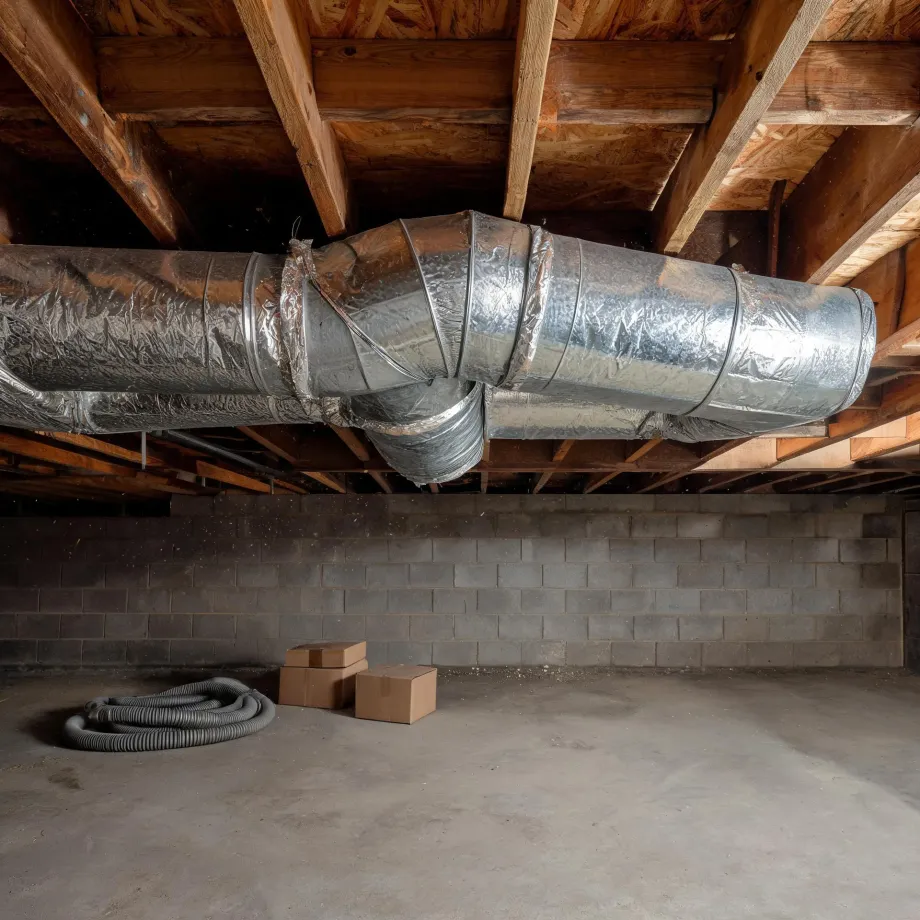
Furnaces in housing this old carry a repair history inside them that only an opened unit reveals. Half the homes in Muscatine County, Iowa were built in 1970 or earlier (2020-2024 ACS 5-year). A system that has run through that many seasons of Iowa winters shows it: heat exchangers crack, blower wheels collect enough buildup to throw the motor off balance, and the specific components a unit of that vintage takes are not always on a current parts list. Whether a repair is a quick fix or a longer job depends on what the contractor finds once the cabinet is open, and on whether the part it needs can still be sourced.
The Parts of a Furnace a Contractor Checks First
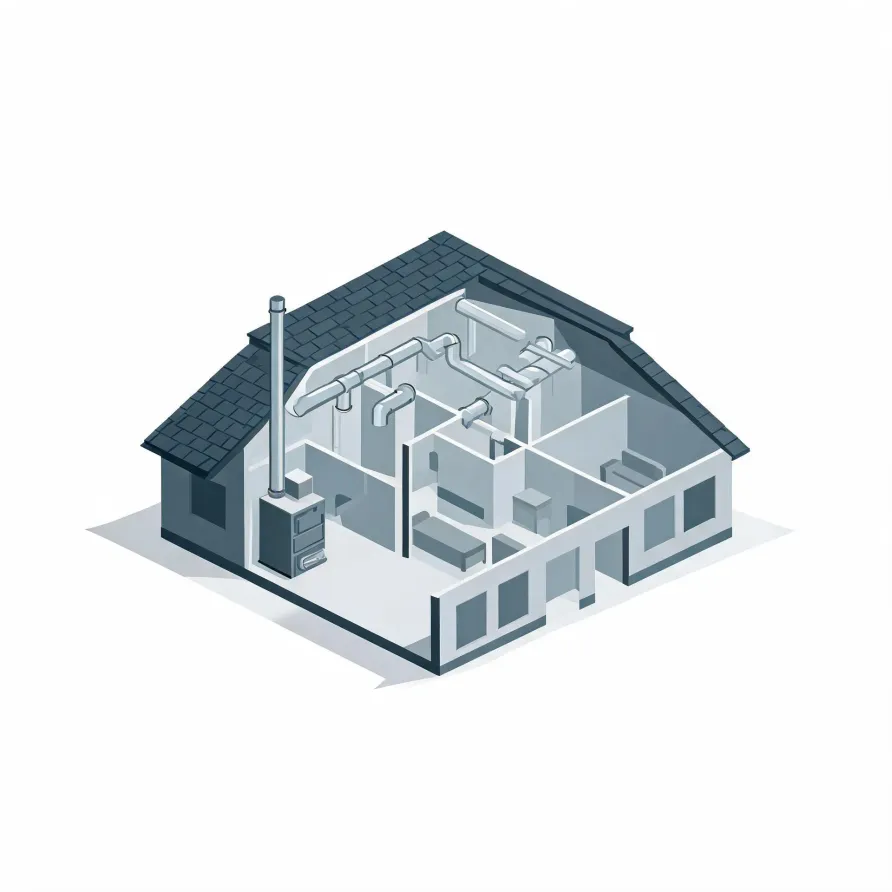
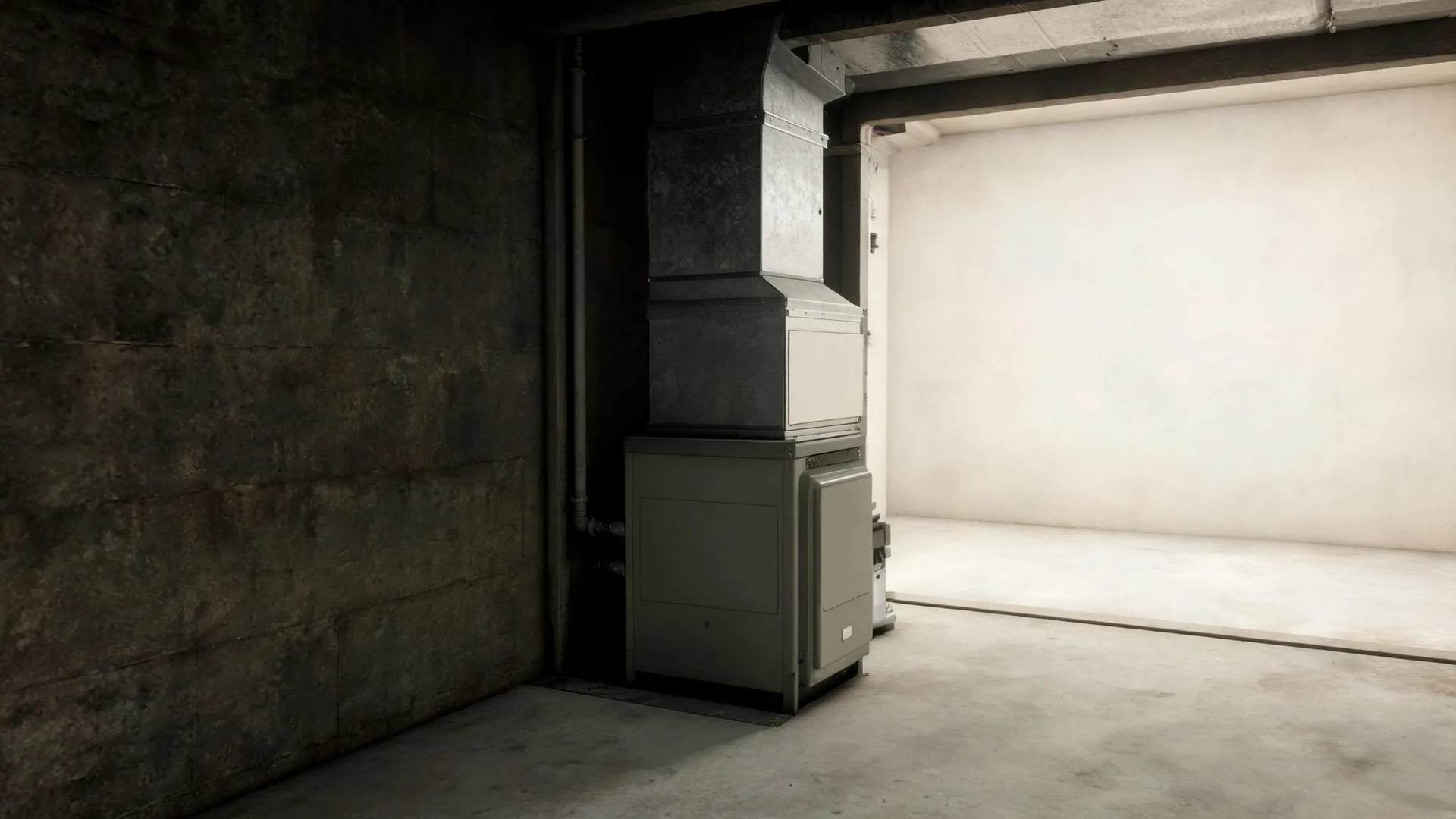
The furnace itself sits in a utility space, basement, or closet and burns fuel to produce heat. Inside it, the heat exchanger is the part a contractor looks at closely: cracks or corrosion there let combustion gases into the living space. The burners and the igniter are the other usual suspects when a furnace fails to fire.
The blower motor moves conditioned air out of the furnace and through the house. Mounted near the furnace, the flue or exhaust vent carries combustion gases outside, and a blocked or corroded vent shows up as a shutdown or a safety-lockout fault. The thermostat, sitting on a living-area wall, tells the system when to run and is often where a diagnostic check begins.
The drawing shows a typical furnace layout, and a licensed contractor determines which components apply to your specific system and situation.
Get matched in Muscatine CountyMuscatine County, by the numbers
137 severe weather events were recorded in Muscatine County, Iowa between 2015 and 2024.
NOAA National Centers for Environmental Information, Storm Events Database, bulk CSV export, events 2015-01-01 through 2024-12-31.Half the homes in Muscatine County, Iowa were built in 1970 or earlier (2020-2024 ACS 5-year).
U.S. Census Bureau, 2020-2024 American Community Survey 5-Year EstimatesMuscatine County, Iowa holds 18,454 housing units (2020-2024 ACS 5-year).
U.S. Census Bureau, 2020-2024 American Community Survey 5-Year EstimatesOwners occupy 73.9% of the occupied homes in Muscatine County, Iowa (2020-2024 ACS 5-year).
U.S. Census Bureau, 2020-2024 American Community Survey 5-Year EstimatesCodes & Standards Covering Furnace Repair in Muscatine County, Iowa5 sourced rules and standards
What HVAC Repair Looks Like in Muscatine County
Non-weatherized gas furnaces manufactured on or after November 19, 2015 must reach 80.0 percent AFUE.
Non-weatherized oil-fired furnaces manufactured on or after November 19, 2015 must reach 83.0 percent AFUE.
Mobile home gas furnaces manufactured on or after November 19, 2015 must reach 80.0 percent AFUE.
Non-weatherized gas furnaces manufactured on or after December 18, 2028 must reach 95.0 percent AFUE, up from the 80.0 percent minimum that applies to units manufactured before that date.
Licensing and Legal Requirements in Muscatine County, Iowa
Iowa requires a state licence to install or repair HVAC, refrigeration, mechanical or plumbing systems, and to operate as a contractor, with exceptions listed in section 105.11.
Severe Weather Events in Muscatine County
Hard weather puts real strain on furnace equipment, cycling it harder and more often than mild conditions do. How much of that strain a system carries depends on what the local climate actually delivers, which is why the record below matters for repair work in this area.
137 severe weather events, 2015–2024. Source: NOAA National Centers for Environmental Information, Storm Events Database.