Tell us about the job
Takes about a minute. No obligation.
A furnace repair in Louisa County starts with the same questions a contractor asks anywhere: how old is the heat exchanger, how often has the filter been changed, and when did the blower motor last get serviced. 60 severe weather events were recorded in Louisa County, Iowa between 2015 and 2024. At that rate, severe weather touches equipment here, but it does not define the operating life of a furnace the way it might somewhere that sees storms as a matter of routine. A unit that breaks down in this county broke down because something wore out. A contractor will look at age, installation quality, and service records before they point at the weather.
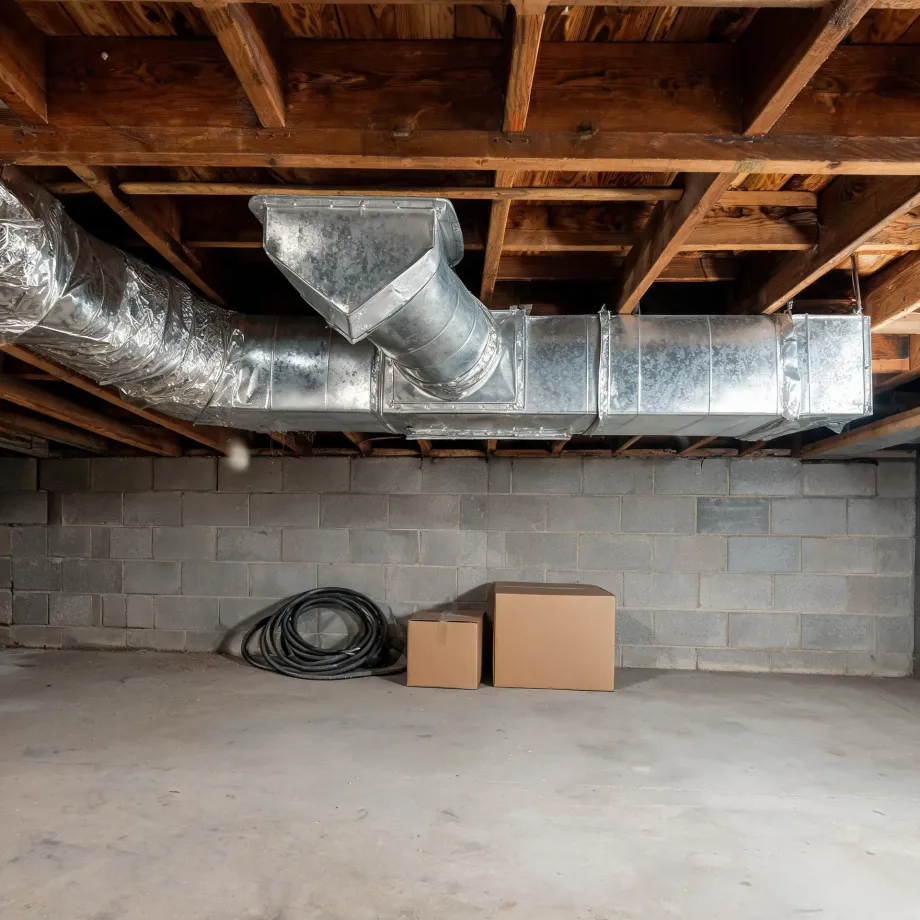
Furnaces in Louisa County housing this old have often been replaced once or twice since the house was built, and each replacement layered new equipment into an old shell. Half the homes in Louisa County, Iowa were built in 1966 or earlier (2020-2024 ACS 5-year). That gap between when the house was framed and when the current furnace was installed means the unit a contractor opens may carry a model line whose replacement parts are no longer stocked at a standard supplier. A heat exchanger or a gas valve for that generation of equipment takes sourcing work, and that sourcing is what shapes the repair timeline more than the labor itself.
The Parts of a Furnace a Contractor Checks First
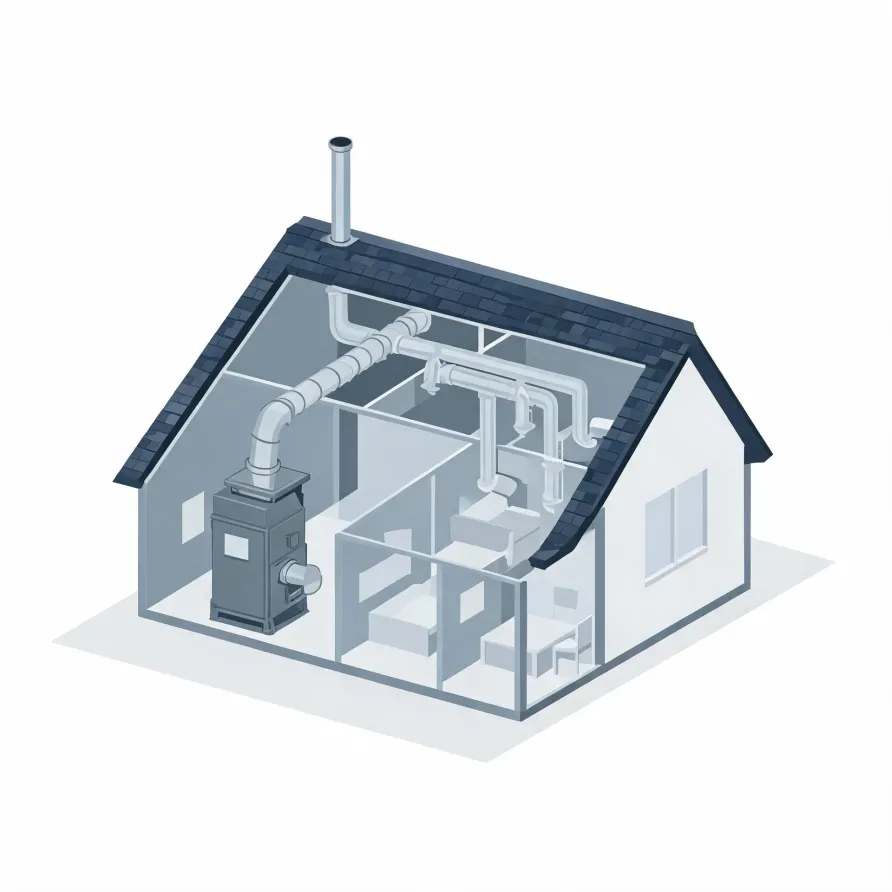
The furnace itself sits in a utility space, basement, or closet and is the piece that generates heat. Inside it, the heat exchanger, burners, and blower motor are the components a contractor goes to first when something is wrong. A cracked heat exchanger, a burner that won't light, or a blower that runs but moves no air each point to a different repair.
The flue pipe runs from the furnace to the outside and carries combustion gases out of the house. Alongside the furnace sits the filter housing, the draft inducer, and the igniter. Each of these can fail in a way that shuts the system down or causes it to run poorly, and a contractor works through them to find where the fault is.
The drawing shows the general layout of a furnace system, and a licensed contractor determines which parts and conditions apply to your specific home.
Get matched in Louisa CountyLouisa County, Iowa, by the numbers
60 severe weather events were recorded in Louisa County, Iowa between 2015 and 2024.
NOAA National Centers for Environmental Information, Storm Events Database, bulk CSV export, events 2015-01-01 through 2024-12-31.Half the homes in Louisa County, Iowa were built in 1966 or earlier (2020-2024 ACS 5-year).
U.S. Census Bureau, 2020-2024 American Community Survey 5-Year EstimatesLouisa County, Iowa holds 4,739 housing units (2020-2024 ACS 5-year).
U.S. Census Bureau, 2020-2024 American Community Survey 5-Year EstimatesOwners occupy 80.3% of the occupied homes in Louisa County, Iowa (2020-2024 ACS 5-year).
U.S. Census Bureau, 2020-2024 American Community Survey 5-Year EstimatesFurnace Repair Rules on the Books for Louisa County, Iowa5 codes, standards & statutes
What the repair visit looks like
Non-weatherized gas furnaces manufactured on or after November 19, 2015 must reach 80.0 percent AFUE.
Non-weatherized oil-fired furnaces manufactured on or after November 19, 2015 must reach 83.0 percent AFUE.
Mobile home gas furnaces manufactured on or after November 19, 2015 must reach 80.0 percent AFUE.
Non-weatherized gas furnaces manufactured on or after December 18, 2028 must reach 95.0 percent AFUE, up from the 80.0 percent minimum that applies to units manufactured before that date.
Licensing and Legal Requirements in Louisa County, Iowa
Iowa requires a state licence to install or repair HVAC, refrigeration, mechanical or plumbing systems, and to operate as a contractor, with exceptions listed in section 105.11.
Severe Weather Events in Louisa County
Weather puts real hours on a furnace. The harder the climate works the equipment, the more repair demand builds up over time, and that pattern is local to this county in ways a national average will not capture.
60 severe weather events, 2015–2024. Source: NOAA National Centers for Environmental Information, Storm Events Database.