Tell us about the job
Takes about a minute. No obligation.
A furnace repair call here asks a contractor to sort out what actually failed and why before ordering parts. 87 severe weather events were recorded in Fremont County, Iowa between 2015 and 2024. At that rate, weather is a real part of what a furnace in this county has been running against, but it is not so relentless that it overrides the other causes a contractor has to rule out: age of the heat exchanger, quality of the original installation, and whether the system has been serviced. A contractor who skips those questions and blames a hard season can easily misread the repair and replace a part that was already failing on its own.
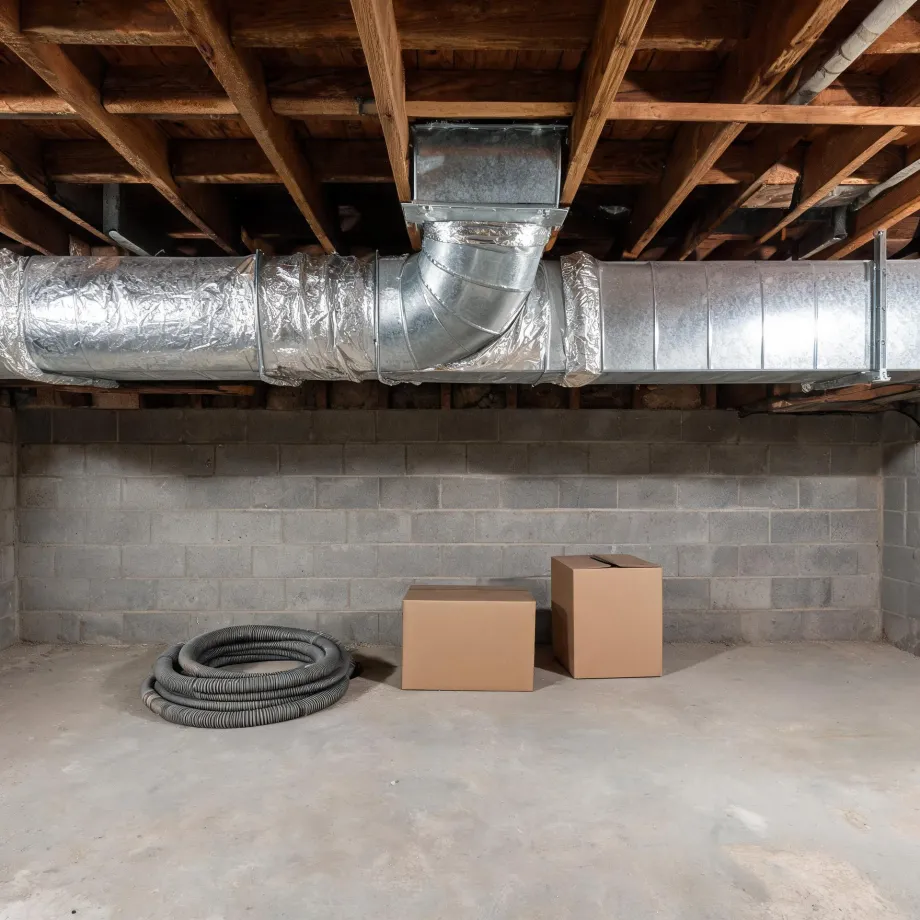
Ductwork in a house this old has a history, and so does whatever furnace is running inside it. Half the homes in Fremont County, Iowa were built in 1958 or earlier (2020-2024 ACS 5-year). That depth of stock means a contractor opening a failed furnace here is not always working on a system whose parts still move through regular supply chains. Heat exchangers crack, igniters wear, and control boards fail on schedules tied to the unit, but sourcing replacements for equipment that has changed hands a few times inside an old house can shift a straightforward repair into a longer conversation about what is still available.
The Parts of a Furnace a Contractor Checks First
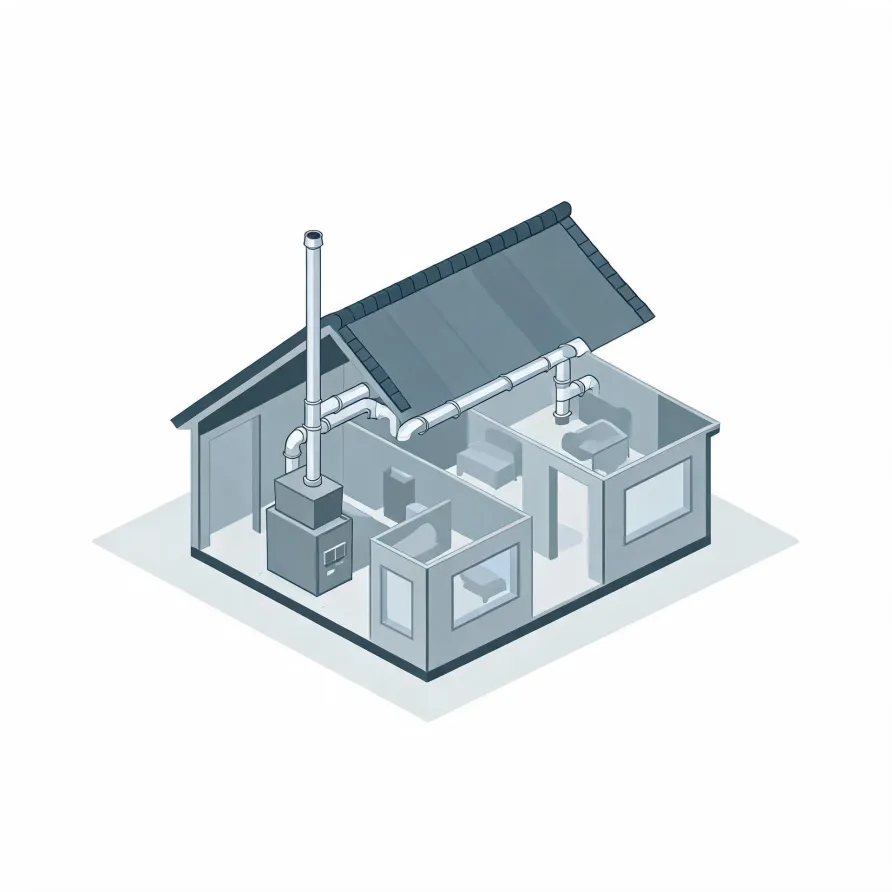
The furnace itself sits in a utility space, basement, or closet and is the heart of the system. Inside it, the heat exchanger is the piece a contractor looks at closely during a repair call. Cracks or failure there affect both heat output and safety, which is why it draws attention early.
The blower motor moves air through the heat exchanger and into the duct system. It sits inside the furnace cabinet. The flue or venting pipe runs from the furnace to the outside, and the ignitor and flame sensor work together to start and sustain combustion. Any of these can be the source of a no-heat or short-cycling complaint.
The drawing shows the general layout of a furnace system, and a licensed contractor determines what applies to the specific equipment and configuration in your home.
Get matched in Fremont CountyFremont County, Iowa, by the numbers
87 severe weather events were recorded in Fremont County, Iowa between 2015 and 2024.
NOAA National Centers for Environmental Information, Storm Events Database, bulk CSV export, events 2015-01-01 through 2024-12-31.Half the homes in Fremont County, Iowa were built in 1958 or earlier (2020-2024 ACS 5-year).
U.S. Census Bureau, 2020-2024 American Community Survey 5-Year EstimatesFremont County, Iowa holds 3,125 housing units (2020-2024 ACS 5-year).
U.S. Census Bureau, 2020-2024 American Community Survey 5-Year EstimatesOwners occupy 78.3% of the occupied homes in Fremont County, Iowa (2020-2024 ACS 5-year).
U.S. Census Bureau, 2020-2024 American Community Survey 5-Year EstimatesCodes & Standards Covering Furnace Repair in Fremont County, Iowa5 sourced rules and standards
What happens when a contractor comes out
Non-weatherized gas furnaces manufactured on or after November 19, 2015 must reach 80.0 percent AFUE.
Non-weatherized oil-fired furnaces manufactured on or after November 19, 2015 must reach 83.0 percent AFUE.
Mobile home gas furnaces manufactured on or after November 19, 2015 must reach 80.0 percent AFUE.
Non-weatherized gas furnaces manufactured on or after December 18, 2028 must reach 95.0 percent AFUE, up from the 80.0 percent minimum that applies to units manufactured before that date.
Licensing and Legal Requirements in Fremont County, Iowa
Iowa requires a state licence to install or repair HVAC, refrigeration, mechanical or plumbing systems, and to operate as a contractor, with exceptions listed in section 105.11.
Severe Weather Events in Fremont County
Extreme weather puts real strain on furnaces, forcing them to run harder and longer than they were sized for. How much of that pressure your equipment faces is a local question, and the data below reflects what Fremont County has recorded.
87 severe weather events, 2015–2024. Source: NOAA National Centers for Environmental Information, Storm Events Database.