Tell us about the job
Takes about a minute. No obligation.
A furnace installation in Davis County starts with load questions a contractor has to answer for this specific location. 49 severe weather events were recorded in Davis County, Iowa between 2015 and 2024. At that rate, severe cold and storm events are a routine part of what a furnace here will be asked to handle across its life, not occasional exceptions to plan around. That shapes sizing: a unit spec'd for mild, stable conditions will cycle harder and recover more slowly than one sized for what this area actually delivers. A contractor who accounts for that from the start picks equipment and a configuration that fits what the house will ask of it, winter after winter.
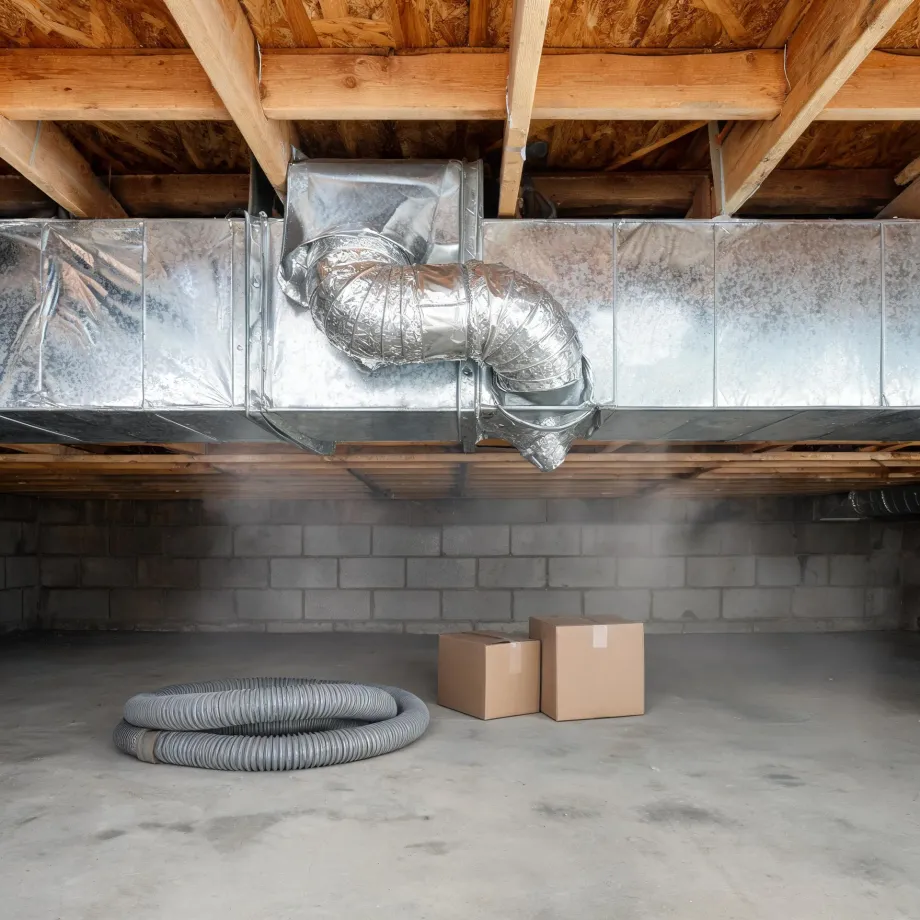
Ductwork designed for an earlier generation of furnaces does not always move the volume a modern unit needs, and whether it does is what a contractor has to settle before anything else on an installation job here. Half the homes in Davis County, Iowa were built in 1973 or earlier (2020-2024 ACS 5-year). That tells you something about what is already behind the walls: trunk lines and branch runs dimensioned for systems long out of production, in houses that may have been reheated and re-routed more than once since. A contractor assessing an installation in Davis County measures airflow capacity and checks the electrical service before pricing the new unit, because those two things determine whether the job is a straight swap or a longer project.
What Gets Installed With a New Furnace
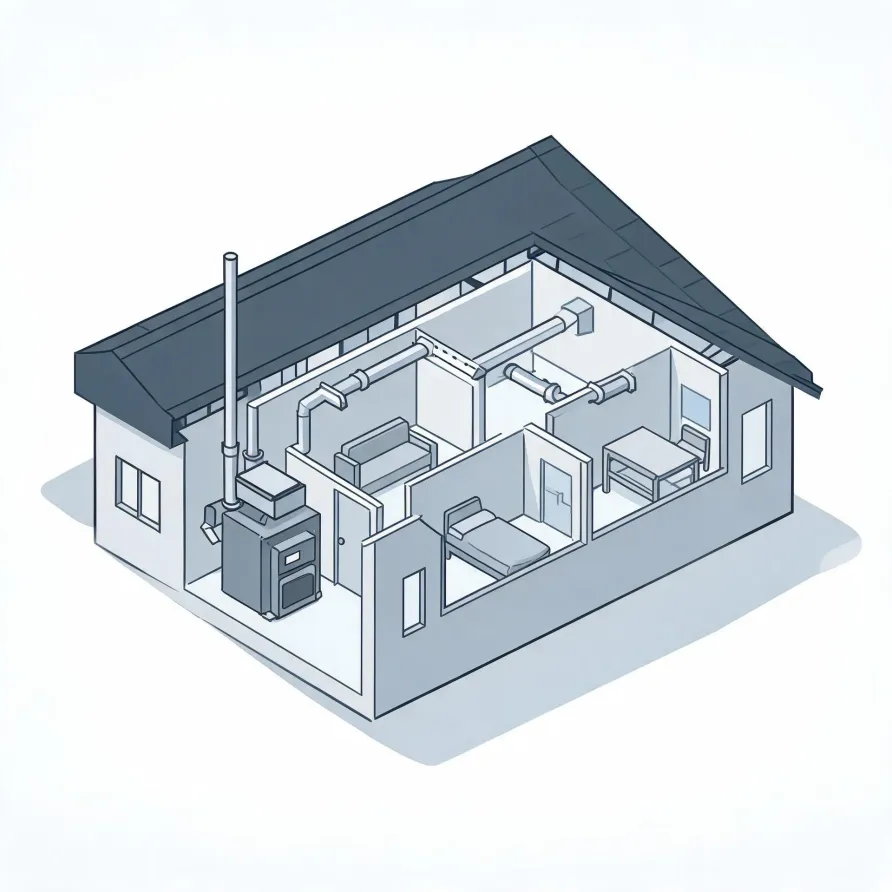
The furnace itself sits in the basement, utility room, or mechanical closet and is the heart of what gets purchased. A contractor sets the heat exchanger and burner assembly inside that cabinet, where fuel is burned and heat is drawn into the airstream. The flue pipe runs from the furnace up and out of the house, carrying combustion gases outside.
The air handler and blower sit inside or directly beside the furnace cabinet and push conditioned air into the duct system. The thermostat mounts on an interior wall and is the control point a homeowner touches every day. A contractor also installs the gas line connection and the condensate drain where the equipment requires them.
The drawing shows a typical layout, and a licensed contractor determines exactly what applies to this house.
Get matched in Davis CountyDavis County, Iowa, by the numbers
49 severe weather events were recorded in Davis County, Iowa between 2015 and 2024.
NOAA National Centers for Environmental Information, Storm Events Database, bulk CSV export, events 2015-01-01 through 2024-12-31.Half the homes in Davis County, Iowa were built in 1973 or earlier (2020-2024 ACS 5-year).
U.S. Census Bureau, 2020-2024 American Community Survey 5-Year EstimatesDavis County, Iowa holds 3,612 housing units (2020-2024 ACS 5-year).
U.S. Census Bureau, 2020-2024 American Community Survey 5-Year EstimatesOwners occupy 83.3% of the occupied homes in Davis County, Iowa (2020-2024 ACS 5-year).
U.S. Census Bureau, 2020-2024 American Community Survey 5-Year EstimatesFurnace Installation Rules for Davis County, Iowa5 sourced standards and codes
What the Installation Actually Looks Like
Non-weatherized gas furnaces manufactured on or after November 19, 2015 must reach 80.0 percent AFUE.
Non-weatherized oil-fired furnaces manufactured on or after November 19, 2015 must reach 83.0 percent AFUE.
Mobile home gas furnaces manufactured on or after November 19, 2015 must reach 80.0 percent AFUE.
Non-weatherized gas furnaces manufactured on or after December 18, 2028 must reach 95.0 percent AFUE, up from the 80.0 percent minimum that applies to units manufactured before that date.
Licensing and Legal Requirements in Davis County, Iowa
Iowa requires a state licence to install or repair HVAC, refrigeration, mechanical or plumbing systems, and to operate as a contractor, with exceptions listed in section 105.11.
Severe Weather Events in Davis County
Local weather puts real demands on heating equipment, and those demands vary by where you live. A furnace sized and installed for Davis County's conditions is built around what the climate here actually asks of it.
49 severe weather events, 2015–2024. Source: NOAA National Centers for Environmental Information, Storm Events Database.