Tell us about the job
Takes about a minute. No obligation.
A furnace quote in Wapello County starts with a load question a catalog spec sheet cannot answer on its own. 116 severe weather events were recorded in Wapello County, Iowa between 2015 and 2024. At that rate, severe weather is a standing feature of operating here, which means a contractor sizing a new furnace has to account for what the heating system will actually be asked to carry through cold-season extremes, not what an average Iowa installation requires. Undersized equipment strains early; a correctly sized and sealed install holds up against the demand this area puts on it.
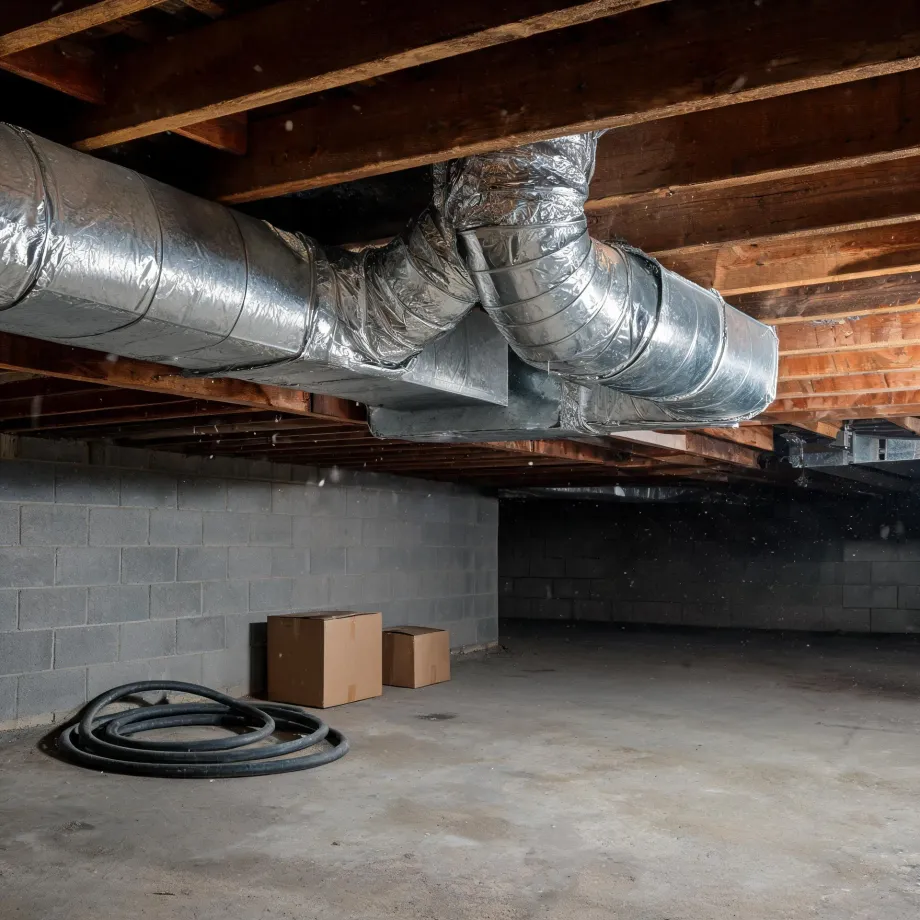
Ductwork laid down for one generation of furnaces does not automatically suit the next. Half the homes in Wapello County, Iowa were built in 1958 or earlier (2020-2024 ACS 5-year). That puts the existing duct runs at the center of any installation conversation here, because what was sized and routed for older equipment may restrict airflow, lack the returns a new furnace needs, or run through spaces that complicate any modification. A contractor pulling permits in Wapello County checks the duct system before the equipment choice is final, and what those runs reveal shapes the scope as much as the unit itself does.
What Gets Installed With a New Furnace
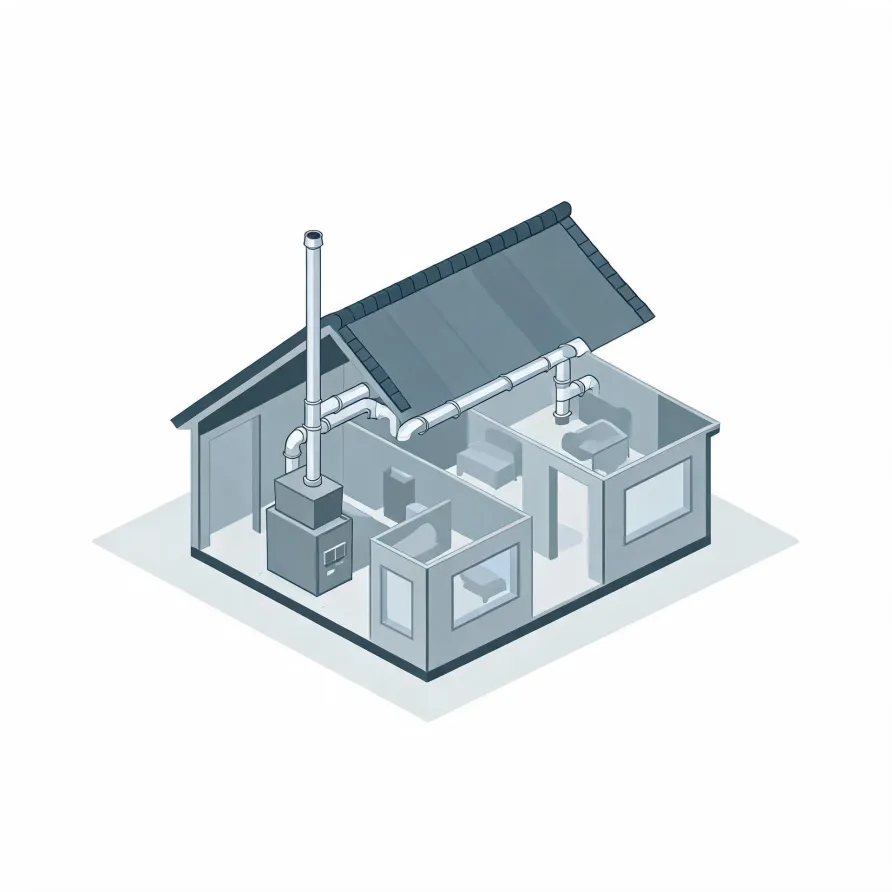
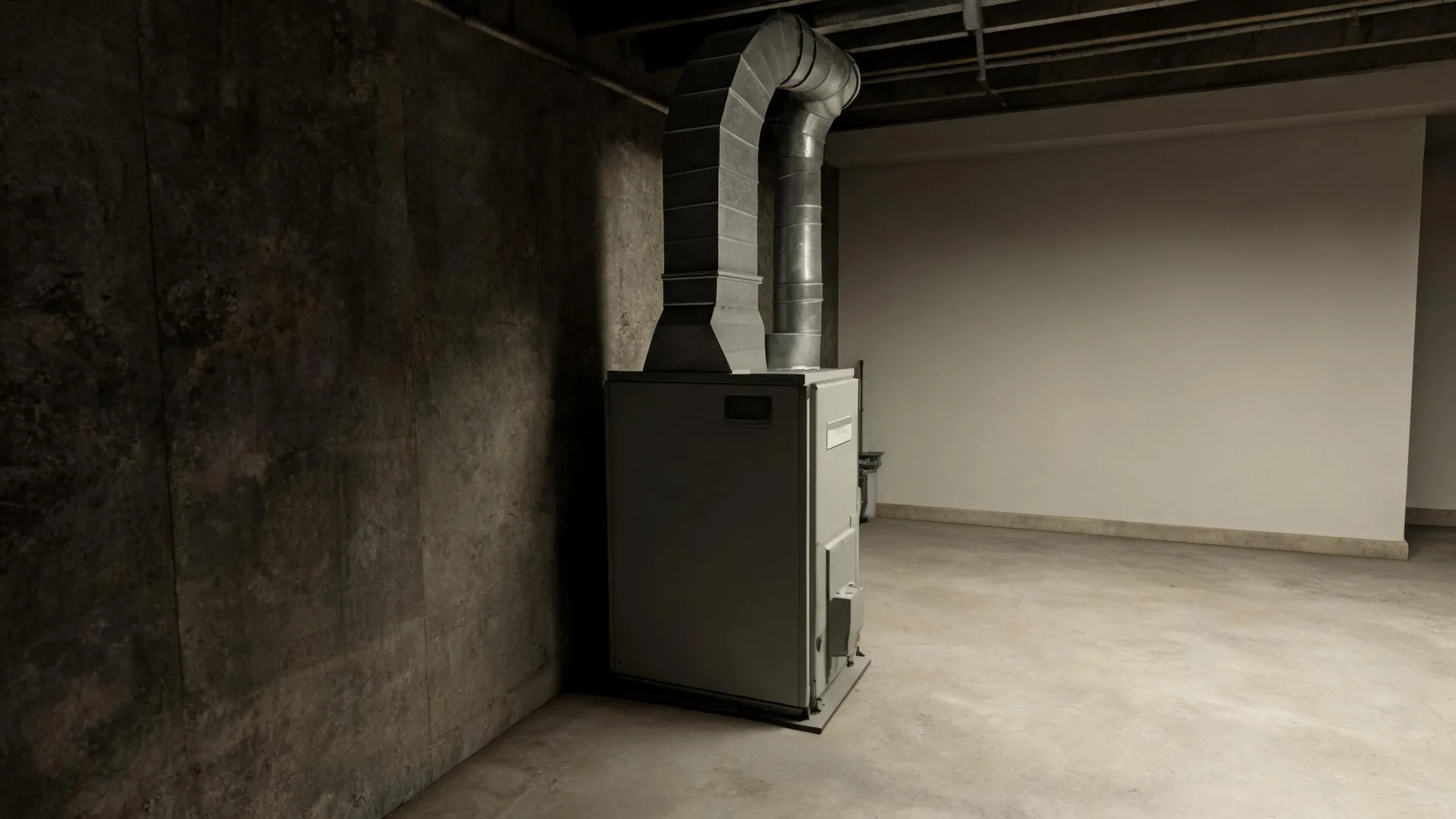
The furnace itself sits in a utility space, basement, or closet and is the unit a homeowner is most likely to recognize. It houses the heat exchanger, burner assembly, and blower motor. The heat exchanger is the chamber where combustion happens, and the blower motor is the fan that pushes conditioned air out through the home.
The flue pipe runs from the furnace to an exterior vent and carries combustion gases safely out of the house. Alongside it, the thermostat mounts on an interior wall and is the control point the homeowner interacts with daily. A condensate drain line is also part of the installation on high-efficiency models, running from the unit to a floor drain or utility sink.
The drawing shows a representative layout, and a licensed contractor determines exactly what applies to this house.
Get matched in Wapello CountyWapello County, by the numbers
116 severe weather events were recorded in Wapello County, Iowa between 2015 and 2024.
NOAA National Centers for Environmental Information, Storm Events Database, bulk CSV export, events 2015-01-01 through 2024-12-31.Half the homes in Wapello County, Iowa were built in 1958 or earlier (2020-2024 ACS 5-year).
U.S. Census Bureau, 2020-2024 American Community Survey 5-Year EstimatesWapello County, Iowa holds 15,730 housing units (2020-2024 ACS 5-year).
U.S. Census Bureau, 2020-2024 American Community Survey 5-Year EstimatesOwners occupy 68.4% of the occupied homes in Wapello County, Iowa (2020-2024 ACS 5-year).
U.S. Census Bureau, 2020-2024 American Community Survey 5-Year EstimatesFurnace Installation Rules for Wapello County, Iowa5 codes, standards, and licensing rules
What the installation actually looks like
Non-weatherized gas furnaces manufactured on or after November 19, 2015 must reach 80.0 percent AFUE.
Non-weatherized oil-fired furnaces manufactured on or after November 19, 2015 must reach 83.0 percent AFUE.
Mobile home gas furnaces manufactured on or after November 19, 2015 must reach 80.0 percent AFUE.
Non-weatherized gas furnaces manufactured on or after December 18, 2028 must reach 95.0 percent AFUE, up from the 80.0 percent minimum that applies to units manufactured before that date.
Licensing and Legal Requirements in Wapello County, Iowa
Iowa requires a state licence to install or repair HVAC, refrigeration, mechanical or plumbing systems, and to operate as a contractor, with exceptions listed in section 105.11.
Severe Weather Events in Wapello County
Wapello County weather puts real demands on residential heating equipment, and those demands shape what a furnace installation here needs to handle. The chart below tracks recorded severe weather events in the county so you can see the local conditions a system will be sized and built for.
116 severe weather events, 2015–2024. Source: NOAA National Centers for Environmental Information, Storm Events Database.