Tell us about the job
Takes about a minute. No obligation.
A furnace install in Marion County is a sizing and specification decision shaped by what the local climate actually demands of heating equipment, not just the square footage of the house. 193 severe weather events were recorded in Marion County, Iowa between 2015 and 2024. At that rate, severe weather is a routine part of what every system here runs against, which means a contractor setting capacity has to build for the load this area puts on equipment rather than defaulting to a catalog spec. Ductwork connections, heat exchanger grade, and cabinet integrity all get priced with that operating reality in mind.
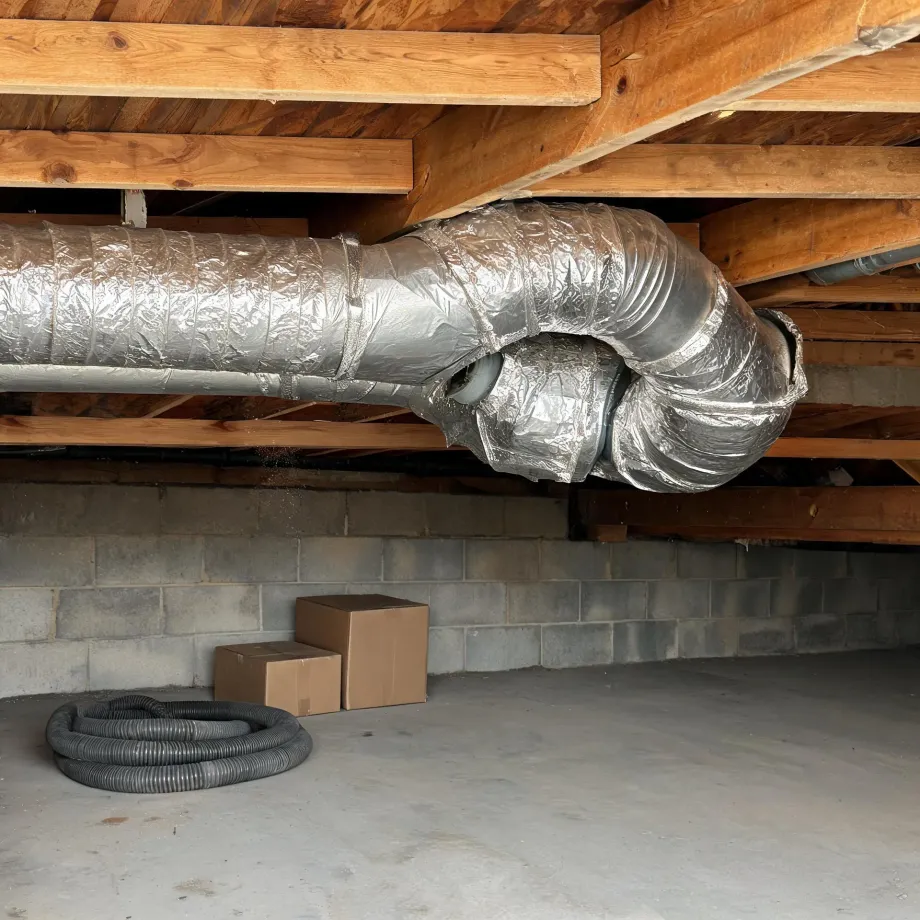
Ductwork installed for an older heating system carries assumptions about airflow that a modern furnace will test. Half the homes in Marion County, Iowa were built in 1975 or earlier (2020-2024 ACS 5-year). A contractor quoting a furnace replacement here has to open up and measure what is already in the walls and floor before the equipment choice means much, because ducts sized for what the house originally ran will determine whether the new unit performs as rated or fights its own distribution. The electrical side gets checked for the same reason. The furnace itself is a straightforward selection once the contractor knows what the house will actually support.
What Gets Installed With a New Furnace
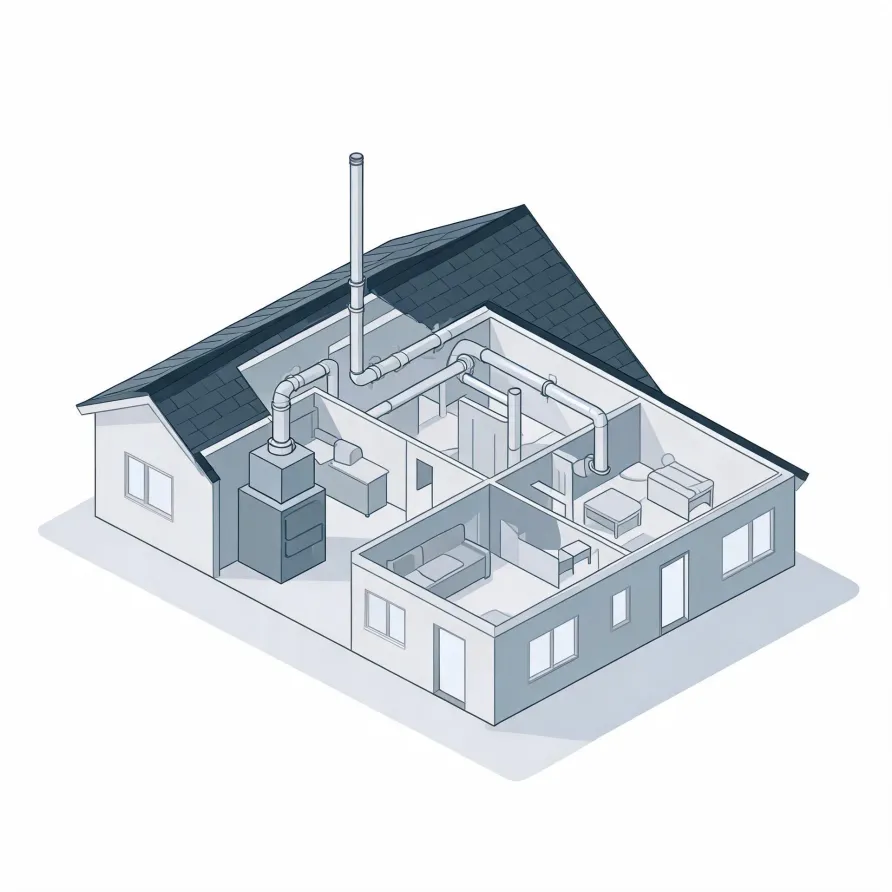
The furnace itself sits in a utility space, basement, or closet and is the unit a homeowner is most likely to recognize on sight. It houses the heat exchanger, the burner assembly, and the blower, which together produce and push heated air into the home. The thermostat mounts on a wall inside the living space and is the control point for the whole system.
The flue pipe runs from the furnace to an exterior wall or through the roof, carrying combustion gases out of the house. Alongside it, the filter cabinet or housing sits at the air intake side of the furnace, and a condensate drain line is part of any high-efficiency unit, routing moisture produced during operation to a floor drain or pump.
The drawing shows a representative layout, and a licensed contractor determines exactly which components and configurations apply to your home.
Get matched in Marion CountyMarion County, Iowa, by the numbers
193 severe weather events were recorded in Marion County, Iowa between 2015 and 2024.
NOAA National Centers for Environmental Information, Storm Events Database, bulk CSV export, events 2015-01-01 through 2024-12-31.Half the homes in Marion County, Iowa were built in 1975 or earlier (2020-2024 ACS 5-year).
U.S. Census Bureau, 2020-2024 American Community Survey 5-Year EstimatesMarion County, Iowa holds 14,386 housing units (2020-2024 ACS 5-year).
U.S. Census Bureau, 2020-2024 American Community Survey 5-Year EstimatesOwners occupy 77.7% of the occupied homes in Marion County, Iowa (2020-2024 ACS 5-year).
U.S. Census Bureau, 2020-2024 American Community Survey 5-Year EstimatesFurnace Installation Rules That Apply in Marion County, Iowa5 codes, standards & laws
What the Installation Actually Looks Like
Non-weatherized gas furnaces manufactured on or after November 19, 2015 must reach 80.0 percent AFUE.
Non-weatherized oil-fired furnaces manufactured on or after November 19, 2015 must reach 83.0 percent AFUE.
Mobile home gas furnaces manufactured on or after November 19, 2015 must reach 80.0 percent AFUE.
Non-weatherized gas furnaces manufactured on or after December 18, 2028 must reach 95.0 percent AFUE, up from the 80.0 percent minimum that applies to units manufactured before that date.
Licensing and Legal Requirements in Marion County, Iowa
Iowa requires a state licence to install or repair HVAC, refrigeration, mechanical or plumbing systems, and to operate as a contractor, with exceptions listed in section 105.11.
Severe Weather Events in Marion County
Marion County's weather puts real demands on heating equipment over time. A furnace that holds up through this county's conditions is sized and installed to match them.
193 severe weather events, 2015–2024. Source: NOAA National Centers for Environmental Information, Storm Events Database.