Tell us about the job
Takes about a minute. No obligation.
A furnace repair in Marion County starts with a real question: what has this system already been through? 193 severe weather events were recorded in Marion County, Iowa between 2015 and 2024. At that rate, severe weather is a standing condition here, and contractors expect to find wear on components that carry the load when the system is pushed hard through cold, wet, and turbulent seasons. Heat exchangers and pressure switches take that strain first. A technician who skips past that history and quotes a straight parts swap risks missing the underlying cause.
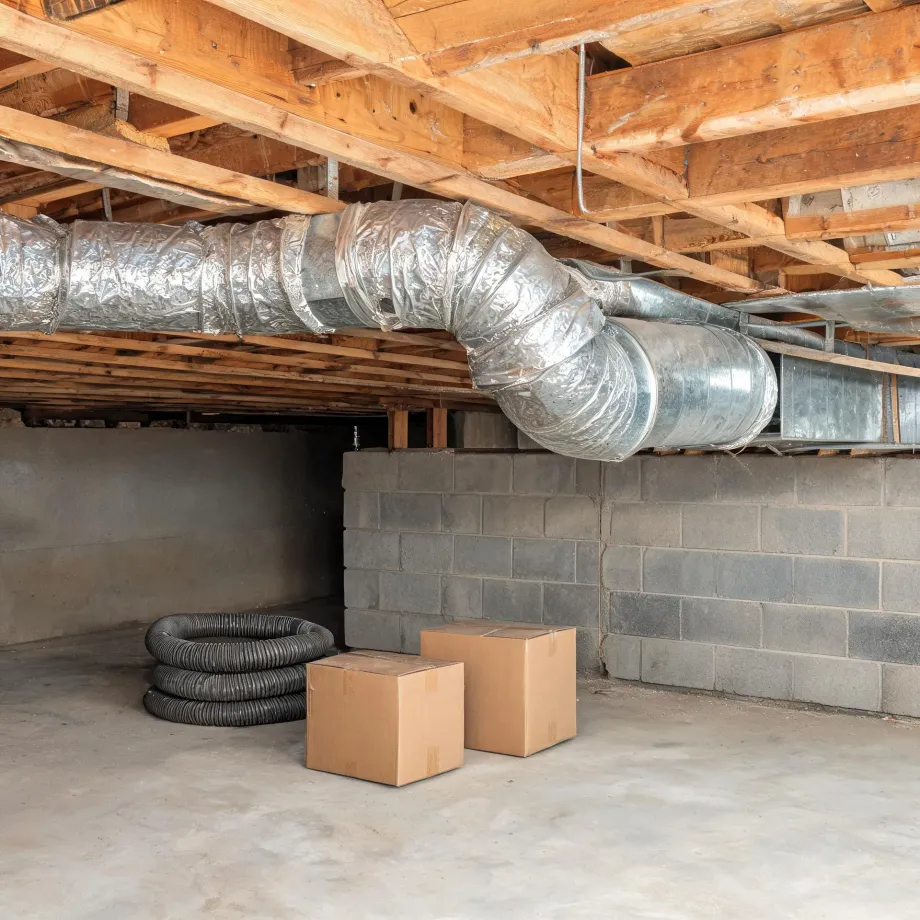
Older furnaces fail in ways that only show up once the cabinet is open. A cracked heat exchanger looks fine from the outside; a burner assembly running lean leaves no obvious sign at the thermostat. Half the homes in Marion County, Iowa were built in 1975 or earlier (2020-2024 ACS 5-year). That means the equipment running in a house here has likely been through enough heating seasons that its internal condition is what sets the repair scope, and a contractor pricing the job before opening the unit is guessing. Parts availability is its own question: equipment installed in stock this age does not always draw from a current catalog, and what a supplier can ship determines whether a repair closes in one visit or drags across several.
The Parts of a Furnace a Contractor Checks First
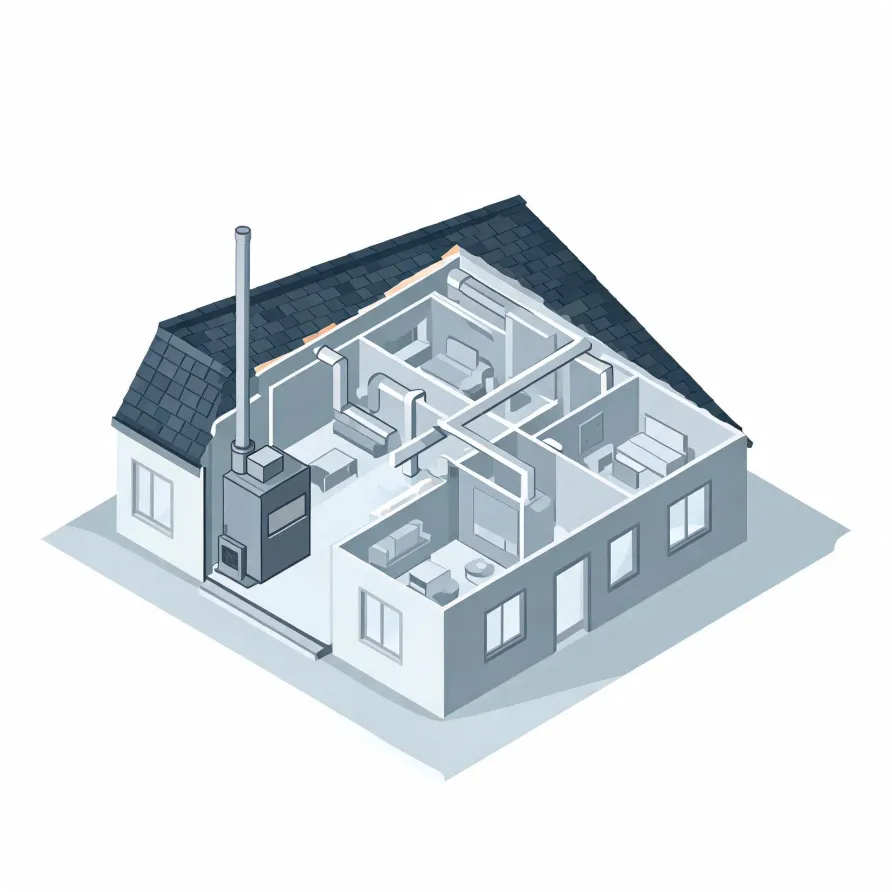
The furnace itself sits in a basement, utility closet, or mechanical room and is the heart of what a contractor examines during a repair call. Inside it, the heat exchanger is often the first stop: cracks or corrosion there affect both warmth and safety. The burners, the igniter, and the flame sensor all sit within the same cabinet and each one can be the reason a furnace stops lighting or runs erratically.
The blower motor and its fan wheel sit at the base of the furnace and push conditioned air out through the house. Alongside them, the control board reads signals from the thermostat and tells every other component when to act. The flue pipe runs from the top of the furnace to an exterior vent, and a contractor checks it for blockage or deterioration when exhaust flow is in question.
The drawing shows a general layout of these components, and a licensed contractor determines which parts apply and what condition they are in for your specific system.
Get matched in Marion CountyMarion County, Iowa, by the numbers
193 severe weather events were recorded in Marion County, Iowa between 2015 and 2024.
NOAA National Centers for Environmental Information, Storm Events Database, bulk CSV export, events 2015-01-01 through 2024-12-31.Half the homes in Marion County, Iowa were built in 1975 or earlier (2020-2024 ACS 5-year).
U.S. Census Bureau, 2020-2024 American Community Survey 5-Year EstimatesMarion County, Iowa holds 14,386 housing units (2020-2024 ACS 5-year).
U.S. Census Bureau, 2020-2024 American Community Survey 5-Year EstimatesOwners occupy 77.7% of the occupied homes in Marion County, Iowa (2020-2024 ACS 5-year).
U.S. Census Bureau, 2020-2024 American Community Survey 5-Year EstimatesCodes & Standards Covering Furnace Repair in Marion County, Iowa5 sourced rules and standards
What the repair visit looks like
Non-weatherized gas furnaces manufactured on or after November 19, 2015 must reach 80.0 percent AFUE.
Non-weatherized oil-fired furnaces manufactured on or after November 19, 2015 must reach 83.0 percent AFUE.
Mobile home gas furnaces manufactured on or after November 19, 2015 must reach 80.0 percent AFUE.
Non-weatherized gas furnaces manufactured on or after December 18, 2028 must reach 95.0 percent AFUE, up from the 80.0 percent minimum that applies to units manufactured before that date.
Licensing and Legal Requirements in Marion County, Iowa
Iowa requires a state licence to install or repair HVAC, refrigeration, mechanical or plumbing systems, and to operate as a contractor, with exceptions listed in section 105.11.
Severe Weather Events in Marion County
Hard weather puts real load on furnace systems, and that load compounds over time. Repair needs in Marion County track closely with what the local climate demands of the equipment.
193 severe weather events, 2015–2024. Source: NOAA National Centers for Environmental Information, Storm Events Database.