Tell us about the job
Takes about a minute. No obligation.
A contractor quoting a furnace installation in Mahaska County starts with the house: its age, its insulation, how air moves through it, and what the existing ductwork can carry. 70 severe weather events were recorded in Mahaska County, Iowa between 2015 and 2024. At that rate, severe weather is a real but occasional factor, and it does not override the load calculations a contractor runs from the structure. Sizing a furnace here depends on what the building loses on a cold night, and a system matched to that will run correctly for years where one sized to a weather worst case will short-cycle and wear faster.
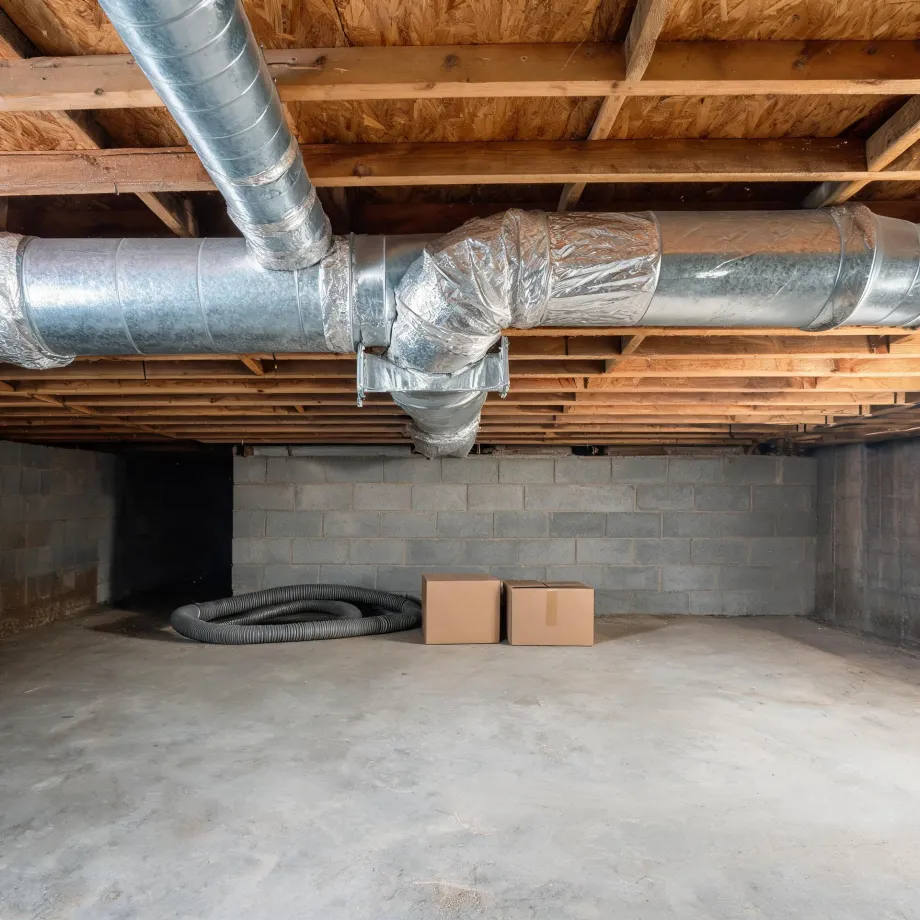
Existing ductwork in a house this old was sized and routed for whatever system came before the current one, and those decisions rarely line up with what a new furnace needs to move air through the house correctly. Half the homes in Mahaska County, Iowa were built in 1965 or earlier (2020-2024 ACS 5-year). That gap between original construction and current equipment is where a contractor spends real time on a furnace installation here: reading the trunk lines, checking the returns, and deciding what carries over and what has to change before the new unit goes in. The electrical is a separate question, but the duct layout is usually the one that rewrites the scope.
What Gets Installed With a New Furnace
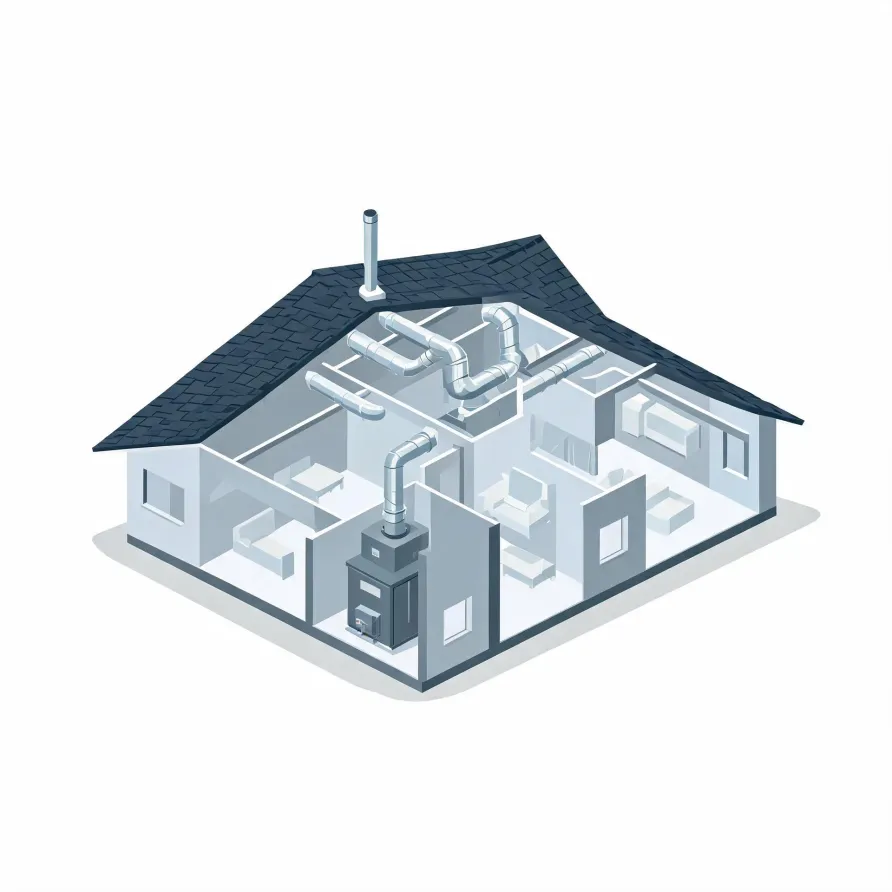
The furnace itself sits in a utility space, basement, or closet at the center of the system. It houses the burner, the heat exchanger, and the blower, which together produce and push heated air. A flue pipe runs from the furnace to an outside wall or through the roof, carrying combustion gases out of the house.
The thermostat mounts on an interior wall where it reads the air temperature and tells the furnace when to run. A filter rack sits at the air intake, and a condensate drain line runs to a floor drain or utility sink if the furnace is a high-efficiency model that produces condensation during operation.
The drawing shows a typical layout, and a licensed contractor determines what applies to your specific house and setup.
Get matched in Mahaska CountyMahaska County, by the numbers
70 severe weather events were recorded in Mahaska County, Iowa between 2015 and 2024.
NOAA National Centers for Environmental Information, Storm Events Database, bulk CSV export, events 2015-01-01 through 2024-12-31.Half the homes in Mahaska County, Iowa were built in 1965 or earlier (2020-2024 ACS 5-year).
U.S. Census Bureau, 2020-2024 American Community Survey 5-Year EstimatesMahaska County, Iowa holds 9,728 housing units (2020-2024 ACS 5-year).
U.S. Census Bureau, 2020-2024 American Community Survey 5-Year EstimatesOwners occupy 68.0% of the occupied homes in Mahaska County, Iowa (2020-2024 ACS 5-year).
U.S. Census Bureau, 2020-2024 American Community Survey 5-Year EstimatesFurnace Installation Rules on the Books for Mahaska County, Iowa5 codes, standards & laws
What the installation looks like
Non-weatherized gas furnaces manufactured on or after November 19, 2015 must reach 80.0 percent AFUE.
Non-weatherized oil-fired furnaces manufactured on or after November 19, 2015 must reach 83.0 percent AFUE.
Mobile home gas furnaces manufactured on or after November 19, 2015 must reach 80.0 percent AFUE.
Non-weatherized gas furnaces manufactured on or after December 18, 2028 must reach 95.0 percent AFUE, up from the 80.0 percent minimum that applies to units manufactured before that date.
Licensing and Legal Requirements in Mahaska County, Iowa
Iowa requires a state licence to install or repair HVAC, refrigeration, mechanical or plumbing systems, and to operate as a contractor, with exceptions listed in section 105.11.
Severe Weather Events in Mahaska County
Mahaska County weather puts real demands on heating equipment, and those demands shape what a furnace needs to handle over its life. How hard a unit works, and how long it lasts, is a local question.
70 severe weather events, 2015–2024. Source: NOAA National Centers for Environmental Information, Storm Events Database.