Tell us about the job
Takes about a minute. No obligation.
A furnace repair call in Warren County starts with a contractor asking what the system has already been through, and the answer here is usually quite a lot. 192 severe weather events were recorded in Warren County, Iowa between 2015 and 2024. At that rate, the heat exchanger, pressure switches, and draft inducer are the first things a contractor examines, because those components absorb the hardest swings in demand. Age matters too, but in a county where severe weather is a regular operating condition, worn stress-bearing parts are a likelier explanation for a breakdown than a single bad event.
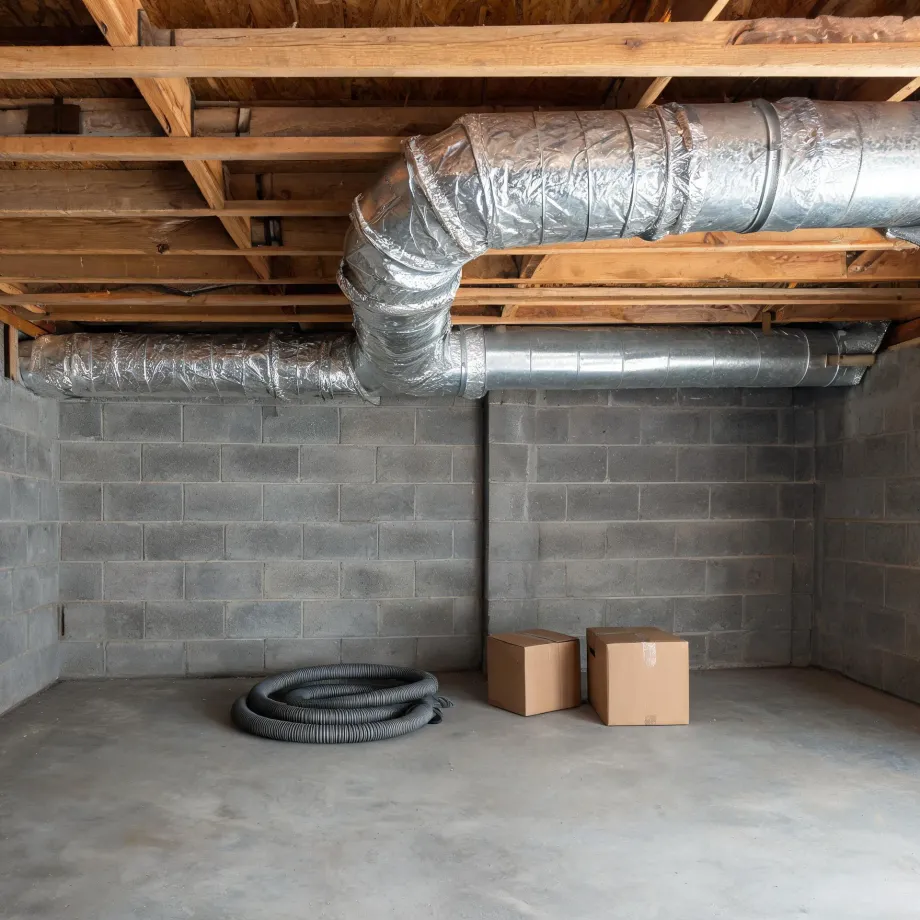
Ductwork laid when a house was built tells you little about a furnace installed long after, and in Warren County that gap is wide. Half the homes in Warren County, Iowa were built in 1985 or earlier (2020-2024 ACS 5-year). Furnaces do not run for as long as houses stand, which means the unit a contractor opens is likely a replacement of a replacement, not the original equipment. What decides how a repair goes is what that contractor finds inside the heat exchanger and the control board, and whether the parts a system of that age still draws from a supplier. If they do not, the scope of the job changes before the quote does.
The Parts of a Furnace a Contractor Checks First
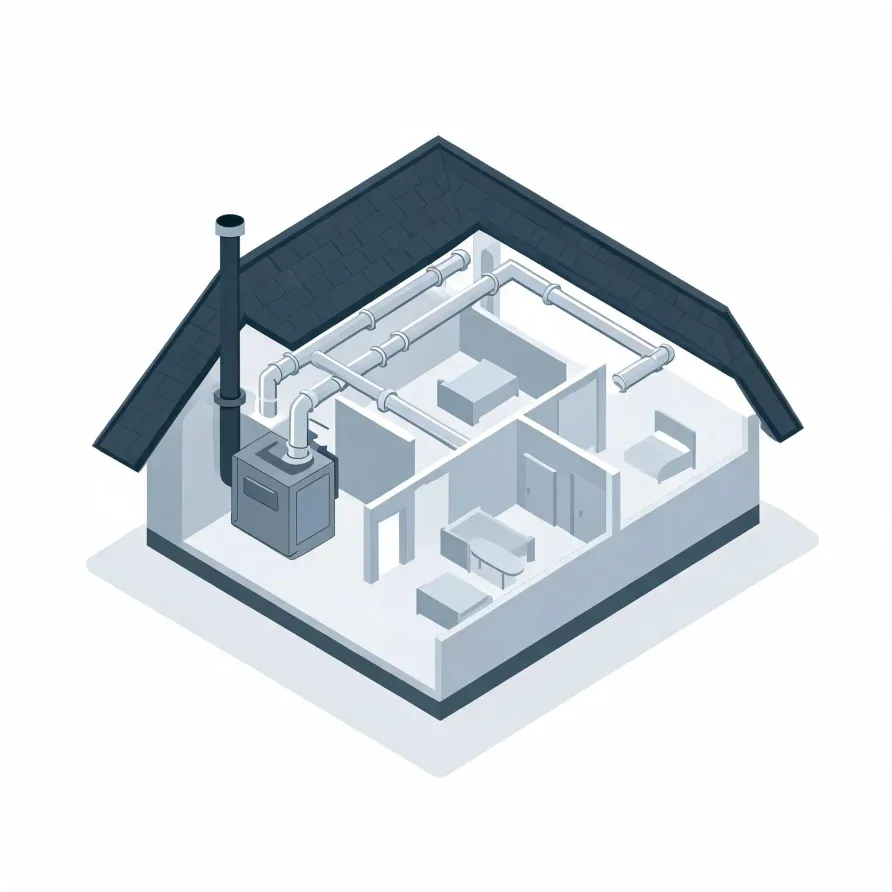
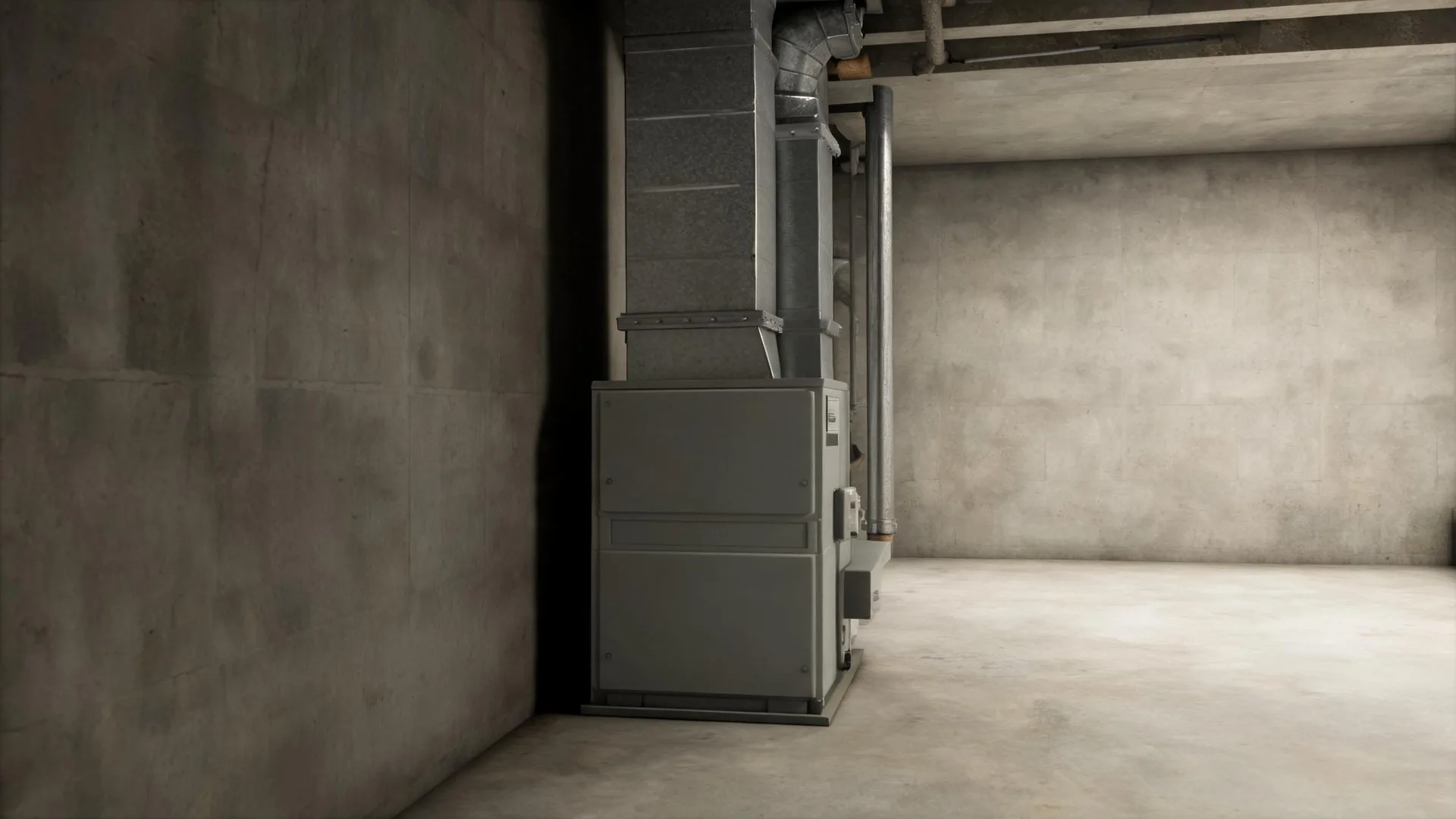
The furnace itself sits in a mechanical room, basement, or utility closet and is the piece most contractors go to first. Inside it, the heat exchanger is the part that does the heating work, and a crack or failure there is one of the more serious findings a contractor can make. The burners, which fire inside that exchanger, are another early stop.
The blower motor sits within the furnace cabinet and pushes conditioned air out into the house. Alongside it, the draft inducer pulls combustion gases out through the flue. The igniter, the flame sensor, and the control board are all smaller components housed in the same cabinet, and each one can be the source of a furnace that won't start or won't stay running.
The drawing shows a representative layout, and a licensed contractor determines which components apply and what condition they're in for your specific system.
Get matched in Warren CountyWarren County, Iowa, by the numbers
192 severe weather events were recorded in Warren County, Iowa between 2015 and 2024.
NOAA National Centers for Environmental Information, Storm Events Database, bulk CSV export, events 2015-01-01 through 2024-12-31.Half the homes in Warren County, Iowa were built in 1985 or earlier (2020-2024 ACS 5-year).
U.S. Census Bureau, 2020-2024 American Community Survey 5-Year EstimatesWarren County, Iowa holds 21,921 housing units (2020-2024 ACS 5-year).
U.S. Census Bureau, 2020-2024 American Community Survey 5-Year EstimatesOwners occupy 82.3% of the occupied homes in Warren County, Iowa (2020-2024 ACS 5-year).
U.S. Census Bureau, 2020-2024 American Community Survey 5-Year EstimatesCodes & Standards for Furnace Repair in Warren County, Iowa5 sourced rules and standards
What the Repair Visit Looks Like
Non-weatherized gas furnaces manufactured on or after November 19, 2015 must reach 80.0 percent AFUE.
Non-weatherized oil-fired furnaces manufactured on or after November 19, 2015 must reach 83.0 percent AFUE.
Mobile home gas furnaces manufactured on or after November 19, 2015 must reach 80.0 percent AFUE.
Non-weatherized gas furnaces manufactured on or after December 18, 2028 must reach 95.0 percent AFUE, up from the 80.0 percent minimum that applies to units manufactured before that date.
Licensing and Legal Requirements in Warren County, Iowa
Iowa requires a state licence to install or repair HVAC, refrigeration, mechanical or plumbing systems, and to operate as a contractor, with exceptions listed in section 105.11.
Severe Weather Events in Warren County
Heating equipment in Warren County works against the conditions outside, and local weather patterns shape how hard that work gets. What stresses a furnace here is a local fact, which is why repair needs in this area follow their own pattern.
192 severe weather events, 2015–2024. Source: NOAA National Centers for Environmental Information, Storm Events Database.