Tell us about the job
Takes about a minute. No obligation.
A furnace contractor in Harrison County has to sort through several possible causes before settling on one. 109 severe weather events were recorded in Harrison County, Iowa between 2015 and 2024. At that rate, severe weather is a real but intermittent pressure on equipment, not the steady grind that wears components down season after season. What drives most failures here is how old the heat exchanger is, how long the filter went unchanged, and whether the system was sized and installed correctly at the start. A contractor who reaches for weather as the explanation is usually looking past the likelier answer.
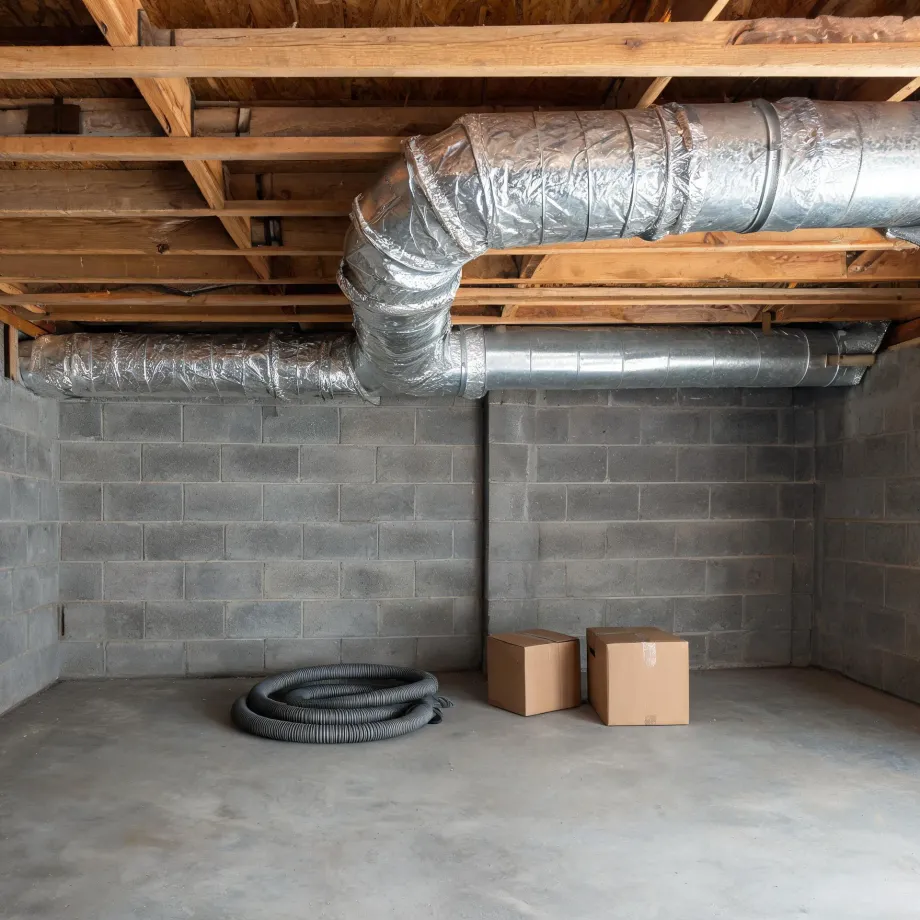
Ductwork in a house built for a different era of heating gets adapted, patched, and left to accumulate whatever the decades bring. Half the homes in Harrison County, Iowa were built in 1954 or earlier (2020-2024 ACS 5-year). That history shapes what a contractor finds once a furnace is open: components worn past a point where a standard replacement part fits, and supply lines for that generation of equipment that have thinned or closed entirely. The age of the house is not what complicates the repair. The age of the parts is.
The Parts of a Furnace a Contractor Checks First
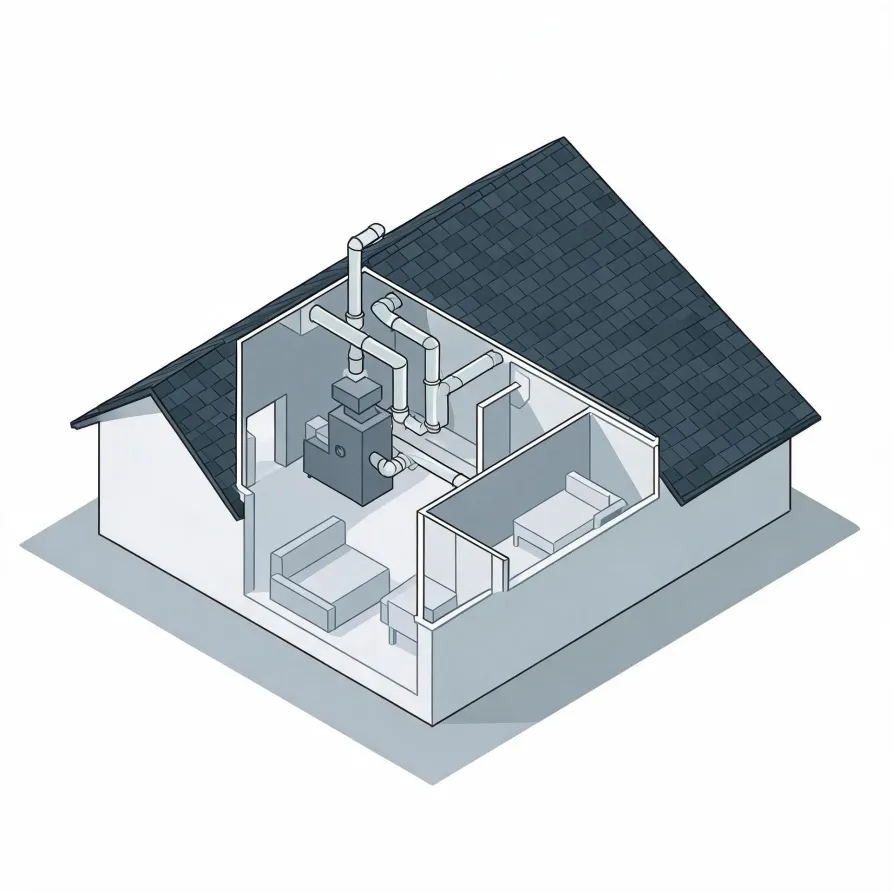
The furnace itself sits in a mechanical room, basement, or utility closet and is the heart of the system. Inside it, the heat exchanger is what a contractor reaches for early when something is wrong: a cracked exchanger lets combustion gases into the airstream, and a failed one shuts a furnace down fast. The burners, igniter, and flame sensor sit close to it, and any of them can be the reason a furnace runs short cycles or refuses to start.
The blower motor and its fan wheel live in the lower cabinet and push conditioned air out through the supply side once the heat exchanger is warm. The flue pipe carries exhaust gases out of the house, and a blockage or separation there is a safety concern a contractor checks before anything else. A pressure switch, control board, and gas valve round out the components a contractor works through when tracing a fault.
The drawing shows a general layout of these components, and a licensed contractor determines what applies to the specific equipment and configuration in your home.
Get matched in Harrison CountyHarrison County, Iowa, by the numbers
109 severe weather events were recorded in Harrison County, Iowa between 2015 and 2024.
NOAA National Centers for Environmental Information, Storm Events Database, bulk CSV export, events 2015-01-01 through 2024-12-31.Half the homes in Harrison County, Iowa were built in 1954 or earlier (2020-2024 ACS 5-year).
U.S. Census Bureau, 2020-2024 American Community Survey 5-Year EstimatesHarrison County, Iowa holds 6,698 housing units (2020-2024 ACS 5-year).
U.S. Census Bureau, 2020-2024 American Community Survey 5-Year EstimatesOwners occupy 77.1% of the occupied homes in Harrison County, Iowa (2020-2024 ACS 5-year).
U.S. Census Bureau, 2020-2024 American Community Survey 5-Year EstimatesCodes & Standards for Furnace Repair in Harrison County, Iowa5 sourced rules and standards
What the repair visit looks like
Non-weatherized gas furnaces manufactured on or after November 19, 2015 must reach 80.0 percent AFUE.
Non-weatherized oil-fired furnaces manufactured on or after November 19, 2015 must reach 83.0 percent AFUE.
Mobile home gas furnaces manufactured on or after November 19, 2015 must reach 80.0 percent AFUE.
Non-weatherized gas furnaces manufactured on or after December 18, 2028 must reach 95.0 percent AFUE, up from the 80.0 percent minimum that applies to units manufactured before that date.
Contractor Rules That Apply in Harrison County, Iowa
Iowa requires a state licence to install or repair HVAC, refrigeration, mechanical or plumbing systems, and to operate as a contractor, with exceptions listed in section 105.11.
Severe Weather Events in Harrison County
Harsh weather puts real load on furnace components, and that load accumulates over time. How hard the weather has pressed on Harrison County shapes how hard the equipment in those homes has had to work, which is why local repair demand is a local question.
109 severe weather events, 2015–2024. Source: NOAA National Centers for Environmental Information, Storm Events Database.