Tell us about the job
Takes about a minute. No obligation.
A furnace repair in this area asks a contractor to work out what the system has already been through before quoting the fix. 141 severe weather events were recorded in Pottawattamie County, Iowa between 2015 and 2024. At that rate, severe weather is a standing condition of operating here, and it shows up in what a contractor finds when they open a furnace that has been running against it. Stress-related wear on heat exchangers, ignitors, and blower components is not a coincidence in a county with this kind of record. Age and maintenance history still shape the repair, but they do not push the weather load aside.
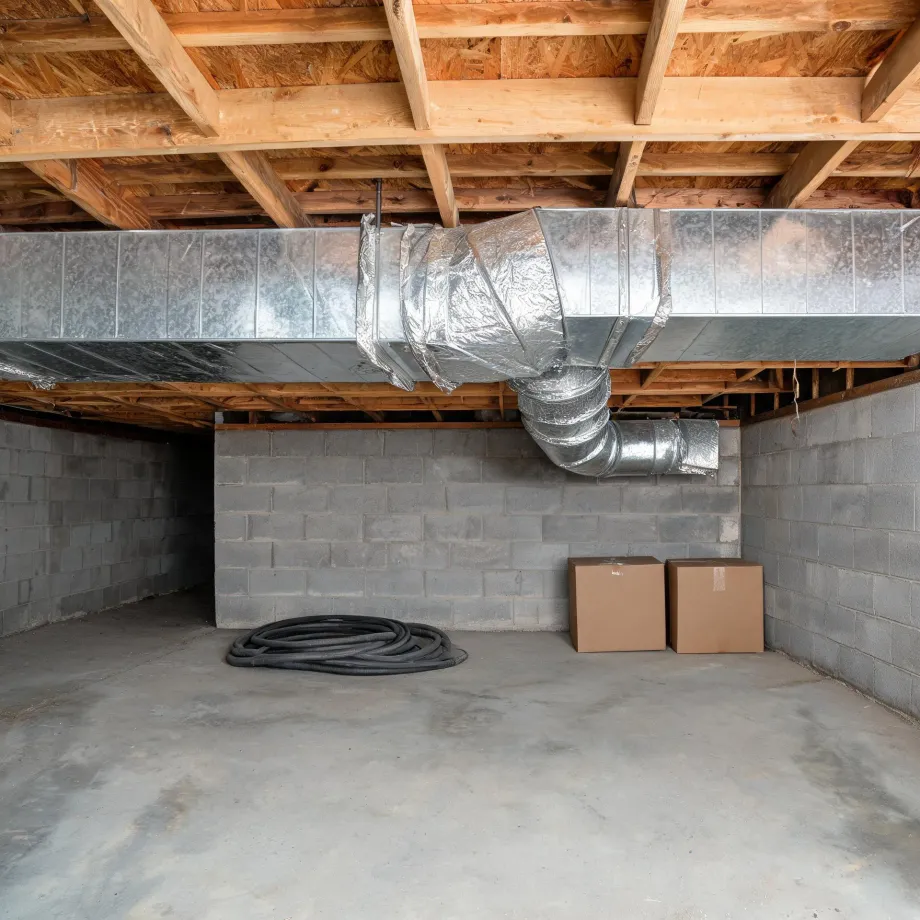
Ductwork and wiring aside, the variable that decides how a furnace repair goes here is parts availability. Half the homes in Pottawattamie County, Iowa were built in 1967 or earlier (2020-2024 ACS 5-year). A system installed into housing of that vintage has had time to move through several equipment generations, and what a contractor finds once the furnace is open may be a heat exchanger or a control board that manufacturers stopped supplying years ago. That changes the scope: a repair that prices out simply on a newer system can turn into a sourcing problem, an extended timeline, or a conversation about what the next step is.
The Parts of a Furnace a Contractor Checks First
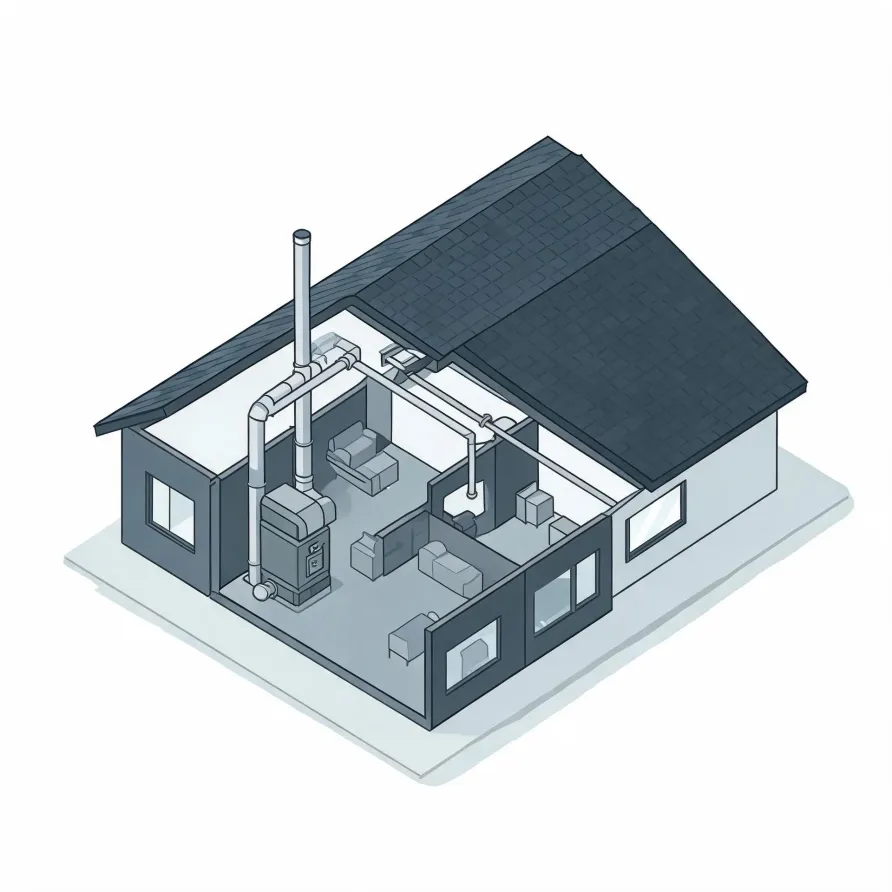
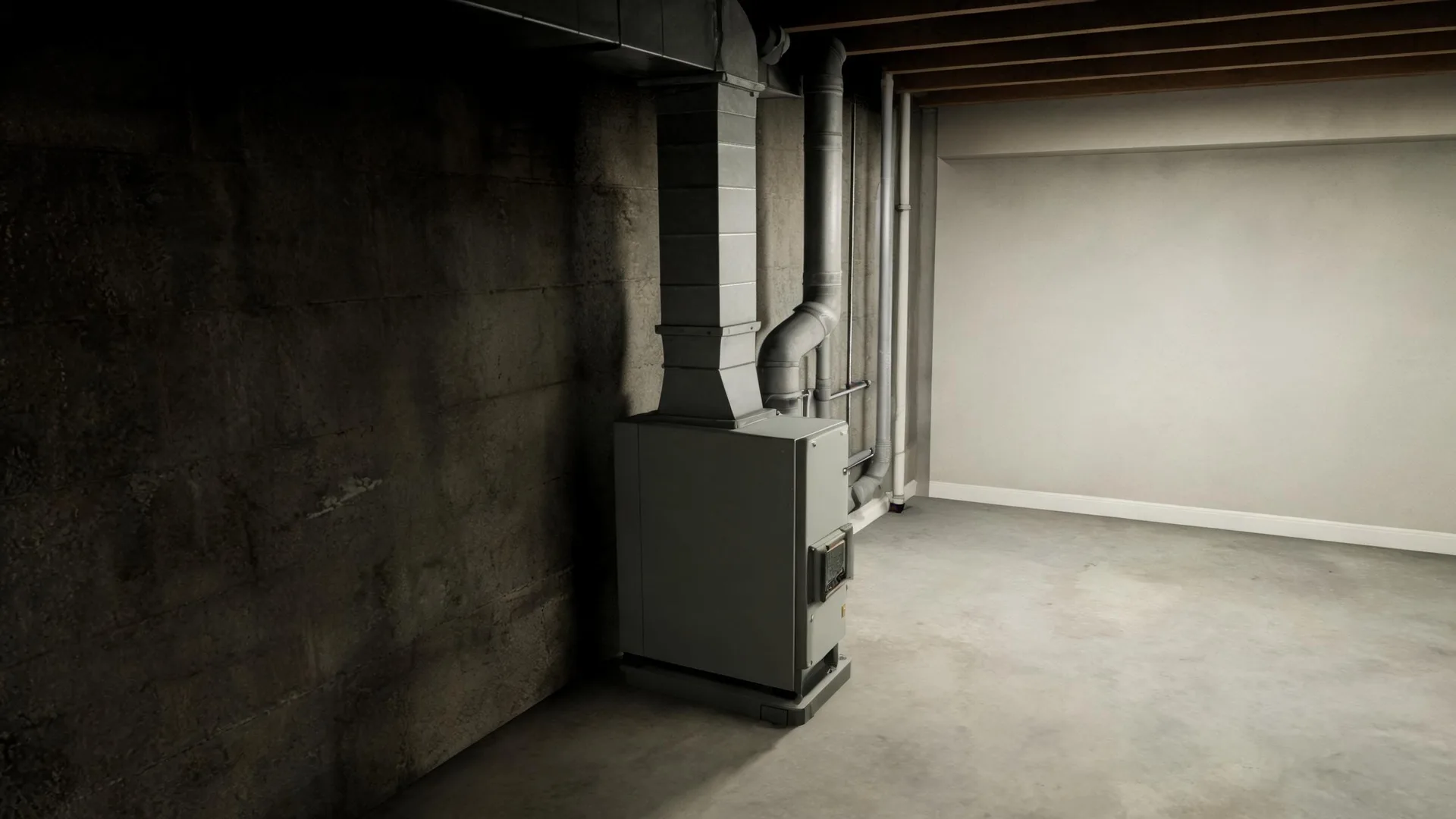
The furnace itself sits in the basement, utility room, or closet and is the heart of the system. Inside it, the heat exchanger is the piece a contractor looks at closely: cracks or corrosion there let combustion gases into the living space. The burners, igniter, and flame sensor all sit within that cabinet and are common starting points when a furnace stops heating or fails to light.
The blower motor and its fan wheel sit in the lower section of the furnace cabinet and push conditioned air into the supply ducts. The flue pipe runs from the furnace to an exterior vent, and a blocked or corroded flue is something a contractor checks when combustion problems appear. The thermostat on the wall is also part of what gets diagnosed, since a wiring fault or failed sensor there can mimic a furnace problem.
The drawing shows a typical furnace layout, and a licensed contractor determines which components apply to the specific equipment and configuration in your home.
Get matched in Pottawattamie CountyPottawattamie County, by the record
141 severe weather events were recorded in Pottawattamie County, Iowa between 2015 and 2024.
NOAA National Centers for Environmental Information, Storm Events Database, bulk CSV export, events 2015-01-01 through 2024-12-31.Half the homes in Pottawattamie County, Iowa were built in 1967 or earlier (2020-2024 ACS 5-year).
U.S. Census Bureau, 2020-2024 American Community Survey 5-Year EstimatesPottawattamie County, Iowa holds 40,083 housing units (2020-2024 ACS 5-year).
U.S. Census Bureau, 2020-2024 American Community Survey 5-Year EstimatesOwners occupy 69.9% of the occupied homes in Pottawattamie County, Iowa (2020-2024 ACS 5-year).
U.S. Census Bureau, 2020-2024 American Community Survey 5-Year EstimatesFurnace Repair Rules & Standards for Pottawattamie County, Iowa5 codes, laws & standards
What HVAC Repair Looks Like in Pottawattamie County
Non-weatherized gas furnaces manufactured on or after November 19, 2015 must reach 80.0 percent AFUE.
Non-weatherized oil-fired furnaces manufactured on or after November 19, 2015 must reach 83.0 percent AFUE.
Mobile home gas furnaces manufactured on or after November 19, 2015 must reach 80.0 percent AFUE.
Non-weatherized gas furnaces manufactured on or after December 18, 2028 must reach 95.0 percent AFUE, up from the 80.0 percent minimum that applies to units manufactured before that date.
Licensing and Legal Requirements in Pottawattamie County, Iowa
Iowa requires a state licence to install or repair HVAC, refrigeration, mechanical or plumbing systems, and to operate as a contractor, with exceptions listed in section 105.11.
Severe Weather Events in Pottawattamie County
Pottawattamie County weather puts real load on furnaces. Hard winters and volatile conditions push heating equipment hard, and what a system weathers over time shapes what it needs in repairs.
141 severe weather events, 2015–2024. Source: NOAA National Centers for Environmental Information, Storm Events Database.