Tell us about the job
Takes about a minute. No obligation.
Before a contractor can quote a furnace repair in Calhoun County, they have to work out what stopped the system and what wore it down over time. 104 severe weather events were recorded in Calhoun County, Iowa between 2015 and 2024. At that rate, severe weather is a regular part of what a furnace here runs against, not an occasional exception. That load concentrates in specific places: heat exchangers, ignition components, and the controls that cycle the system on and off. A contractor who skips that history risks replacing parts that were already compromised while leaving the underlying cause in place.
Ductwork in a house this old was run for whatever system was original to it, and the furnace a contractor opens today is almost certainly a later replacement, not that original. Half the homes in Calhoun County, Iowa were built in 1958 or earlier (2020-2024 ACS 5-year). What the opened unit turns out to contain matters more than the house around it: heat exchangers, burner assemblies, and control boards from systems installed into aging stock cycle out of production over time, and a part that was available at the last service call may not be available at this one. A contractor working a repair here checks parts availability alongside the diagnosis itself, because a fix that cannot be sourced is not a fix.
The Parts of a Furnace a Contractor Checks First
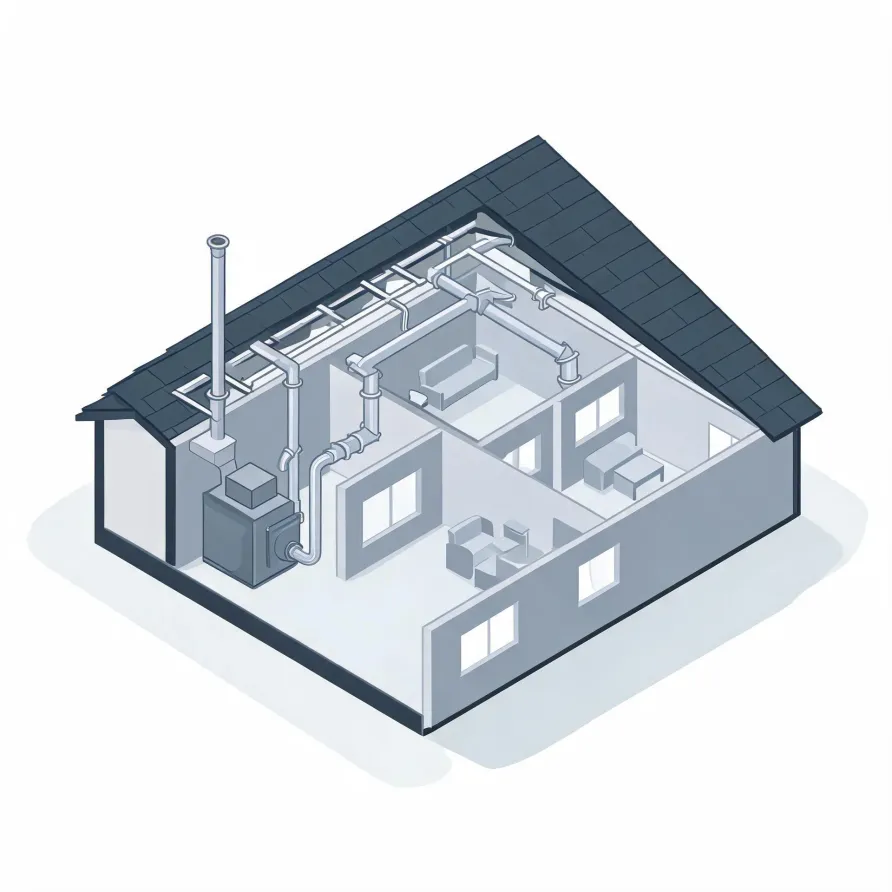
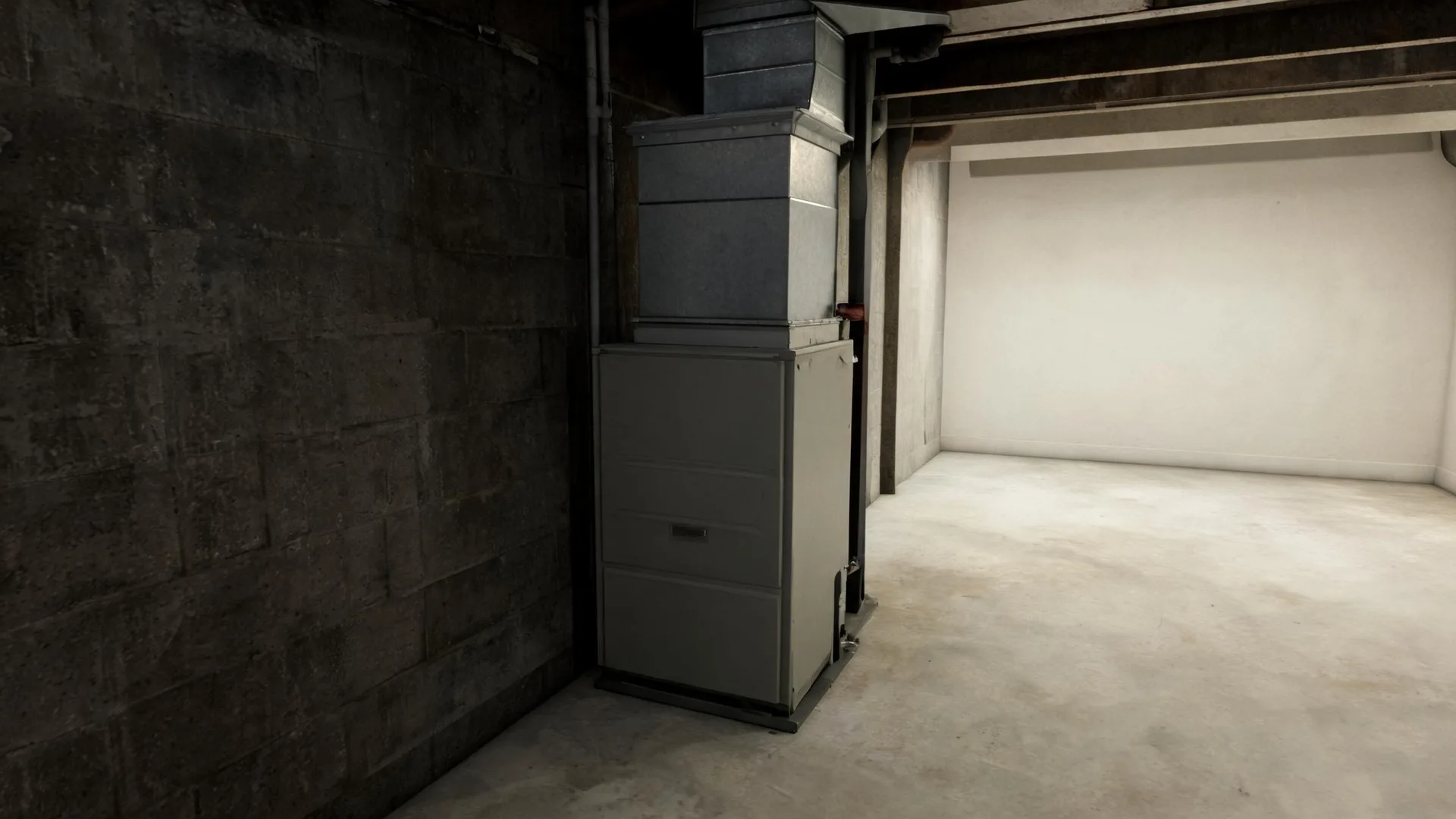
The furnace itself sits in the basement, utility room, or closet and is where heat is produced. Inside it, the heat exchanger is the part a contractor looks at closely when there is a heating problem or a safety concern. The burners, which fire inside the heat exchanger, are another early stop when the system is not producing heat or is cycling off before the house reaches temperature.
The blower motor sits within the furnace cabinet and pushes conditioned air out through the supply side of the duct system. The flue or exhaust vent runs from the furnace to the outside and carries combustion gases out of the house. The thermostat, mounted on a wall in the living space, is where a contractor often starts because it controls when the system runs at all.
The drawing shows a general layout of these components, and a licensed contractor determines which parts apply and what attention each needs in your specific home.
Get matched in Calhoun CountyCalhoun County, Iowa, by the record
104 severe weather events were recorded in Calhoun County, Iowa between 2015 and 2024.
NOAA National Centers for Environmental Information, Storm Events Database, bulk CSV export, events 2015-01-01 through 2024-12-31.Half the homes in Calhoun County, Iowa were built in 1958 or earlier (2020-2024 ACS 5-year).
U.S. Census Bureau, 2020-2024 American Community Survey 5-Year EstimatesCalhoun County, Iowa holds 4,798 housing units (2020-2024 ACS 5-year).
U.S. Census Bureau, 2020-2024 American Community Survey 5-Year EstimatesOwners occupy 80.5% of the occupied homes in Calhoun County, Iowa (2020-2024 ACS 5-year).
U.S. Census Bureau, 2020-2024 American Community Survey 5-Year EstimatesCodes & Standards for Furnace Repair in Calhoun County, Iowa5 sourced rules & standards
What the repair visit looks like
Non-weatherized gas furnaces manufactured on or after November 19, 2015 must reach 80.0 percent AFUE.
Non-weatherized oil-fired furnaces manufactured on or after November 19, 2015 must reach 83.0 percent AFUE.
Mobile home gas furnaces manufactured on or after November 19, 2015 must reach 80.0 percent AFUE.
Non-weatherized gas furnaces manufactured on or after December 18, 2028 must reach 95.0 percent AFUE, up from the 80.0 percent minimum that applies to units manufactured before that date.
Licensing and Legal Requirements in Calhoun County, Iowa
Iowa requires a state licence to install or repair HVAC, refrigeration, mechanical or plumbing systems, and to operate as a contractor, with exceptions listed in section 105.11.
Severe Weather Events in Calhoun County
Extreme weather puts real hours on a furnace. How hard local conditions push heating equipment is a local question, and the record below reflects what the climate in this county actually delivers.
104 severe weather events, 2015–2024. Source: NOAA National Centers for Environmental Information, Storm Events Database.