Tell us about the job
Takes about a minute. No obligation.
A furnace repair call in Sac County starts with the basics: how old the unit is, whether filters and heat exchangers have been serviced, and how the system was installed. 78 severe weather events were recorded in Sac County, Iowa between 2015 and 2024. At that rate, severe weather shapes the area's character but does not explain most furnace failures on its own. A contractor will check the heat exchanger for cracks, test the igniter and flame sensor, and look at how the blower has been running. Those components wear out from age and neglect well before storm exposure becomes the deciding factor.
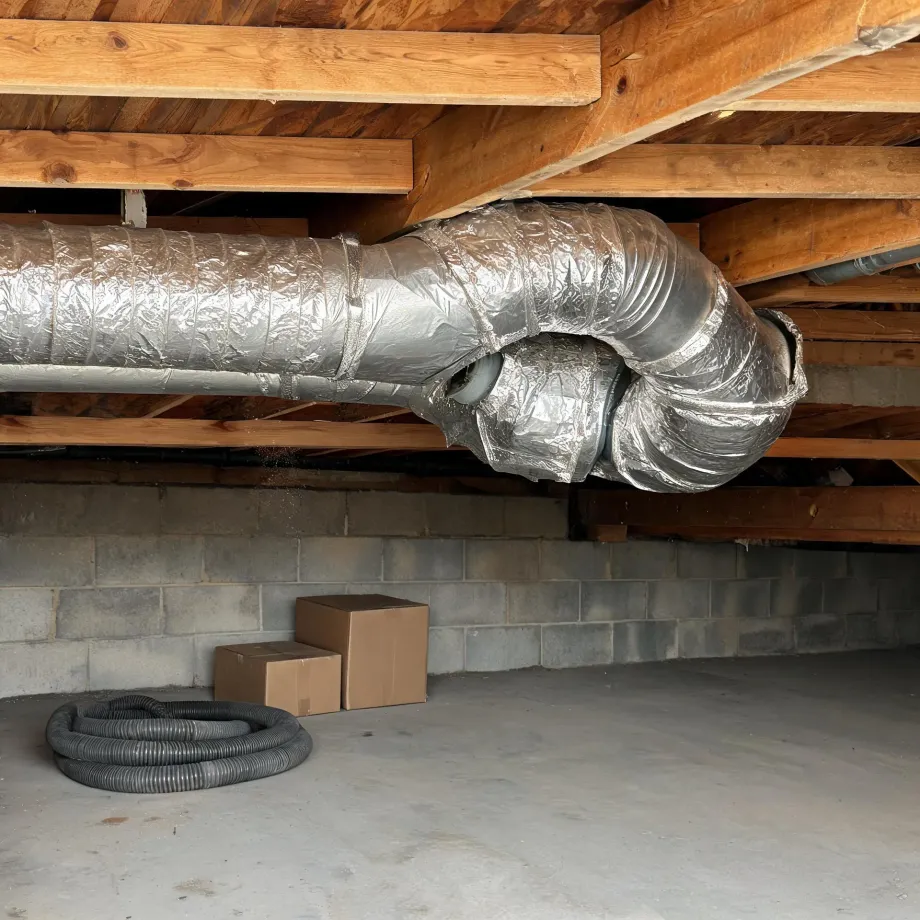
Ductwork and wiring in a house tell you what the original builder expected, not what the furnace now asks of them. Half the homes in Sac County, Iowa were built in 1957 or earlier (2020-2024 ACS 5-year). A system running in housing of this vintage has often been repaired or partially replaced more than once, which means the components inside may not match any single manufacturer's current parts catalog. When a contractor opens a furnace here, what decides the repair scope is whether the specific part the unit needs is still in production, or whether sourcing it means a longer wait and a different bill than the homeowner first expected.
The Parts of a Furnace a Contractor Checks First
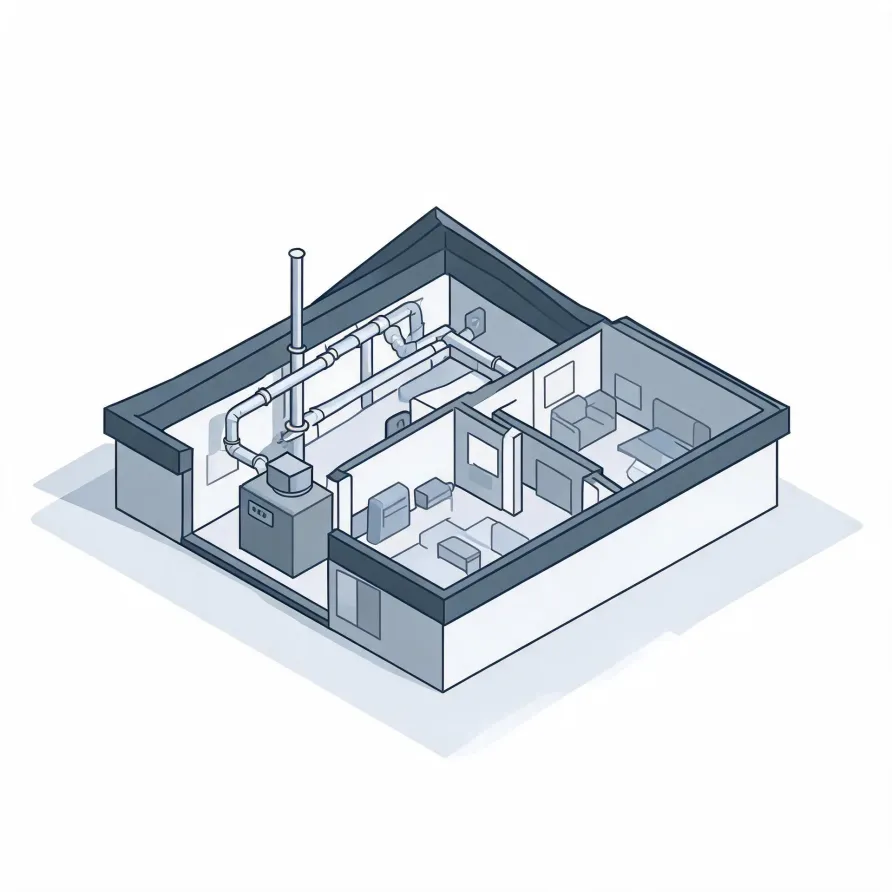
The furnace cabinet sits in a basement, utility room, or closet and is where most repair work is concentrated. Inside it, the heat exchanger is the piece a contractor looks at closely when something smells wrong or combustion seems off, and the burners are checked when the unit fails to light or holds a weak flame. The blower motor, also inside the cabinet, is a common source of airflow complaints.
The flue pipe runs from the furnace cabinet up and out of the house, carrying exhaust away, and cracks or blockages there show up as safety or performance problems. The thermostat on a main living-area wall is the first stop when the system runs poorly or not at all, since a wiring fault or failed sensor there can mimic a much larger problem.
The drawing shows a typical furnace layout, and a licensed contractor determines which components apply to your specific house and situation.
Get matched in Sac CountySac County, Iowa, by the numbers
78 severe weather events were recorded in Sac County, Iowa between 2015 and 2024.
NOAA National Centers for Environmental Information, Storm Events Database, bulk CSV export, events 2015-01-01 through 2024-12-31.Half the homes in Sac County, Iowa were built in 1957 or earlier (2020-2024 ACS 5-year).
U.S. Census Bureau, 2020-2024 American Community Survey 5-Year EstimatesSac County, Iowa holds 5,118 housing units (2020-2024 ACS 5-year).
U.S. Census Bureau, 2020-2024 American Community Survey 5-Year EstimatesOwners occupy 78.0% of the occupied homes in Sac County, Iowa (2020-2024 ACS 5-year).
U.S. Census Bureau, 2020-2024 American Community Survey 5-Year EstimatesCodes & Standards Covering Furnace Repair in Sac County, Iowa5 sourced rules & standards
What HVAC Repair Looks Like in Sac County
Non-weatherized gas furnaces manufactured on or after November 19, 2015 must reach 80.0 percent AFUE.
Non-weatherized oil-fired furnaces manufactured on or after November 19, 2015 must reach 83.0 percent AFUE.
Mobile home gas furnaces manufactured on or after November 19, 2015 must reach 80.0 percent AFUE.
Non-weatherized gas furnaces manufactured on or after December 18, 2028 must reach 95.0 percent AFUE, up from the 80.0 percent minimum that applies to units manufactured before that date.
Licensing and Legal Requirements in Sac County, Iowa
Iowa requires a state licence to install or repair HVAC, refrigeration, mechanical or plumbing systems, and to operate as a contractor, with exceptions listed in section 105.11.
Severe Weather Events in Sac County
Weather in Sac County puts real demands on heating equipment: hard conditions cycle a furnace harder and push wear faster than moderate climates do. How often those conditions arrive here shapes what repair work looks like and how soon it tends to come due.
78 severe weather events, 2015–2024. Source: NOAA National Centers for Environmental Information, Storm Events Database.