Tell us about the job
Takes about a minute. No obligation.
A furnace in O'Brien County has not been sitting out mild seasons. 121 severe weather events were recorded in O'Brien County, Iowa between 2015 and 2024. At that rate, severe weather is part of the normal operating life of equipment here, not an occasional exception to it. A contractor working a furnace repair will check the components that carry the hardest load under those conditions: heat exchangers, ignitors, and blower motors all wear differently when a system is cycled hard and often. The cause of a failure may still be age or a poor original install, but the weather record here is a real variable, and a contractor factors it in before naming a part.
Ductwork that was sized and routed for a different system, then adapted when a furnace was swapped in, is where a furnace repair in O'Brien County often gets complicated. Half the homes in O'Brien County, Iowa were built in 1959 or earlier (2020-2024 ACS 5-year). A furnace installed into that older shell inherits whatever compromises the previous retrofit left behind: crimped runs, mismatched joints, or a heat exchanger sitting in a space that was never quite the right shape for it. When a contractor opens the unit, what slows the job is often something upstream of the furnace itself.
The Parts of a Furnace a Contractor Checks First
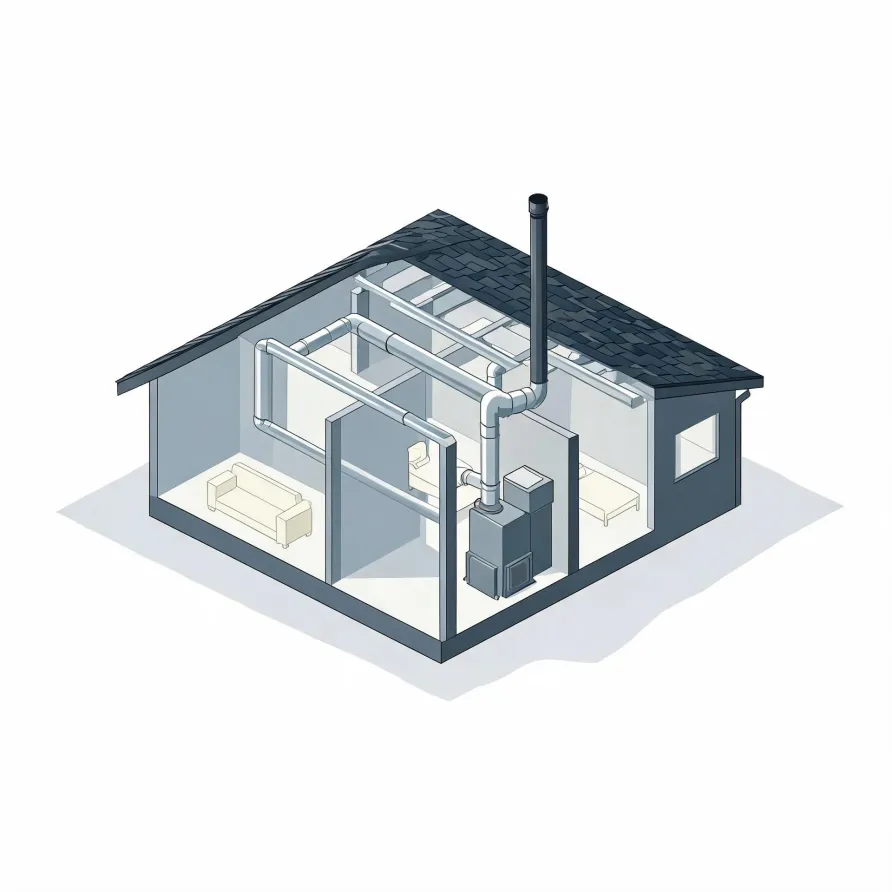
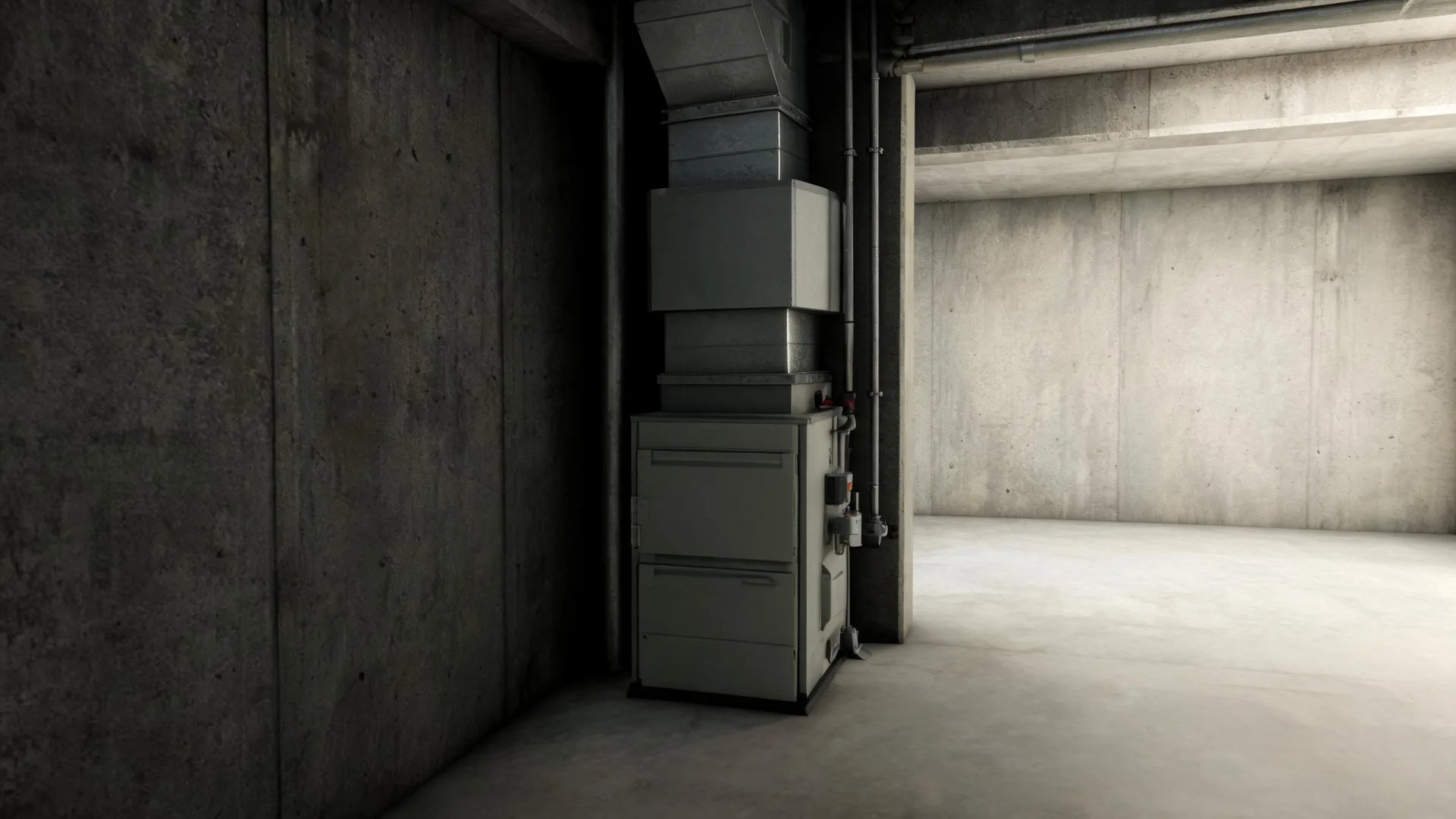
The furnace itself sits in a utility space, basement, or closet and is the piece a contractor goes to first. Inside it, the heat exchanger and burner assembly are the most common sources of trouble. A cracked heat exchanger, a failed igniter, or a dirty burner can each stop a furnace cold or cause it to run poorly.
The blower motor and its fan wheel move conditioned air out through the supply side of the system. The flue or exhaust vent carries combustion gases out of the house, and a blocked or corroded vent is a repair a contractor checks early. The thermostat and its wiring tie the whole system together, and a fault there can look like a furnace problem when the furnace itself is fine.
The drawing shows a general layout of these components, and a licensed contractor determines what applies to your specific system and setup.
Get matched in O'Brien CountyO'Brien County, Iowa, by the numbers
121 severe weather events were recorded in O'Brien County, Iowa between 2015 and 2024.
NOAA National Centers for Environmental Information, Storm Events Database, bulk CSV export, events 2015-01-01 through 2024-12-31.Half the homes in O'Brien County, Iowa were built in 1959 or earlier (2020-2024 ACS 5-year).
U.S. Census Bureau, 2020-2024 American Community Survey 5-Year EstimatesO'Brien County, Iowa holds 6,564 housing units (2020-2024 ACS 5-year).
U.S. Census Bureau, 2020-2024 American Community Survey 5-Year EstimatesOwners occupy 76.1% of the occupied homes in O'Brien County, Iowa (2020-2024 ACS 5-year).
U.S. Census Bureau, 2020-2024 American Community Survey 5-Year EstimatesFurnace Repair Rules & Codes for O'Brien County, Iowa5 sourced standards and regulations
What HVAC Repair Looks Like in O'Brien County
Non-weatherized gas furnaces manufactured on or after November 19, 2015 must reach 80.0 percent AFUE.
Non-weatherized oil-fired furnaces manufactured on or after November 19, 2015 must reach 83.0 percent AFUE.
Mobile home gas furnaces manufactured on or after November 19, 2015 must reach 80.0 percent AFUE.
Non-weatherized gas furnaces manufactured on or after December 18, 2028 must reach 95.0 percent AFUE, up from the 80.0 percent minimum that applies to units manufactured before that date.
Licensing and Legal Requirements in O'Brien County, Iowa
Iowa requires a state licence to install or repair HVAC, refrigeration, mechanical or plumbing systems, and to operate as a contractor, with exceptions listed in section 105.11.
Severe Weather Events in O'Brien County
Hard weather puts real hours on heating equipment. Furnaces that cycle through pressure drops, power fluctuations, and temperature swings wear differently than those that don't, and what that means for repair work depends on what the local record actually looks like.
121 severe weather events, 2015–2024. Source: NOAA National Centers for Environmental Information, Storm Events Database.