Tell us about the job
Takes about a minute. No obligation.
A furnace repair in this county starts with what the system has already been through. 77 severe weather events were recorded in Tama County, Iowa between 2015 and 2024. At that rate, severe weather is a steady background condition for equipment here, present enough to add real wear over the years but not so relentless that it overrides everything else a contractor checks. Age, filter habits, and whether the original install was sized right for the house all stay on the table. A contractor working a repair here weighs weather load against those factors before deciding which part failed and why.
Stock built before the postwar era was adapted for heating equipment that arrived later, and what a contractor finds inside an opened furnace here is shaped by that history. Half the homes in Tama County, Iowa were built in 1957 or earlier (2020-2024 ACS 5-year). A system installed into a house that old may have been replaced once or twice since, but the furnace a contractor opens today still reflects the era it was installed in, and that era determines what replacement parts exist and which have to be sourced specially. When a heat exchanger or a control board turns out to be discontinued, the repair scope changes and so does the bill.
The Parts of a Furnace a Contractor Checks First
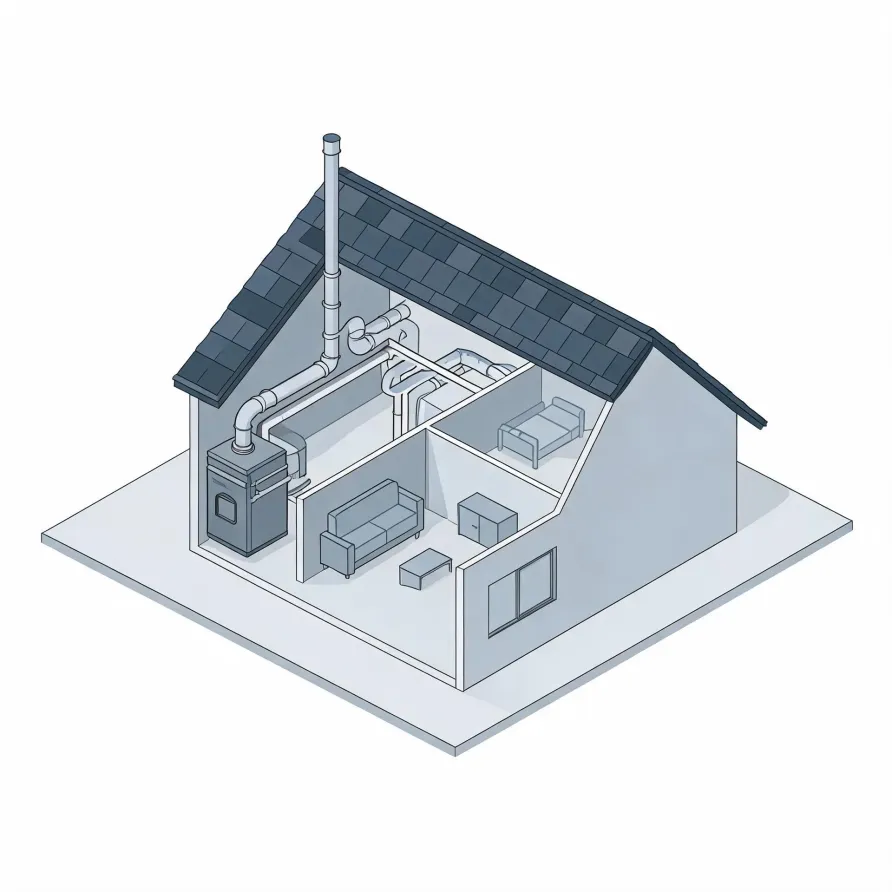
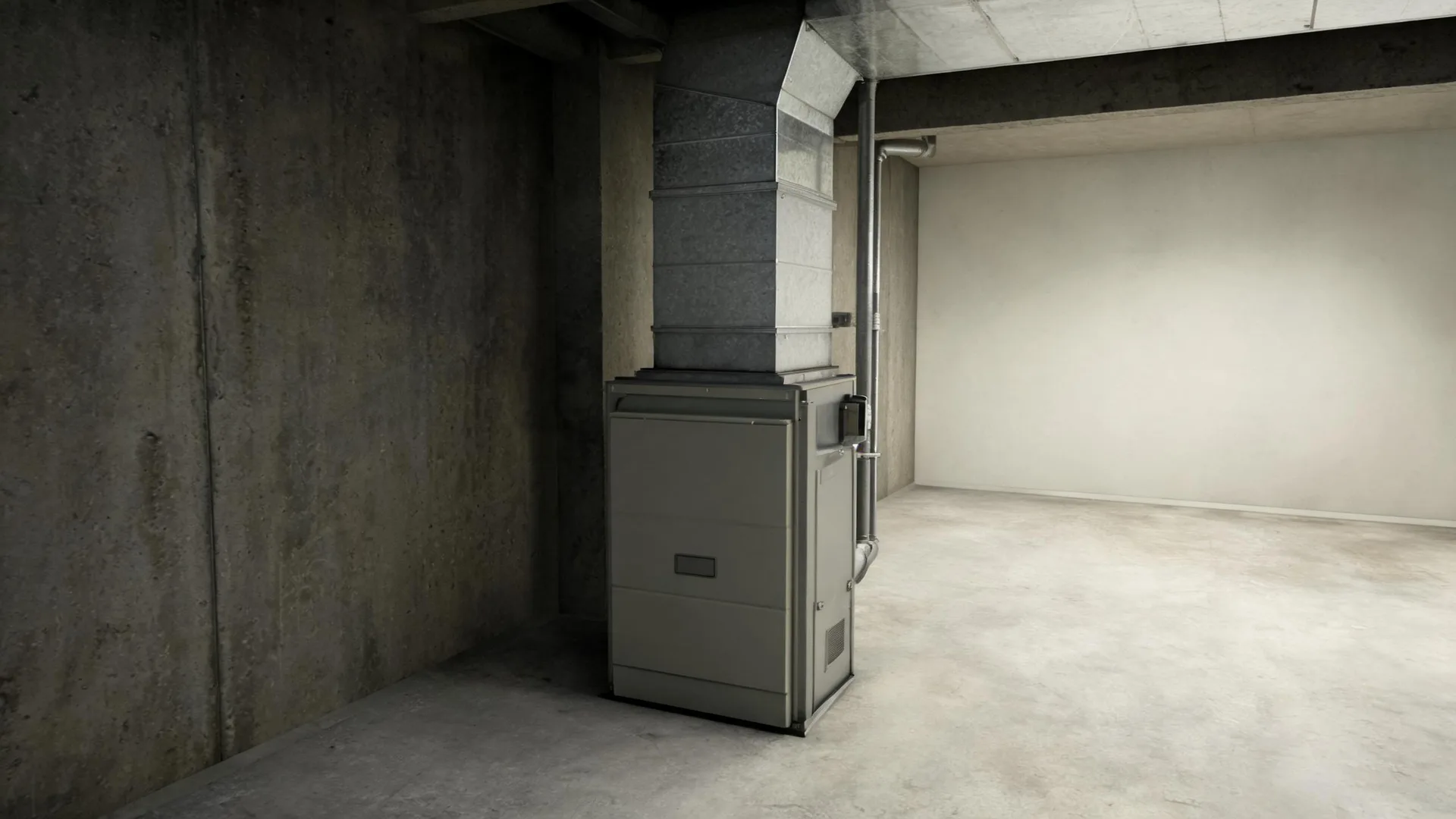
The furnace itself sits in the basement, utility room, or closet and is the piece a contractor goes to first. Inside it, the heat exchanger is where combustion heat transfers to the air your home breathes, and a crack there is one of the more serious findings a repair visit turns up. The burners, igniter, and flame sensor work together to start and sustain that combustion, and any one of them can be the reason the system fails to fire.
The blower motor and its fan sit inside the furnace cabinet and push conditioned air into the duct system. The flue or vent pipe runs from the cabinet to an exterior wall or up through the roof, carrying combustion gases out of the house. A contractor also checks the control board, which governs the sequence the system runs through each time it calls for heat.
The drawing shows the general layout of a furnace system, and a licensed contractor determines what applies to the specific equipment and setup in your home.
Get matched in Tama CountyTama County, Iowa, by the numbers
77 severe weather events were recorded in Tama County, Iowa between 2015 and 2024.
NOAA National Centers for Environmental Information, Storm Events Database, bulk CSV export, events 2015-01-01 through 2024-12-31.Half the homes in Tama County, Iowa were built in 1957 or earlier (2020-2024 ACS 5-year).
U.S. Census Bureau, 2020-2024 American Community Survey 5-Year EstimatesTama County, Iowa holds 7,595 housing units (2020-2024 ACS 5-year).
U.S. Census Bureau, 2020-2024 American Community Survey 5-Year EstimatesOwners occupy 76.0% of the occupied homes in Tama County, Iowa (2020-2024 ACS 5-year).
U.S. Census Bureau, 2020-2024 American Community Survey 5-Year EstimatesFurnace Repair Rules on the Books for Tama County, Iowa5 codes & standards
What the repair visit looks like
Non-weatherized gas furnaces manufactured on or after November 19, 2015 must reach 80.0 percent AFUE.
Non-weatherized oil-fired furnaces manufactured on or after November 19, 2015 must reach 83.0 percent AFUE.
Mobile home gas furnaces manufactured on or after November 19, 2015 must reach 80.0 percent AFUE.
Non-weatherized gas furnaces manufactured on or after December 18, 2028 must reach 95.0 percent AFUE, up from the 80.0 percent minimum that applies to units manufactured before that date.
Licensing and Legal Requirements in Tama County, Iowa
Iowa requires a state licence to install or repair HVAC, refrigeration, mechanical or plumbing systems, and to operate as a contractor, with exceptions listed in section 105.11.
Severe Weather Events in Tama County
Weather in Tama County puts real stress on heating equipment. Hard winters and volatile conditions push furnaces into long runs and sharp cycles, which is where wear accumulates and repairs become necessary.
77 severe weather events, 2015–2024. Source: NOAA National Centers for Environmental Information, Storm Events Database.