Tell us about the job
Takes about a minute. No obligation.
A furnace that stops working in Poweshiek County has probably not been worn down by weather. 70 severe weather events were recorded in Poweshiek County, Iowa between 2015 and 2024. At that rate, severe weather is an event here, not a standing condition, and a contractor diagnosing a repair is not sorting through years of storm-driven stress on the heat exchanger or the blower motor. Age and maintenance history are the first things to establish. A system that has not been serviced regularly, or one that has simply run past its useful years, will show the contractor exactly what failed and why.
Furnaces in stock this old are rarely the original units, which means a repair traces back through at least one prior replacement. Half the homes in Poweshiek County, Iowa were built in 1971 or earlier (2020-2024 ACS 5-year). Each cycle brings its own parts generation, and a contractor opening a furnace here has to identify exactly what that system takes before any sourcing can begin. A heat exchanger or control board from one era does not cross to another, and whether a given part is still manufactured decides how the job resolves as much as the diagnosis does.
The Parts of a Furnace a Contractor Checks First
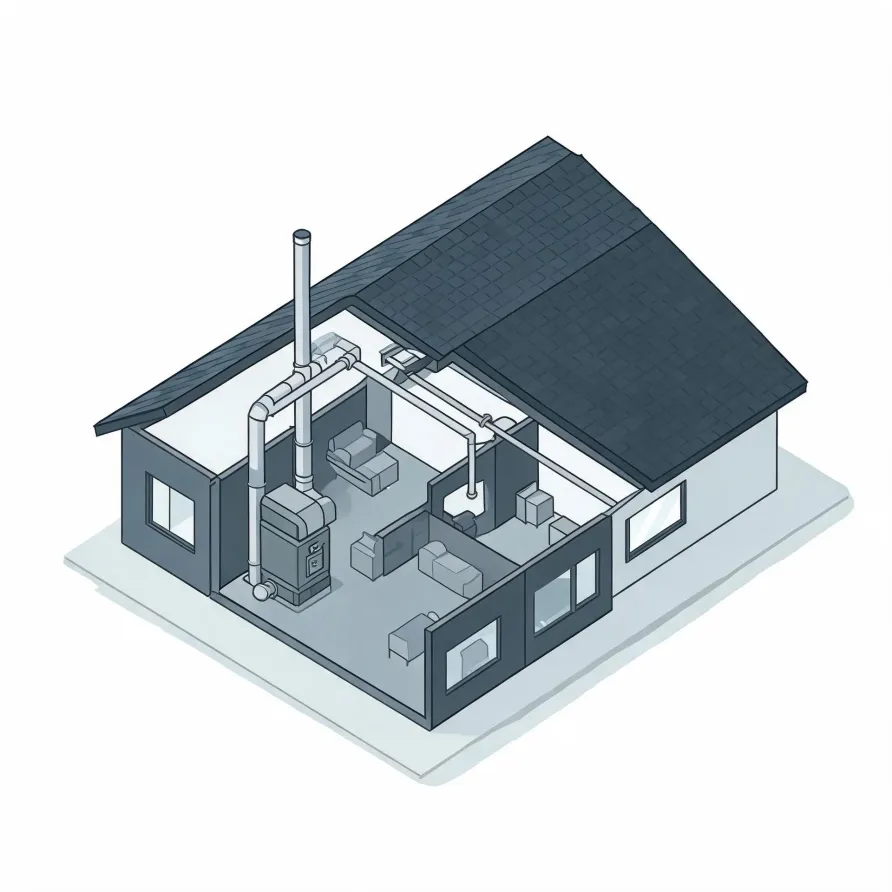
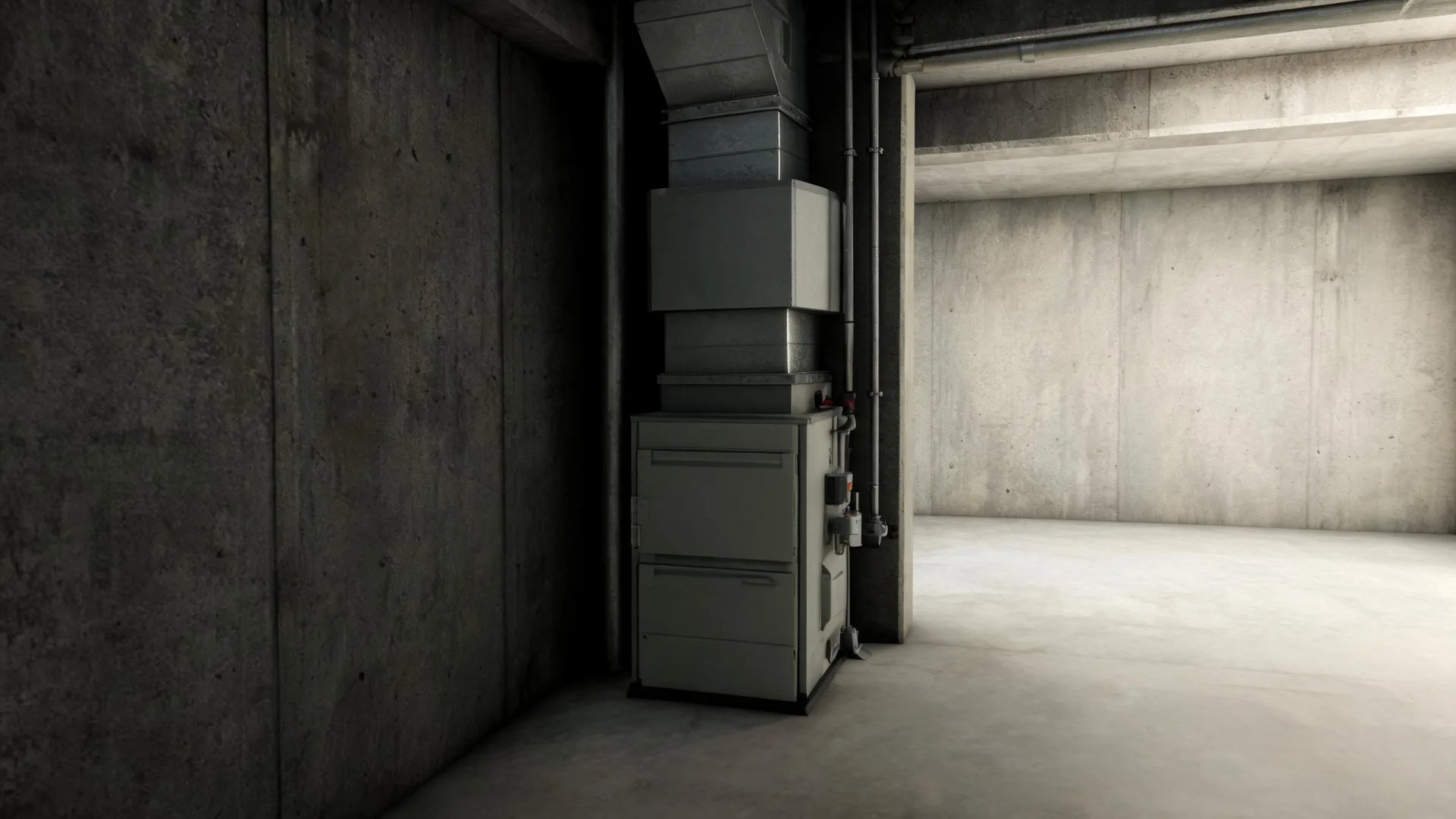
The furnace itself sits in a utility space, basement, or closet and is the core of the system. Inside it, the heat exchanger is what a contractor reaches for early when something is wrong. A cracked or corroded heat exchanger stops the furnace from doing its job and can push combustion gases into the living space. The burners, which ignite the fuel and produce heat, are another early stop. When a furnace short-cycles, runs cold, or refuses to start, the burners and heat exchanger are where the diagnosis usually begins.
The blower motor sits inside the furnace cabinet and pushes conditioned air through the house. A failed or struggling motor shows up as weak airflow or a unit that runs but never moves air. The flue and venting pipe carries exhaust out of the home and is checked for blockages or separation. Nearby, the thermostat and the ignition system, whether a pilot or electronic igniter, are small components that cause a large share of no-heat calls.
The drawing shows a general layout of these components, and a licensed contractor determines what applies to the specific equipment and configuration in your home.
Get matched in Poweshiek CountyPoweshiek County, by the record
70 severe weather events were recorded in Poweshiek County, Iowa between 2015 and 2024.
NOAA National Centers for Environmental Information, Storm Events Database, bulk CSV export, events 2015-01-01 through 2024-12-31.Half the homes in Poweshiek County, Iowa were built in 1971 or earlier (2020-2024 ACS 5-year).
U.S. Census Bureau, 2020-2024 American Community Survey 5-Year EstimatesPoweshiek County, Iowa holds 8,975 housing units (2020-2024 ACS 5-year).
U.S. Census Bureau, 2020-2024 American Community Survey 5-Year EstimatesOwners occupy 71.2% of the occupied homes in Poweshiek County, Iowa (2020-2024 ACS 5-year).
U.S. Census Bureau, 2020-2024 American Community Survey 5-Year EstimatesFurnace Repair Rules & Codes for Poweshiek County, Iowa5 sourced rules and standards
What the repair visit actually looks like
Non-weatherized gas furnaces manufactured on or after November 19, 2015 must reach 80.0 percent AFUE.
Non-weatherized oil-fired furnaces manufactured on or after November 19, 2015 must reach 83.0 percent AFUE.
Mobile home gas furnaces manufactured on or after November 19, 2015 must reach 80.0 percent AFUE.
Non-weatherized gas furnaces manufactured on or after December 18, 2028 must reach 95.0 percent AFUE, up from the 80.0 percent minimum that applies to units manufactured before that date.
Licensing and Legal Requirements in Poweshiek County, Iowa
Iowa requires a state licence to install or repair HVAC, refrigeration, mechanical or plumbing systems, and to operate as a contractor, with exceptions listed in section 105.11.
Severe Weather Events in Poweshiek County
Extreme weather puts real strain on furnace components, from pressure switches and heat exchangers to ignitors and blower motors. How hard that equipment works over time is a local fact, and the record of weather events in this county is part of that picture.
70 severe weather events, 2015–2024. Source: NOAA National Centers for Environmental Information, Storm Events Database.