Tell us about the job
Takes about a minute. No obligation.
A contractor quoting furnace work in Keokuk County has to settle one question before anything else: what has actually been driving the wear on this system. 92 severe weather events were recorded in Keokuk County, Iowa between 2015 and 2024. At roughly the national midpoint, that record puts severe weather in the occasional category for equipment here. A furnace that has degraded is far more likely carrying the cost of undersized equipment, a rushed original install, or years of deferred maintenance. The contractor checks those first, because the weather record here does not make a strong case on its own.
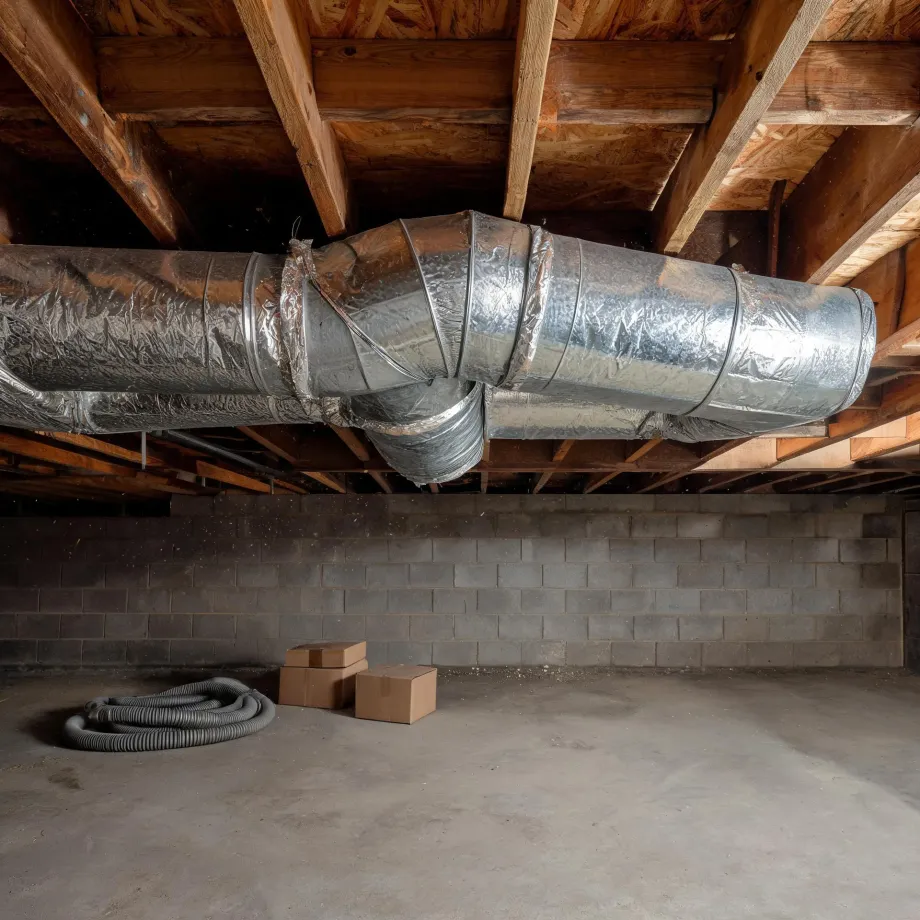
Ductwork laid out for mid-century heating equipment was not designed around the static pressure and airflow that a modern furnace expects. Half the homes in Keokuk County, Iowa were built in 1950 or earlier (2020-2024 ACS 5-year). That gap between what the ducts were built for and what a new unit will push through them is where a furnace installation in this county gets complicated or stays straightforward. A contractor who opens the existing trunk lines before quoting is working out whether they carry the new system or need to be rerouted, which is the question the equipment selection alone cannot answer.
What Gets Installed With a New Furnace
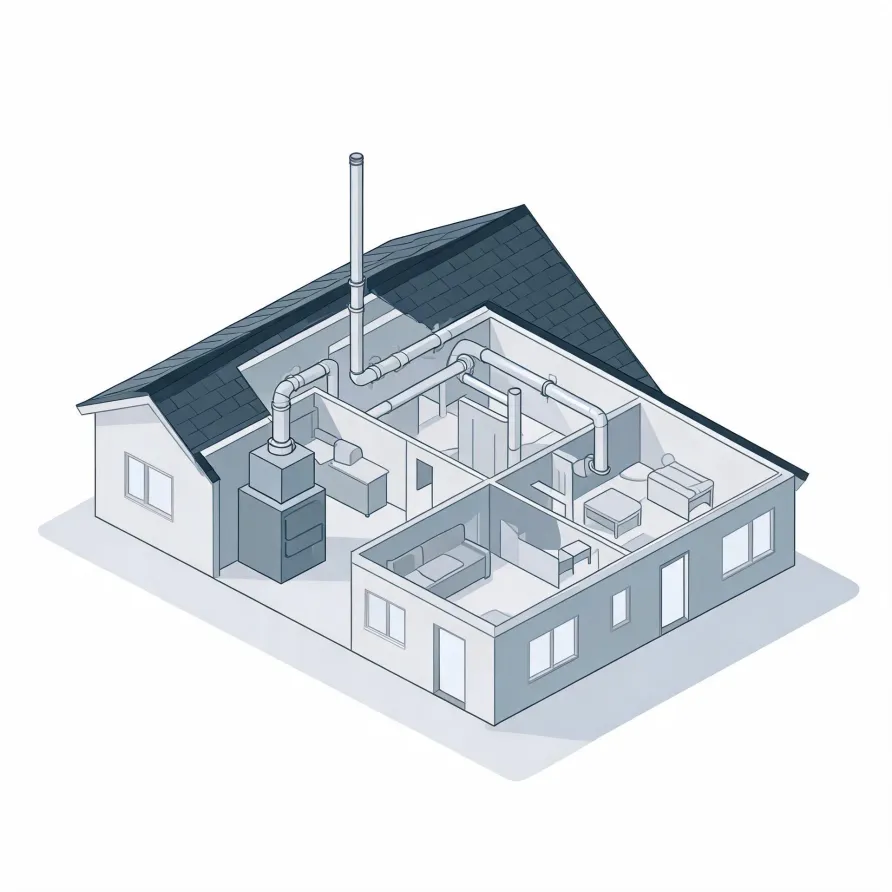
The furnace itself sits in a utility room, basement, or closet and is the central unit a homeowner is buying. Attached to it is the air handler, which moves conditioned air through the home. Together they form the core of what a contractor installs.
A thermostat mounts on an interior wall and gives the homeowner control over the system. The flue pipe runs from the furnace to an exterior wall or roofline, carrying combustion gases out of the house. A contractor also connects the system to existing ductwork at the supply and return openings of the furnace cabinet.
The drawing shows a general layout of these components, and a licensed contractor determines exactly what applies to this house.
Get matched in Keokuk CountyKeokuk County, by the numbers
92 severe weather events were recorded in Keokuk County, Iowa between 2015 and 2024.
NOAA National Centers for Environmental Information, Storm Events Database, bulk CSV export, events 2015-01-01 through 2024-12-31.Half the homes in Keokuk County, Iowa were built in 1950 or earlier (2020-2024 ACS 5-year).
U.S. Census Bureau, 2020-2024 American Community Survey 5-Year EstimatesKeokuk County, Iowa holds 4,647 housing units (2020-2024 ACS 5-year).
U.S. Census Bureau, 2020-2024 American Community Survey 5-Year EstimatesOwners occupy 81.3% of the occupied homes in Keokuk County, Iowa (2020-2024 ACS 5-year).
U.S. Census Bureau, 2020-2024 American Community Survey 5-Year EstimatesFurnace Installation Rules for Keokuk County, Iowa5 codes and standards
What the installation actually looks like
Non-weatherized gas furnaces manufactured on or after November 19, 2015 must reach 80.0 percent AFUE.
Non-weatherized oil-fired furnaces manufactured on or after November 19, 2015 must reach 83.0 percent AFUE.
Mobile home gas furnaces manufactured on or after November 19, 2015 must reach 80.0 percent AFUE.
Non-weatherized gas furnaces manufactured on or after December 18, 2028 must reach 95.0 percent AFUE, up from the 80.0 percent minimum that applies to units manufactured before that date.
What Keokuk County, Iowa Requires for HVAC Installation
Iowa requires a state licence to install or repair HVAC, refrigeration, mechanical or plumbing systems, and to operate as a contractor, with exceptions listed in section 105.11.
Severe Weather Events in Keokuk County
Weather in this part of Iowa puts real demands on heating equipment, from hard winters to volatile shoulder seasons that cycle systems on and off. How much strain a furnace carries over its life is a local question, and the answer starts with what the climate here actually does.
92 severe weather events, 2015–2024. Source: NOAA National Centers for Environmental Information, Storm Events Database.