Tell us about the job
Takes about a minute. No obligation.
A furnace breakdown in Keokuk County deserves a straight look at the system itself before weather gets the blame. 92 severe weather events were recorded in Keokuk County, Iowa between 2015 and 2024. At that rate, severe weather is part of the operating background here, but it is not relentless enough to be the first thing a contractor rules out when a heat exchanger cracks or a blower motor quits. Age and service history are what the contractor checks first, because those are what typically separate a fixable repair from a full replacement in a county where the weather applies steady but not punishing pressure on equipment.
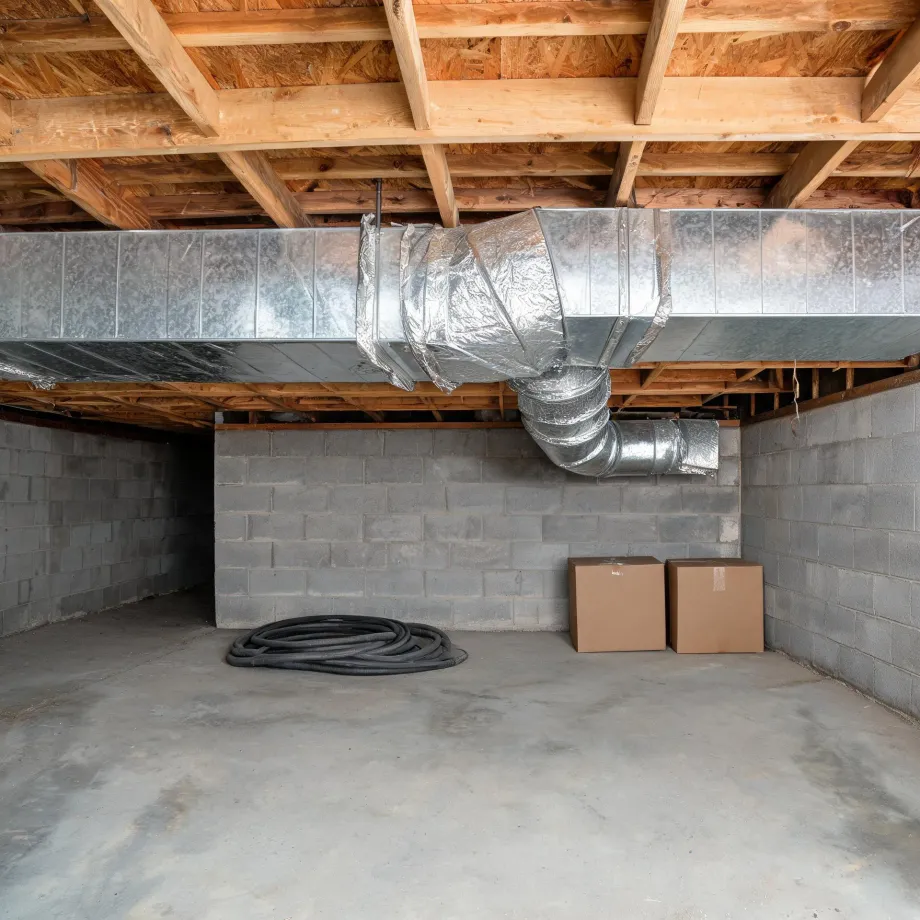
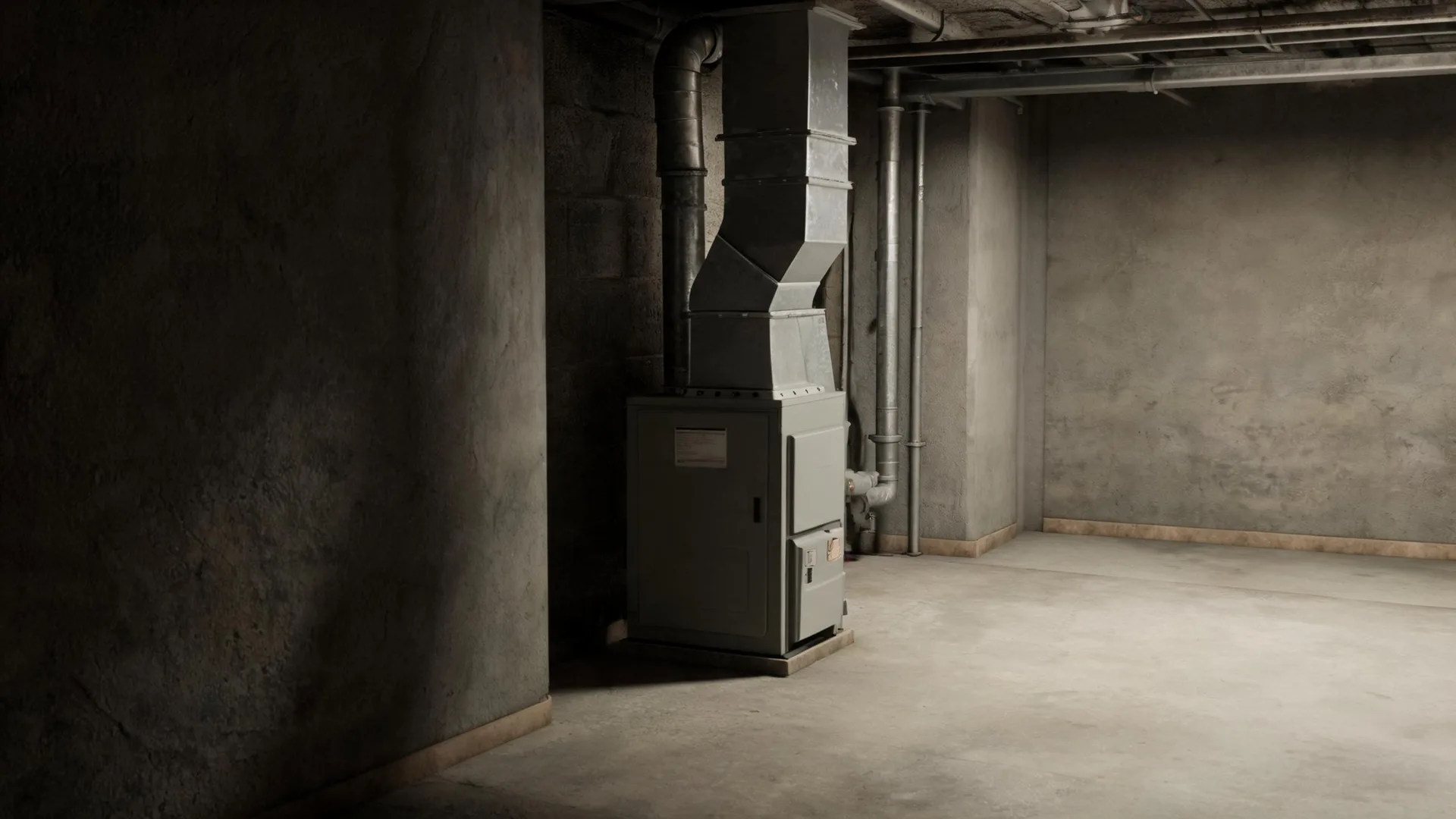
Prewar construction shapes what a furnace repair turns up once the cabinet is open. Half the homes in Keokuk County, Iowa were built in 1950 or earlier (2020-2024 ACS 5-year). A system running in a house that old has been swapped and re-swapped, and the furnace a contractor opens today is rarely the original one, but the venting it ties into and the clearances it sits within often are. Heat exchangers crack. Burner assemblies wear in ways that depend on how many seasons they have run and how well the flue has drawn. Parts for a unit installed in a house already old at the time are not always stocked locally, and that gap between what the opened furnace needs and what a supplier carries is what determines how the repair goes.
The Parts of a Furnace a Contractor Checks First
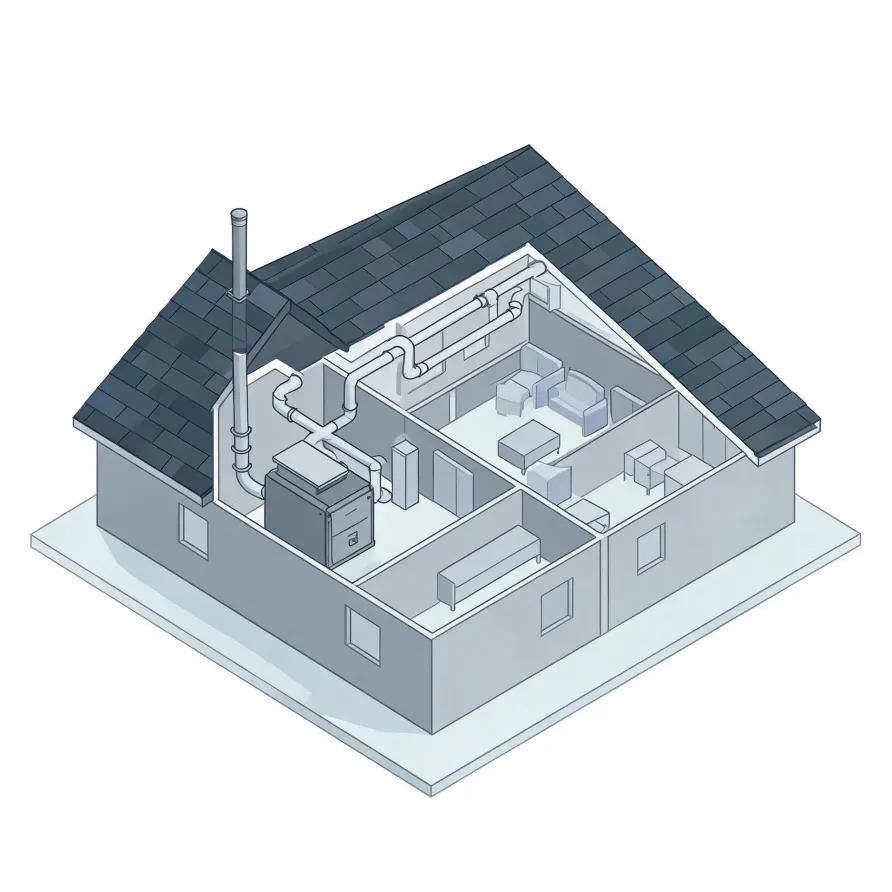
The furnace cabinet sits in the basement, utility room, or closet and is the first place a contractor looks when something goes wrong. Inside it, the heat exchanger, burners, and blower each have a distinct job, and a fault in any one of them produces its own set of symptoms. A cracked heat exchanger, a dirty burner, or a failing blower motor will each show up differently.
The flue pipe runs from the cabinet to an exterior vent and carries combustion gases out of the house. The thermostat on the wall and the limit switches inside the cabinet act as the system's controls, and either can cause the furnace to behave erratically or refuse to run at all.
The drawing shows a typical furnace layout, and a licensed contractor determines which components apply to the specific equipment and configuration in your home.
Get matched in Keokuk CountyKeokuk County, by the record
92 severe weather events were recorded in Keokuk County, Iowa between 2015 and 2024.
NOAA National Centers for Environmental Information, Storm Events Database, bulk CSV export, events 2015-01-01 through 2024-12-31.Half the homes in Keokuk County, Iowa were built in 1950 or earlier (2020-2024 ACS 5-year).
U.S. Census Bureau, 2020-2024 American Community Survey 5-Year EstimatesKeokuk County, Iowa holds 4,647 housing units (2020-2024 ACS 5-year).
U.S. Census Bureau, 2020-2024 American Community Survey 5-Year EstimatesOwners occupy 81.3% of the occupied homes in Keokuk County, Iowa (2020-2024 ACS 5-year).
U.S. Census Bureau, 2020-2024 American Community Survey 5-Year EstimatesCodes & Standards Covering Furnace Repair in Keokuk County, Iowa5 sourced rules and standards
What happens when the contractor arrives
Non-weatherized gas furnaces manufactured on or after November 19, 2015 must reach 80.0 percent AFUE.
Non-weatherized oil-fired furnaces manufactured on or after November 19, 2015 must reach 83.0 percent AFUE.
Mobile home gas furnaces manufactured on or after November 19, 2015 must reach 80.0 percent AFUE.
Non-weatherized gas furnaces manufactured on or after December 18, 2028 must reach 95.0 percent AFUE, up from the 80.0 percent minimum that applies to units manufactured before that date.
Licensing and Legal Requirements in Keokuk County, Iowa
Iowa requires a state licence to install or repair HVAC, refrigeration, mechanical or plumbing systems, and to operate as a contractor, with exceptions listed in section 105.11.
Severe Weather Events in Keokuk County
Keokuk County weather puts real stress on furnace components over time. That load is local, and so is the repair work it drives.
92 severe weather events, 2015–2024. Source: NOAA National Centers for Environmental Information, Storm Events Database.