Tell us about the job
Takes about a minute. No obligation.
A furnace repair in this county starts with the system's service history, not its exposure to severe weather. 88 severe weather events were recorded in Appanoose County, Iowa between 2015 and 2024. At roughly that rate, severe weather is an occasional event here, not a standing condition, and it does not account for most of what contractors find when they open a furnace in trouble. Cracked heat exchangers, failed igniters, and worn blower motors trace back to age and how the system was maintained. A contractor quoting a repair here prices those factors, not weather load.
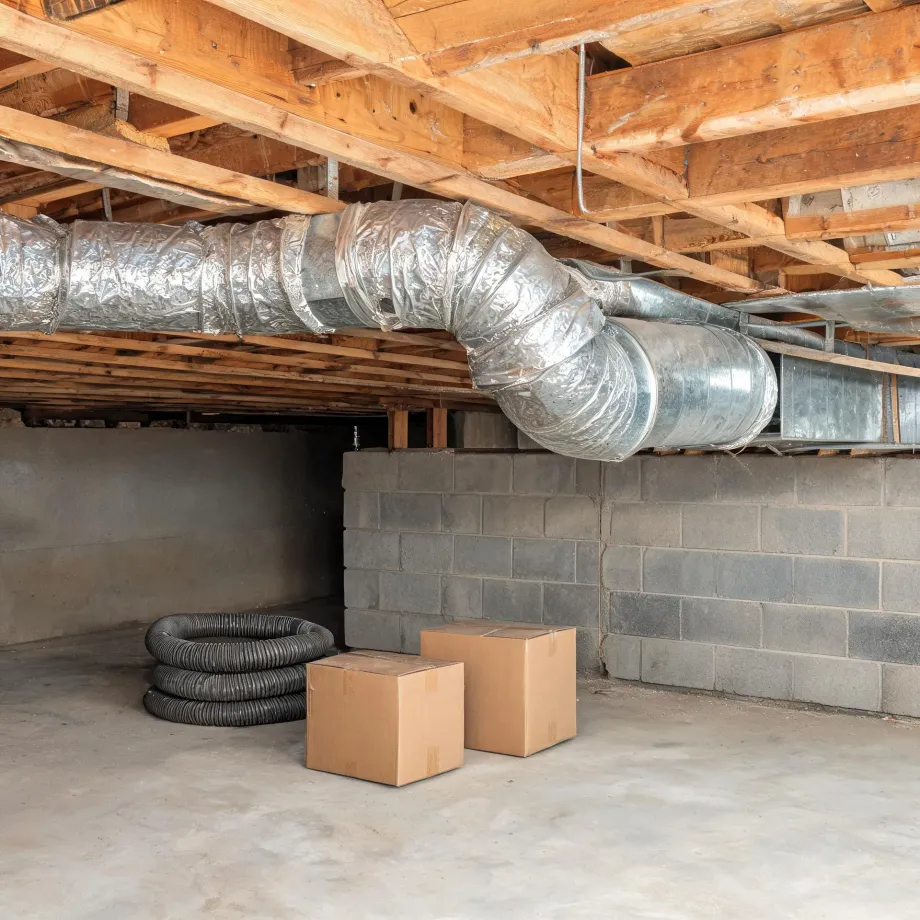
Ductwork in a house this old was designed around whatever system the original builder spec'd, and furnaces have been swapped in and out since. Half the homes in Appanoose County, Iowa were built in 1964 or earlier (2020-2024 ACS 5-year). That history shows up inside the unit when a contractor opens it: heat exchangers that have flexed through decades of heating seasons, limit switches worn past reliable operation, flue connections that have shifted. Parts for a furnace running in stock this age are sometimes still catalogued and sometimes require a sourcing call. What the opened system contains sets the scope of the repair, and the contractor's findings there decide what a replacement part costs and how long the job runs.
The Parts of a Furnace a Contractor Checks First
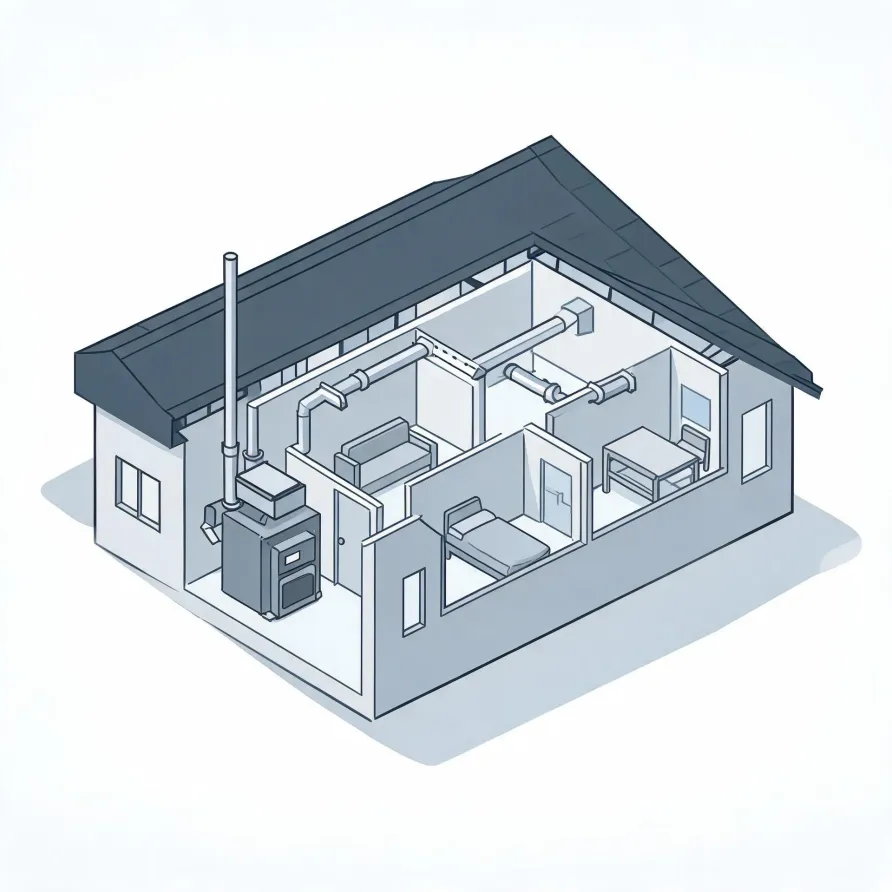
The furnace itself sits in a basement, utility room, or closet and is the piece a contractor goes to first. Inside it, the heat exchanger is the part most worth understanding: it separates combustion gases from the air your home breathes, and a crack there is one of the more serious findings a repair visit can turn up. The burners and the igniter sit just below it, and either one can be the reason a furnace fails to fire.
The blower motor pulls air across the heat exchanger and pushes it into the supply ducts. It runs every cycle, and worn bearings or a failed capacitor show up as weak airflow or a furnace that shuts off early. The flue pipe runs from the furnace to an exterior wall or roof and carries combustion exhaust out; a contractor checks it for blockages or separation at the joints.
The drawing shows a typical furnace layout, and a licensed contractor determines what applies to your specific system and installation.
Get matched in Appanoose CountyAppanoose County, by the numbers
88 severe weather events were recorded in Appanoose County, Iowa between 2015 and 2024.
NOAA National Centers for Environmental Information, Storm Events Database, bulk CSV export, events 2015-01-01 through 2024-12-31.Half the homes in Appanoose County, Iowa were built in 1964 or earlier (2020-2024 ACS 5-year).
U.S. Census Bureau, 2020-2024 American Community Survey 5-Year EstimatesAppanoose County, Iowa holds 6,312 housing units (2020-2024 ACS 5-year).
U.S. Census Bureau, 2020-2024 American Community Survey 5-Year EstimatesOwners occupy 68.8% of the occupied homes in Appanoose County, Iowa (2020-2024 ACS 5-year).
U.S. Census Bureau, 2020-2024 American Community Survey 5-Year EstimatesCodes & Standards for Furnace Repair in Appanoose County, Iowa5 sourced rules & standards
What the repair visit looks like
Non-weatherized gas furnaces manufactured on or after November 19, 2015 must reach 80.0 percent AFUE.
Non-weatherized oil-fired furnaces manufactured on or after November 19, 2015 must reach 83.0 percent AFUE.
Mobile home gas furnaces manufactured on or after November 19, 2015 must reach 80.0 percent AFUE.
Non-weatherized gas furnaces manufactured on or after December 18, 2028 must reach 95.0 percent AFUE, up from the 80.0 percent minimum that applies to units manufactured before that date.
Licensing and Legal Requirements in Appanoose County, Iowa
Iowa requires a state licence to install or repair HVAC, refrigeration, mechanical or plumbing systems, and to operate as a contractor, with exceptions listed in section 105.11.
Severe Weather Events in Appanoose County
Hard weather puts real hours on a furnace. Repairs in Appanoose County reflect what the local climate actually demands of the equipment.
88 severe weather events, 2015–2024. Source: NOAA National Centers for Environmental Information, Storm Events Database.