Tell us about the job
Takes about a minute. No obligation.
A furnace repair in Jasper County is not a simple process of ruling out the obvious and ordering a part. The weather here adds up. 128 severe weather events were recorded in Jasper County, Iowa between 2015 and 2024. A contractor who shows up to a failed furnace in this area checks heat exchangers, ignition assemblies, and pressure switches with that load in mind, because those are the components that wear differently under a system that has been working against real seasonal stress. Age still matters, and so does how the system was installed, but dismissing the weather record as background noise misses what it has actually been asking of the equipment.
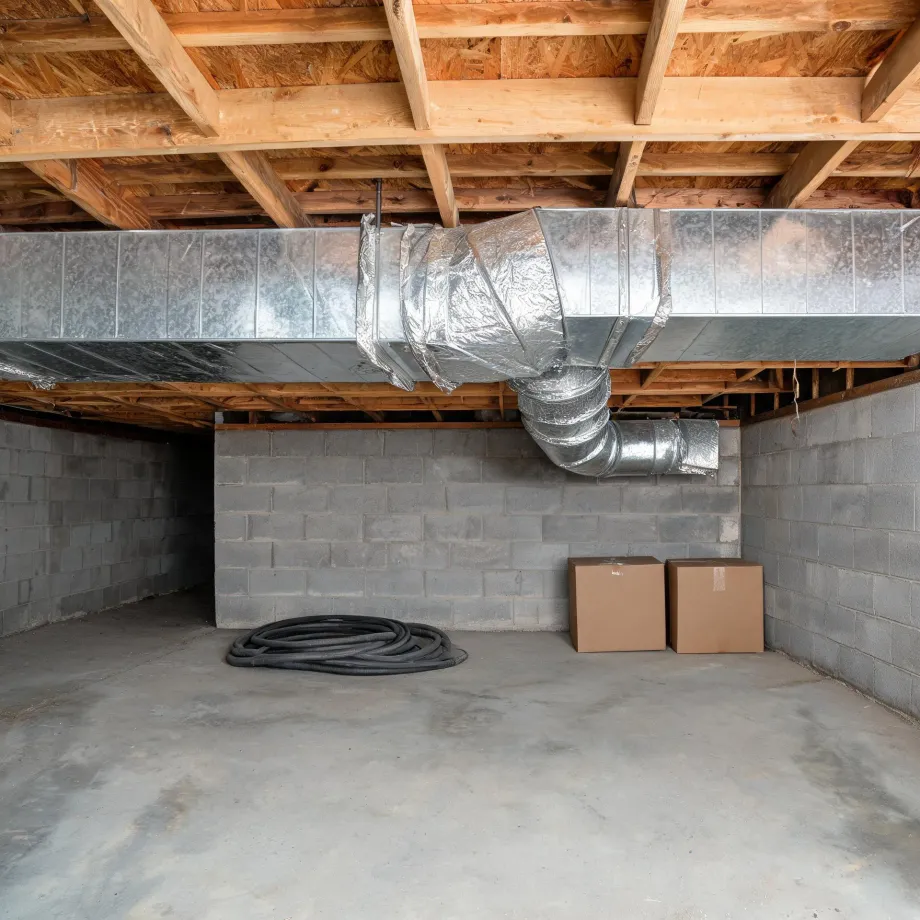
Ductwork and wiring in a house this old have been adapted more than once, and what a furnace repair turns up inside the cabinet often reflects that layered history. Half the homes in Jasper County, Iowa were built in 1965 or earlier (2020-2024 ACS 5-year). A contractor who opens a furnace here finds not just the failed component but the choices made by whoever worked on it before: a heat exchanger patched rather than replaced, a limit switch swapped for whatever was available at the time, parts sourced from a system that does not match the one it is sitting in. Whether a repair is a single part or a cascade depends on what those previous calls actually left behind.
The Parts of a Furnace a Contractor Checks First
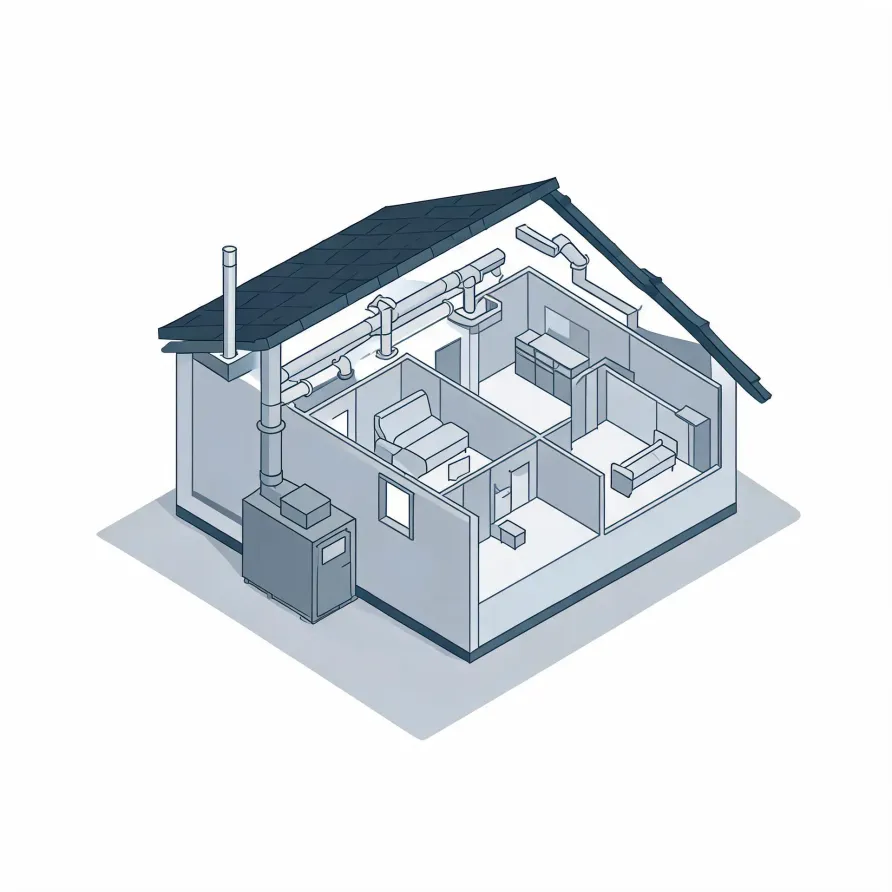
The furnace itself sits in the basement, utility room, or garage and is where heat is produced. Inside it, the heat exchanger is the piece a contractor looks at closely during a repair call: cracks or failures there affect both heat output and safety. The burners, which fire inside the heat exchanger, are another early stop when a furnace is underperforming or cycling off before the house reaches temperature.
The blower motor sits at the base of the furnace cabinet and pushes conditioned air into the supply ducts. The flue or exhaust vent runs from the cabinet up and out of the house, and problems there show up as ignition failures or shutdown faults. The thermostat on the wall is where a contractor often begins, since a wiring or calibration fault there can look like a furnace problem.
The drawing shows a typical furnace layout, and a licensed contractor determines which components apply to your specific system and what work each one needs.
Get matched in Jasper CountyJasper County, Iowa, by the numbers
128 severe weather events were recorded in Jasper County, Iowa between 2015 and 2024.
NOAA National Centers for Environmental Information, Storm Events Database, bulk CSV export, events 2015-01-01 through 2024-12-31.Half the homes in Jasper County, Iowa were built in 1965 or earlier (2020-2024 ACS 5-year).
U.S. Census Bureau, 2020-2024 American Community Survey 5-Year EstimatesJasper County, Iowa holds 16,249 housing units (2020-2024 ACS 5-year).
U.S. Census Bureau, 2020-2024 American Community Survey 5-Year EstimatesOwners occupy 72.3% of the occupied homes in Jasper County, Iowa (2020-2024 ACS 5-year).
U.S. Census Bureau, 2020-2024 American Community Survey 5-Year EstimatesCodes & Standards Covering Furnace Repair in Jasper County, Iowa5 sourced rules and standards
What the repair visit looks like
Non-weatherized gas furnaces manufactured on or after November 19, 2015 must reach 80.0 percent AFUE.
Non-weatherized oil-fired furnaces manufactured on or after November 19, 2015 must reach 83.0 percent AFUE.
Mobile home gas furnaces manufactured on or after November 19, 2015 must reach 80.0 percent AFUE.
Non-weatherized gas furnaces manufactured on or after December 18, 2028 must reach 95.0 percent AFUE, up from the 80.0 percent minimum that applies to units manufactured before that date.
Licensing and Legal Requirements in Jasper County, Iowa
Iowa requires a state licence to install or repair HVAC, refrigeration, mechanical or plumbing systems, and to operate as a contractor, with exceptions listed in section 105.11.
Severe Weather Events in Jasper County
Jasper County weather puts real load on heating equipment. Hard seasons push furnaces harder, and that wear shows up as repair calls.
128 severe weather events, 2015–2024. Source: NOAA National Centers for Environmental Information, Storm Events Database.