Tell us about the job
Takes about a minute. No obligation.
A furnace repair call in Mahaska County is usually a story about the system, not the sky. 70 severe weather events were recorded in Mahaska County, Iowa between 2015 and 2024. At that rate, severe weather is a real but occasional part of operating here, not a chronic load pressing on components every season. When a heat exchanger cracks or a blower motor fails, a contractor working in this area will look first at service history and installation quality, because those are what the evidence in this county actually points toward.
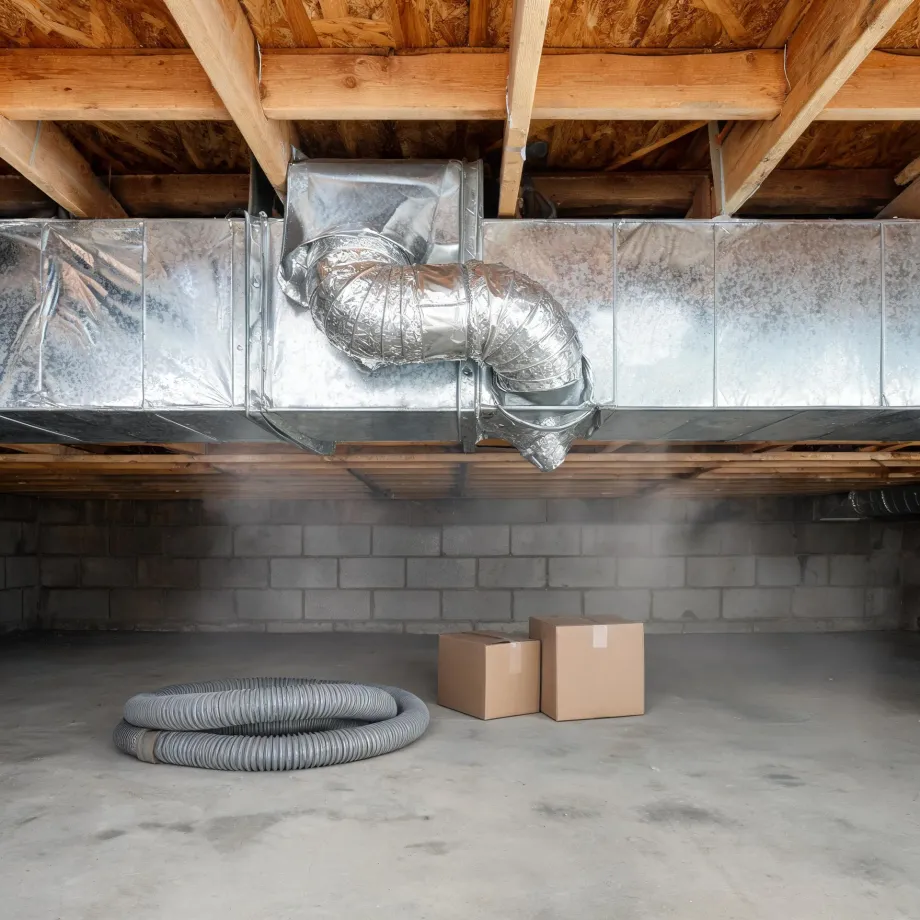
Half the homes in Mahaska County, Iowa were built in 1965 or earlier (2020-2024 ACS 5-year). A furnace in a house that age has likely been through more than one repair cycle already, and what a contractor finds once the heat exchanger or blower assembly is open shapes the whole job. The problem is rarely the diagnosis. It is whether the replacement part the system takes is still in production, or whether what is available now fits the original configuration without a secondary fix. Sourcing is where furnace repairs in older stock get complicated and where the bill moves.
The Parts of a Furnace a Contractor Checks First
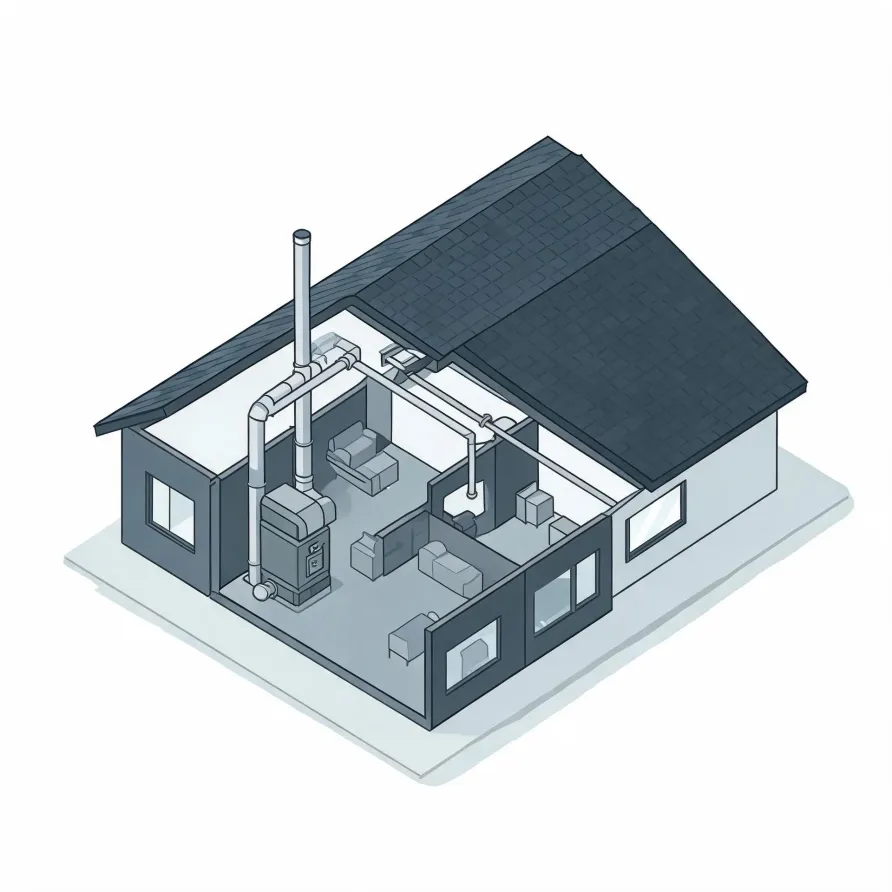
The furnace itself sits in a mechanical room, basement, or utility closet and is the unit a contractor opens first. Inside it, the heat exchanger is the part that fails most quietly and matters most: cracks there let combustion gases into the air supply. The burners and ignitor sit just below it, and either can leave the system unable to fire.
The blower motor and its wheel live in the lower cabinet and push conditioned air into the ducts. Beside the furnace, the flue pipe carries exhaust gases out of the house, and the condensate drain on a high-efficiency unit pulls moisture away from the secondary heat exchanger. A blocked drain or a cracked flue connection gives a contractor reason to stop work until it is resolved.
The drawing shows a typical furnace layout, and a licensed contractor determines which components apply to your specific system and what work each one needs.
Get matched in Mahaska CountyMahaska County, by the numbers
70 severe weather events were recorded in Mahaska County, Iowa between 2015 and 2024.
NOAA National Centers for Environmental Information, Storm Events Database, bulk CSV export, events 2015-01-01 through 2024-12-31.Half the homes in Mahaska County, Iowa were built in 1965 or earlier (2020-2024 ACS 5-year).
U.S. Census Bureau, 2020-2024 American Community Survey 5-Year EstimatesMahaska County, Iowa holds 9,728 housing units (2020-2024 ACS 5-year).
U.S. Census Bureau, 2020-2024 American Community Survey 5-Year EstimatesOwners occupy 68.0% of the occupied homes in Mahaska County, Iowa (2020-2024 ACS 5-year).
U.S. Census Bureau, 2020-2024 American Community Survey 5-Year EstimatesCodes & Standards Governing Furnace Repair in Mahaska County, Iowa5 sourced rules and standards
What happens when the contractor shows up
Non-weatherized gas furnaces manufactured on or after November 19, 2015 must reach 80.0 percent AFUE.
Non-weatherized oil-fired furnaces manufactured on or after November 19, 2015 must reach 83.0 percent AFUE.
Mobile home gas furnaces manufactured on or after November 19, 2015 must reach 80.0 percent AFUE.
Non-weatherized gas furnaces manufactured on or after December 18, 2028 must reach 95.0 percent AFUE, up from the 80.0 percent minimum that applies to units manufactured before that date.
Licensing Rules for HVAC Work in Mahaska County, Iowa
Iowa requires a state licence to install or repair HVAC, refrigeration, mechanical or plumbing systems, and to operate as a contractor, with exceptions listed in section 105.11.
Severe Weather Events in Mahaska County
Extreme weather puts a real load on furnaces, pushing equipment harder and accelerating wear. How often that happens here shapes what repair work looks like in Mahaska County.
70 severe weather events, 2015–2024. Source: NOAA National Centers for Environmental Information, Storm Events Database.