Tell us about the job
Takes about a minute. No obligation.
A furnace repair in this area asks a contractor to sort out what the equipment has actually been running against. 109 severe weather events were recorded in Washington County, Iowa between 2015 and 2024. At that rate, severe weather is a standing feature of life for any system in this county, and components that carry the heaviest load during weather events, namely the heat exchanger, the blower motor, and the pressure switches, are the ones a contractor checks first before pricing anything else. A part that fails here often fails under conditions the county sees regularly, and that shapes both what the contractor looks for and which parts they show up with.
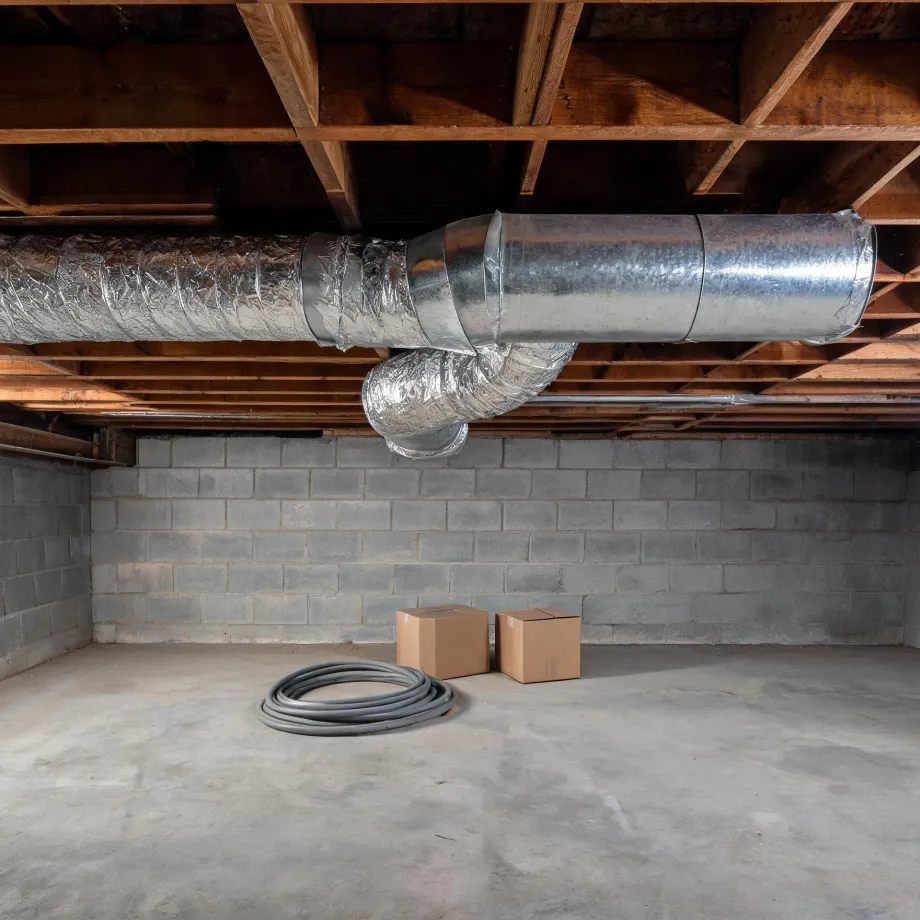
Furnaces in a house this old have often been swapped out once or twice already, which means the unit itself carries no reliable signal about what the original system was or what the current one has been asked to do. Half the homes in Washington County, Iowa were built in 1964 or earlier (2020-2024 ACS 5-year). What that history produces, for a repair contractor, is a parts question as much as a labor question: a furnace that takes a heat exchanger or control board that is no longer in regular production turns a straightforward repair into a sourcing job, and the cost follows from that, not from the diagnostic call.
The Parts of a Furnace a Contractor Checks First
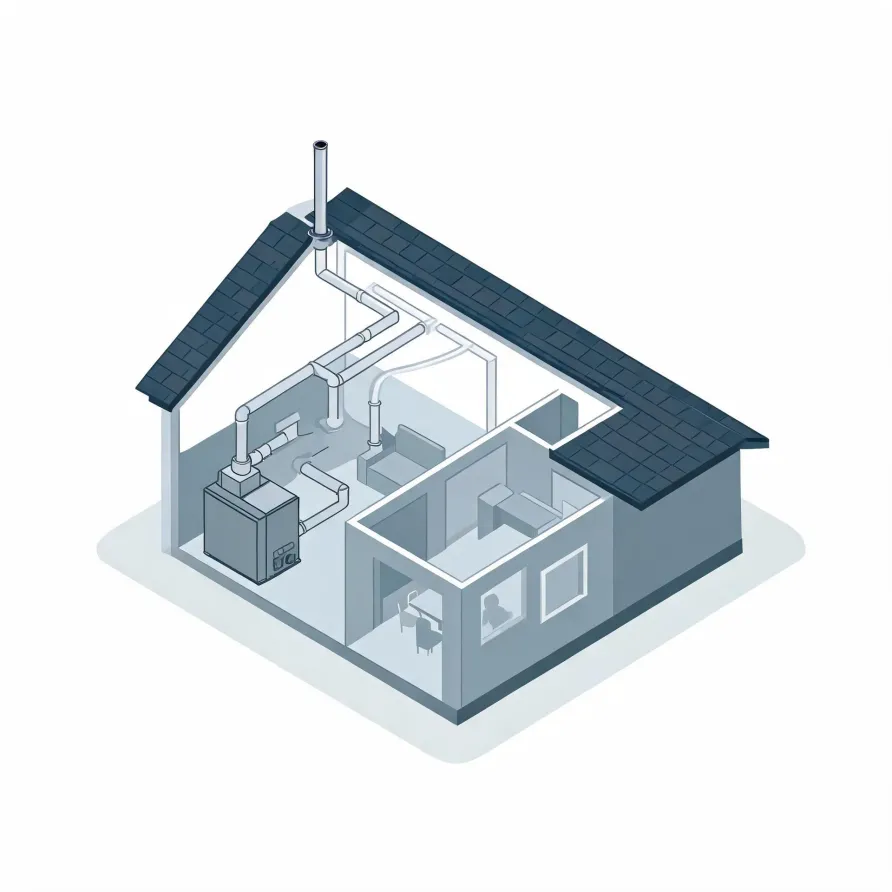
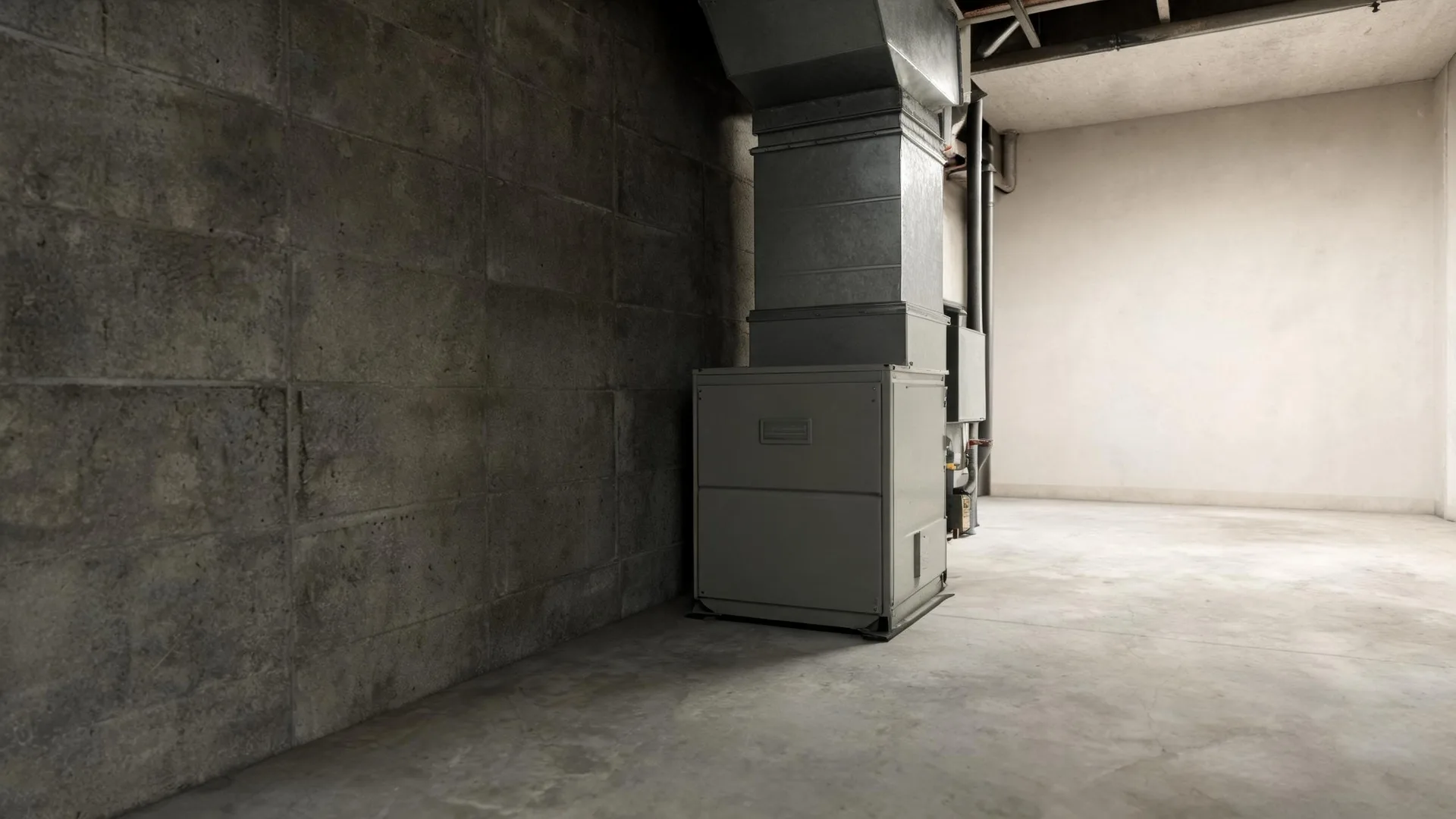
The furnace itself sits in the basement, utility room, or closet and is the piece a contractor goes to first. Inside it, the heat exchanger is the part that takes the most wear. A cracked or corroded heat exchanger is one of the more serious faults a contractor looks for, because it separates combustion gases from the air your home breathes.
The blower motor moves conditioned air out through the supply side and pulls return air back in. When a furnace runs but heat does not reach the rooms, or when it cycles on and off without completing a full run, the blower, the inducer motor, or the control board are where a contractor looks next.
The drawing shows the general layout of these components, and a licensed contractor determines what applies to your specific house and system.
Get matched in Washington CountyWashington County, Iowa, by the numbers
109 severe weather events were recorded in Washington County, Iowa between 2015 and 2024.
NOAA National Centers for Environmental Information, Storm Events Database, bulk CSV export, events 2015-01-01 through 2024-12-31.Half the homes in Washington County, Iowa were built in 1964 or earlier (2020-2024 ACS 5-year).
U.S. Census Bureau, 2020-2024 American Community Survey 5-Year EstimatesWashington County, Iowa holds 9,657 housing units (2020-2024 ACS 5-year).
U.S. Census Bureau, 2020-2024 American Community Survey 5-Year EstimatesOwners occupy 74.0% of the occupied homes in Washington County, Iowa (2020-2024 ACS 5-year).
U.S. Census Bureau, 2020-2024 American Community Survey 5-Year EstimatesCodes & Standards Governing Furnace Repair in Washington County, Iowa5 sourced rules and standards
What the repair visit looks like
Non-weatherized gas furnaces manufactured on or after November 19, 2015 must reach 80.0 percent AFUE.
Non-weatherized oil-fired furnaces manufactured on or after November 19, 2015 must reach 83.0 percent AFUE.
Mobile home gas furnaces manufactured on or after November 19, 2015 must reach 80.0 percent AFUE.
Non-weatherized gas furnaces manufactured on or after December 18, 2028 must reach 95.0 percent AFUE, up from the 80.0 percent minimum that applies to units manufactured before that date.
Licensing and Legal Requirements in Washington County, Iowa
Iowa requires a state licence to install or repair HVAC, refrigeration, mechanical or plumbing systems, and to operate as a contractor, with exceptions listed in section 105.11.
Severe Weather Events in Washington County
Weather puts a measurable load on heating equipment, and that load compounds over time. How hard a furnace works in any given year is partly a function of what the local climate throws at it, which makes regional storm history relevant to what repair and maintenance look like here.
109 severe weather events, 2015–2024. Source: NOAA National Centers for Environmental Information, Storm Events Database.