Tell us about the job
Takes about a minute. No obligation.
A contractor quoting a furnace repair in Henry County has to separate what the climate has asked of the system from what neglect or age has done to it. 107 severe weather events were recorded in Henry County, Iowa between 2015 and 2024. At that rate, severe weather is a real but occasional feature of life here, not a constant grind on equipment. A heat exchanger that has cracked or a blower motor that has seized is more likely carrying years of deferred maintenance than a beating from the weather outside. The contractor checks both, but age and service history are where the answer usually sits.
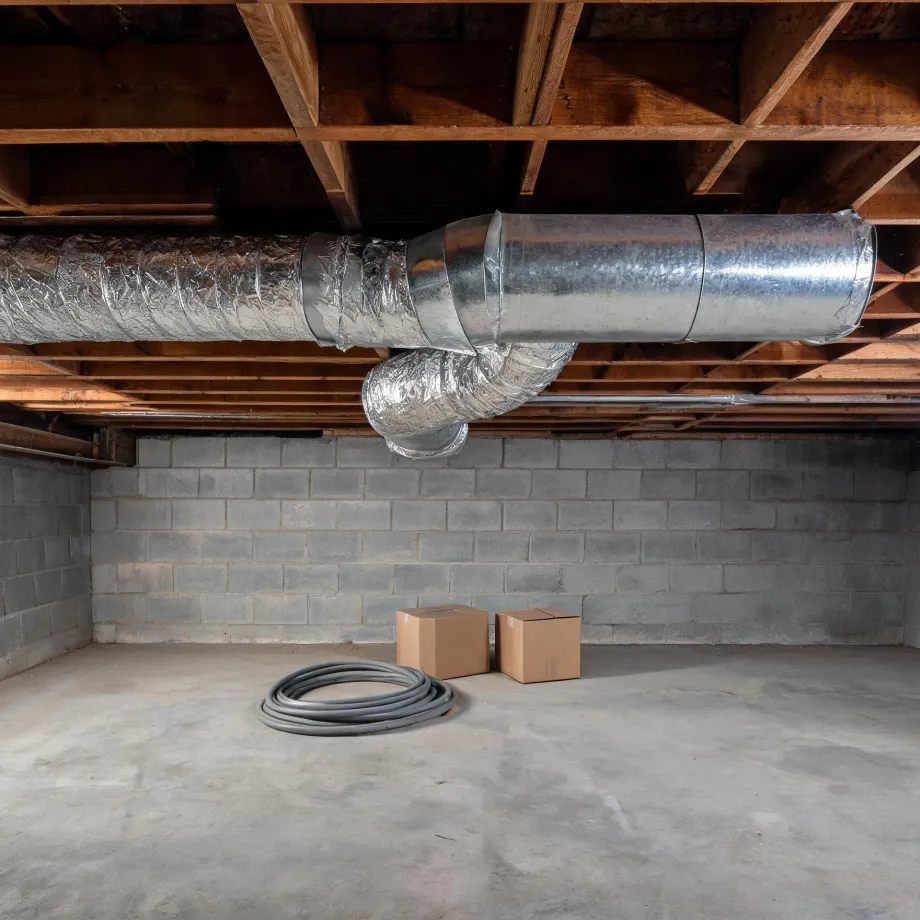
Older ductwork and older furnaces are not always the same problem, and repair work here tends to separate them fast. Half the homes in Henry County, Iowa were built in 1968 or earlier (2020-2024 ACS 5-year). A furnace sitting in a house that age has likely been replaced at least once, but the replacement was sized and sourced for what was available at the time. When a contractor opens the unit, the question that shapes the repair bill is whether the components it takes are still manufactured. Discontinued parts mean sourcing delays or substitutions, and that changes both the scope and the timeline of the job before a single piece is touched.
The Parts of a Furnace a Contractor Checks First
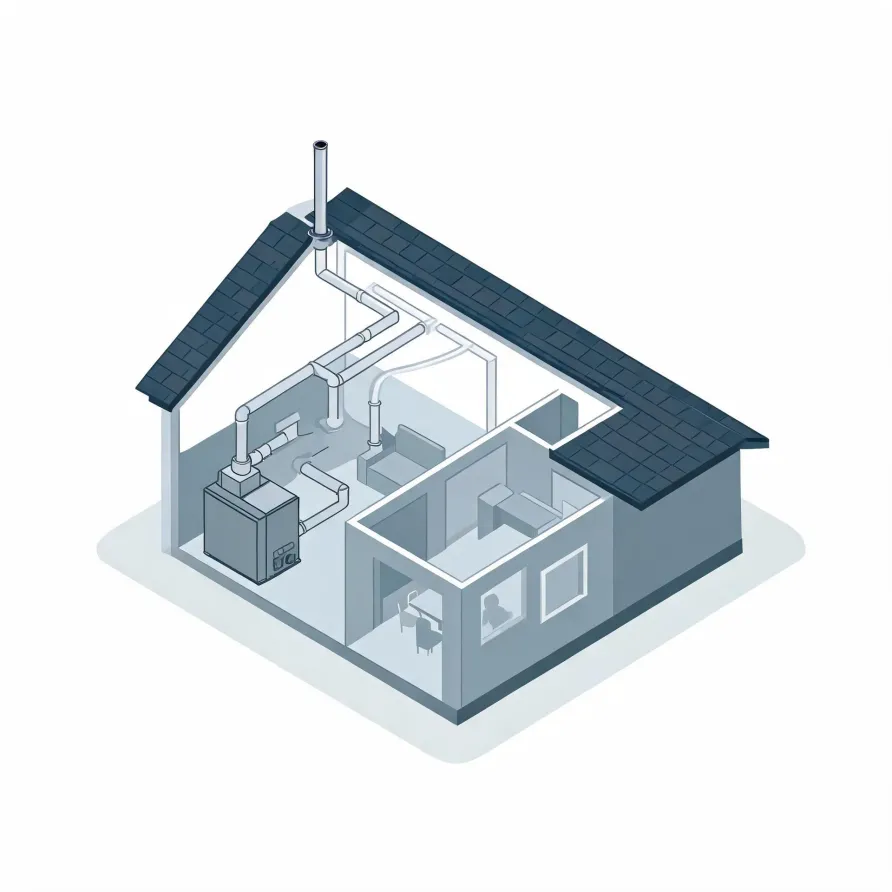
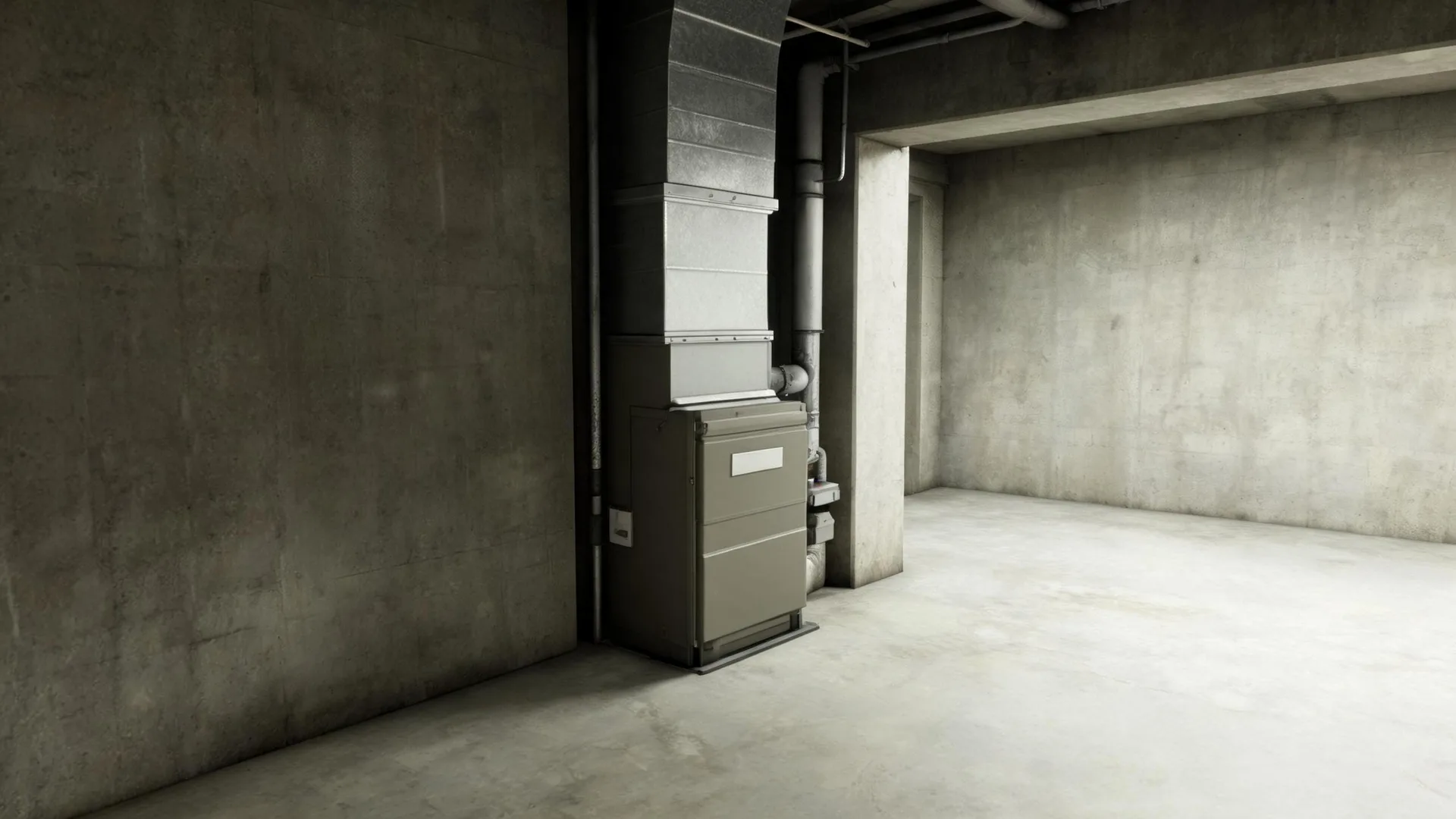
The furnace itself sits in a basement, utility room, or closet and is the piece a contractor goes to first. Inside it, the heat exchanger is the part that warms the air your home breathes, and a crack or failure there is among the more serious findings a repair visit can turn up. The burner assembly feeds the heat exchanger, and when ignition is weak or the flame pattern is off, that assembly is where a contractor looks.
The blower motor sits inside the furnace cabinet and pushes conditioned air out through the supply side of the house. The flue pipe runs from the furnace to an exterior wall or roofline and carries combustion gases out. The thermostat on the wall is the first thing many contractors check because a wiring fault or a failed sensor there can mimic a furnace problem.
The drawing shows the general layout of a furnace system, and a licensed contractor determines which components apply and what condition they are in for your specific home.
Get matched in Henry CountyHenry County, Iowa, by the numbers
107 severe weather events were recorded in Henry County, Iowa between 2015 and 2024.
NOAA National Centers for Environmental Information, Storm Events Database, bulk CSV export, events 2015-01-01 through 2024-12-31.Half the homes in Henry County, Iowa were built in 1968 or earlier (2020-2024 ACS 5-year).
U.S. Census Bureau, 2020-2024 American Community Survey 5-Year EstimatesHenry County, Iowa holds 8,445 housing units (2020-2024 ACS 5-year).
U.S. Census Bureau, 2020-2024 American Community Survey 5-Year EstimatesOwners occupy 74.1% of the occupied homes in Henry County, Iowa (2020-2024 ACS 5-year).
U.S. Census Bureau, 2020-2024 American Community Survey 5-Year EstimatesCodes & Standards Covering Furnace Repair in Henry County, Iowa5 rules & standards
What the Repair Visit Looks Like
Non-weatherized gas furnaces manufactured on or after November 19, 2015 must reach 80.0 percent AFUE.
Non-weatherized oil-fired furnaces manufactured on or after November 19, 2015 must reach 83.0 percent AFUE.
Mobile home gas furnaces manufactured on or after November 19, 2015 must reach 80.0 percent AFUE.
Non-weatherized gas furnaces manufactured on or after December 18, 2028 must reach 95.0 percent AFUE, up from the 80.0 percent minimum that applies to units manufactured before that date.
What Henry County, Iowa Requires for HVAC Repair
Iowa requires a state licence to install or repair HVAC, refrigeration, mechanical or plumbing systems, and to operate as a contractor, with exceptions listed in section 105.11.
Severe Weather Events in Henry County
Henry County weather puts real load on heating equipment. Hard conditions accelerate wear, and a furnace that gets pushed hard through rough stretches is the one most likely to need repair.
107 severe weather events, 2015–2024. Source: NOAA National Centers for Environmental Information, Storm Events Database.